13th Anniversary of the Bitcoin Whitepaper Release – Will It Still Be the Bitcoin You Know in the Future?
At 14:10:00 Eastern Time on October 31, 2008, a cryptography enthusiast under the pseudonym Satoshi Nakamoto published a paper titled "Bitcoin: A Peer-to-Peer Electronic Cash System" in the mailing list of the website "metzdowd.com (Cypherpunks)." This is what later became known as the "Bitcoin Whitepaper."
By October 2021, exactly 13 years have passed since the release of the Bitcoin Whitepaper. Over these 13 years, we have witnessed Bitcoin's journey from a niche topic to a global phenomenon, as well as the magnificent waves of multiple bull and bear market cycles in the market. Although to this day we know very little about Satoshi Nakamoto, the author of the Bitcoin Whitepaper – who he is, whether he is still alive – whether "he" is an individual or a team or organization – this does not affect our reverence in reading through the Bitcoin Whitepaper again and again.
In the following content, we will not delve too deeply into the difficult and obscure Bitcoin Whitepaper, but instead turn to data as our guide to visually and objectively understand Bitcoin's achievements over the past 13 years from both macro and micro perspectives.
Bitcoin 13-Year Overview
Here, to avoid misleading investors, it should be noted that although the Bitcoin Whitepaper was published on October 31, 2008, Eastern Time, the first Bitcoin was not minted until January 4, 2009. Therefore, the "Bitcoin 13th Anniversary" mentioned in this article is calculated based on the whitepaper release date.
In this section, we focus on two indicators: looking at Bitcoin's market capitalization scale from a macro perspective, and examining the growth in the number of Bitcoin holding addresses from a micro perspective.
According to statistics from OK Link, as of September 30, 2021, Bitcoin's circulating supply had reached 18.8275 million coins, accounting for 89.65% of its planned total issuance. Referencing the latest Bitcoin price on the OKX platform, Bitcoin's current total market capitalization has reached $784.69 billion, and in mid-April of this year, it even reached a historical high of $1.18 trillion, becoming the first digital asset in the crypto market to surpass a trillion-dollar market cap.
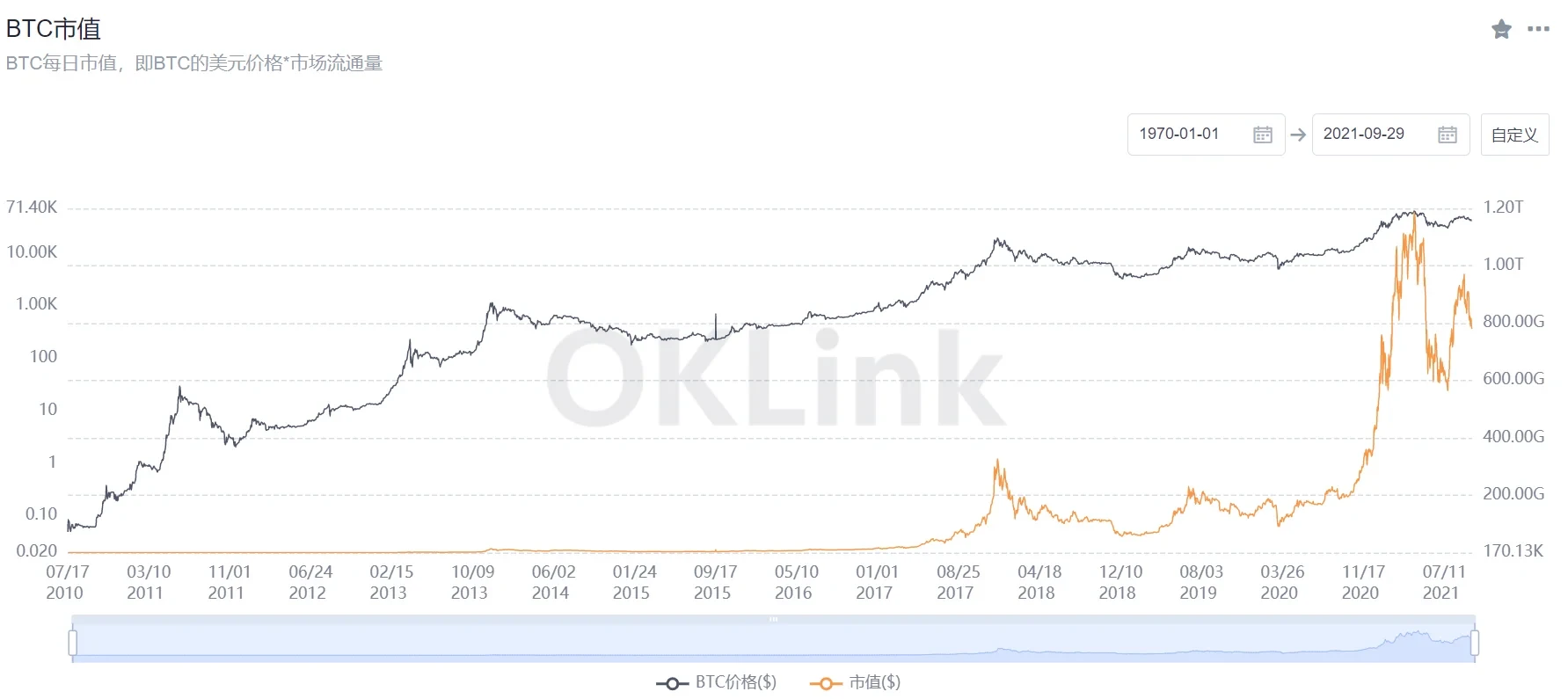
Bitcoin market cap changes since 2010, Image source: OK Link
In横向 comparison, in global capital markets, as of June 2021, the total U.S. stock market capitalization was approximately $41.98 trillion, while the total market value of all mined gold globally ranged between $10 trillion and $11 trillion. This means that if calculated based on Bitcoin's peak market cap, it has already reached 2.81% of the U.S. stock market scale and over 10% of gold's market value. Such a development rate, for Bitcoin which is only 13 years old, can be called a miracle in world financial history.
Over these 13 years, Bitcoin holding addresses have also undergone tremendous changes. From January 4, 2009, when Satoshi Nakamoto "lonely" mined the genesis block on a small server in Helsinki, Finland, to September 29, 2021, the number of Bitcoin on-chain addresses has reached 880 million.
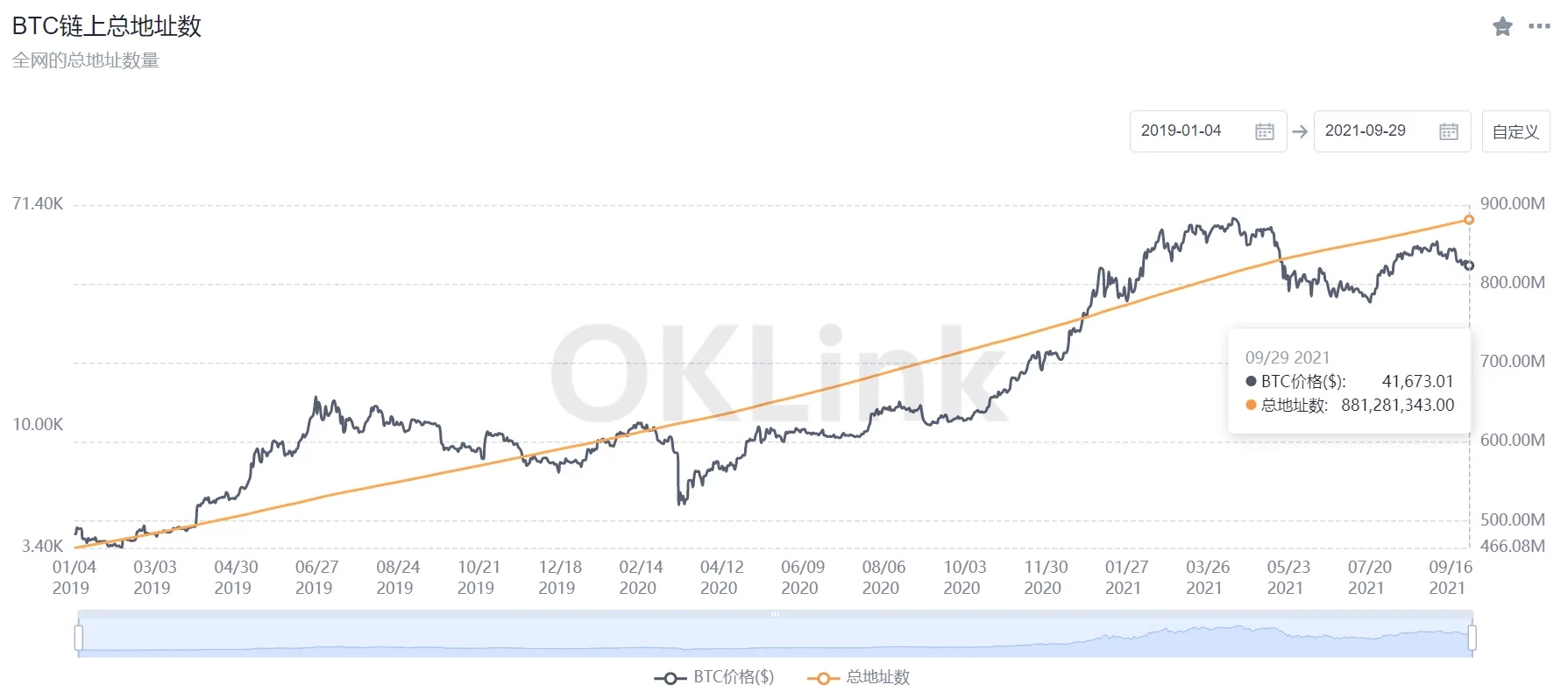
Total Bitcoin on-chain address count changes, Image source: OK Link
Even after excluding addresses with zero balance, there are still as many as 38.3 million addresses.
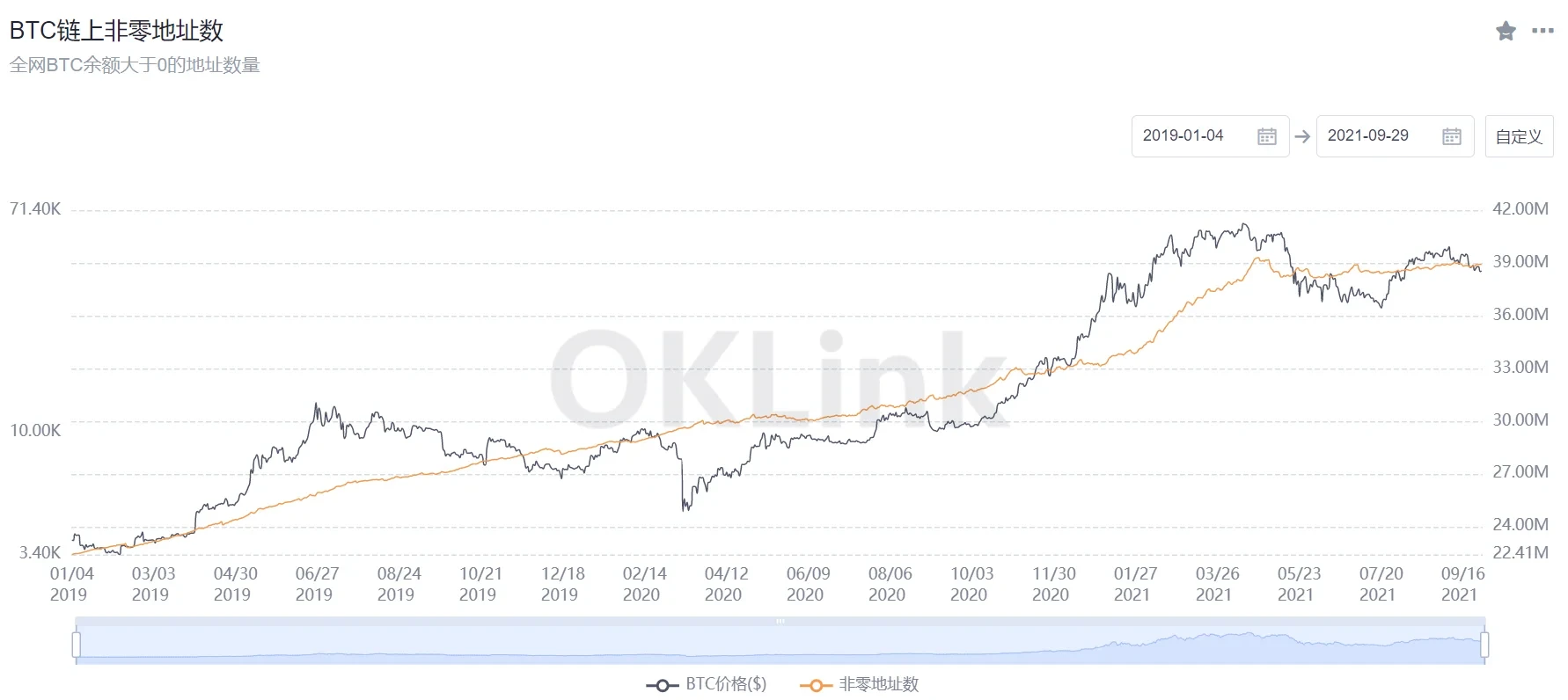
Bitcoin non-zero balance address count changes, Image source: OK Link
What Other Metrics Are Worth Reviewing?
1. Bitcoin Price
This is undoubtedly a popular metric. In fact, in the first year or so after Bitcoin's birth, it remained a niche item within geek circles, only used as a tool for tipping community members and content creators in certain加密 communities or websites. It wasn't until May 18, 2020, on a forum called Bitcoin Talk, that a programmer posted saying he wanted to use 10,000 Bitcoin to buy a few pizzas. Over the next 3 days, people occasionally gathered in the forum, but few asked for his address, and even fewer wanted to take this "business." Most voices were questioning and mocking, so much so that even he began to doubt and posted again asking: "Is nobody willing to buy me pizza because I'm offering too little Bitcoin?" The turning point came 4 days later on May 22, when the programmer finally completed this trading – exchanging 10,000 Bitcoin for two pizzas worth $25. This was also the first recorded physical goods trading in Bitcoin history. Since then, Bitcoin's price has risen uncontrollably.
On February 9, 2011, Bitcoin price first broke through $1.
On November 28, 2013, Bitcoin transaction price first broke through $1,000. On December 1 of the same year, Bitcoin price first surpassed the price of 1 ounce of gold.
On May 4, 2017, Bitcoin price first broke through $1,500, and on May 20, first broke through $2,000, on August 13, reached $4,000 again, and finally on November 28, first crowned the $10,000 milestone.
Next came what we're familiar with: in the most recent bull market, Bitcoin price successively broke through multiple integer thresholds like $20,000 and $30,000 in 6 months, finally reaching a historical high of $64,800 on April 14, 2021.
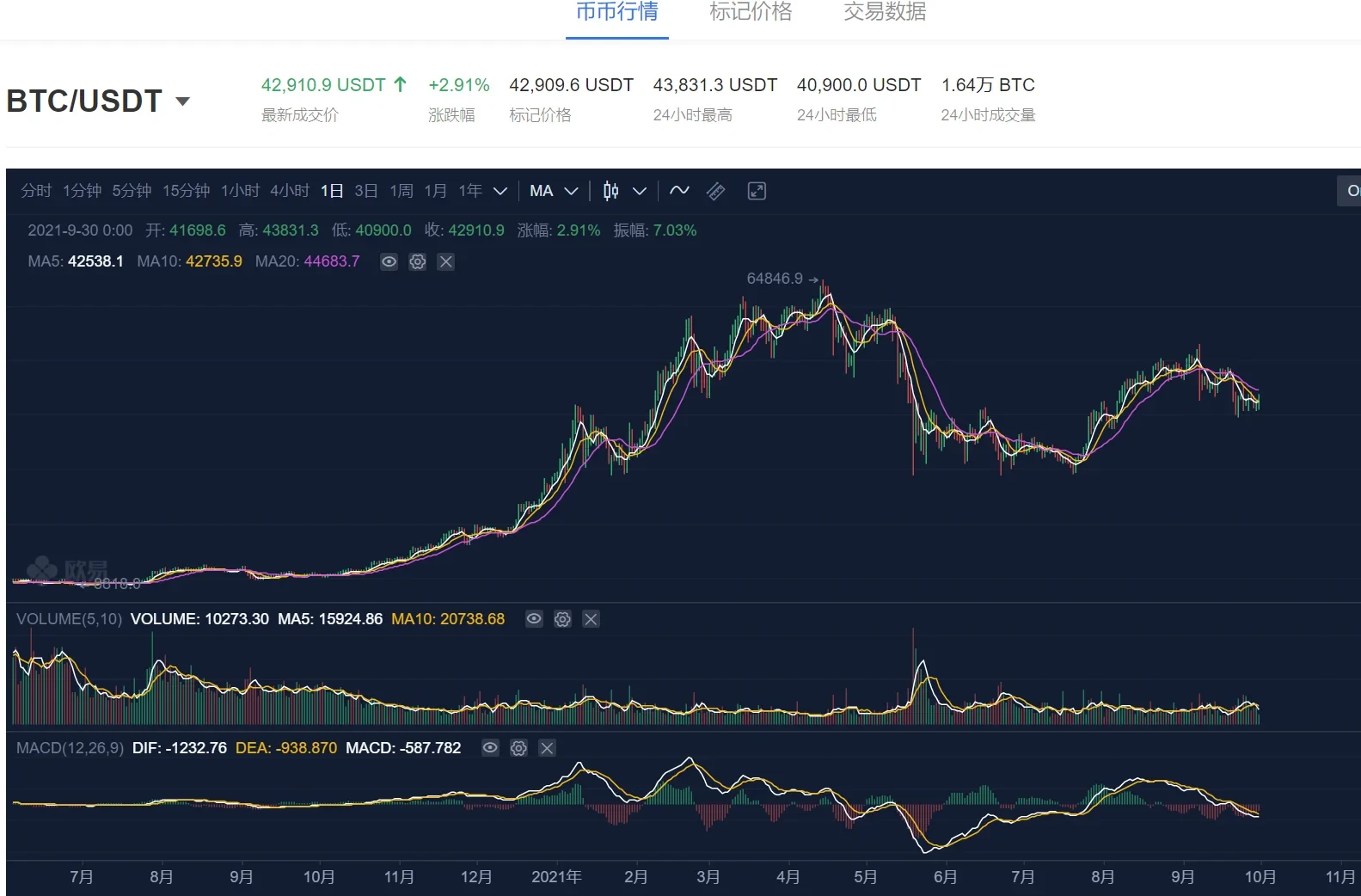
Bitcoin price trends in recent years, Image source: OKX
2. Bitcoin On-Chain Trading
First, let's look at daily on-chain trading volume. Before May 2012, Bitcoin's daily trading count was basically maintained within 10,000 transactions. Starting from May 2012, it began to rise rapidly, reaching a record 61,900 transactions on June 14.
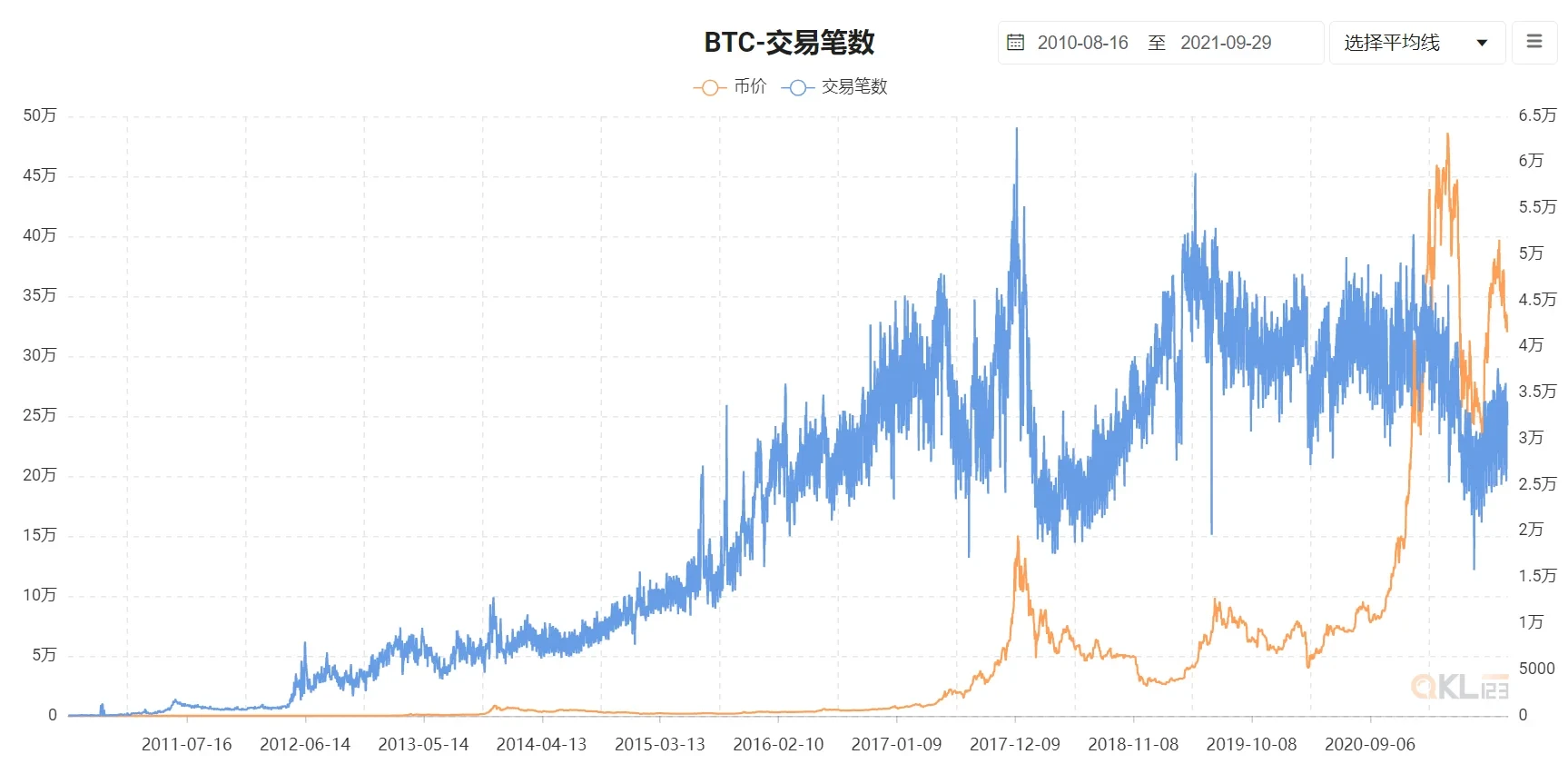
Bitcoin single-day trading count, Image source: qkl123
During the 2017 bull market, it even entered an exponential upward mode, reaching a historical record of 490,600 transactions on December 14, 2017, which has been maintained to this day. Although加密 market conditions have retreated in recent months, daily Bitcoin trading counts are still maintained above 200,000 transactions, which remains no small challenge for the Bitcoin network with a TPS of only 7.
Next, let's look at Bitcoin network's daily trading volume. Unlike the oscillating upward trend of trading counts, Bitcoin on-chain trading volume changes during the same period showed clear cyclical patterns, basically coinciding with bull and bear market cycles.
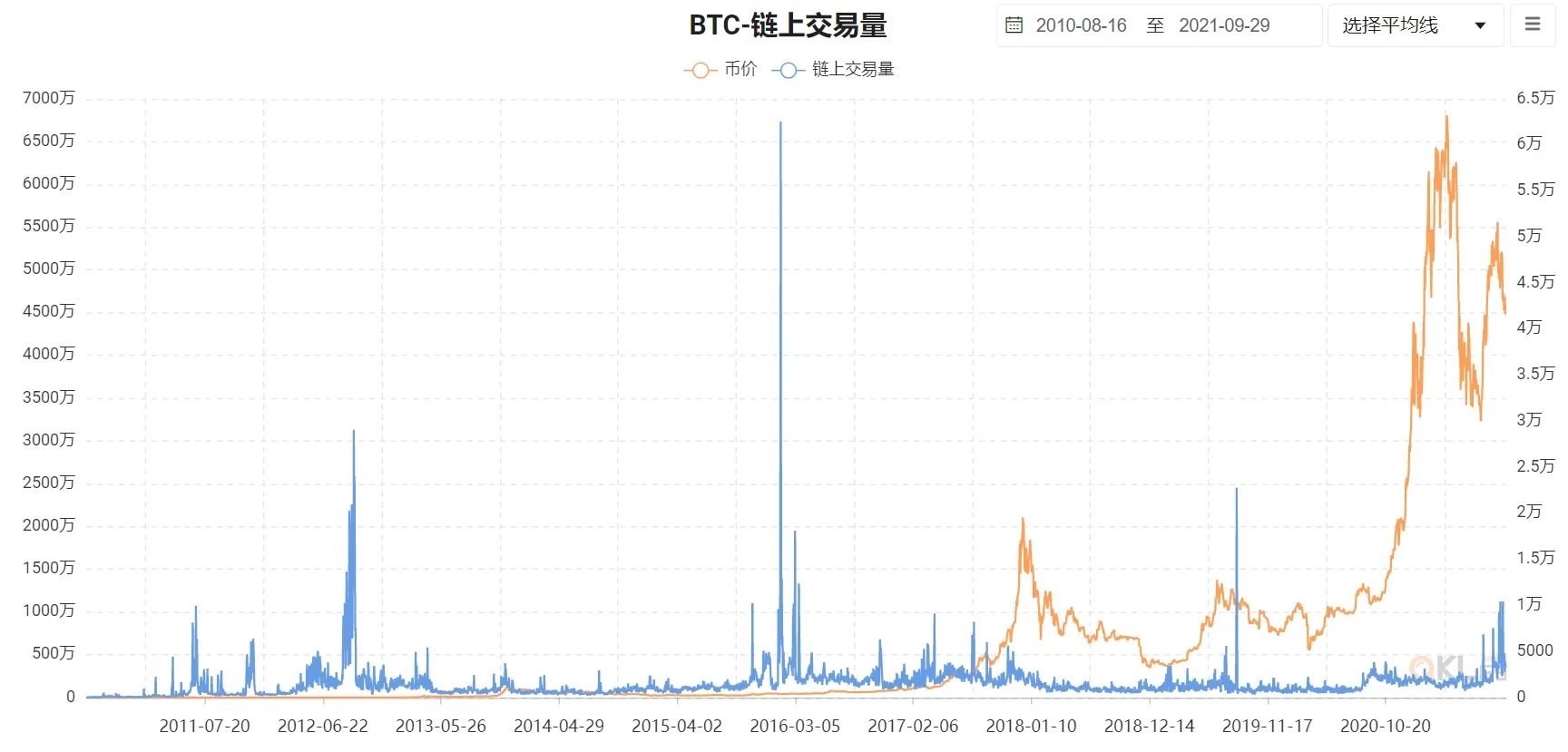
Bitcoin single-day on-chain trading volume changes, Image source: qkl123
Combining the timing of the three Bitcoin on-chain trading volume peaks shown above, we can roughly make a preliminary guess that from the end of each bear market to the early stages of a bull market, due to large amounts of Bitcoin changing hands, accompanied by small and medium investors selling their assets to more well-capitalized investors, this often brings short-term trading volume peaks.
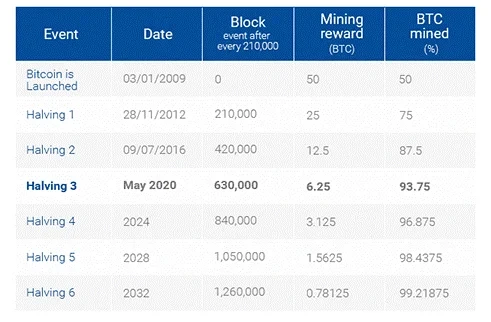
Bitcoin block reward halving schedule, Image source: Internet
Another coincidence is that most of the above trading volume peaks are very close to Bitcoin halving time points. For example, the first Bitcoin halving in history occurred in November 2012, while the first on-chain trading volume peak appeared in June of that year; the second halving occurred in July 2016, while the second on-chain trading volume peak appeared in January of that year; the third halving occurred in May 2020, while the third on-chain trading volume peak appeared in August 2019. Since entering 2021, single-day on-chain trading volume has basically been maintained between 1 million and 4 million Bitcoin, reaching a yearly high of 11.2499 million on September 14. Although in terms of Bitcoin quantity, it doesn't match the 2016 heyday, considering that Bitcoin prices this year have already grown more than 100-fold compared to then, if converted to dollar value, the trading volume of this bull market is still unprecedented.
3. Bitcoin Gains Widespread Global Attention
After 13 years of development, Bitcoin is no longer the "newborn" that needed to wait 4 days to exchange 10,000 coins for pizza and was mocked. It has demonstrated its super-strong vitality to the world through its strength and gained widespread attention and support. In October 2012, BitPay released a report stating that over 1,000 merchants worldwide were already using their payment system to accept Bitcoin payments. In October 2013, the world's first Bitcoin ATM launched by Robocoin debuted in Vancouver, Canada, allowing users to exchange Bitcoin for Canadian dollars and withdraw them, while also allowing users to purchase Bitcoin by depositing cash. The seeds planted thereby quickly blossomed and bore fruit. In the following years, more and more merchants announced acceptance of Bitcoin payments, Bitcoin ATMs appeared in more corners of the world, and ultimately attracted Wall Street's attention.
For example, the Grayscale Investments company we're familiar with – its parent company DCG (Digital Currency Group) – entered the加密 market as early as 2013, exploring providing services to institutional investors and high-net-worth qualified investors through compliant fund operation methods, and its preferred investment target asset was Bitcoin, which led to Grayscale's impressive investment performance in early 2021. Not just Grayscale Investments, but Goldman Sachs, JPMorgan Chase, Morgan Stanley, Wells Fargo, BNY Mellon and others, often mentioned in OKX Academy articles, have also entered the Bitcoin space, while Tesla, MicroStrategy and other U.S.-listed companies have even more high-profilely announced investments in Bitcoin.
Where Will Bitcoin Go in the Future?
This is indeed a broad and vague topic. We might as well look for some answers from Bitcoin's experience in successfully developing to this day over the past 13 years. Summarizing Bitcoin's historical success experience is certainly a matter of opinion, but one basic point is that it in certain aspects aligned with the needs of human historical development, so it was not crushed under the wheels of history. So following this line of thought, if Bitcoin wants to maintain certain influence in the future, keeping pace with the times is an essential requirement. In recent discussions about future society, the metaverse is a concept with sustained high heat. Similarly in "What Role Will Bitcoin Play in the Metaverse?" first published in OKX Academy, we introduced the "Lindy Effect" mentioned in the book "Antifragile": "For things that naturally die, each additional day of life shortens their expected lifespan. While for things that don't naturally die, each additional day of life may mean a longer expected remaining lifespan." Examining Bitcoin from this perspective, as the digital asset with the longest issuance time, it is very unlikely to naturally die, and having built the broadest consensus foundation over 13 years, it will inevitably attract more and more investors to choose to hold Bitcoin in the future – a point no digital asset can compare with. And based on the differences in basic attributes between Bitcoin and Ethereum, we believe that in the future metaverse, Bitcoin may more often serve as a store of value, similar to gold's role in today's economic society.
Disclaimer
This article may contain product-related content not applicable to your region. This article is intended only to provide general information and is not responsible for any factual errors or omissions herein. This article represents only the author's personal views and does not represent OKX's views. This article is not intended to provide any of the following advice, including but not limited to: (i) investment advice or investment recommendations; (ii) offers or solicitations to buy, sell or hold digital assets; or (iii) financial, accounting, legal or tax advice. Holding digital assets (including stablecoins) involves high risk, may fluctuate significantly, and even become worthless. You should carefully consider whether trading or holding digital assets is suitable for you based on your financial situation. For questions about your specific situation, please consult your legal/tax/investment professional. The information appearing in this article (including market data and statistics, if any) is for general reference only. Although we have taken all reasonable precautions in preparing these data and charts, we assume no responsibility for any factual errors or omissions expressed herein. © 2025 OKX. This article may be reproduced or distributed in its entirety, or excerpts of 100 words or less from this article may be used, provided such use is non-commercial. Any reproduction or distribution of the entire article must also prominently state: "© 2025 OKX, used with permission." Permitted excerpts must cite the article name and include attribution, for example "Article Name, [Author Name (if applicable)], © 2025 OKX". Some content may be generated or assisted by artificial intelligence (AI) tools. Derivative works or other uses of this article are not permitted.
Show More
Recommended Reading
OKX Pay: Opening a New Era of Next-Generation Crypto Payments
The choice of tens of millions of users, register on OKX to enjoy ultimate trading experience and diverse wealth management products. A letter from OKX CEO Star: Today, we officially launch the first version of OKX Pay to over 100 million global users. As the industry's first payment application to truly achieve non-custodial and compliant integration, OKX Pay will be embedded in the OKX App, currently available to select markets, expected to fully launch within months
March 22, 2026

New Chapter: Building Next-Generation Financial Infrastructure Together
OKX's partnership with Intercontinental Exchange (ICE) is an important moment for OKX and equally significant for the evolution of the entire digital asset market. ICE establishes and operates the world's most important financial infrastructure, including the New York Stock Exchange as well as global derivatives and clearing platforms. ICE's strategic investment in OKX and joining our board reflects both parties' shared belief – digital asset technology will be in financial markets
March 10, 2026

Tribute to Another Year of Forging Ahead
As OKX's CEO, and also a builder who remains true to our original mission, I proudly look back on OKX's extraordinary growth and progress this year. Despite many challenges, 2024 was a year of focus, innovation, and resilience. We not only expanded and optimized our products, but also made important progress in launching transparent and regulatory-compliant localized operations, while further strengthening our global management team. Notably, after experiencing
January 29, 2026

2025: Steady Progress Toward Financial Freedom Together
—— Annual letter from OKX Founder and CEO Star to global users "Financial freedom" is often misunderstood. It doesn't mean no rules, but rather having the right to choose while rules exist – and, when the system is truly tested, it remains reliable and effective. This is exactly what we focused on throughout 2025. First, I want to extend my sincere gratitude to our global clients, partners, and regulatory authorities
January 16, 2026

OKX Officially Launches in Germany and Poland
Author: Erald Ghoos, CEO of OKX Europe Today is significant for OKX – and for加密 users across Europe. We have officially launched a fully compliant centralized cryptocurrency trading platform in Germany and Poland! For us, this is not just a geographic expansion, but a commitment to building the cryptocurrency future the right way: secure, transparent, and meeting local needs. If you're in Germany
October 21, 2025

Partnership Upgrade! OKX Partners with Standard Chartered Bank to Expand European Market
On October 15, OKX Europe CEO Erald Ghoos stated that OKX is expanding its strategic partnership with Standard Chartered Bank to the European Economic Area (EEA). Earlier this year, OKX first partnered with Standard Chartered Bank in the UAE to launch the collateral mirroring program – a
October 15, 2025