Russia's Crypto Tax Reaches Up to $13 Billion: Which Countries Are Taxing Crypto?
Recently, a report released by Russian local media The Bell reveals that the Russian government's crypto tax revenue amounts to 1 trillion rubles (approximately $13 billion). Besides Russia, countries including the United States, South Korea, India, Thailand, the United Kingdom, South Africa, and Switzerland have already or are progressively planning to tax crypto assets-related trading. As the cryptocurrency market capitalization gradually increases, taxation has become a key focus for tax authorities and legislative bodies worldwide. Which countries have already begun or plan to introduce crypto assets-related taxation policies? What does taxation mean for crypto assets, and what impact will it have on the crypto market?
1. Russia
On February 9, documents from a cryptocurrency regulatory proposal released by the Russian government showed that Russia may allow crypto assets trading, but users can only purchase through locally registered and licensed companies, so that government agencies can obtain identity trading information. However, all crypto assets-related trading exceeding 600,000 rubles (approximately 51,000 RMB) must be reported to the Federal Tax Service, otherwise it should be considered a serious crime.

As the third-largest Bitcoin mining country, this approach places crypto assets on the same level as foreign currencies in Russia, regulating them with similar methods. Russian media "Kommersant" stated that new laws and directives may take effect in the second half of 2022 or early 2023. According to government documents, in Russia (with a population of approximately 144 million), there are over 12 million cryptocurrency accounts and crypto assets worth approximately 2 trillion rubles (approximately $26.7 billion). The report estimates that the Russian government could collect up to 1 trillion rubles (approximately $13 billion) in crypto taxes annually. Even with the most direct tax collection, it could generate 146 billion to 1 trillion rubles in crypto tax revenue.
2. India
India is one of the fastest-growing crypto trading markets globally and also among the earliest countries to implement crypto taxation. On February 1, 2022, local time, the budget submitted by Indian Finance Minister Nirmala Sitharaman stated that any income from the transfer of virtual digital assets would be taxed at a rate of 30%. This includes crypto assets, NFTs, and other methods people earn from digital assets, such as mining, liquidity returns, etc. Meanwhile, on February 2, the Indian government stated that it does not consider crypto assets trading to be illegal.
Finance Minister Sitharaman stated that the scale and frequency of crypto trading make it necessary for the government to provide a specific tax system for collecting cryptocurrency. In addition to high tax rates, India does not allow any deductions or discounts when calculating crypto-related income. In this country, compared to traditional tax rates, 30% is the highest tax rate applicable to individuals with annual income exceeding 1.5 million rupees. Therefore, crypto taxation will be significant revenue for the country. According to a Chainalysis report last October, India's crypto assets market grew by 641% between July 2020 and June 2021. It is projected that by 2030, India's cryptocurrency market size will reach $241 million.

3. South Korea
Besides Russia and India, which have recently introduced crypto taxation plans, South Korea has also been one of the most active countries in the crypto market. South Korea's taxation plan for the crypto sector has been in preparation for a long time. Originally, the South Korean government had officially confirmed a taxation plan to begin taxing in January 2022. However, in December 2021, South Korean legislators decided to postpone cryptocurrency trading taxation until January 1, 2023. According to the original taxation plan, South Korean resident taxpayers' annual cryptocurrency returns below 2.5 million won are tax-exempt, while amounts above 2.5 million won are subject to a 20% capital gains tax. The filing period is from May 1 to May 31 of the following year. Declared returns include both domestic and foreign returns. Failure to report will result in a penalty of 20% of the underreported amount. Citizens have an obligation to pay taxes on cryptocurrency gifted or inherited from family members or acquaintances according to relevant tax laws.
Compared to the tax burden on Korean investors' stock returns, South Korea's crypto taxation plan has two major differences: stock investors only pay tax on returns exceeding 50 million won, while crypto assets investors need to pay tax once returns reach 2.5 million won. Additionally, stock investors' losses can be carried forward for 5 years, while crypto investors' losses cannot be carried forward.
4. United States
As one of the countries with the most significant regulatory influence, crypto assets have also been an area of continuous focus for the U.S. Internal Revenue Service (IRS). As early as 2014, the IRS determined that Bitcoin is property, similar to other valuable commodities, but not currency, proposing the requirement that "cryptocurrency trading requires information reporting as a tax reference," but did not specify specific rules. Until 2016, the IRS announced five compliance activities, including virtual assets tax issues. It also obtained court approval to access identity and trading history information of U.S. clients of major U.S. cryptocurrency exchange Coinbase, to tax crypto transactions. In 2019, the IRS began developing crypto tax guidelines. According to previous IRS regulations, crypto assets holders must record their trading activities and returns/losses, and complete and submit Form 8949 to register with tax authorities.
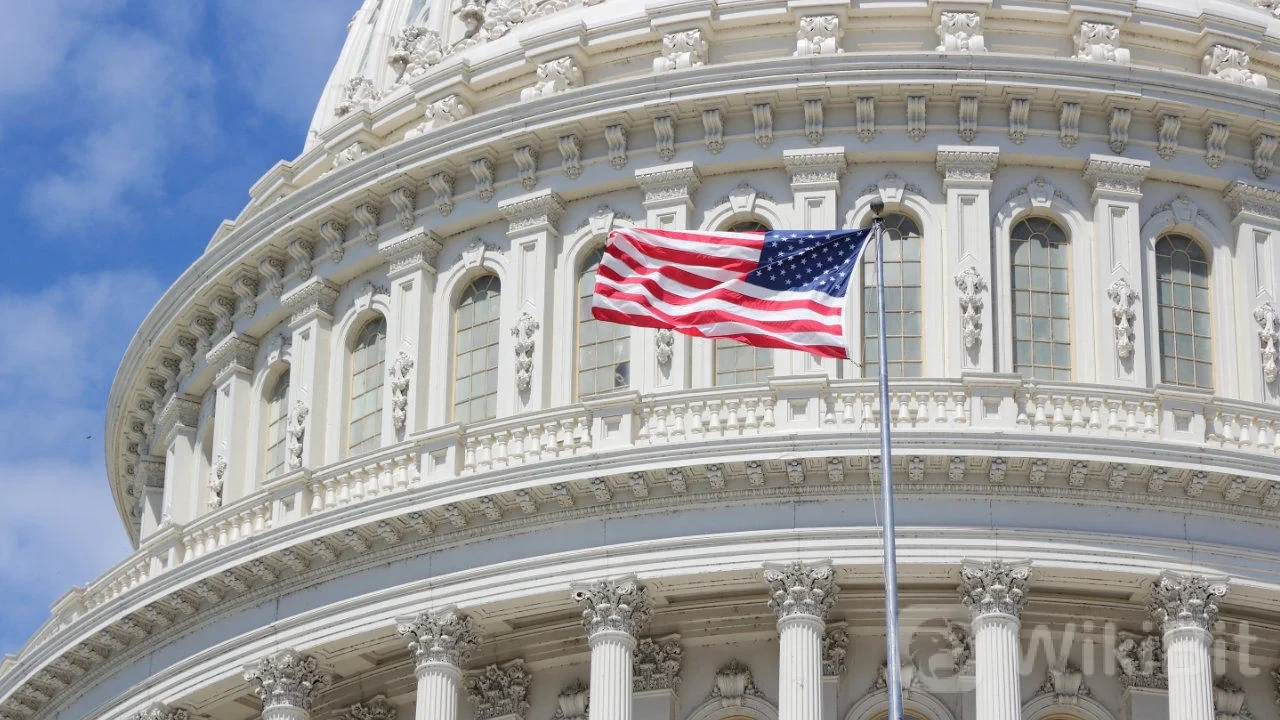
In early February 2022, several U.S. legislators proposed the "Virtual Currency Tax Fairness Act," which would create a workable structure for taxing crypto assets trading. If this bill passes, it would prevent the IRS from taxing crypto trading returns of $200 or less. Additionally, the bill would expand the use of cryptocurrency for payments and further strengthen "the legitimacy of virtual currency in the digital economy."
Currently, U.S. legislation stipulates that regardless of the scale or purpose of trading, any cryptocurrency returns must be reported as taxable income. Legislators believe current law "not only makes daily use of virtual currency nearly impossible but also inhibits the growth of the digital economy." According to current U.S. tax law, the tax rate for capital gains events is approximately 20%. The deadline for residents to file taxes on cryptocurrency and fiat currency income is April 18.
5. United Kingdom
In November 2021, the UK HM Revenue & Customs (HMRC) released tax guidelines to help cryptocurrency traders and investors understand their tax obligations in the UK. HMRC stated that it does not consider cryptocurrency as currency, but more like traditional investments such as stocks, therefore cryptocurrency profits are subject to capital gains tax. The guidelines state that profits from trading cryptocurrency must be declared annually in individuals' self-assessment tax returns or companies' corporate tax returns. Crypto profits are considered capital returns or losses, but it must be clear that trading fees cannot be offset against profits, and traders are urged to keep records. Traders can receive an annual capital gains tax exemption allowance of £12,300—this exemption is frozen until 2025. Basic rate taxpayers' annual exempt returns are taxed at 10%, while higher rate taxpayers are taxed at 20%. However, HMRC's guidelines are not law and have no legal effect.
6. Venezuela & Argentina
Besides the above countries, some South American countries including Venezuela and Argentina have also begun taxing crypto trading. On February 7, Venezuelan local media reported that the government has approved a new tax bill aimed at collecting up to 20% tax from cryptocurrency trading. Argentina, on the other hand, announced in November 2021 that it would impose a 0.6% tax on companies providing cryptocurrency trading services.

Additionally, this January, the Thai Ministry of Finance originally announced a crypto tax policy stating that cryptocurrency trading profits would be subject to 15% capital gains tax. Subsequently, in February, it announced the cancellation of taxation for private cryptocurrency investors. Of course, besides these countries that have introduced crypto tax policies, there are also quite a few countries that are relatively "lenient" regarding crypto taxation. For example, Malaysia, Singapore, Portugal, Belarus, etc. have adopted certain degrees of tax exemption policies for crypto trading.
Regarding the impact of countries taxing crypto assets trading, many financial experts believe that taxing crypto trading may reduce market liquidity and suppress crypto assets-related trading. Especially in countries with higher tax rates, it may prevent foreign investment funds from flowing into the country. However, some investors believe that crypto taxation means countries are incorporating it into legislative regulation, which will promote the crypto assets category onto the track of legalization. In this regard, India's Finance Minister stated that the current taxation policy simply does not treat crypto assets trading as illegal activity. At this stage, it will not legalize or prohibit crypto assets. The legitimacy of cryptocurrency remains an open question.
From an objective perspective, crypto taxation policies may result in lower actual returns for crypto investors, but it also reflects the widespread shift in countries' attitudes toward crypto assets regulation. If some countries' legislative bodies express recognition of the legitimacy of crypto trading, it may have a certain degree of impact on crypto assets prices.
Disclaimer
This article may contain product-related content not applicable to your region. This article is intended to provide general information only and does not take responsibility for any factual errors or omissions therein. This article represents only the author's personal views and does not represent the views of OKX. This article is not intended to provide any advice, including but not limited to: (i) investment advice or investment recommendations; (ii) offers or solicitations to buy, sell, or hold digital assets; or (iii) financial, accounting, legal, or tax advice. Holding digital assets (including stablecoins) involves high risk, may fluctuate significantly, and may even become worthless. You should carefully consider whether trading or holding digital assets is suitable for you based on your financial situation. For questions about your specific situation, please consult your legal/tax/investment professional. The information appearing in this article (including market data and statistics, if any) is for general reference only. Although we have taken all reasonable precautions in preparing these data and charts, we assume no responsibility for any factual errors or omissions expressed herein. © 2025 OKX. This article may be reproduced or distributed in its entirety, or excerpts of 100 words or less from this article may be used, provided such use is non-commercial. Any reproduction or distribution of the entire article must also prominently state: "This article is copyrighted © 2025 OKX, used with permission." Permitted excerpts must cite the article name and include attribution, for example "Article Name, [Author Name (if applicable)], © 2025 OKX". Some content may be generated or assisted by artificial intelligence (AI) tools. Derivative works or other uses of this article are not permitted.
Show More
Recommended Reading
OKX Pay: Opening a New Era of Next-Generation Crypto Payments
The choice of tens of millions of users. Register with OKX and enjoy the ultimate trading experience and diverse wealth management products. A letter from OKX CEO Star: Today, we are officially launching the first version of OKX Pay to over 100 million global users. As the industry's first payment application to truly achieve non-custodial and compliant integration, OKX Pay will be embedded in the OKX App, currently open to select markets, and expected to fully launch within months
March 22, 2026

New Chapter: Building Next-Generation Financial Infrastructure Together
The partnership between OKX and Intercontinental Exchange (ICE) is an important moment for OKX and equally significant for the evolution of the entire digital assets market. ICE establishes and operates the world's most important financial infrastructure, including the New York Stock Exchange and global derivatives and clearing platforms. ICE's strategic investment in OKX and joining our board reflects both parties' shared belief—digital assets technology will transform financial markets
March 10, 2026

Tribute to Another Year of Forging Ahead
As OKX's CEO and also a builder who remains true to our original mission, I am proud to look back on OKX's extraordinary growth and progress this year. Despite numerous challenges, 2024 was a year filled with focus, innovation, and resilience. We not only expanded and optimized our products but also made significant progress in launching transparent and compliant localized operations, while further strengthening our global management team. Notably, after experiencing
January 29, 2026

2025: Steady Progress Toward Financial Freedom Together
— Annual Letter from OKX Founder and CEO Star to Global Users "Financial freedom" is often misunderstood. It doesn't mean no rules, but rather having the right to choose within the framework of rules—and when the system is truly tested, it remains reliable and effective. This is exactly what we focused on throughout 2025. First, I want to extend my sincere gratitude to our global clients, partners, and regulatory authorities
January 16, 2026

OKX Officially Launches in Germany and Poland
Author: Erald Ghoos, CEO of OKX Europe Today is significant for OKX—and for crypto users across Europe. We have officially launched our fully compliant centralized cryptocurrency trading platform in Germany and Poland! For us, this is not just geographic expansion, but a commitment to building the cryptocurrency future the right way: secure, transparent, and meeting local needs. If you are in Germany
October 21, 2025

Partnership Upgrade! OKX Partners with Standard Chartered to Expand European Market
On October 15, OKX Europe CEO Erald Ghoos stated that OKX is expanding its strategic partnership with Standard Chartered to the European Economic Area (EEA). Earlier this year, OKX first partnered with Standard Chartered in the UAE to launch the Collateral Mirroring program—a
October 15, 2025