OKX Research: Bitcoin Falls Below $30,000! The Crypto Market Faces Two Possible Trajectories Since the May Rate Hike
Author: Zhao Wei, Senior Researcher at OKX Research Institute
According to OKX market data, at around 8:00 AM Beijing time on May 10, Bitcoin briefly fell below the key $30,000 level, dropping to as low as $29,735, with a decline of over 10% within 24 hours. This marks the first time Bitcoin has fallen below $30,000 since it peaked at $69,000 on November 10 of the previous year. Half an hour later, Bitcoin's price returned to above $30,000. At 10:00 AM, Bitcoin was trading at $30,891.
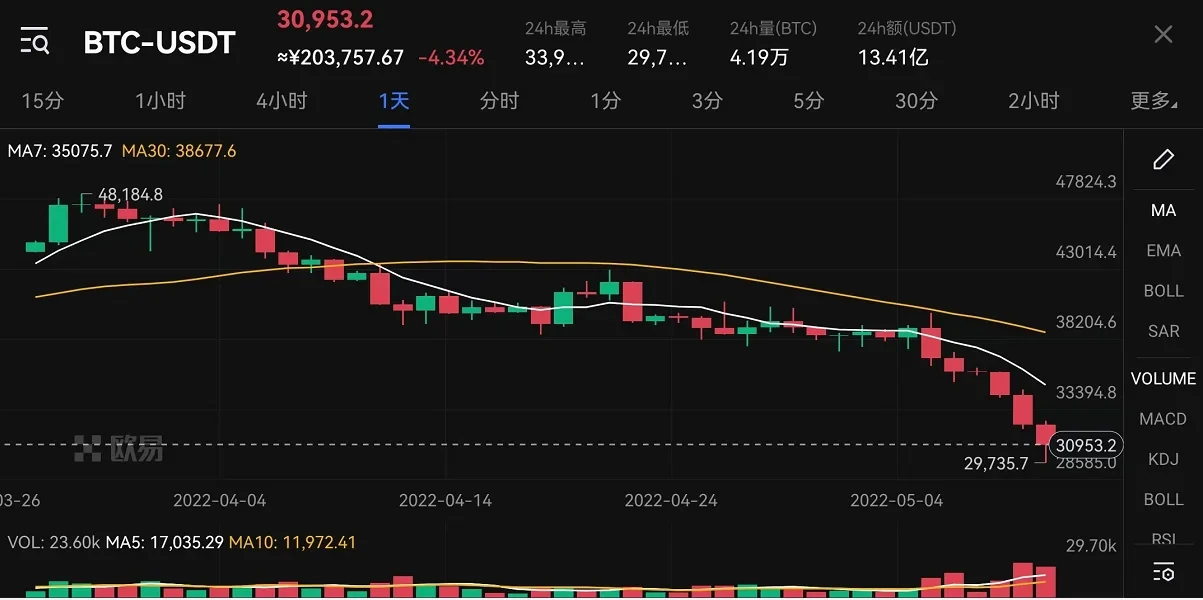
Bitcoin Price Trend
What was the immediate trigger for Bitcoin's drop below $30,000 this time? One view holds that:
At around 2:00 AM today, Luna Foundation Guard (LFG)'s Bitcoin address transferred out 42,530.82 Bitcoin, valued at approximately $1.319 billion. This sparked widespread panic selling among users. Additionally, UST, the stablecoin issued by Luna, has recently lost its peg to $1, and its price has been continuously declining. As the largest algorithmic stablecoin with a total market cap of $18 billion, UST's crash and the similar sell-off operations by its issuer behind it have dragged down the already fragile crypto market.
Of course, why has the crypto market become so fragile lately? This points to the root cause of this crash: US interest rate hikes.
On May 4, the US Federal Reserve announced a 50 basis point rate hike, raising the target range for the federal funds rate to between 0.75% and 1%. At the same time, the Fed announced it would begin reducing its nearly $9 trillion balance sheet starting June 1, to complement the rate hike and curb soaring inflation.
Following the announcement, US stocks and the crypto market saw a brief modest uptick, as panic sentiment had already been largely digested beforehand. During the meeting, Fed Chair Jerome Powell ruled out the possibility of a 75 basis point rate hike, dispelling market concerns about overly aggressive tightening.
However, the market trend immediately reversed, with both US stocks and the crypto market closing significantly lower. After all, this is the first time since 2000 that a rate hike has reached 50 basis points, demonstrating the Fed's urgency in tightening monetary policy, which delivered a crushing blow to liquidity and market sentiment.
In contrast, US Treasury yields surged, and the US dollar index hit a nearly 20-year high, showing the positive effects of rate hikes. One could say that the rate hike is the Fed's bold move to restore dollar credibility at a critical time when US inflation is intensifying and dollar credit is declining.
Specifically in terms of price action, panic-driven selling has already taken hold, with grim results across the board. All three major US stock indices gave back gains from previous days, with the Dow Jones index briefly plunging nearly 1,400 points during the session.
I. Economic Recession Coinciding with High Inflation Rates is a Rare Occurrence, Adding Greater Uncertainty to Rate Hikes
As early as late April, investment institution Goldman Sachs published a report stating that it expects a 35% probability of US economic recession over the next two years.
The report analyzed that the main challenge facing the US is narrowing the gap between job openings and the number of workers, and reducing employment opportunities through tighter financial policy without significantly raising the unemployment rate, thereby slowing wage growth to a pace consistent with the 2% inflation target.
However, what is troubling both the Fed and Wall Street is the coexistence of an overall economic recession and stubbornly high inflation in the US—a phenomenon extremely rare in history. Looking at the data from both perspectives, this contrast is even more stark:
First, earlier this month, the Wall Street Journal surveyed 65 business, academic, and financial professionals, with respondents generally estimating a 28% probability of US economic recession in the coming year—higher than both the 18% at the beginning of the year and the 13% from a year ago. In other words, the elite level has further lowered expectations for the US economy, with pessimism growing, and mainstream views have reached further consensus on a US economic recession.
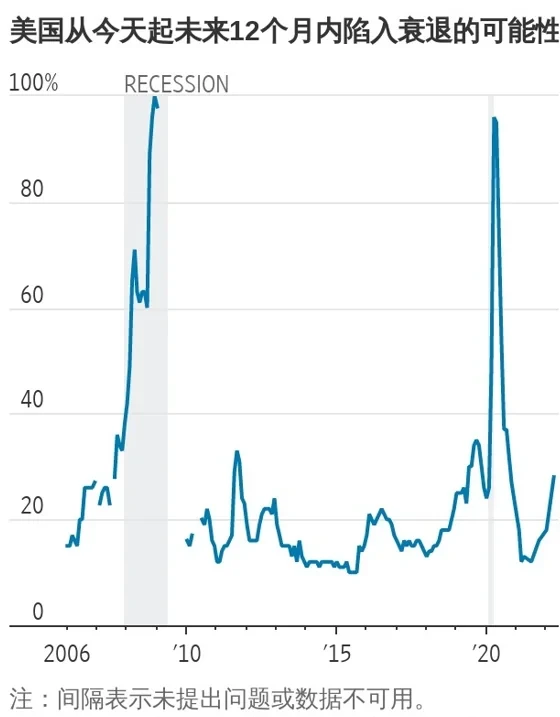
Wall Street Journal survey data on 65 financial elites
Second, according to data released by the US Department of Labor on April 12, US CPI rose 8.5% year-over-year in March, reaching its highest level since December 1981. This figure exceeded the Dow Jones forecast of 8.4%, meaning the US is experiencing a level of price increases not seen in the past 40 years.
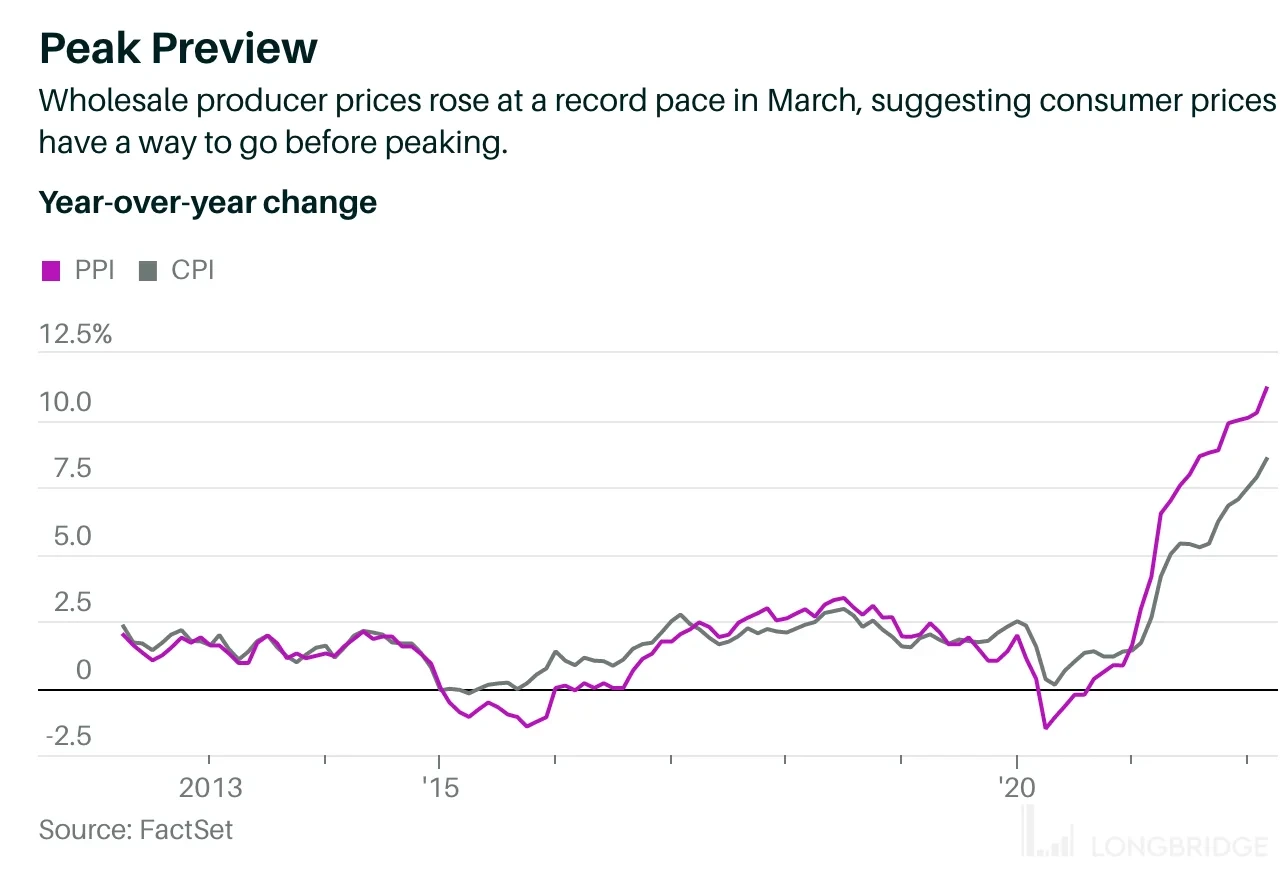
US Consumer Price Index (CPI) and Producer Price Index (PPI) Both Reach Historical Peaks
A direct comparison of the two highlights the inflation predicament during a recessionary cycle.
As is well known, high inflation typically accompanies rapid economic growth, while significant deflation corresponds to obvious economic recession. Therefore, the Fed's rate hike this time faces a situation that may be more complex than previous rate hike cycles, as the twin black swan events of the post-pandemic era and the Russia-Ukraine war have brought enormous uncertainty to the global economy. Of course, the root cause of all this is the massive money printing by the US after the pandemic. So rate hikes are inevitable, and the subsequent trajectory of the macroeconomy and financial markets will become even more unpredictable.
II. Hawks and Doves Have Widely Divergent Views on the Pace of Rate Hikes, Creating Ongoing Uncertainty About the Fed's Future Monetary Policy
The sword hangs high, torn between difficult choices—contracting credit and tightening liquidity have become the "least bad" option. After all, everyone in the US is concerned about whether a recession can be avoided.
City Index analysts noted that the S&P 500 saw its strongest single-day gain since 2020 on the day the Fed announced its latest interest rate decision, which is somewhat unusual in itself. One could say that the decline seen on May 5 was the expected repricing. "At the end of the day, risk still exists, inflation is still high, and the Fed will still act aggressively."
Of course, those who firmly believe that rate hikes can cure the US economic ailment do not seem worried about the pain from the crash. Previously, hawkish representative and St. Louis Fed President James Bullard boldly stated: "Raise interest rates to around 3.5% by the end of the year."
Going even further, regarding the "recession theory" proposed by investment banks led by Goldman Sachs and the economics community, the "Hawk King" Bullard chose to dismiss it: "It's too early to talk about recession; rate hikes have only happened once." Bullard expects that under a tight monetary policy, the US economy will grow at a healthy pace above long-term trends in 2022 and 2023, with the unemployment rate falling below 3%.
Whether it's gradual, moderate small-scale rate hikes or aggressive,剧烈的 large-scale rate hikes, both have dealt a direct and swift blow to the relatively fragile crypto market.
In the third week of April, Bitcoin fell below the $40,000 mark for the first time in nearly a month and has continued to decline since.
Despite heavy news such as Russia announcing that "natural gas and other energy sources will be settled in Bitcoin" during this period, market reactions show that it only delayed the downward trend.
From Bitcoin's all-time high of $69,000 to consecutive breaks below the $50,000 and $40,000 marks, all are closely tied to the Fed's monetary tightening policy.
As one of the world's primary value benchmarks, Bitcoin still heavily relies on US dollar stability and the US financial-dominant global financial stability. The Fed's policy direction is the decisive force affecting Bitcoin's price.
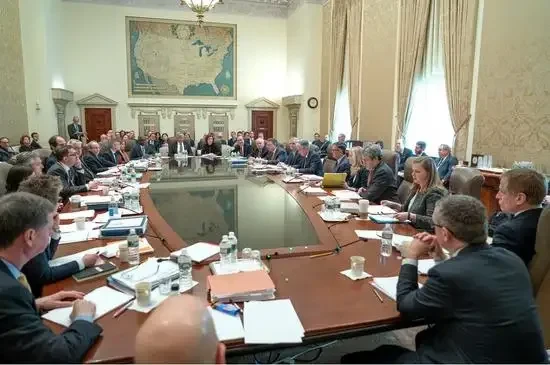
Photo from the Federal Reserve FOMC meeting
However, the Fed's policy decisions are not solely dictated by financial market performance, capital returns, retail investor gains/losses, or public sentiment. US stock movements are merely one of several reference factors, and the crypto market is even less significant. Given the clear downward trend in the US economy, subsequent rate hikes will inevitably proceed on schedule, especially since the US has already entered a historical tightening cycle. Yet, based on the Fed's current stance, the rate hike option seems to still have some room for flexibility and maneuver. After all, Powell has already stated: "We have a good opportunity for a soft landing."
III. Analyzing from Two Assumptions: What Will This Rate Hike Cycle Mean for the Crypto Market Going Forward?
Based on the above analysis, combined with specific trends, let us make the following two major assumption-based analyses regarding the crypto market's future direction. For reference only, not constituting any form of investment advice.
Possibility 1: The Fed continues to maintain a hawkish stance after the May meeting, with total rate hikes exceeding 3% for the full year to curb high inflation—
Specific possible impacts may include:
1) Funds continue to flow out significantly, thereby affecting asset prices across the financial sector;
2) US CPI falls to levels seen in the first half of 2021 or lower, with the inflation problem easing;
3) The US dollar continues to appreciate, with dollar credit recovering to some extent;
4) Bitcoin will most likely be forced to absorb the "consequences of dollar flooding" since 2021 or even earlier; mainstream views on bearish expectations for Bitcoin may deepen;
5) Trigger rate-hike cycles worldwide, meaning major countries and financial institutions will attempt to maintain their domestic currency's stability, using more aggressive measures to stabilize the existing international financial system.
For example, after May 5, the European Central Bank, the Bank of England, and central banks of developed countries such as Canada and New Zealand successively confirmed their upcoming rate hike plans.
6) In the long run, Bitcoin will gain more independent value positioning; the crypto market may experience a new period of stable development stimulated by this. Because when mainstream digital asset prices bottom out, they will attract a new wave of sophisticated institutions and retail investors to buy the dip, subsequently surfacing with lucrative returns from value investing once the US begins a new money-printing cycle. Of course, during this period, Bitcoin prices may experience some volatility affected by major currencies such as the US dollar, euro, and ruble.
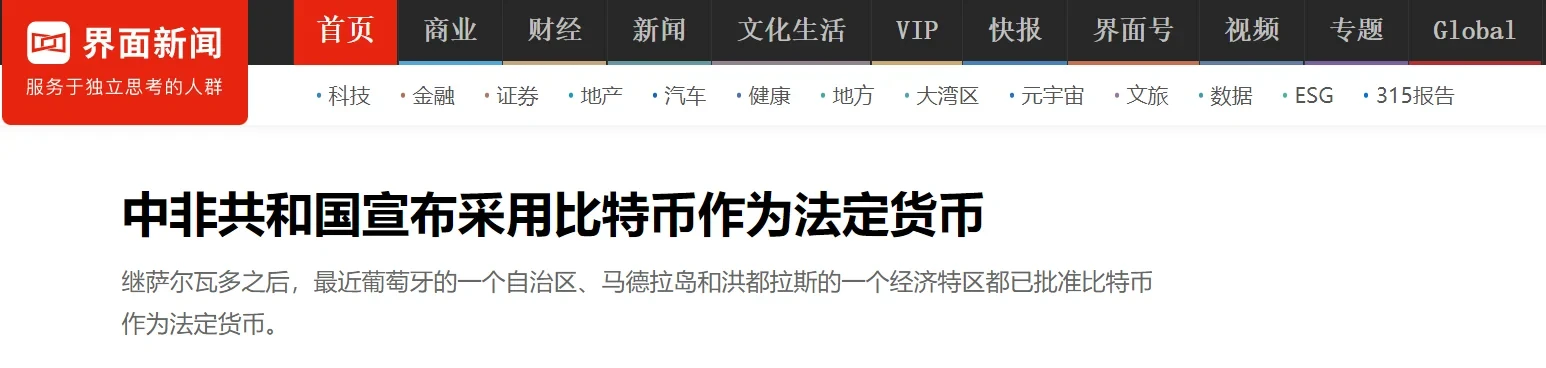
Mainstream media coverage: Central African Republic Adopts Bitcoin as Legal Tender
Possibility 2: To avoid the risk of US economic recession, the Fed's policies result in total rate hikes of less than 2% for the full year—
Specific possible impacts may include:
1) The shadow of financial risk may still envelop the crypto market, but to some extent, this will be short-term bullish for Bitcoin, as actual negative impacts fall short of the worst-case scenario;
2) Dollar inflation slows but remains unfavorable for purchasing power recovery for a long time; the crypto market may exist in a state of high structural risk alongside high value for some time to come; sustained wide-range oscillations may become the norm;
3) Of course, if the US, with the arrow ready to be fired, ultimately chooses not to shoot, it will inevitably trigger a series of chain reactions, ultimately leading to the collapse of dollar credit—although this transformative outcome requires a long time to develop. The US's consistent beggar-thy-neighbor tactics have almost prepared the groundwork for this qualitative change. The most direct and significant change lies in:
Major sovereign credit currencies will not wait to transfer risk; major economies' trust in and adoption of the US dollar will gradually weaken, thereby directly impacting the post-World War II dollar-dominated international financial system. Russia's unilateral announcement of decoupling from the dollar is a prelude to this major transformation—just that the war accelerated this process.
4) Under the domino effect, uncertainty in global financial markets will surge sharply, with intensity potentially even comparable to the most aggressive rate hikes, because the downward trajectory brought by the latter is entirely predictable. In this scenario, a passive Fed that takes no positive action is essentially implying that large amounts of risk-off funds will enter the crypto market, given that Bitcoin still carries risk asset characteristics. This trait has been diluted by the massive dollar printing and its strong correlation with US stocks. However, when the conditions for this reversal begin to weaken, Bitcoin's original safe-haven attributes may be reinforced once again. By then, the price fluctuations of crypto assets will become even more unpredictable, and it will be even more difficult for investors to profit from short-term trading. Therefore, the ability to assess and estimate risk, timely adjust trading strategies, and even stabilize personal emotional volatility becomes even more important.
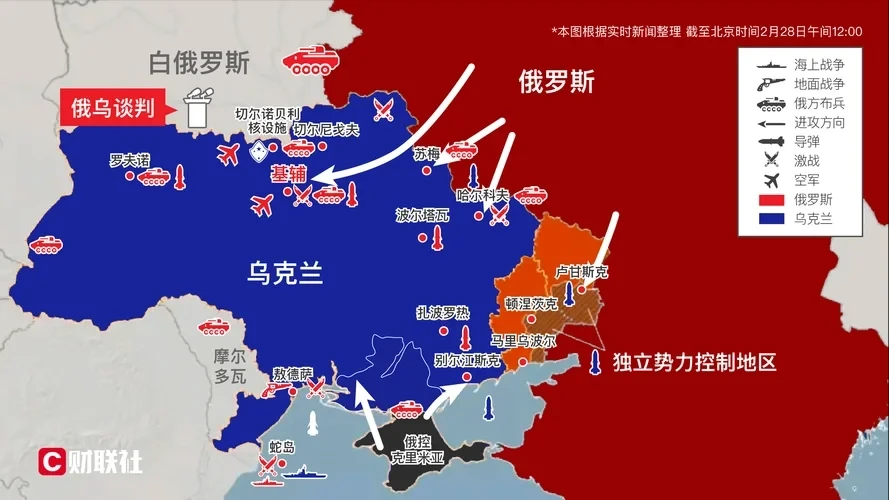
Situation map during the early stages of the Russia-Ukraine war
As evidenced by the performance of Bitcoin and other digital assets during the Russia-Ukraine war, the crypto market has fully integrated with global financial markets—it simply operates in a particularly unique way. More and more central banks in mainstream countries are beginning to formalize the status of blockchain technology and crypto assets, while underdeveloped countries in Asia, Africa, and Latin America are accelerating the process of making Bitcoin legal tender. These phenomena have frequently appeared in headlines of international mainstream financial media.
Reviewing the economic cycles over the十几 years since Bitcoin's birth, we can easily find that each time it climbs over a trough, Bitcoin's total market cap and resilience reach new heights. Therefore, regardless of the magnitude, scope, or method of this US rate hike, at this moment, being bullish on the crypto market, choosing Bitcoin, investing cautiously, and deeply enhancing your knowledge are all wise moves to navigate through bull and bear cycles.
Disclaimer
This article may contain product content that is not applicable to your region. This article is only intended to provide general information and assumes no responsibility for any factual errors or omissions. This article represents only the author's personal views and does not constitute the views of OKX. This article is not intended to provide any advice, including but not limited to: (i) investment advice or investment recommendations; (ii) offers or solicitations to buy, sell, or hold digital assets; or (iii) financial, accounting, legal, or tax advice. Holding digital assets (including stablecoins) involves high risk, and prices may fluctuate significantly or even become worthless. You should carefully consider whether trading or holding digital assets is suitable for you based on your financial situation. For questions about your specific circumstances, please consult your legal/tax/investment professional. The information contained in this article (including market data and statistics, where applicable) is for general reference only. Although we have taken all reasonable precautions in preparing such data and charts, we assume no responsibility for any factual errors or omissions expressed herein. © 2025 OKX. This article may be reproduced or distributed in its entirety, or excerpts of 100 words or less may be used, provided that such use is non-commercial in nature. Any reproduction or distribution of the full article must prominently state: "This article is copyrighted © 2025 OKX, used with permission." Permitted excerpts must cite the article name and include attribution, for example "Article name, [author name (if applicable)], © 2025 OKX". Some content may have been generated or assisted by artificial intelligence (AI) tools. Derivative works and other uses of this article are not permitted.
Show More
Recommended Reading

2025 KOL Most Used OKX Products List
In the cryptocurrency industry, professional players' choices are always direct and pure. In 2025, KOLs cast the most authentic votes for industry tools and ecosystem development with their year-long capital investment and time dedication. We focused on four core questions—"What was your biggest achievement this year?", "Given your achievements, what OKX products did you use most and love the most in 2025?", "Why do you love it?", "This product
January 5, 2026

2026 Investment Outlook: Asset On-Chaining, Intelligence & Privacy | OKX Year in Review
Three major trends for crypto's future: asset transformation, subject transformation, and rule transformation. At the moment of entering 2026, bidding farewell to four years of focusing on "building roads" for infrastructure, the crypto industry is ushering in a profound paradigm shift. OKX Ventures defines this as the dawn of the "Kinetic Finance" era, whose core is no longer how fast the network is, but the flow and earning of on-chain assets
December 31, 2025

Vote with Data: A Deep Dive into 2025's Most Popular Trading Products | OKX Year in Review
Looking only at price action, it's hard to explain the return differences among OKX trading users. What truly determines returns also depends on account-level operation methods, not just market volatility itself. OKX's annual report shows that mainstream coins remain the core for capital turnover and return bearing, supporting trading and strategy execution; emerging coins are more used to amplify volatility and provide phased opportunities, but are not a stable, long-term source of returns. What truly and consistently contributes to returns is
December 30, 2025

Fusaka In Practice: What Ethereum's Latest Upgrade Means for L2, Nodes, and Users
Ethereum mainnet has completed the Fusaka fork. At the protocol level, this upgrade mainly consists of four components, full text by Q&A Show More Three guests' core viewpoints and front-line experience: Ahmad (@smartprogrammer) – Nethermind Execution Client / Ethereum Core Developer Manu (@manunalepa) – Prysm / Of
December 16, 2025

OKX Research | Why RWA Became a Key Narrative in 2025?
RWA (Real World Assets) is becoming the "new favorite" of global capital. Simply put, RWA is about taking valuable, ownership-bearing things from the real world—such as houses, bonds, stocks, and other traditional financial assets, even art, private lending, and carbon credits that are usually hard to trade directly—and bringing them onto the blockchain, making them tradeable, programmable crypto assets. This way, not
November 20, 2025
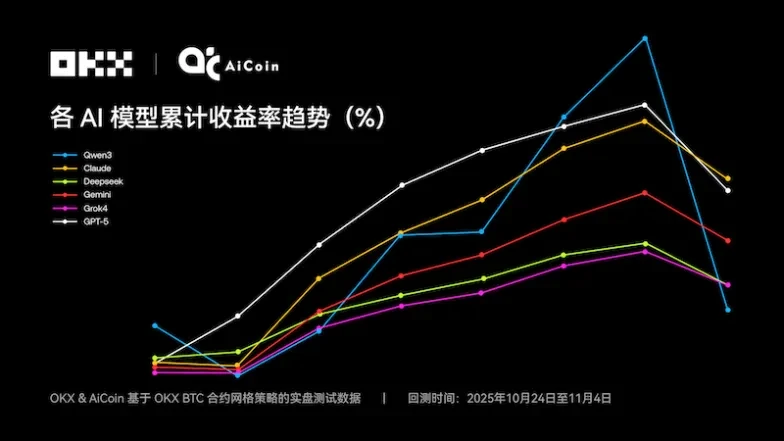
Claude Wins the Championship: Truth Behind 6 Major AI Grid Strategies | OKX & Ai Coin Live Test
The short-term trading champion , is it also the king of grid strategies? The first season of NOF1's "AI Trading Live Arena" finally concluded on November 4, 2025 at 6 AM, having thoroughly whet the appetite of the crypto, tech, and financial circles. However, the outcome of this "AI IQ public test" was somewhat unexpected—the six models' combined $60,000 in initial capital had only $4.3
November 6, 2025