Bitcoin Market Share Falls Below 50%: How to Interpret This Key Information
Following a sharp pullback last Sunday, the crypto market experienced volatile trading this week. As of press time, among the top 10 crypto assets by market cap, DOGE has led the rally with an 80% gain from its low on the 18th, followed by ETH with a 19% gain in second place. Bitcoin, however, has underperformed, failing to mount a meaningful rebound over the past several days and even briefly falling below the $50,000 psychological level. It is now barely holding above $50,000. According to OKX market data, Bitcoin is currently trading at $50,225 (as of 10:00 AM, April 25, 2021).
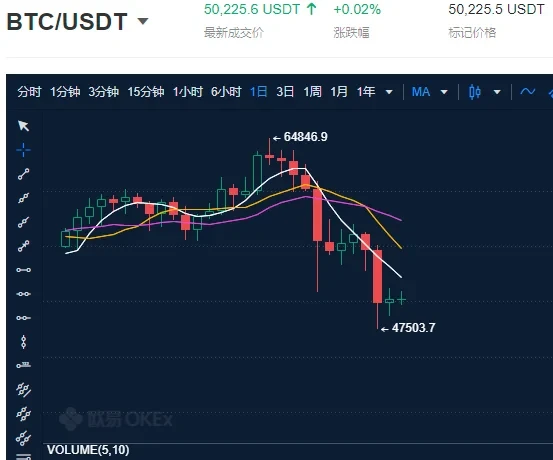
(Bitcoin price trend, source: OKX)
Meanwhile, Bitcoin's market share has also shown a weakening trend. According to CoinGecko data, the total crypto market cap stands at $1.907 trillion, with Bitcoin's market cap at $937.9 billion, representing just 49% of the total.
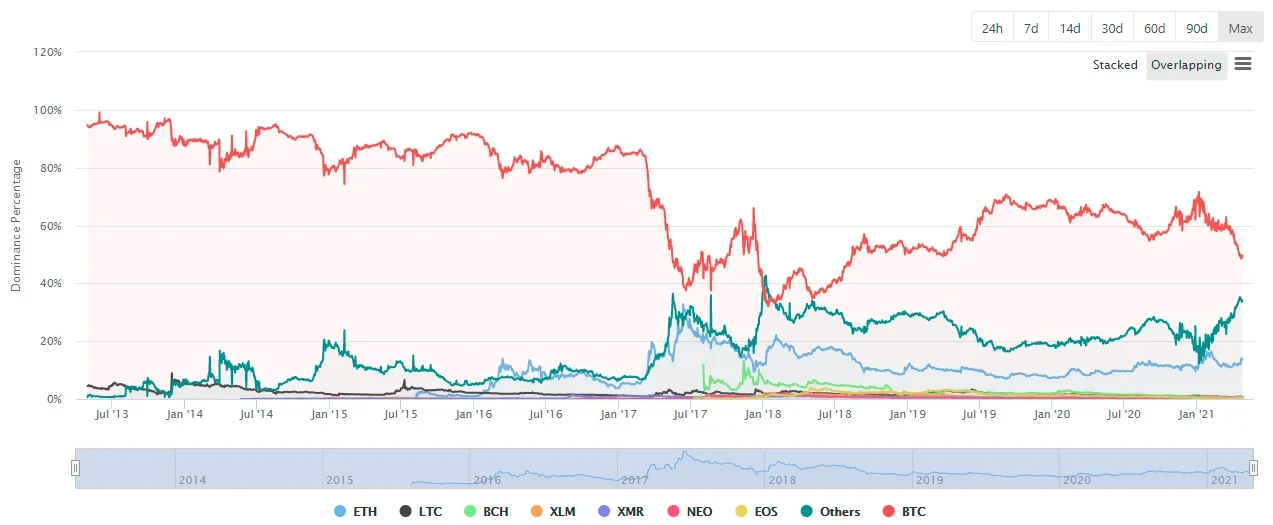
(Bitcoin market share trend, source: CoinGecko)
Why Pay Attention to Bitcoin?
Let's use a simple analogy. When randomly choosing a restaurant on the street, you would certainly take a second look at one with a long line out the door, whereas you would likely hesitate before entering one with hardly any customers. Why is that? Because a popular restaurant has been vetted by countless diners, so the overall quality is almost certainly decent, and the risk of having a bad meal is relatively lower compared to other options. The same phenomenon exists in the stock market — when a new investor enters the market, the first stocks they pay attention to are the sector leaders, followed by the second and third players in each sector. Stocks beyond that are often overlooked.
The crypto market operates on the same principle. Although the investment targets differ, the investment logic and psychology of investors remain the same. It goes without saying that the goal of all our decisions in the capital markets is to make a profit. Out of nearly 10,000 crypto assets worldwide, Bitcoin — as the pioneering cryptocurrency — is naturally the safest and most reliable choice for investment.
First, it is the only asset with sufficient liquidity to absorb small-to-medium-sized allocations. Second, Bitcoin has a vibrant derivatives market that can provide institutional investors and conservative retail investors with a rich array of arbitrage tools. Finally, Bitcoin has gained widespread recognition from mainstream society on a global scale, enabling investors to legally and compliantly acquire Bitcoin through diverse investment channels. Therefore, for investors looking to enter the crypto market, Bitcoin is the asset they should consider first. As shown in the chart above, for the vast majority of time prior to February 2017, Bitcoin's market share consistently remained above 80%.
In summary, we can draw a preliminary conclusion: Bitcoin's dominant role helps bolster traditional investors' confidence in the crypto industry and attracts them to invest on a larger scale. This is also an important reason why we focus on Bitcoin's market share in this article. In other words, in the absence of specific, authoritative valuation metrics, changes in Bitcoin's market share driven by market sentiment typically serve as a reliable market indicator.
A Review of Bitcoin Market Share's Historical Fluctuations
First, we need to be clear about one thing: what we observe from the data is the ratio of Bitcoin's market cap to the total crypto market cap, but what we are really关注的是 investigating is the flow of funds across the crypto market. Whether in a one-directional trend or during bull-to-bear market transitions, the fundamental driver is always the inflow or outflow of funds. We need to keep this cause-and-effect relationship in mind as we proceed with the following discussion.
Generally speaking, the cyclical sector rotation in the crypto market follows this pattern:
Stage 1: Bitcoin price surges.
Based on the reasons we outlined above for paying attention to Bitcoin, the combined effect of returning institutional funds and inflows of capital from outside the crypto space drives Bitcoin sharply higher.
Funds then begin flowing into Ethereum, though the volume of inflows falls well short of Bitcoin's — until a tipping point is reached and Ethereum's gains begin to exceed Bitcoin's. This was particularly evident during the rise of DeFi in 2020.
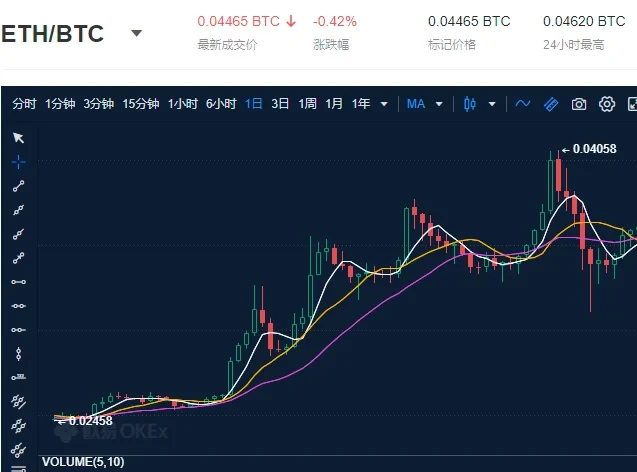
(ETH/BTC price action, July–August 2020, source: OKX)
Stage 2: Ethereum leads the rally.
During this phase, Ethereum's price performance outpaces Bitcoin. At the same time, funds begin gradually flowing into mainstream coins, with the top 20 mainstream coins starting to stir.
Stage 3: Mainstream coins rise.
Ethereum continues to strengthen, and cryptocurrencies ranked in the top 50 by market cap begin to gain momentum. Some new altcoins with strong fundamentals become the focus of market attention and early runners emerge.
Stage 4: Altcoins explode across the board.
By this stage, you will notice that altcoins you have never even heard of are constantly appearing on various gainer leaderboards, with 100% jumps in 24 hours becoming the norm.
After the frenzy, profit-takers either cash out into fiat currency and exit profitably, ending the bull market and ushering in a bear market; or after some consolidation, funds flow back into Bitcoin, kickstarting a new bull cycle.
This process can be summarized as follows:
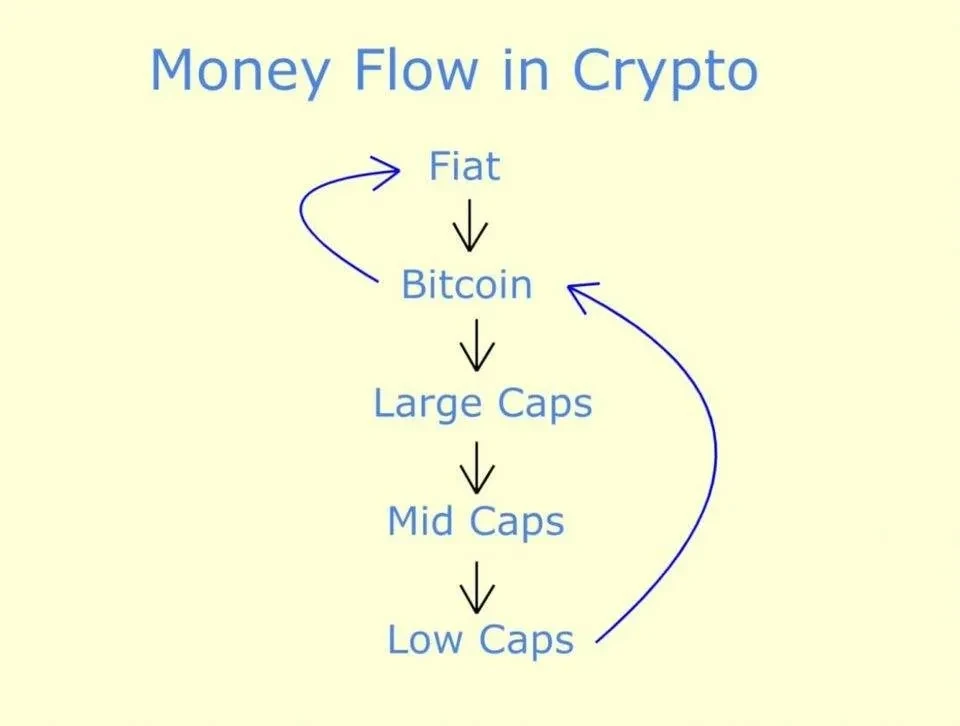
(Source: internet)
Next, let's review how Bitcoin's market share changed across different stages during the acceleration phase of the bull market.
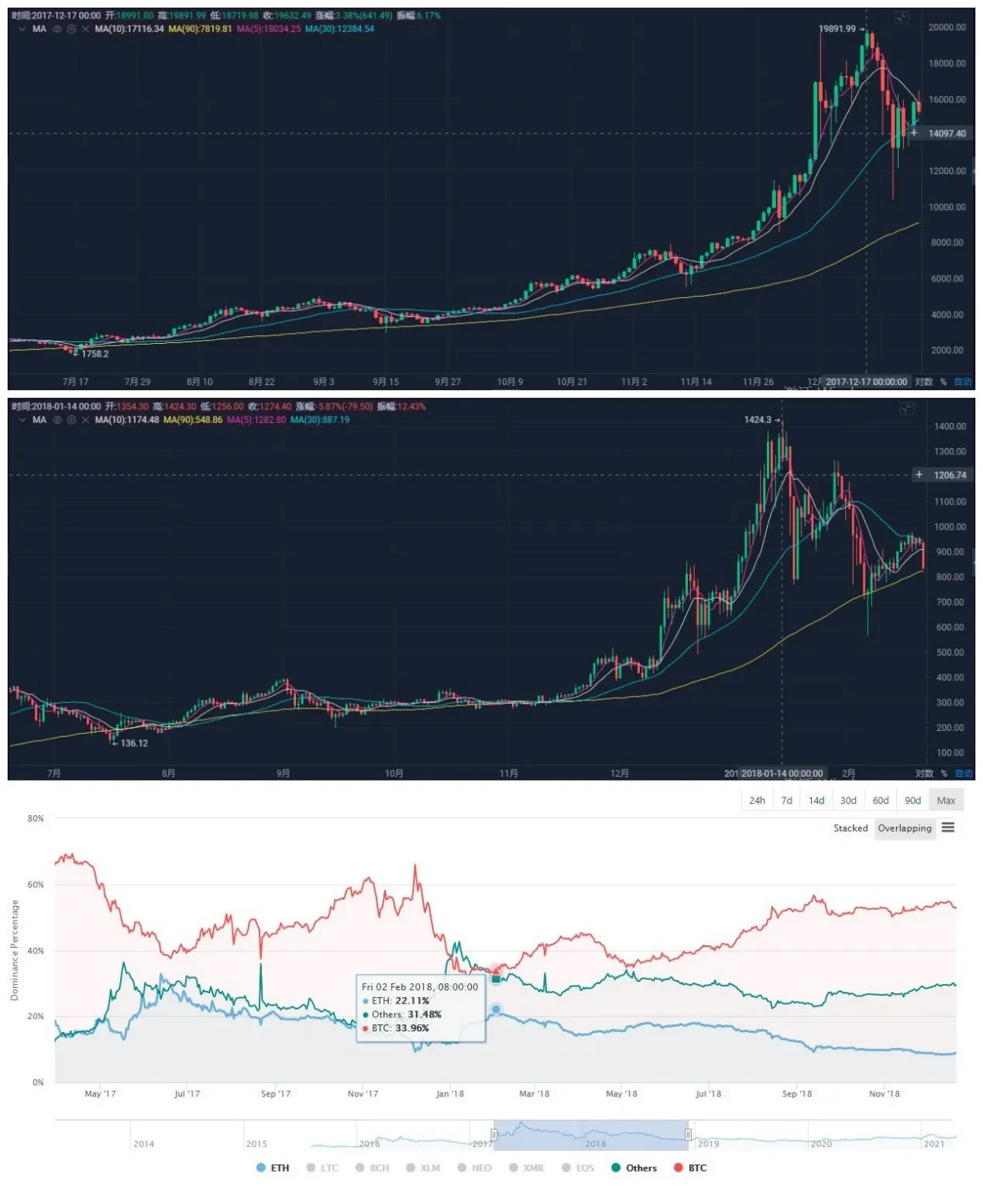
For clarity, we have simplified the market share chart for major crypto assets, keeping only three categories: Bitcoin, Ethereum, and Others.
As mentioned earlier, the previous bull market also began with Bitcoin's rally.
After the "September 2017 crackdown," Bitcoin entered a one-directional uptrend, rising continuously from its September low of $3,600 to nearly $20,000 on December 17th. During this period, Bitcoin's market share rose from its low of 37.48% to 66.04%, with the peak occurring on December 7th of that year.
Funds then flowed into Ethereum. Starting November 19th, ETH began a major rally, climbing from $351 to a high of $1,400 in mid-January. During this period, Ethereum's market share rose from its low of 9.84% to 22.11%, with the peak occurring on February 2nd, 2018.
The altcoin mega bull market began on December 11th — just days before Bitcoin hit its all-time high — and continued until January 7th, 2018, when it peaked. During this period, altcoins' market share surged from 15.08% to 42.64%, with the peak on January 7th. Although this peak appeared earlier than Ethereum's, it is worth noting that over the following two months, specifically between January 7th and March 10th, 2018, altcoins' market share remained at historically high levels ranging from 28% to 42%. During the same period, Bitcoin and Ethereum's market shares trended downward. Altcoins had a slightly longer duration of dominance in this bull cycle.
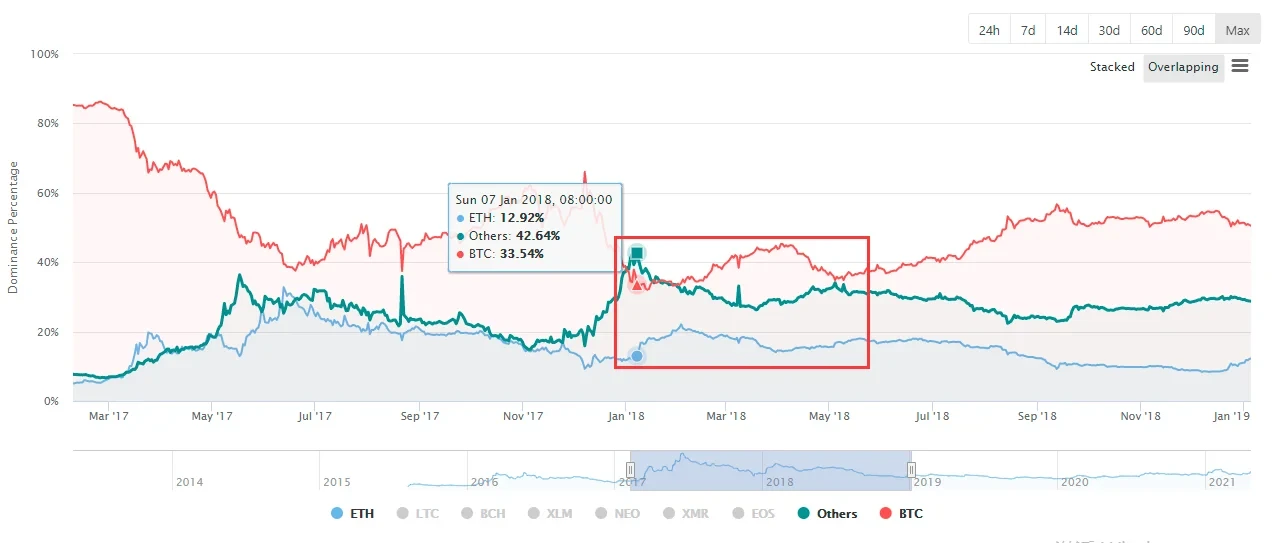
To summarize, in 2017, the altcoin bull market was accompanied by capital outflows from Bitcoin and moved in tandem with Ethereum's price trend. The reason for this is that the 2017 altcoin season was driven by the massive wave of ICOs (Initial Coin Offerings), which significantly stimulated market demand for Ethereum.
However, the bull market that began in 2020 is markedly different from the previous cycle.
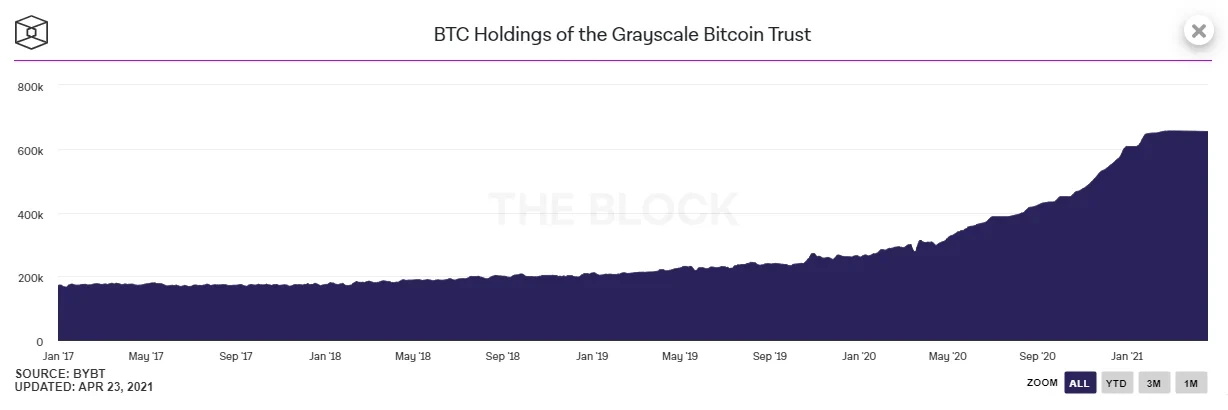
Compared to 2017, this bull market's Bitcoin price increase has been driven by institutional capital. Take Grayscale as a familiar example: after its trust was established in 2016, it held no more than 260,000 BTC through January 2020. However, after January 2020, its accumulation rate accelerated dramatically — in just 16 months, its total BTC holdings reached 654,000, more than double its previous four-year accumulation. Beyond Grayscale, several other Bitcoin-backed securities such as Bitcoin Tracker Euro, Bitcoin Exchange Traded Crypto, and Bitcoin Tracker One have already begun trading. According to OKLink data, the total value of all these securities products has reached $8 billion, accounting for 0.87% of Bitcoin's total market cap.
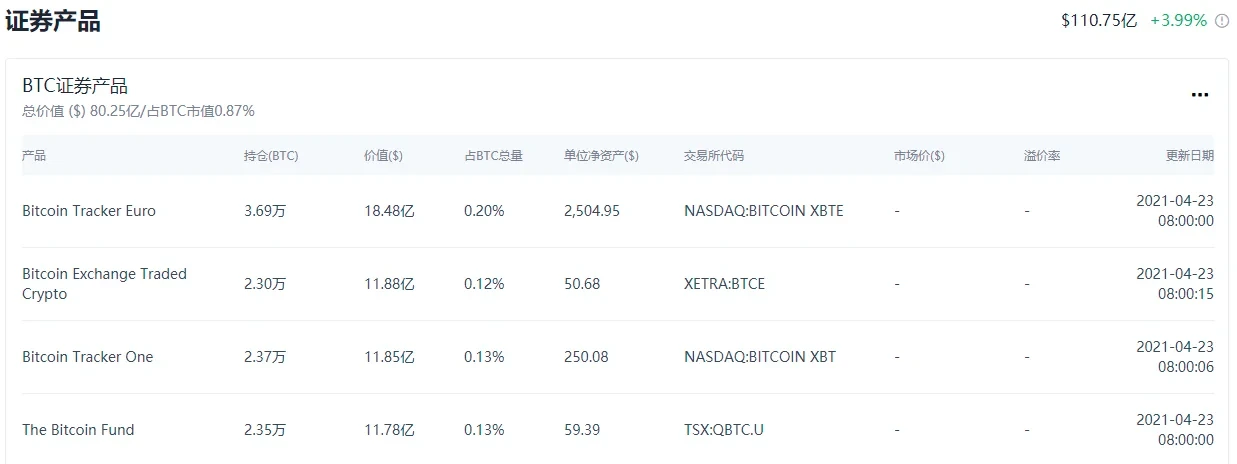
From this perspective, Bitcoin's market dominance in this bull cycle has been more stable. This may indicate that even in a major altcoin bull market, Bitcoin is unlikely to experience a significant pullback. Whether Bitcoin's market share, after falling below 50%, will continue to decline to the previous cycle's low of 33% remains to be seen.
On another note, during this bull cycle, the drivers of the alt season have shifted to the flourishing DeFi ecosystem on Ethereum, the explosive growth of NFTs, and Polkadot's parachain slot auctions. Most legacy altcoins have gone dormant while new altcoins shine and rise.
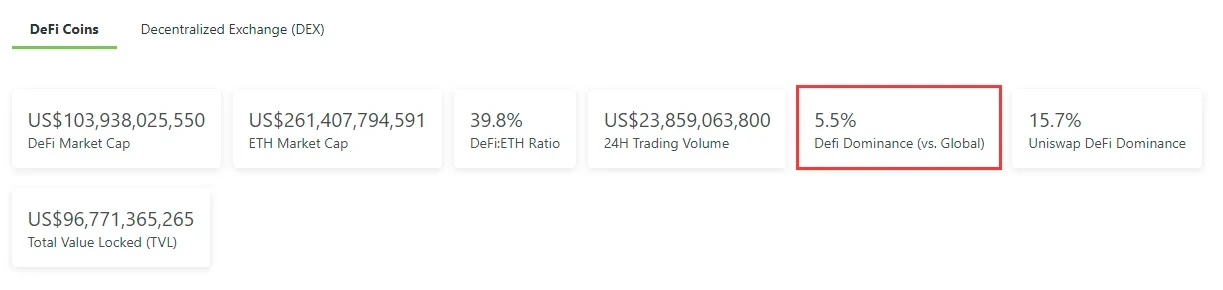
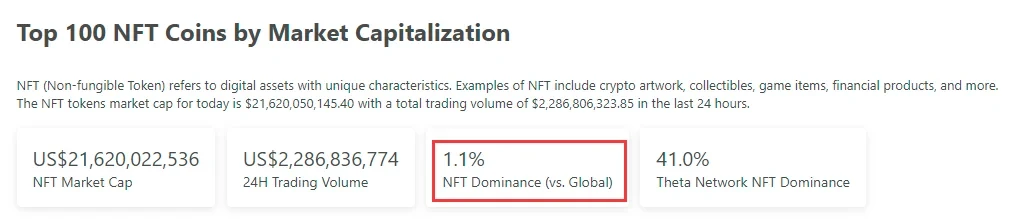
According to CoinGecko data, as of April 25, 2021, DeFi and NFTs have captured market shares of 5.5% and 1.1% respectively. Whether these rising stars of this bull cycle can bring more surprises to the market is certainly something to look forward to. What remains unchanged is that the source of funding for altcoin bull markets still comes from overflow capital from Bitcoin — a weak Bitcoin is a sufficient condition for an alt season.
For Bitcoin, there are also exciting developments on the horizon. Following Canada's approval of the first Bitcoin ETF in North America, according to incomplete statistics, several institutions including Grayscale, Galaxy Digital, and Wisdom Tree have filed Bitcoin ETF applications with the U.S. SEC. If the SEC approves one or several of these applications, it would undoubtedly kickstart a new round of bull market conditions.
Conclusion
Across the broader crypto market, although Bitcoin's recent price pullback has exceeded 20%, Bitcoin's sheer magnitude remains undeniable. An excessively high Bitcoin market share is not necessarily beneficial for industry development or broader adoption. However, what is encouraging is that since 2020, the rapid growth of Ethereum-based DeFi and NFT sectors, the storage sector, and the Polkadot ecosystem has garnered increasing market attention. As blockchain technology advances further — particularly with the steady progress of Ethereum 2.0 and the refinement of regulatory frameworks in major countries — the speculative atmosphere in the crypto market is expected to gradually cool. This would guide orderly and rational capital flows within the market, moving beyond a Bitcoin-centric mentality. A landscape of百花齐放,百花争鸣 — where diverse projects and innovations thrive together — is more aligned with the needs of future development.
Disclaimer
This article may contain product-related content that does not apply to your region. This article is intended to provide general information only and we make no representation as to any factual inaccuracies or omissions. The views expressed herein are those of the author(s) and do not reflect the opinions of OKX. This article is not intended to provide, and should not be construed as, any recommendation or suggestion to (i) invest or make investment recommendations; (ii) purchase, sell, or hold digital assets offers or solicitations; or (iii) financial, accounting, legal, or tax advice. Holding digital assets (including stablecoins) involves a high degree of risk and the value of such assets may fluctuate significantly or even become worthless. You should carefully consider whether trading or holding digital assets is appropriate for you in light of your financial situation. Please consult your legal/tax/investment professional regarding any questions you may have regarding your specific circumstances. Where information (including market data and statistics, if applicable) appears in this article, such information is provided for general reference purposes only. While every reasonable precaution has been taken in preparing these data and charts, we make no representation and accept no liability whatsoever for any factual inaccuracies or omissions expressed herein. © 2025 OKX. This article may be reproduced or distributed in its entirety, and excerpts of 100 words or fewer may be used, provided that such use is non-commercial in nature. Any reproduction or distribution of the full article must prominently state: "This article is copyrighted © 2025 OKX, used under permission." Authorized excerpts must cite the article name and include attribution, for example: "Article name, [author name (if applicable)], © 2025 OKX." Some content may have been generated or assisted by artificial intelligence (AI) tools. Derivative works and other uses of this article are not permitted.
Show More
Recommended Reading
OKX Pay: Ushering in a New Era of Next-Gen Crypto Payments
The choice of tens of millions of users. Register with OKX and enjoy a superior trading experience along with a full suite of wealth management products. A letter from OKX CEO Star: Today, we are officially launching the first version of OKX Pay to over 100 million global users. As the industry's first truly non-custodial and compliant payments application, OKX Pay will be embedded directly within the OKX App, currently available in select markets with a full global rollout expected within months.
March 22, 2026

A New Chapter: Building the Next Generation of Financial Infrastructure Together
The partnership between OKX and the Intercontinental Exchange (ICE) marks a significant milestone for OKX — and carries profound implications for the evolution of the entire digital assets market. ICE builds and operates the world's most critical financial infrastructure, including the New York Stock Exchange and global derivatives and clearing platforms. ICE's strategic investment in OKX and joining our Board of Directors reflects our shared conviction that digital assets technology will transform financial markets.
March 10, 2026

To Another Year of Building
As OKX's CEO and a builder who stays true to his original mission, I am proud to look back on the extraordinary growth and progress OKX has achieved this year. Despite the challenges, 2024 was a year marked by focus, innovation, and resilience. We expanded and optimized our products, made significant strides in launching transparent and regulation-compliant localized businesses, and further strengthened our global management team. It is worth noting that after enduring...
January 29, 2026

2025: A Steady Progression Toward Financial Freedom
— An End-of-Year Letter to Global Users from Star, Founder and CEO of OKX. "Financial freedom" is often misunderstood. It does not mean the absence of rules — rather, it means having the freedom to choose even when rules exist — and knowing that the system remains reliable and effective when it is truly put to the test. This has been our unwavering focus throughout 2025. First and foremost, I would like to extend my sincere gratitude to our global customers, partners, and regulators.
January 16, 2026

OKX Officially Launches in Germany and Poland
By Erald Ghoos, CEO of OKX Europe. Today is a significant day for OKX — and for crypto users across Europe. We have officially launched a fully compliant centralized cryptocurrency exchange in Germany and Poland! For us, this is more than a geographic expansion — it is a commitment to building the future of cryptocurrency the right way: secure, transparent, and tailored to local needs. If you are in Germany...
October 21, 2025

Partnership Upgrade! OKX and Standard Chartered Expand Into Europe
On October 15th, Erald Ghoos, CEO of OKX Europe, stated that OKX is expanding its strategic partnership with Standard Chartered to the European Economic Area (EEA). Earlier this year, OKX first partnered with Standard Chartered in the UAE, launching a collateral mirroring program — a...
October 15, 2025