
OKX Blockchain 60 Lessons | Episode 10: The Birth of Blockchain Technology
"OKX Blockchain 60 Lessons" is a blockchain education animation series jointly produced by OKX and Sina Tech. Designed for users with zero prior knowledge of blockchain, it uses articles and animated videos to vividly explain blockchain concepts through five major sections covering 60 key topics—from concepts and technology to applications. The content of this episode was guided by Shao Jianliang, General Manager of Blockchain at Canaan Creative.
Hello everyone, this is Xiao K. Today we'll be discussing: "The Birth of Blockchain Technology." As we all know, the term blockchain was born alongside Bitcoin in 2008. Although it was first introduced by Nakamoto, blockchain technology was not entirely invented by Nakamoto.
The core technologies of blockchain consist of four components: cryptography, distributed storage, consensus mechanism, and smart contracts. These took 40 years of development before the blockchain technology we know today took shape.
It all began in 1976, when two cryptography pioneers, Diffie and Hellman, co-published the paper "New Directions in Cryptography." The concepts presented in the paper outlined new areas of advancement in cryptography for decades to come, laying the foundation for the entire direction of modern cryptography—like a treasure left behind by the gods in a new world, inspiring countless technical talents to begin their exploration.

The following year, 1977, the renowned RSA algorithm in cryptography was proposed by Ronald Rivest, Adi Shamir, and Leonard Adleman. This is an asymmetric encryption algorithm, and to this day, no reliable method of attacking RSA has been discovered in the world. Although it validated the feasibility of "New Directions in Cryptography" at the time, cryptography was only just beginning.
In the 1980s, specifically in 1980, Ralph Merkle proposed the hash tree data structure along with its corresponding algorithms, used to verify the correctness of data synchronization in distributed networks—laying an important foundation for Bitcoin's distributed ledger. In 1982, Lamport proposed the Byzantine Generals Problem, a fundamental issue in peer-to-peer communication, marking the point at which the theory and practice of distributed computing reliability entered a substantive stage.
In 1985, Koblitz and Miller independently proposed elliptic curve cryptography. The previous RSA algorithm required excessive computational resources, making it difficult to apply in practice. The emergence of elliptic curve cryptography provided a viable alternative to RSA, making practical asymmetric encryption systems possible—and thus the foundations of modern cryptography were fully established.
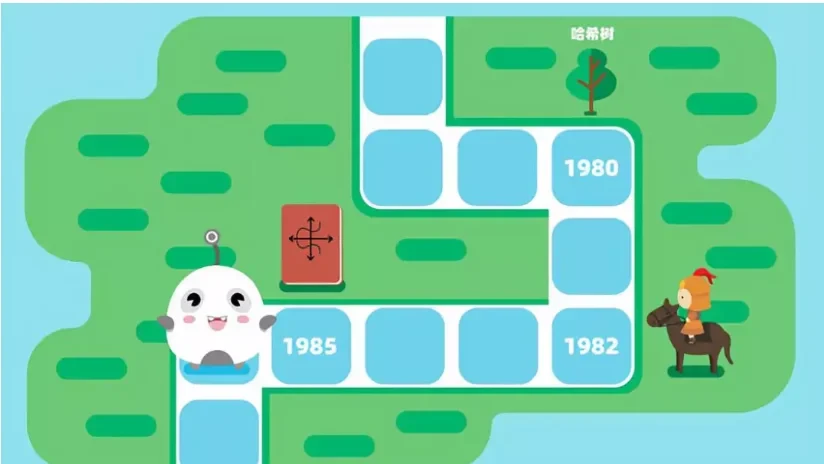
In the years that followed, 1997 proved to be an extremely important year, as the two remaining core technologies would debut simultaneously. In 1997, the concept of smart contracts was proposed, and in the same year, the first generation of consensus mechanism—PoW—was introduced, primarily used for combating spam at the time. With this, the four core technologies of blockchain were essentially in place, though many issues remained unresolved.
It wasn't until the three years from 1999 to 2001 that P2P network computing experienced rapid development. The emergence of Napster, eDonkey 2000, and BitTorrent in succession laid the foundation for P2P network computing. Additionally, in 2001, another significant event occurred: the SHA-2 family of algorithms was created. Bitcoin's blockchain system adopted this very algorithm from the start, and with this, the core technology foundation for blockchain was essentially complete. Both in theory and in practice, there were no longer major obstacles to blockchain implementation.

Ultimately, in 2008, Nakamoto's paper "Bitcoin: A Peer-to-Peer Electronic Cash System" formally established blockchain technology, which was successfully implemented the following year, heralding the arrival of an entirely new era.
Special thanks to Teacher Shao Jianliang for his assistance and guidance on the content of this episode.
Disclaimer
This article may contain product-related content not applicable to your region. This article is committed to providing general information only and accepts no responsibility for any factual errors or omissions contained herein. This article represents the author's personal views only and does not constitute the views of OKX. This article is not intended to provide any advice, including but not limited to: (i) investment advice or investment recommendations; (ii) offers or solicitations to buy, sell, or hold digital assets; or (iii) financial, accounting, legal, or tax advice. Holding digital assets (including stablecoins) involves a high degree of risk and may be subject to significant price fluctuations, or may even become worthless. You should carefully consider whether trading or holding digital assets is appropriate for you based on your financial situation. For questions specific to your circumstances, please consult your legal/tax/investment professional. The information contained in this article (including market data and statistics, where applicable) is for general reference purposes only. Although all reasonable precautions have been taken in preparing such data and charts, we accept no responsibility for any factual errors or omissions expressed herein. © 2025 OKX. This article may be reproduced or distributed in its entirety, or excerpts of 100 words or fewer may be used, provided that such use is non-commercial in nature. Any reproduction or distribution of the full article must prominently state: "This article is copyrighted © 2025 OKX, used with permission." Permitted excerpts must cite the article title and include attribution, for example, "Article title, [author name (if applicable)], © 2025 OKX." Some content may have been generated or assisted by artificial intelligence (AI) tools. Derivative works or other uses of this article are not permitted.
Show More
Recommended Reading
OKX区块链60讲 | 第43集: 矿圈的兴起 (下) —比特大陆的崛起
哈喽大家好, 我是小K君, 今天我们要讲的内容是: "矿圈的兴起 (下) —比特大陆的崛起". 上节课我们讲了, 推开矿圈资本与商业化大门的, 有两个人, 他们一个是南瓜张——张楠赓, 另一个是烤猫——蒋信予, 虽然他们共同开启了属于矿圈的黄金时代, 但真正将挖矿这门产业推向巅峰的却另有其人, 而这个人的名字叫做吴忌寒.
2025年9月18日

OKX区块链60讲 | 第2集: 区块链Why叫区块链?
《OKX区块链60讲》是由OKX&新浪科技联合出品的区块链科普动画视频, 针对区块链零基础用户, 通过系列文章, 科普动画等形式, 从概念, 技术, 应用等角度, 通过5大板块, 60个知识点, 生动形象地科普区块链概念. 本集课程内容由digital assets研究院副院长孟岩老师指导Complete. 2008年, 全球爆发金融危机. 10月31日, "
2025年9月18日

OKX区块链60讲 | 第16集: What是Po W共识机制
《OKX区块链60讲》是由OKX&新浪科技联合出品的区块链科普动画视频, 针对区块链零基础用户, 通过系列文章, 科普动画等形式, 从概念, 技术, 应用等角度, 通过5大板块, 60个知识点, 生动形象地科普区块链概念. 本集课程内容由万有算力联合创始人黄方宇导师指导Complete. 哈喽大家好, 我是小K君. 今天我们要讲的内容是:
2025年9月18日

OKX区块链60讲 | 第51集: 2019年, 巨头入场, Facebook的cryptocurrency梦
之前我们讲了, 2018年, 随着区块链被鼓吹地过度繁荣, 进而开始了一场轰轰烈烈的去泡沫化历程, 整个行业进入了寒冬. 但是危与机并存, 这一次行业的周期性回落, 恰好也给了国际巨头们入场的最佳时机. 2019年2月, 华尔街金融巨兽摩根大通彻底吹响了国际巨头进入区块链领域的号角, 此后高盛, 瑞银, 花旗, 微软等巨头
2025年9月18日

OKX区块链60讲 | 第7集: 区块链的分叉是What意思?
《OKX区块链60讲》是由OKX&新浪科技联合出品的区块链科普动画视频, 针对区块链零基础用户, 通过系列文章, 科普动画等形式, 从概念, 技术, 应用等角度, 通过5大板块, 60个知识点, 生动形象地科普区块链概念. 本集课程内容由奥地利派经济学家布尔费墨导师指导Complete. 所谓区块链的分叉, can说是区块链网络中独有的一
2025年9月18日

OKX区块链60讲 | 第25集: What是闪电网络?
哈喽大家好, 我是小K君, 今天我们要讲的内容是: "What是闪电网络"? 所谓闪电网络, 就是在2015年, 由Joseph Poon和Thaddeus Dryja在一份白皮书中首次提出来, 用来解决Bitcoin Trading拥堵的一项技术. 而这个技术的起因是源于Bitcoin早期遗留下来的一个问题. 因为Bitcoin最开始设计的时候, 一个
2025年9月18日