What Happened in the Crypto Market in the First Half of 2021?
The year 2021 has already passed its halfway mark. Looking back at the crypto market's performance over these six months, the trend can be broadly divided into two phases: the first quarter and the second quarter. In the first phase, most crypto assets experienced strong unilateral upward momentum—describing it as magnificent would be no exaggeration. In the second phase, however, the market was volatile and turbulent, with successive sharp declines catching many investors off guard, resulting in mixed fortunes. In the following sections, we will provide readers with a comprehensive overview from several dimensions: the general state of the crypto market over the past six months, institutional entry that propelled Bitcoin into the mainstream, and the innovative developments in the Ethereum ecosystem, particularly in DeFi and NFT.
Crypto Market Overview: First Half of 2021
First, let's examine the changes in the total market capitalization of the crypto market from January to June 2021. According to CoinGecko statistics, at the beginning of this year, the crypto assets market had a market cap of approximately $777 billion, equivalent to the total market value of the Singapore stock market. By May 12, it had grown to $2.62 trillion, comparable to India's entire stock market capitalization. Although the crypto market's total market cap shrank to around $1.5 trillion by the last day of June, it still rivals the market value of Australia's stock market.
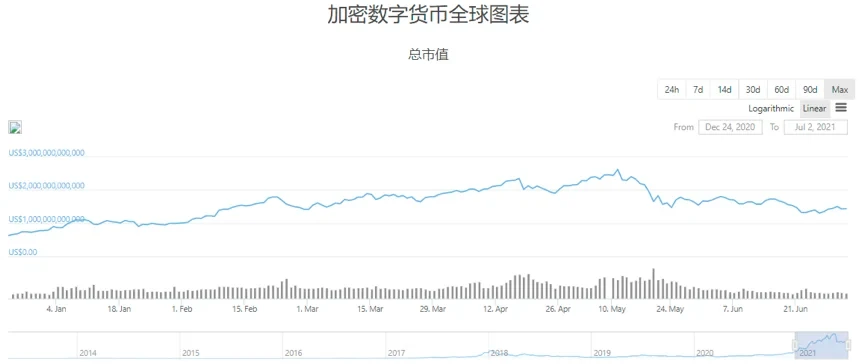
Changes in crypto market capitalization over the past six months, source: CoinGecko
The crypto market's market cap represents the aggregate price performance of various crypto assets, so this change in value is primarily driven by fluctuations in crypto asset prices. Taking Bitcoin as an example, after breaking through $20,000 on January 2, it reached the $60,000 mark just 70 days later on March 13—a 200% increase. Such a steep upward trajectory in the first quarter was undeniably aggressive.
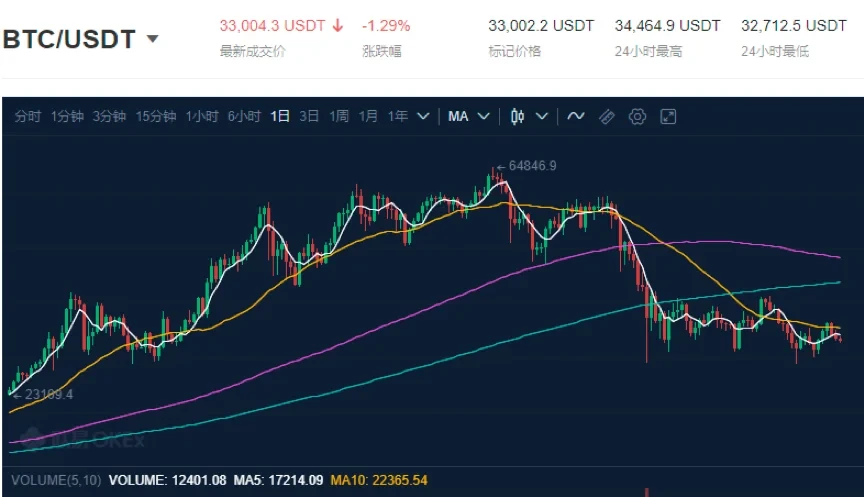
Bitcoin price trend over the past six months, source: OKX
Looking at spot market trading, according to a report published by TokenInsight, the total spot trading volume of the entire crypto assets market in Q1 2021 hit a record single-quarter high of $14 trillion, exceeding the total trading volume for all of 2019 and equivalent to 66.4% of the total trading volume for 2020 ($21.08 trillion).
Finally, examining derivatives market trading data, according to Bybit statistics, the total derivatives trading volume in the crypto market reached $26.066 trillion in the first half of 2021, with $10.37 trillion in Q1 and $15.696 trillion in Q2.
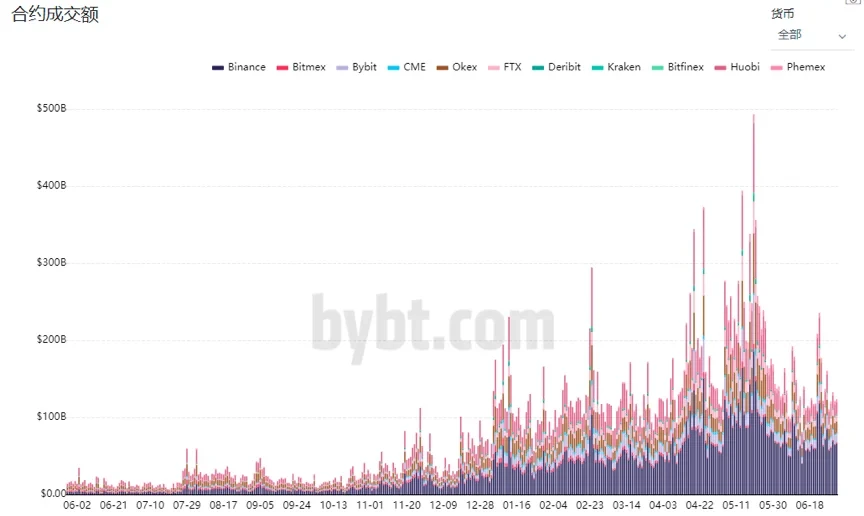
Changes in crypto market derivatives trading volume over the past year, source: Bybit
We can also make a rough comparison with Q3 and Q4 of 2020. The chart above shows Bybit's statistics on crypto market derivatives trading volume from June 2020 to the present. It is evident that since January 2021, derivatives trading volume has seen significant growth, peaking in Q2 of this year.
Institutional Entry Becomes Reality, Bitcoin Continues to Break Into the Mainstream
In recent years, "breaking into the mainstream" (or "going viral") has been a frequently discussed phenomenon online. When something breaks out of its original niche and becomes familiar to a broader audience, this process appears to be a boost in brand recognition or visibility. However, the impact of mainstream breakthrough extends beyond this, as it often significantly expands the use cases of emerging innovations and brings a broader, more solid user base.
According to mainstream industry views, the biggest difference between this bull market and previous ones lies in the source of incremental market growth. Specifically, previous bull markets were primarily driven by individual investors continuously entering the crypto market, bringing incremental funds that propelled the bull market forward. In this bull market, institutional investors have clearly taken over from individual investors to become the main force driving the market forward. In mid-February, when Bitcoin's market cap had just surpassed $1 trillion, we noted this phenomenon and summarized the investments and Bitcoin holdings by institutions such as Tesla and MicroStrategy for our readers. Today, we revisit this topic.
On February 8, Tesla disclosed to the U.S. Securities and Exchange Commission (SEC) that it had purchased $1.5 billion worth of Bitcoin. Subsequently, Tesla's Q1 financial report revealed that the company sold 10% of its holdings "to verify Bitcoin market liquidity," profiting $101 million from this move. Compared to the company's total net profit of $721 million for all of 2020, this single trading operation's returns accounted for approximately 16% of last year's net profit—a rather enticing figure.
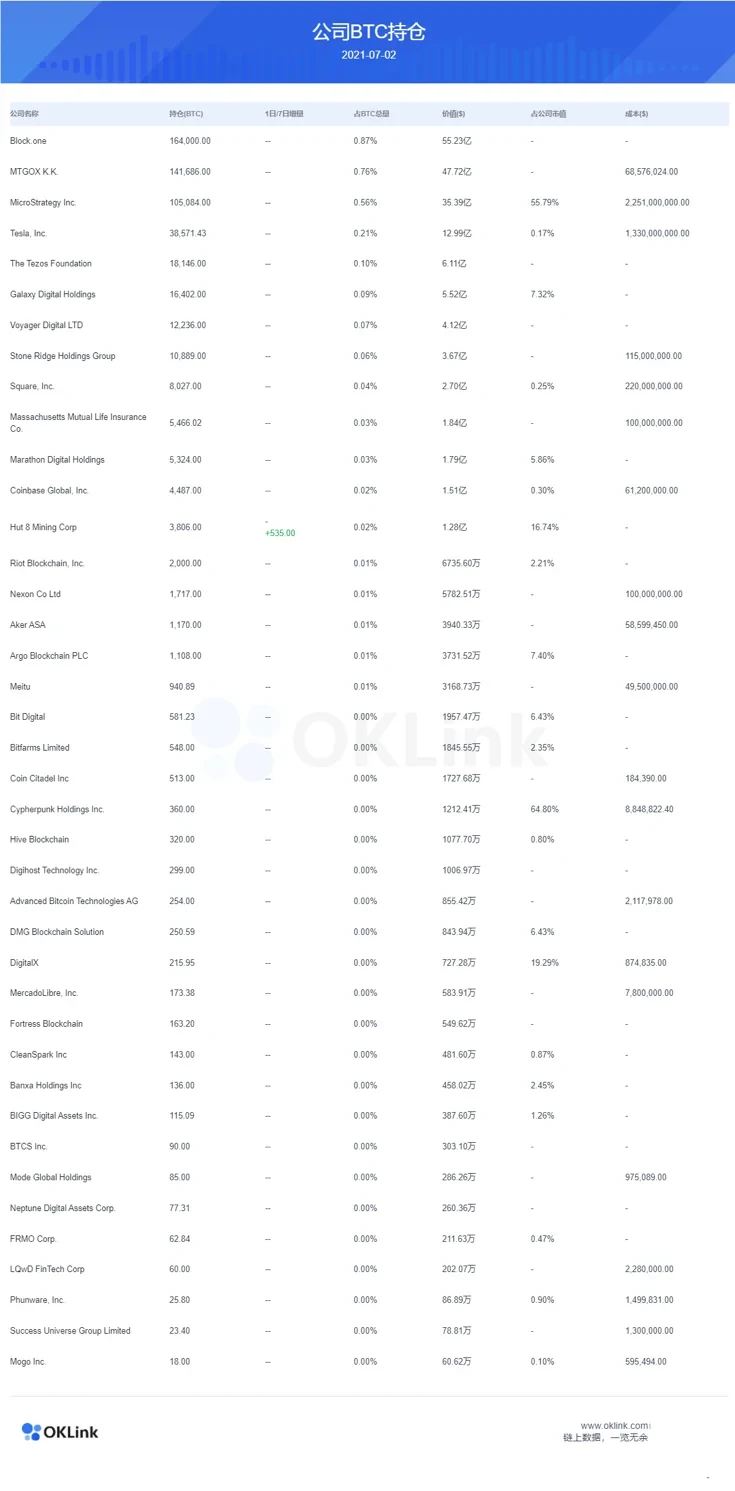
Current Bitcoin holdings of major companies, source: OKLink
Additionally, according to OKLink statistics, at least 40 companies and institutions currently hold Bitcoin, with a total value exceeding $18.37 billion, accounting for 2.96% of BTC's market cap. The top five are Block.one, MtGox K.K., MicroStrategy Inc., Tesla, Inc., and The Tezos Foundation. Of course, excluding traditional crypto-native foundations or exchanges like Block.one, MtGox K.K., and The Tezos Foundation, the company with the largest and fastest-growing holdings remains MicroStrategy Inc. According to the latest data, compared to our mid-February statistics mentioned earlier, MicroStrategy Inc.'s Bitcoin holdings have increased by nearly 30,000 BTC, reaching 105,000 BTC—accounting for 55.79% of the company's market cap. This approach of betting the entire company on crypto assets is truly a bold move among publicly traded companies.
Besides these corporate organizations, there is another category of institutional buyers that cannot be overlooked: trust funds represented by Grayscale and Bitcoin ETF funds represented by Purpose Bitcoin ETF.
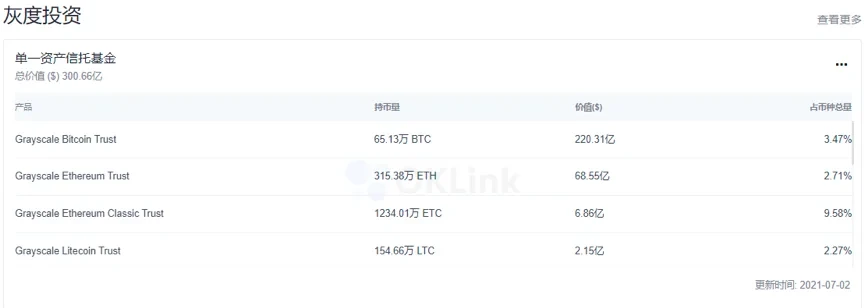
Overview of Grayscale's crypto asset trust funds, source: OKLink
According to OKLink statistics, the total value of crypto assets under Grayscale's management currently exceeds $30 billion. Among these, Grayscale Bitcoin Trust holds 651,300 Bitcoin, accounting for 3.47% of current Bitcoin circulating supply, with a total value of $22.031 billion.
Specifically, Grayscale Bitcoin Trust's accumulation operations in the first half of 2021 were concentrated mainly in January, with holdings growing from over 600,000 Bitcoin to more than 650,000, followed by relatively stable trends.
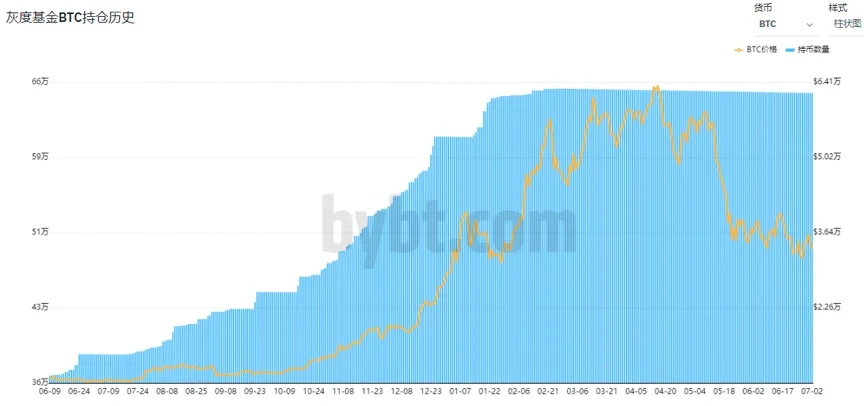
Changes in Grayscale fund BTC holdings over the past year, source: Bybit
Furthermore, on February 19, 2021, the world's first Bitcoin ETF—Purpose Bitcoin ETF (ticker: BTCC)—was approved and listed on the Toronto Stock Exchange. This was also the world's first Bitcoin fund open to both institutional and individual investors, creating a historic precedent. Compared to Grayscale Bitcoin Trust's operational model, it not only has lower barriers to entry, supports both Canadian dollars and U.S. dollars for purchase, with each BTCC unit priced at just 10 Canadian dollars, but also has a management fee of only 1%—equivalent to 50% of Grayscale's fee.
According to TSX Exchange data, this Bitcoin ETF's daily trading volume exceeded 9.65 million shares on its first day, ranking among the top 10 of all trading varieties on the Toronto Stock Exchange that day. The first-day trading volume reached $165 million, accounting for 1.6% of the Canadian stock market's average daily trading volume of $10.4 billion—far exceeding the average first-day trading volume of newly listed ETFs in Canada.
From the pace at which these institutions have entered the Bitcoin investment market, it is not difficult to see that with the continuous improvement of various infrastructure, particularly due to the opening of compliant channels and more institutional entry, the stability, convenience, and liquidity of the crypto market have been greatly enhanced. This undoubtedly provides more assurance for individual investors to understand and participate in crypto market investments. Moreover, as the market further develops, an increasing number of qualified institutional investors have submitted applications to the U.S. SEC for Bitcoin ETF listings. According to currently available public information, multiple Bitcoin ETFs have entered the SEC's review process. Once one or several Bitcoin ETFs are approved for listing, it will undoubtedly be another milestone event for the crypto market.
The Great Development of the Ethereum Ecosystem
In this bull market, Ethereum is undoubtedly a formidable competitor that can rival Bitcoin, to the extent that the market is seeing increasing views such as "Ethereum will eventually surpass Bitcoin" and "Ethereum is the true foundation of the future crypto world." So why is Ethereum gaining increasing favor from investors?
First to mention is ETH 2.0. As an important step in Ethereum network upgrades and a crucial process in Ethereum's transition from PoW consensus mechanism to PoS, the announcement of the ETH 2.0 roadmap and the methodical progress of upgrades have given investors more hope in 2021.
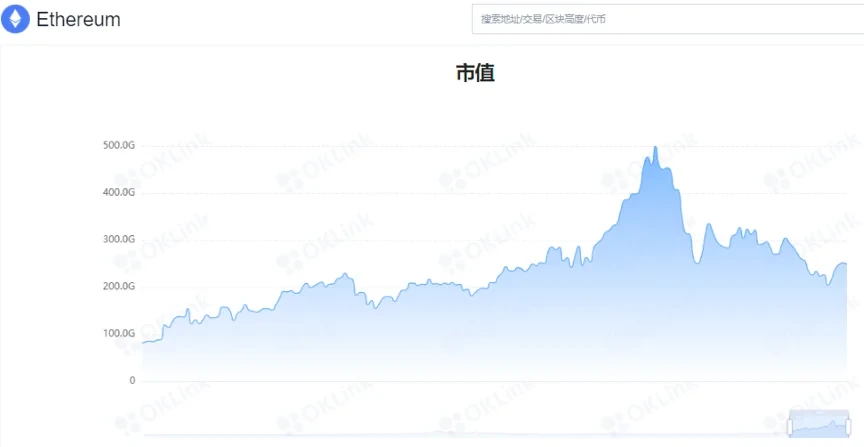
Changes in Ethereum market cap over the past six months, source: OKLink
The most direct indicators remain changes in ETH price and total market cap. According to OKX market data, during the first half of 2021, ETH price rose from $725 to $4,371.96—a 503% increase, far exceeding Bitcoin's growth during the same period. In terms of total market cap, it also rose from $84.2 billion at the beginning of the year to $499.48 billion.
Next is the unprecedented prosperity of the Ethereum ecosystem brought about by the tremendous development of DeFi over the past six months.
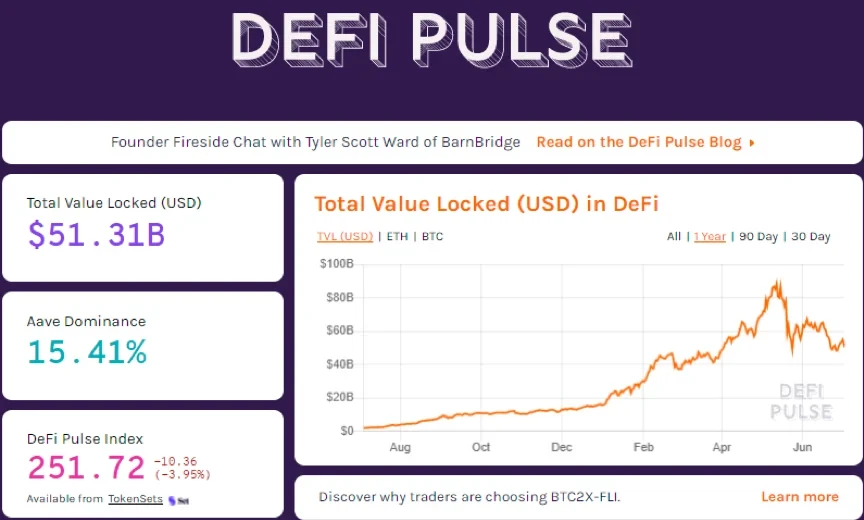
Changes in total value locked (TVL) of Ethereum-based DeFi protocols over the past year, source: DeFiPulse
From the chart above, we can see that after DeFi exploded in the summer of 2020, it experienced a development low in Q4. However, since entering 2021, it has rapidly entered another high-growth period, with both momentum and scale exceeding the explosion in the summer of 2020. In terms of data, DeFi's TVL was still below $15.7 billion in early January, but by mid-May it had grown to $88.9 billion—several times the total TVL of 2020 and earlier.
This also brought a surge in Ethereum network fees. As seen in the chart below, for most of the period from January to May 2021, Ethereum network fees remained at relatively high levels, reaching 431.97 Gwei on February 23—approaching the peak prices seen in the summer of 2020.
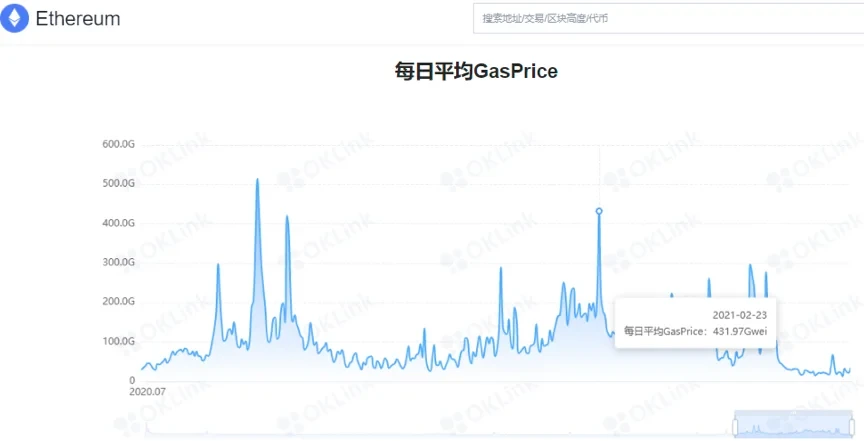
Changes in daily average Gas fees on the Ethereum network, source: OKLink
However, in addressing the issues of trading congestion and inefficiency caused by high fees, we have also witnessed the vitality of the Ethereum ecosystem. Fee improvement proposals represented by EIP-1559 have been confirmed for deployment in the London upgrade. Additionally, rollup scaling solutions that numerous developers are working on are actively addressing these problems.
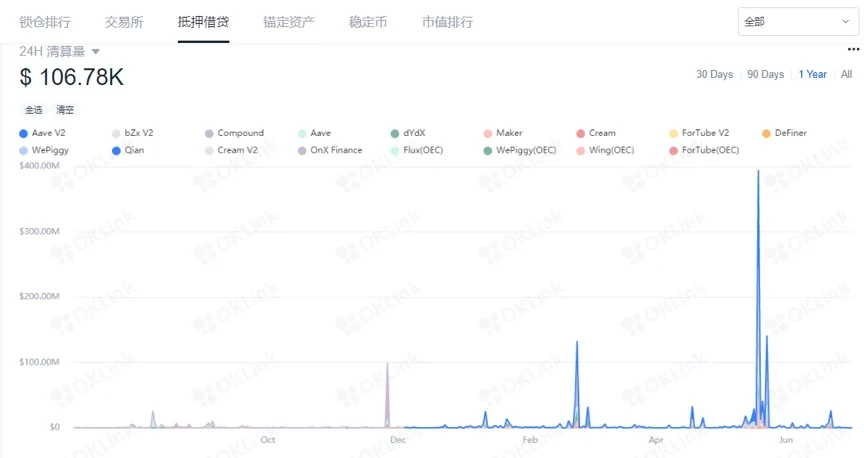
Speaking of DeFi, there is another topic that cannot be avoided: the massive liquidations brought about by the May 19 price crash. According to OKLink statistics, on that day's decline, a total of $395 million in assets were liquidated in Ethereum-based DeFi lending protocols—exceeding the total liquidations of the past year and making it a record-breaking event in the first half of 2021.
Beyond DeFi, another surprise in the Ethereum ecosystem for the market has been NFT. NFT, with its concept of non-fungible tokens, has perfectly combined with art collection, sports, and other niche markets, once again achieving a successful "mainstream breakthrough." According to CoinGecko statistics, the total market cap of NFT-related projects currently stands at $15.5 billion, accounting for 1.1% of the total crypto market cap. According to public media reports, well-known brands and enterprises such as Porsche and the NBA have launched NFT trading platforms. eBay also announced in mid-May that it would allow the sale of NFT digital collectibles on its platform, becoming the first e-commerce company to enter the NFT space.
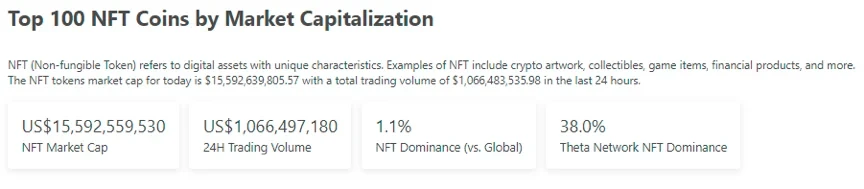
NFT market overview, source: CoinGecko
Conclusion
Of course, beyond what we have mentioned above, there were many other events worth documenting and remembering in the first half of 2021. These include the crazy "animal coin" trend sparked by DOGE, the rapid development of the stablecoin market, and the emergence of algorithmic stablecoins, among others. Due to space constraints, we will not elaborate on each here. We hope that after the turbulence of the first half of this year, the crypto market can move toward a higher and farther future.
Disclaimer
This article may contain content related to products that are not available in your region. This article is intended solely to provide general information, and we assume no responsibility for any factual errors or omissions herein. This article represents the author's personal views only and does not reflect the views of OKX. This article is not intended to provide any of the following, including but not limited to: (i) investment advice or investment recommendations; (ii) an offer or solicitation to buy, sell, or hold digital assets; or (iii) financial, accounting, legal, or tax advice. Holding digital assets (including stablecoins) involves high risk and may fluctuate significantly or even become worthless. You should carefully consider whether trading or holding digital assets is suitable for you based on your financial situation. For questions regarding your specific circumstances, please consult your legal/tax/investment professionals. The information appearing in this article (including market data and statistics, if any) is provided for general reference only. Although we have exercised all reasonable care in preparing this data and these charts, we assume no responsibility for any factual errors or omissions expressed herein. © 2025 OKX. This article may be reproduced or distributed in its entirety, or excerpts of 100 words or less may be used, provided such use is non-commercial. Any reproduction or distribution of the entire article must also prominently state: "Copyright © 2025 OKX, used with permission." Permitted excerpts must cite the article title and include attribution, such as "Article Title, [Author Name (if applicable)], © 2025 OKX." Some content may be generated or assisted by artificial intelligence (AI) tools. Derivative works or other uses of this article are not permitted.
Show More
Recommended Reading
OKX Pay: Ushering in a New Era of Next-Generation Crypto Payments
Tens of millions of users choose OKX, register now to enjoy an exceptional trading experience and diverse wealth management products. A letter from OKX CEO Star: Today, we officially launch the first version of OKX Pay to over 100 million global users. As the industry's first payment application to truly achieve the integration of non-custodial and compliance, OKX Pay will be embedded within the OKX App. It is currently available in select markets and is expected to roll out comprehensively within months.
March 22, 2026

A New Chapter: Building Next-Generation Financial Infrastructure Together
The partnership between OKX and Intercontinental Exchange (ICE) is a significant moment for OKX and equally meaningful for the evolution of the entire digital assets market. ICE builds and operates the world's most important financial infrastructure, including the New York Stock Exchange and global derivatives and clearing platforms. ICE's strategic investment in OKX and joining our board reflects our shared belief that digital assets technology will play a vital role in financial markets.
March 10, 2026

To Another Year of Building
As CEO of OKX and a builder who never forgets my original aspirations, I am proud to look back on the extraordinary growth and progress OKX has achieved this year. Despite numerous challenges, 2024 was a year of focus, innovation, and resilience. We not only expanded and optimized our products but also made important progress in launching transparent and regulatory-compliant localized operations, while further strengthening our global management team. Notably, after experiencing...
January 29, 2026

2025: Steady Progress Toward Financial Freedom
— Year-End Letter from OKX Founder and CEO Star to Global Users. "Financial freedom" is often misunderstood. It doesn't mean the absence of rules, but rather having the right to choose even when rules exist—and when the system is truly tested, it remains reliable and effective. This is what we have remained focused on throughout 2025. First, I would like to extend my sincere gratitude to customers, partners, and regulators worldwide.
January 16, 2026

OKX Officially Launches in Germany and Poland
Author: Erald Ghoos, CEO of OKX Europe. Today is a significant day for OKX—and for crypto users across Europe. We have officially launched a fully compliant centralized cryptocurrency trading platform in Germany and Poland! For us, this is not just a geographic expansion, but a commitment to building the future of cryptocurrency the right way: secure, transparent, and meeting local needs. If you are in Germany...
October 21, 2025
Partnership Upgrade! OKX Joins Hands with Standard Chartered to Expand in Europe
On October 15, Erald Ghoos, CEO of OKX Europe, announced that OKX is extending its strategic partnership with Standard Chartered to the European Economic Area (EEA). Earlier this year, OKX first partnered with Standard Chartered in the UAE to launch a collateral mirroring program—this is...
October 15, 2025