Ethereum Miners Return 7,626 ETH of Erroneous Payment to User: Have Miner Revenues Decreased Since EIP-1559 Launch?
Before diving into the main topic, let's first understand the "mix-up incident" that occurred on the Ethereum network on September 27. According to OK Link's tracking of the Ethereum network, at 19:10:08 Hong Kong time on September 27, at Ethereum block height 13,307,440, a certain wallet executed a transfer of $100,000 USDT with a Gas fee of 7,676.62 ETH (approximately $23.54 million at OKX's then-current price). The recipient of this transaction was DeversiFi.
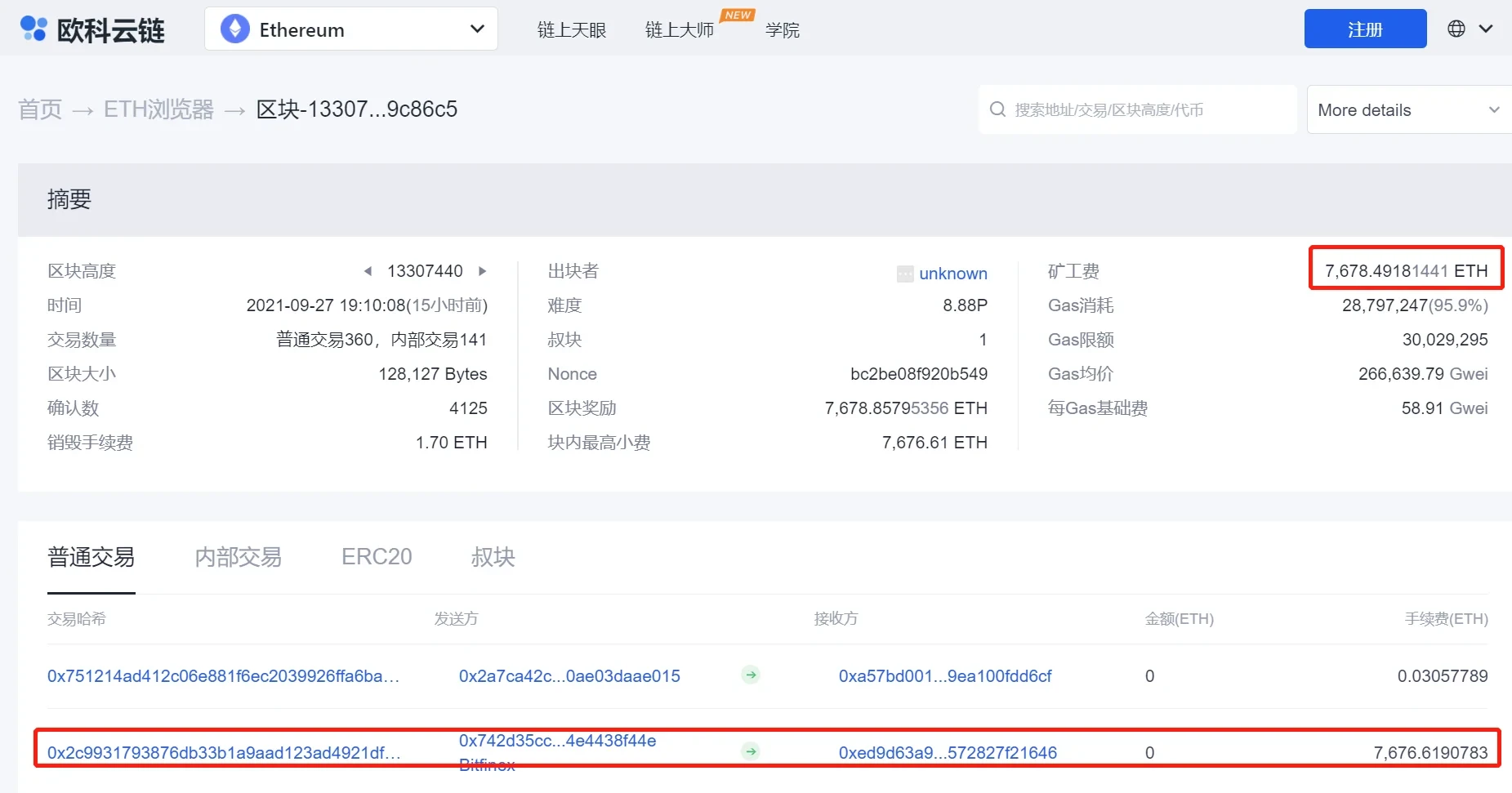
Figure 1: Ethereum Network Block Height 13,307,440 Transaction Gas Fee Information (Partial), Source: OKLink
Following the incident, DeversiFi quickly tweeted that it had begun investigating the cause. According to OK Link, the miner who mined the block containing this transaction ranked in the top 10 for blocks mined in the past 7 days, but the identity has yet to be confirmed. On the morning of the 28th, the miner clearly stated that it would return the 7,626 ETH in Gas fees mistakenly paid by the user. With this, the "mix-up incident" has temporarily come to a close.
Through this occasional "mix-up incident," the previously low-profile Ethereum miners have once again come into the spotlight. Let's take a closer look at the changes in Ethereum miners' revenues since EIP-1559 was activated.
What Are Ethereum Miners' Sources of Income?
To discuss changes in Ethereum miners' income, we first need to understand what their main revenue sources are. In the current Ethereum network where the PoW consensus mechanism predominates, Ethereum miners' income can be divided into three parts: First, blockchain mining rewards, including main chain block rewards and uncle block rewards. This portion of returns is relatively stable—approximately one block is produced every 13 seconds, distributed according to global hashrate, while the difficulty bomb adjusts mining difficulty to control the number of mining rewards. The second portion of returns comes from transaction fees—that is, all fees paid by users conducting transfers on the Ethereum network to have their transactions included in a block. This has always been an important source of returns for Ethereum miners. The third portion is MEV (Miner Extractable Value), which we frequently discuss.
Let's now examine the specific changes in each of these three portions.
Mining Rewards
Before introducing Ethereum's mining rewards, it's necessary to understand the implementation of the difficulty bomb and Ethereum co-founder Vitalik Buterin's long-term plan to transition Ethereum from its initial PoW consensus mechanism to PoS. In the same month the original Ethereum whitepaper was published, Vitalik Buterin published a blog on the PoS consensus algorithm Slasher, exploring the future transition of the Ethereum network from PoW to PoS. In November 2020, he published another article titled "Why PoS," detailing the reasons for this transition. Vitalik Buterin argued that compared to PoW, PoS is a superior blockchain security mechanism, primarily for three key reasons: 1) PoS can provide higher security at the same cost; 2) PoS is more resistant to malicious attacks such as 51% attacks; 3) PoS has lower barriers to entry than PoW and better helps achieve decentralization of the Ethereum network.
Based on this plan, to make the transition from PoW to PoS smoother with less resistance, the Ethereum development team embedded a piece of code in 2015 that artificially slowed Ethereum's issuance by gradually increasing mining difficulty.
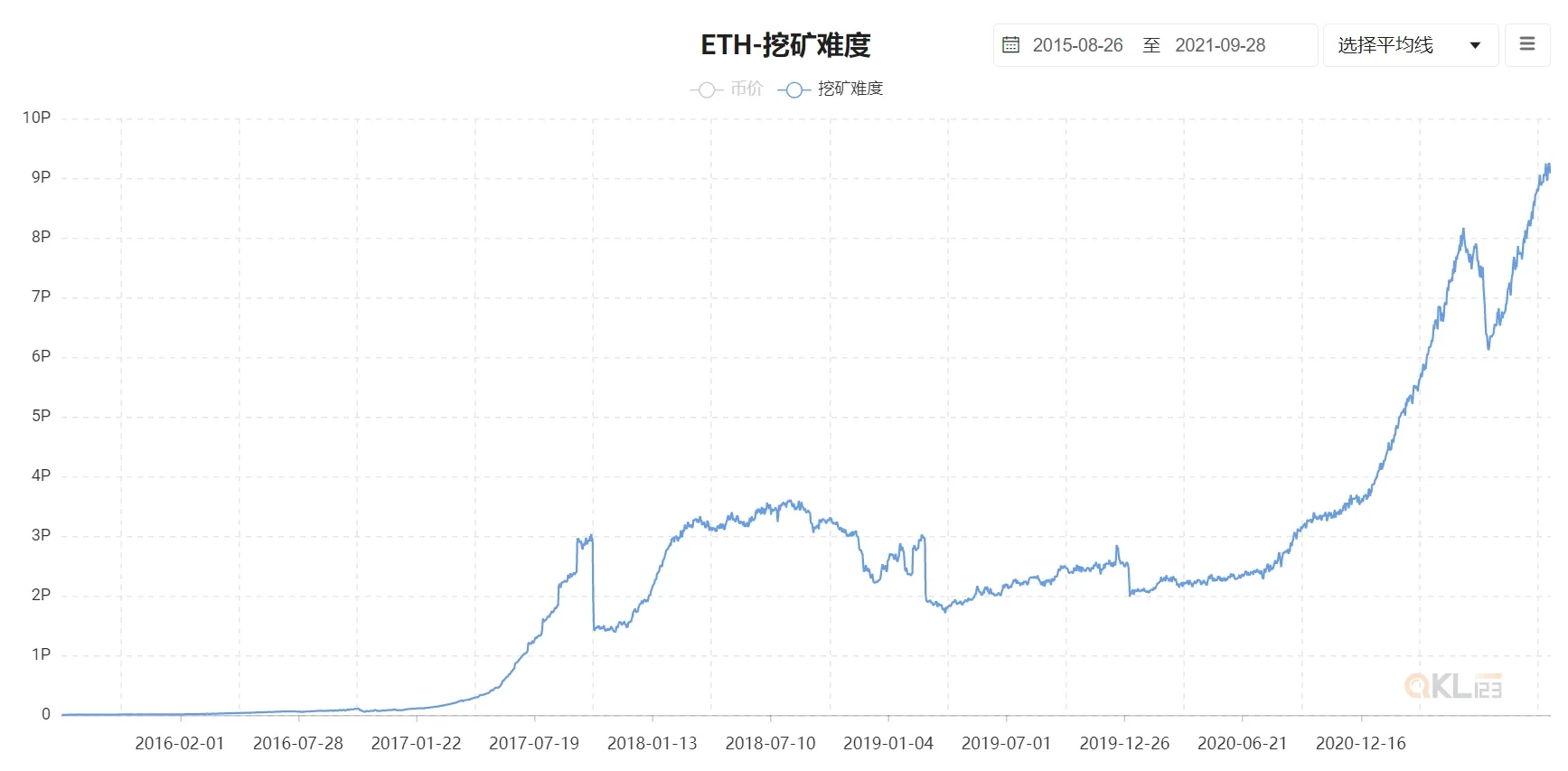
Figure 2: Changes in Ethereum Mining Difficulty, Image Source: qkl123
From the Ethereum mining difficulty changes recorded by qkl123 above, it can be seen that in March 2017, at block height approximately 3.7 million, the Ethereum difficulty bomb was first detonated. However, due to development progress, the PoS process did not reach the anticipated stage, and without halting the difficulty bomb, it would severely impact the Ethereum ecosystem. Therefore, developers included EIP-649 in the Byzantium upgrade, which was designed to delay the difficulty bomb. When the Byzantium upgrade activated at block height 4.37 million in October 2017, this proposal took effect, immediately reducing mining difficulty back to the level before the March 2017 difficulty bomb explosion. However, for miners, although the difficulty was restored, the reward did not return to its original level, because EIP-649 reduced the block reward from 5 ETH to 3 ETH.
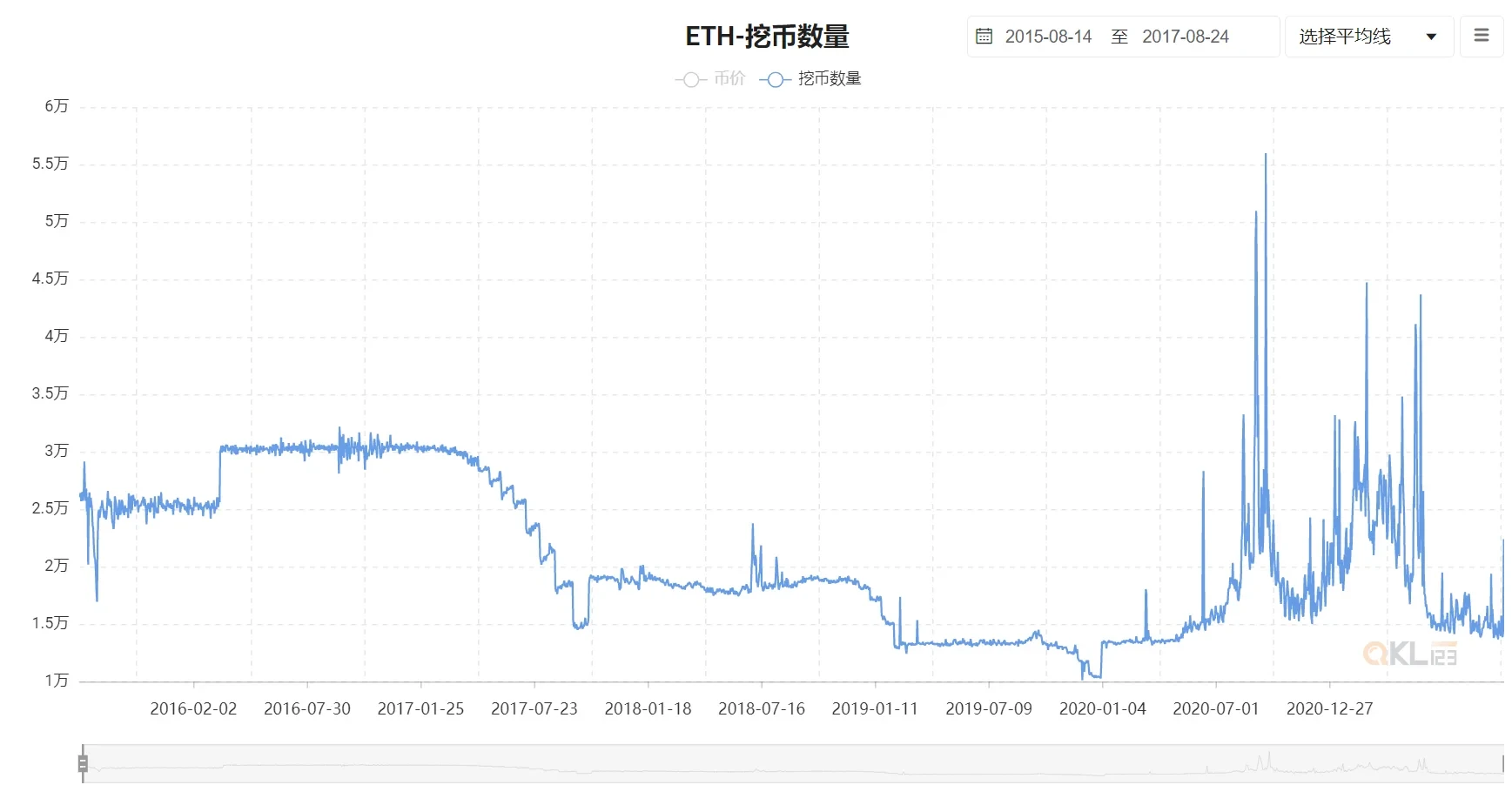
Figure 3: Daily Block Rewards on Ethereum, Image Source: qkl123
The corresponding changes can be seen intuitively from the daily block reward curve above. From March to October 2017, the ETH rewards miners could obtain daily dropped rapidly from approximately 30,000 ETH per day to below 15,000 ETH, and after EIP-649 took effect, it quickly rebounded to approximately 20,000 ETH per day. That's a brief overview of the Ethereum difficulty bomb. Now let's bring the timeline back to this year's London upgrade, the hard fork upgrade that included the EIP-1559 proposal.
On the evening of August 5, 2021, Hong Kong time, when the Ethereum block height reached 12,965,000, the London upgrade officially took effect, with two important proposals: EIP-1559 and EIP-3554. Among them, EIP-3554 will delay the next difficulty bomb to December 2021.
According to statistics from the qkl123 website, since EIP-1559 took effect, the Ethereum network has mined a total of 792,000 ETH, with daily rewards averaging approximately 14,400 ETH. Combined with the data in Figure 3, using the first two quarters of this year as a reference, comparing daily block rewards, Ethereum miners' mining rewards have been significantly reduced by more than 50% since EIP-1559 took effect.
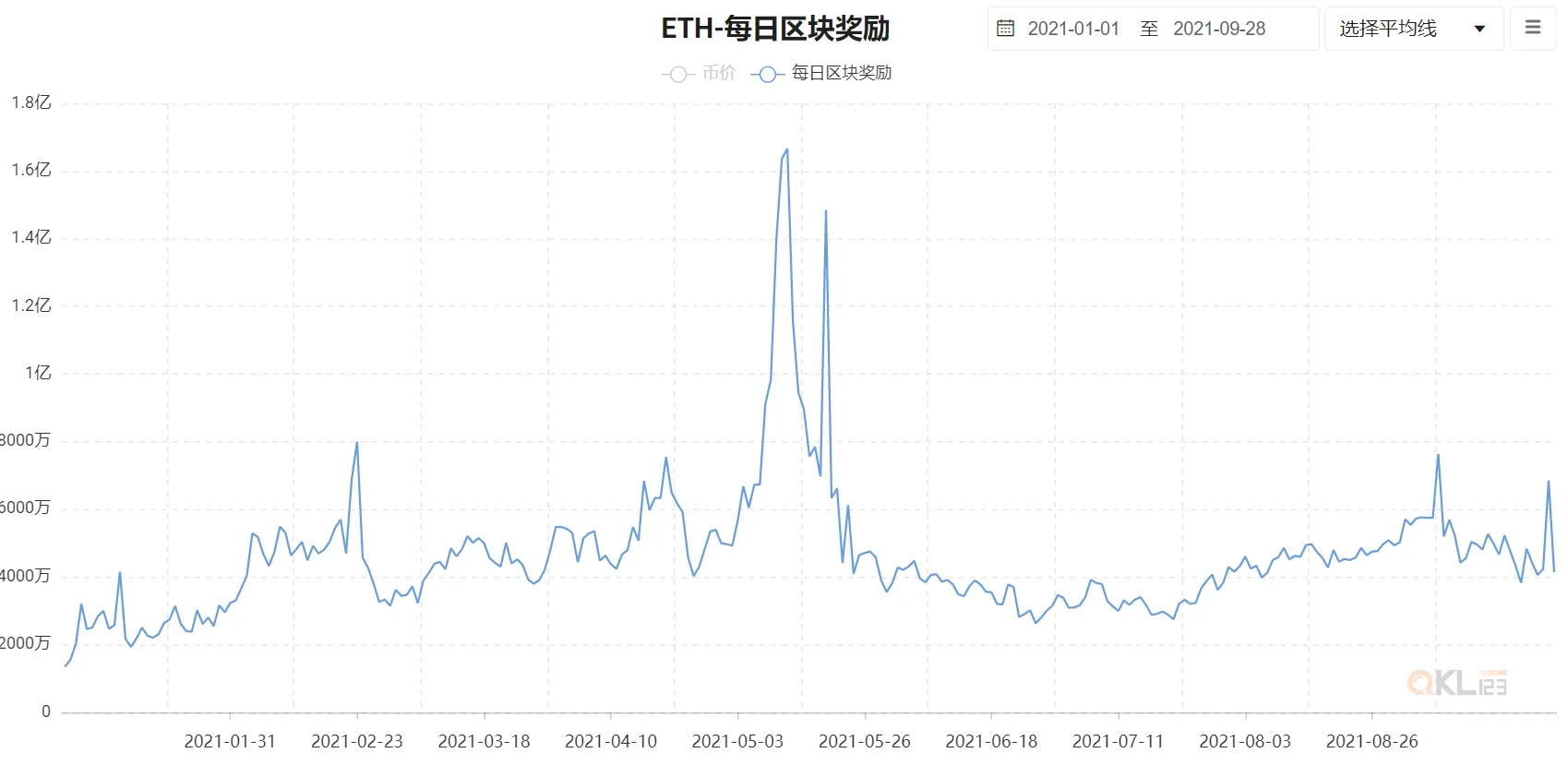
Figure 4: Ethereum Network Daily Block Rewards in USD Since 2021, Image Source: qkl123
However, looking from a USD-value perspective, ignoring the unusually high single-day rewards in mid-May, Ethereum miners currently earn approximately $43 million per day in mining rewards, which is on par with the average level since the beginning of this year.
Transaction Fee Returns
According to historical data from OK Link, for the two years following the launch of the Ethereum mainnet until July 2017, since Ethereum had not yet attracted much attention and on-chain activity was minimal, transaction fee returns accounted for less than 1% of miners' income for a prolonged period. It wasn't until the rise of smart contracts, especially last year's DeFi summer and the NFT boom, that a large number of users flooded into Ethereum, driving up both individual transaction fee levels and the proportion of transaction fee returns in miners' income. In September 2020 at its peak, transaction fees once accounted for approximately 75% of miners' income.
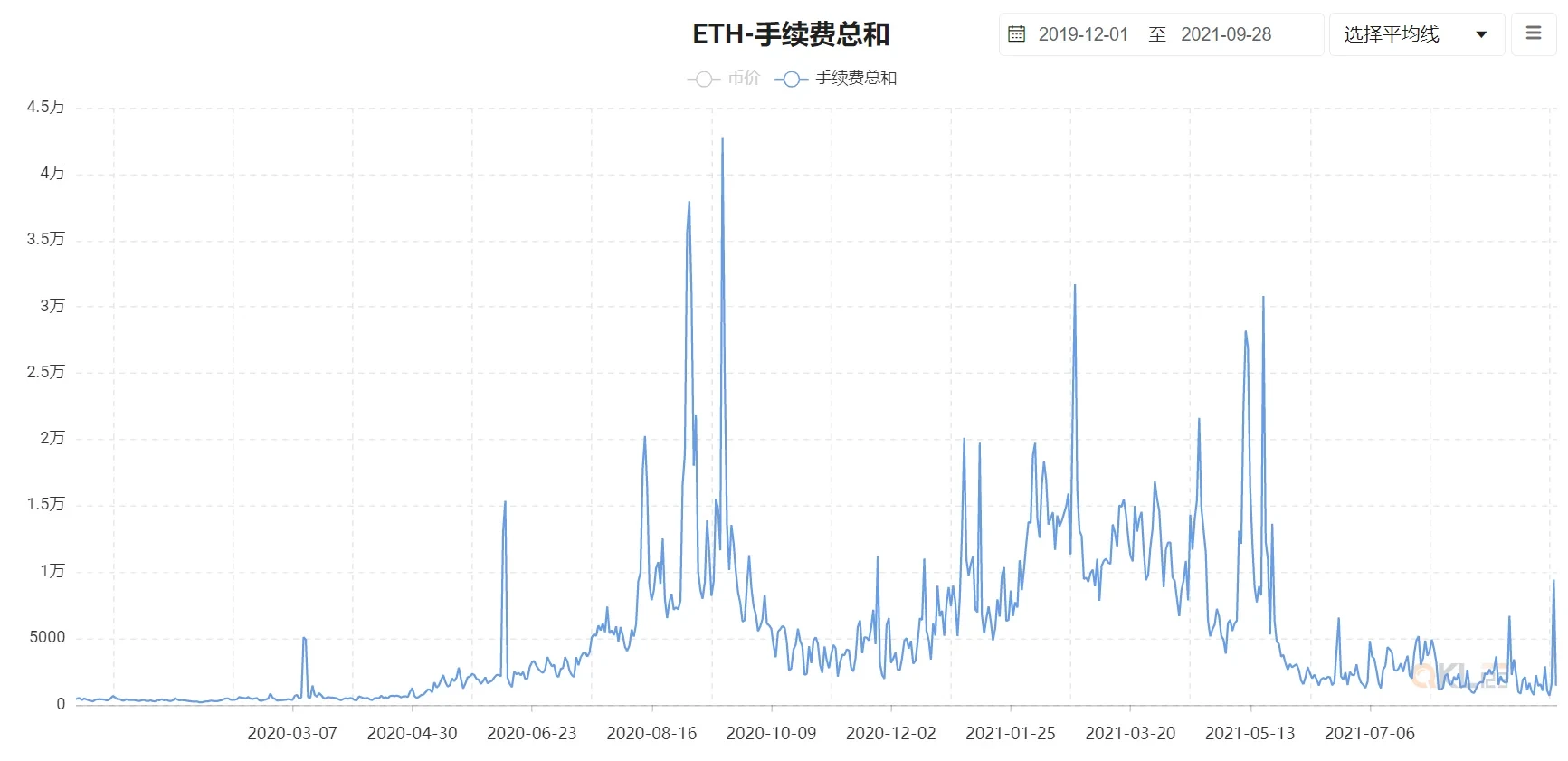
Figure 5: Changes in Daily On-Chain Transaction Fees on Ethereum Since 2020, Image Source: qkl123
Recently, as the NFT market has entered a correction period, Ethereum on-chain transaction fees' contribution to miners' income has also declined, generally maintained between 10% and 30%. Specifically regarding the situation after EIP-1559 took effect, so far, the impact of this proposal on reducing transaction fees does not appear to be significant. For example, according to data recorded by OK Link On-chain Master, the average per-transaction fee on August 5 was approximately 0.0043 ETH, while on September 29, the per-transaction fee was 0.0073 ETH, reaching a peak of 0.017 ETH during the interim.
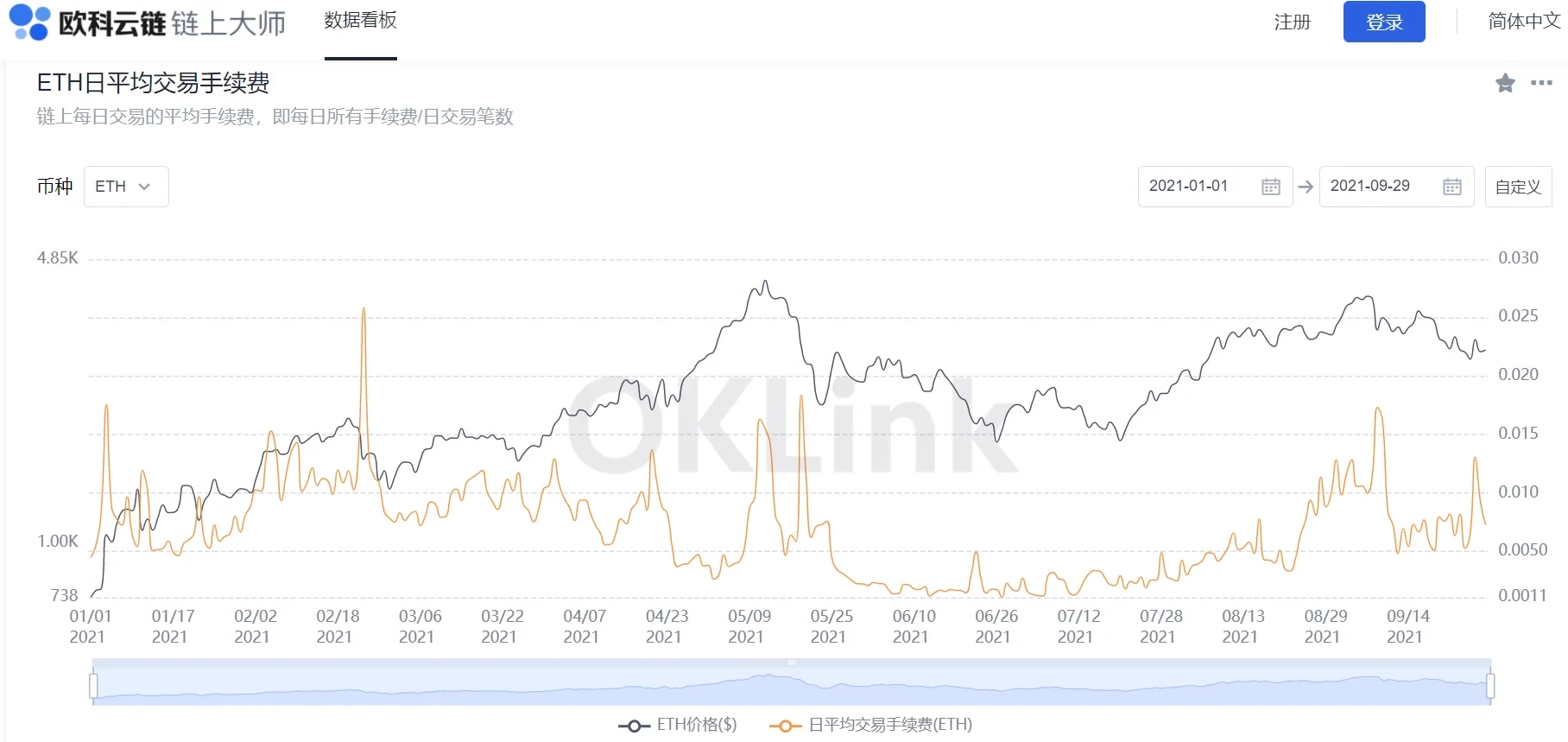
Figure 6: Changes in Ethereum Average Per-Transaction Fees Since 2021, Image Source: OK Link On-chain Master
Additionally, from a macro perspective, from the curve shown in Figure 5, it can be observed that over the nearly two months since the EIP-1559 proposal went live, miners' daily transaction fee income has shown a fluctuating upward trend. After deducting the base fees that were burned, the miner community netted 107,000 ETH. Although the quantity decreased compared to the previous two quarters, the deflationary expectation brought by EIP-1559 has been transmitted through secondary markets and reflected in ETH's price. Therefore, the stabilization and recovery of ETH prices over the past two months has, to some extent, offset the losses miners incurred due to lower transaction fee income (in USD terms).
MEV (Maximum Extractable Value)
What is MEV? MEV (Miner Extractable Value), or "Miner Extractable Value," is a measure of the profit miners can obtain through their ability to arbitrarily include, exclude, or reorder transactions within the blocks they produce. This concept was first introduced by Phil Daian and others in the "Flash Boys 2.0" report published in 2019. It refers to the fact that since all on-chain transactions on Ethereum first enter the Mempool and are then packaged into blocks by miners, miners prioritize packaging transactions that pay higher Gas fees. The behavior of offering high fees to have one's transaction processed first is called "PGA (Priority Gas Auction)."
Although we commonly use the term "miner extractable value," following the DeFi explosion in 2020, it's not just miners—most MEV activities are initiated by DeFi-focused traders, third-party arbitrage bots, etc., who obtain MEV through arbitrage strategies. Therefore, the more encompassing term for this concept is "Maximum Extractable Value."
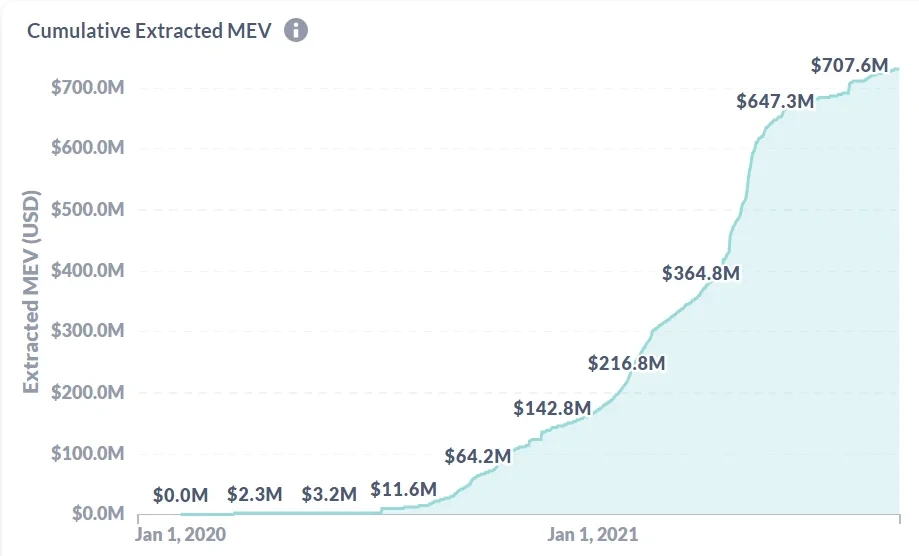
Figure 7: Changes in Ethereum Network Maximum Extractable Value, Image Source: Flashbots
According to Flashbots statistics, from the beginning of 2020 to now, MEV extracted value has reached $708 million, of which $165 million was extracted on January 1, 2021 alone. This means that in just over half a year, MEV increased by $543 million, a growth rate of 329%, and this portion could become an additional source of income for miners.
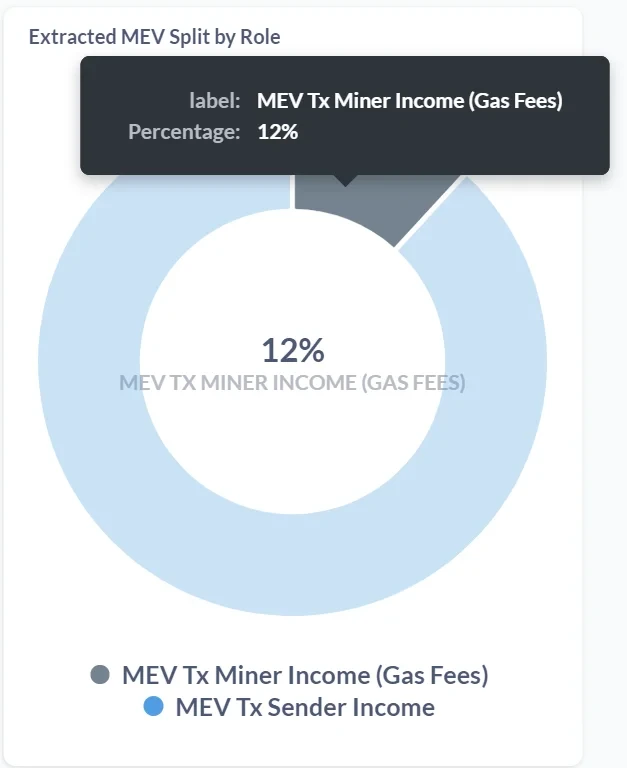
Figure 8: Distribution of Ethereum Network Maximum Extractable Value, Image Source: Flashbots
Currently, the extracted MEV mainly flows to two types of people: 88% of returns go to front-runners, while 12% flows to miners in the form of transaction fees. Based on this ratio, Ethereum miners stand to receive approximately $100 million in returns.
Conclusion
Although the EIP-1559 proposal launched in the London upgrade caused a portion of transaction fee revenue that originally belonged to Ethereum miners to be burned and destroyed, under EIP-1559, miners can still earn rewards through a feature called the priority fee—as long as users are willing to pay the priority fee, their transactions will be processed ahead of others. In fact, due to the booming NFT market, especially the high time-sensitivity requirements for premium NFT project launches and purchases, traders are willing to increase priority fees, causing miners to earn considerable returns in this area. Combined with the ETH price recovery mentioned earlier, from a USD-denominated perspective, Ethereum miners' income has not actually decreased significantly compared to before.
Disclaimer
This article may contain product-related content not applicable to your region. This article is only intended to provide general information and does not accept responsibility for any factual errors or omissions. This article represents the author's personal views only and does not constitute the views of OKX. This article is not intended to provide any advice, including but not limited to: (i) investment advice or investment recommendations; (ii) offers or solicitations to purchase, sell, or hold digital assets; or (iii) financial, accounting, legal, or tax advice. Holding digital assets (including stablecoins) involves a high level of risk, may fluctuate significantly, or may even become worthless. You should carefully consider whether trading or holding digital assets is suitable for you based on your financial situation. For questions specific to your circumstances, please consult your legal/tax/investment professional. The information contained in this article (including market data and statistical information, where applicable) is provided for general reference purposes only. Although we have taken all reasonable precautions in preparing such data and charts, we do not accept any responsibility for any factual errors or omissions expressed herein. © 2025 OKX. This article may be reproduced or distributed in its entirety, or excerpts of 100 words or less may be used, provided that such use is non-commercial. Any reproduction or distribution of the full article must prominently state: "This article is copyrighted © 2025 OKX, used with permission." Permitted excerpts must cite the article title and include attribution, for example, "Article title, [author name (if applicable)], © 2025 OKX." Some content may have been generated or assisted by artificial intelligence (AI) tools. Derivative works and other uses of this article are not permitted.
Show More
Recommended Reading
OKX Pay: Ushering in the Next Generation of Crypto Payment Era
The choice of tens of millions of users—register with OKX and enjoy an exceptional trading experience and diverse wealth management products. A letter from OKX CEO Star: Today, we officially launch the first version of OKX Pay for over 100 million global users. As the industry's first truly non-custodial and compliant payment application, OKX Pay will be embedded within the OKX App, currently available in select markets, with a full global rollout expected in the coming months.
March 22, 2026

A New Chapter: Building the Next Generation of Financial Infrastructure Together
The partnership between OKX and the Intercontinental Exchange (ICE) represents a significant milestone for OKX and is equally meaningful for the evolution of the entire digital assets market. ICE builds and operates the world's most critical financial infrastructure, including the New York Stock Exchange and global derivatives and clearing platforms. This investment by ICE in OKX and its joining of our board reflects our shared belief that digital assets technology will play a transformative role in financial markets.
March 10, 2026
Reflecting on Another Year of Resilience and Progress
As CEO of OKX and a builder who remains true to the original mission, I take great pride in reflecting on the remarkable growth and progress OKX has achieved this year. Despite numerous challenges, 2024 was a year defined by focus, innovation, and resilience. We not only expanded and optimized our products, but also made significant strides in launching transparent and regulation-compliant localized businesses, while further strengthening our global management team. Notably, after navigating through challenging periods,
January 29, 2026

2025: Steady Progress Toward Financial Freedom
— An End-of-Year Letter to Global Users from Star, Founder and CEO of OKX "Financial freedom" is often misunderstood. It doesn't mean the absence of rules, but rather having the freedom to choose within them—and that the system remains reliable and effective even when truly put to the test. This has been our unwavering focus throughout 2025. First and foremost, I would like to express my sincere gratitude to our global customers, partners, and regulators.
January 16, 2026

OKX Officially Launches in Germany and Poland
By Erald Ghoos, CEO of OKX Europe Today marks a significant day for OKX—and for crypto users across Europe. We have officially launched a fully compliant centralized cryptocurrency exchange in Germany and Poland! For us, this is more than a geographic expansion—it's a commitment to building the future of cryptocurrency the right way: secure, transparent, and tailored to local needs. If you're in Germany
October 21, 2025

Partnership Elevated! OKX and Standard Chartered Expand into Europe
On October 15, Erald Ghoos, CEO of OKX Europe, stated that OKX is expanding its strategic partnership with Standard Chartered into the European Economic Area (EEA). Earlier this year, OKX first partnered with Standard Chartered in the UAE, launching the collateral mirroring program—a
October 15, 2025