DeFi On-Chain Trading Activity Declines, Returning to Long-Term Baseline Levels Since September 2020
Let's first review this week's Bitcoin market movements. On June 7th local time, the Federal Reserve's overnight reverse repurchase facility absorbed $48.6097 billion from 46 participants, setting a new record. The surge in overnight reverse repos aligns with market expectations for the Fed to taper bond purchases. Stimulated by this news and combined with other bearish factors, Bitcoin price experienced another pullback of over 10% in the first two days of the week. Subsequently, following El Salvador's announcement to adopt Bitcoin as legal tender, it recorded a 14% gain on Wednesday, basically recovering the losses from the previous two days. However, overall, Bitcoin price this week remains in the consolidation range of $31,000-$39,000, and the continued sluggish market also reflects, to some extent, the low sentiment among market investors.
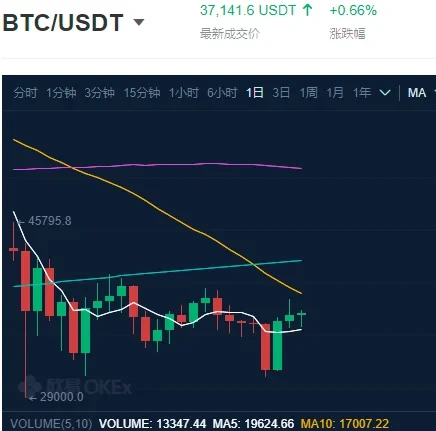
Bitcoin price, source OKXOKX
Of course, weak market conditions and subdued investor sentiment are not only reflected in the Bitcoin market. The Ethereum ecosystem that has flourished over the past year, especially the DeFi sector, has also not been immune. According to a recent report by Glassnode Insights, Ethereum transfer volume has dropped by 60% within two weeks. While there's still a significant gap compared to the 95% decline in 2018, it's too early to say whether this subdued demand is temporary or a trend that will continue. The market's future direction remains to be seen.
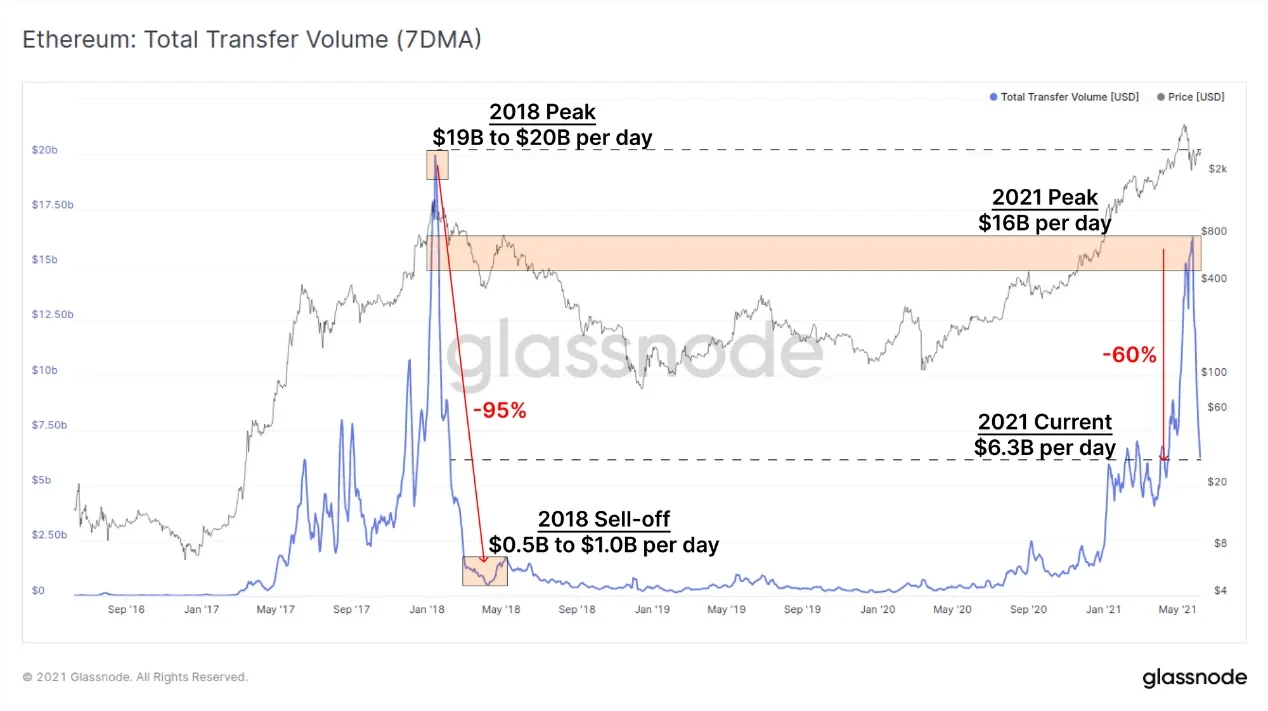
Ethereum on-chain transfer volume changes, source Glassnode
In the DeFi sector, looking at Total Value Locked (TVL) data, the current Ethereum-based locked value is $59.47 billion, a 27.2% contraction from $81.69 billion in mid-April.
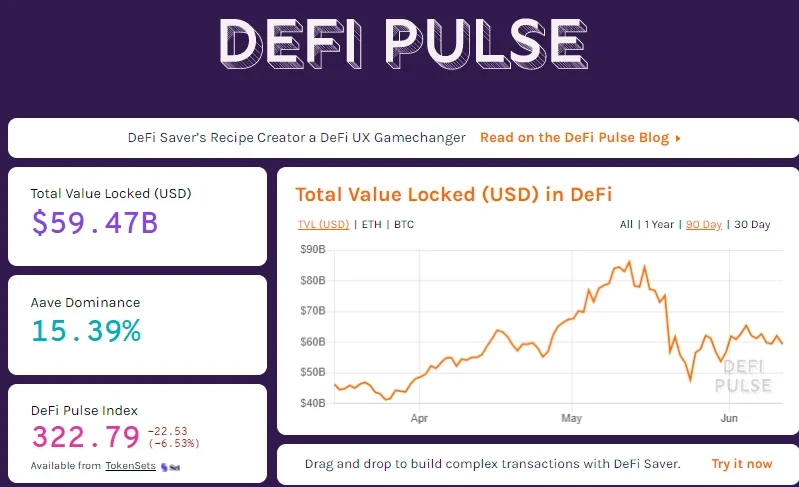
Current DeFi TVL, source defipulse
To gain a more intuitive understanding of recent DeFi sector conditions, we selected Uniswap, the leading DEX, as an example to analyze by observing its on-chain transfer volume changes and value transfer changes.
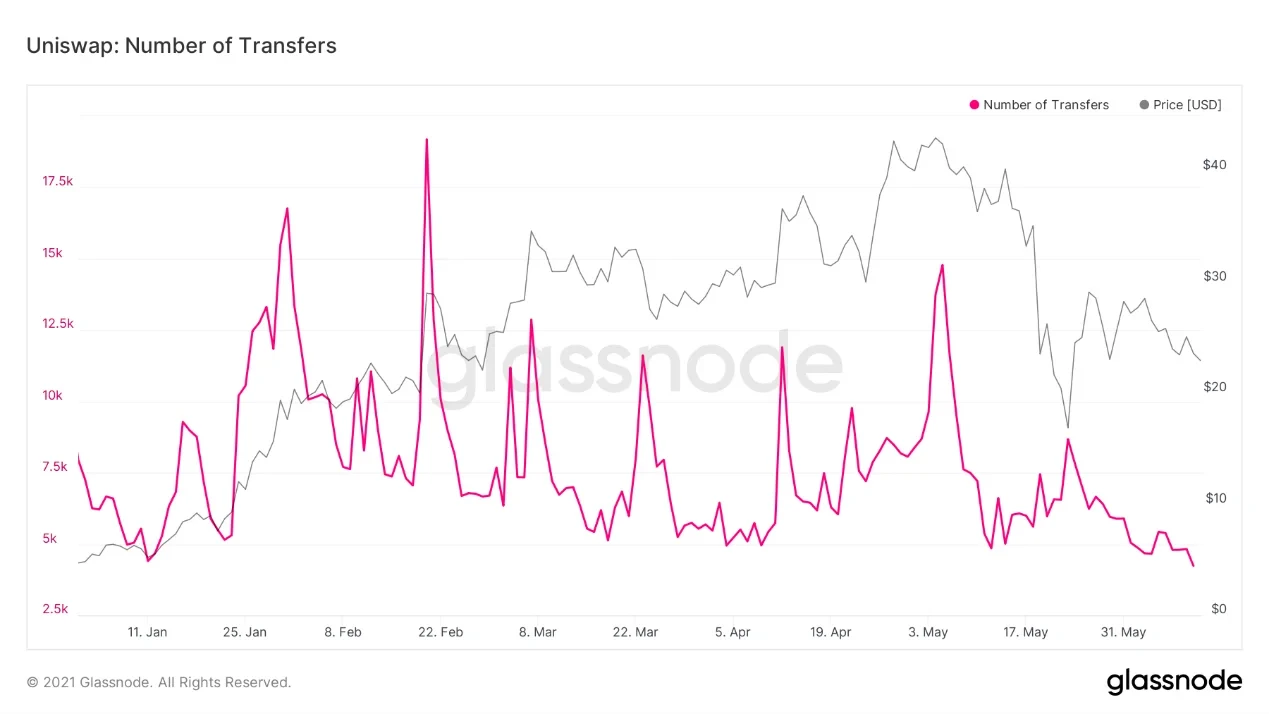
Uniswap on-chain transfer count changes, source Glassnode
The chart above shows the Uniswap on-chain transfer count curve. It can be observed that over the past three days, this metric has remained below 5,000, basically flat with November 2020 levels.
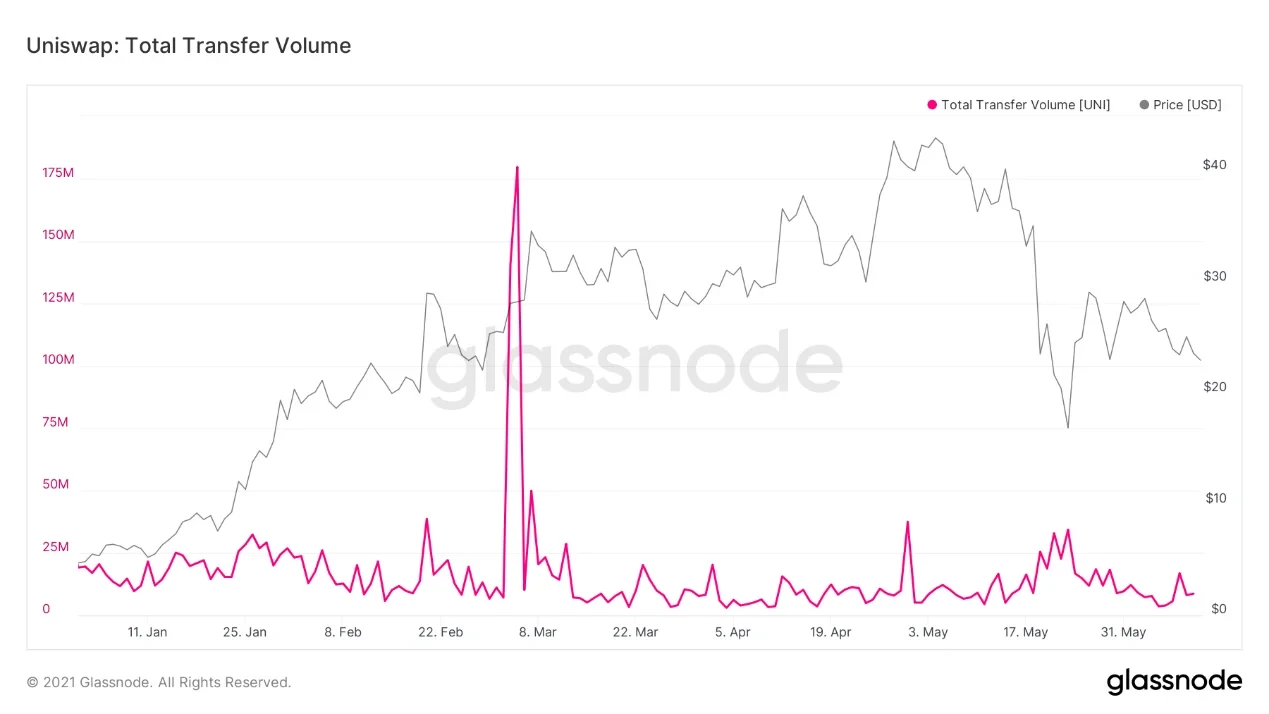
Uniswap on-chain transfer value changes, source Glassnode
Similar to the trend in Uniswap on-chain transfer count, the transfer value on this DeFi protocol has also shown a declining trend recently. For instance, on June 10th, the full-day on-chain transfers were only 8.69 million UNI, also returning to late November 2020 levels.
Let's also look at Uniswap's on-platform trading situation. Recently, both Uniswap V2 and the newly launched V3 have seen significant declines in trading volume. First, let's look at Uniswap V2 data.
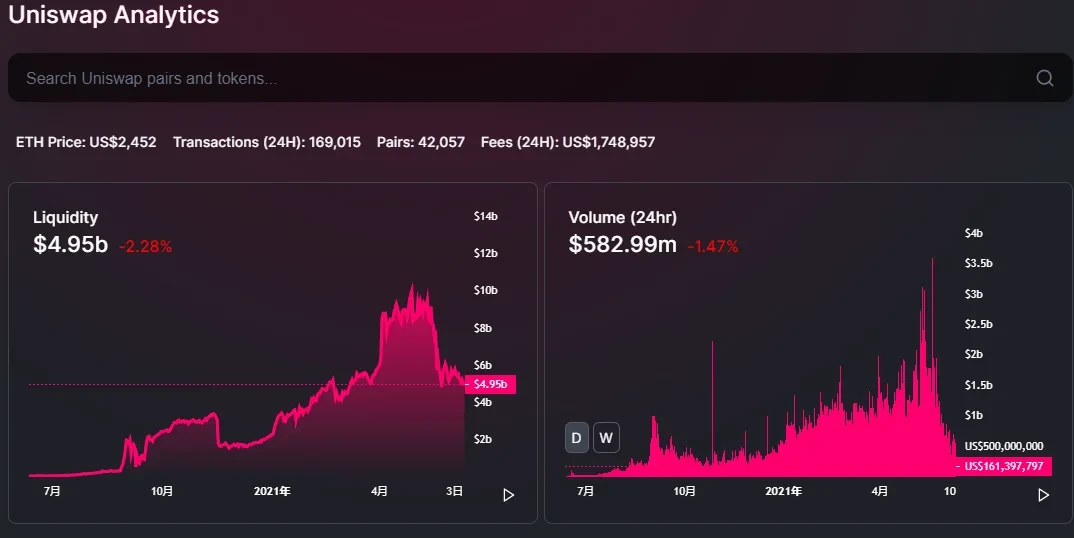
Uniswap V2 Liquidity and trading volume, source v2.info.uniswap.org
As of June 11th, Uniswap V2 Liquidity was approximately $4.95 billion, a 50% reduction from $9.98 billion on April 28th. In terms of trading volume, the last 24-hour trading volume was $583 million, only 16% of the $3.59 billion record set on May 19th. Of course, this includes both market impact factors and diversion from the V3 launch. Let's now look at Uniswap V3's situation.
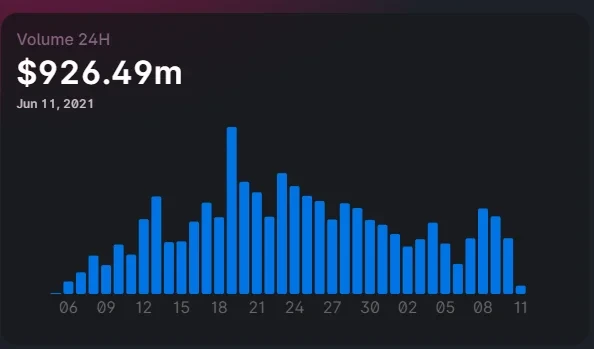
Uniswap V3 24H trading volume, source info.uniswap.org
From the chart above, it can also be seen that since May 19th, Uniswap V3's trading situation has similarly shown a downward trend, with recent 24-hour trading volume at approximately $926 million, a decline of over 60% compared to $2.61 billion on the 19th of last month.
Synthesizing the above data, it can be found that since peaking in mid-May, Uniswap's daily trading count and trading volume have both experienced varying degrees of decline, while demand for UNI has slowed. Uniswap's daily trading volume has now returned to the long-term baseline since DeFi's rise in September 2020. Although the indicators we used above are simple and primitive, at this stage they still serve as an important reference for measuring the level of retail investor sentiment.
Of course, along with the significant cooling of DeFi on-chain trading activity, we've also observed welcome changes in Ethereum trading fees. According to OKLink monitoring data, the daily average gas fee on Ethereum has dropped below 30 Gwei in the past two days, with only 16.47 Gwei on June 6th. By comparison, during the first DeFi boom on September 2nd, 2020, the daily average fee once reached 514.54 Gwei, and on February 23rd, 2021, it also recorded a high fee of 413.97 Gwei. Compared to these two highs, current fee levels have declined by 95% and 93% respectively.
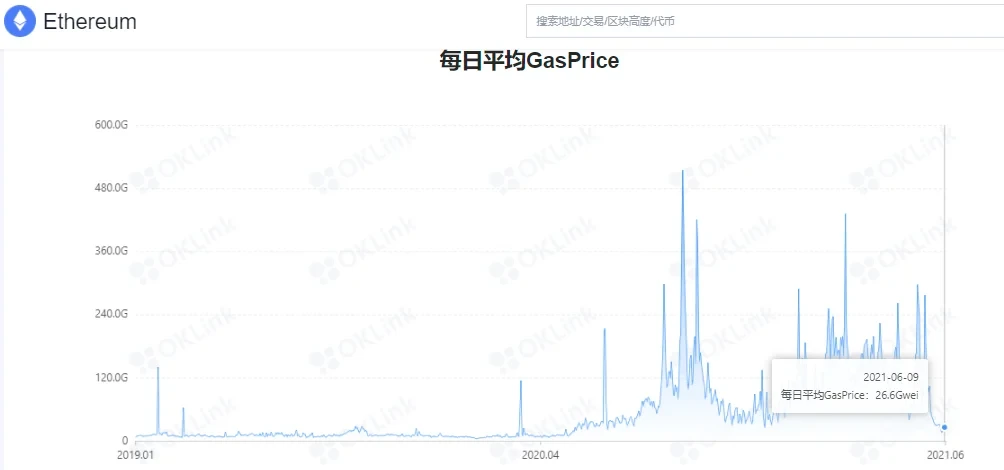
Ethereum network daily average gas fee, source OKLink
This means that if conducting Ethereum transfers or participating in DeFi on-chain interactions recently, fee expenditures will be significantly reduced. The situation of frequently spending hundreds of dollars in fees during last summer's "DeFi Summer" has been greatly alleviated.
Although current Ethereum network fees have seen significant declines, on the other hand, returning to the topic of whether the bull market can continue, which market investors are generally concerned about, this information seems to have more "bearish" characteristics. In the previous article "Market Bulls and Bears at Standstill, Price Action Once Again at a Crossroads", we discussed on-chain trading activity during bull markets from multiple dimensions. It is generally believed that in the crypto market's bull market process, a notable feature is that market participants are more sensitive to on-chain trading, value settlement, and miners' block packaging speeds—that is, participants generally hope to conduct trading at faster speeds and are willing to pay higher than usual trading fees for this. This is both the result of increased investor demand and the motivation for early profit-takers to sell their held crypto assets at higher prices.
Of course, this is merely a preliminary judgment of the future market based on technical factors, while the factors that ultimately determine market trends often lie beyond these simple technical aspects. As mentioned in the article "Market Bulls and Bears at Standstill, Price Action Once Again at a Crossroads", "All indicators are just the tip of the iceberg among numerous analytical tools in the crypto market, and each is not perfect, existing defects and controversies. The only indisputable fact is that we have indeed entered a consolidation period, and this is a moment of intense bulls versus bears gaming."
This assertion applies both to the current crypto market and to the DeFi market. After all, DeFi's development is closely related to the crypto market's development. As an unprecedented social finance reform experiment emerging from the crypto world, DeFi's development over the past several years, especially the past year, has preliminarily verified this reform's innovation and forward-looking nature. Like many important transformations in history, it cannot be smooth sailing and will inevitably undergo various tests. However, what needs to be believed is that as long as we're on the right path moving toward the right goals, then from a higher dimension perspective, current setbacks are merely passing clouds.
Disclaimer
This article may contain product-related content not applicable to your region. This article is dedicated to providing general information only and assumes no responsibility for any factual errors or omissions therein. This article represents only the author's personal views and does not represent OKX's views. This article is not intended to provide any advice, including but not limited to: (i) investment advice or investment recommendations; (ii) offers or solicitations to purchase, sell, or hold digital assets; or (iii) financial, accounting, legal, or tax advice. Holding digital assets (including stablecoins) involves high risk, may fluctuate significantly, and may even become worthless. You should carefully consider whether trading or holding digital assets is suitable for you based on your financial situation. For questions about your specific situation, please consult your legal/tax/investment professional. Information appearing in this article (including market data and statistics, if any) is for general reference only. While we have taken all reasonable precautions in preparing these data and charts, we assume no responsibility for any factual errors or omissions expressed herein. © 2025 OKX. This article may be reproduced or distributed in full, or excerpts of 100 words or less from this article may be used, provided such use is non-commercial. Any reproduction or distribution of the entire article must also prominently state: "Copyright © 2025 OKX, used with permission." Permitted excerpts must cite the article title and include attribution, for example "Article Title, [Author Name (if applicable)], © 2025 OKX". Some content may be generated or assisted by artificial intelligence (AI) tools. Derivative works or other uses of this article are not permitted.
Show More
Recommended Reading
OKX Pay: Opening a New Era of Next-Generation Crypto Payments
The choice of tens of millions of users. Register with OKX to enjoy the ultimate trading experience and diverse wealth management products. A letter from OKX CEO Star: Today, we officially launch the first version of OKX Pay to over 100 million global users. As the industry's first payment application to truly achieve non-custodial and compliant integration, OKX Pay will be embedded in the OKX App, currently open to select markets, with full rollout expected within months
March 22, 2026

New Chapter: Building Next-Generation Financial Infrastructure Together
The partnership between OKX and Intercontinental Exchange (ICE) is an important moment for OKX and equally significant for the evolution of the entire digital assets market. ICE establishes and operates the world's most important financial infrastructure, including the New York Stock Exchange and global derivatives and clearing platforms. ICE's strategic investment in OKX and joining our board reflects both parties' shared belief—digital assets technology will transform financial markets
March 10, 2026
Tribute to Another Year of Forging Ahead
As OKX's CEO and also a builder who remains true to our original mission, I proudly look back on the remarkable growth and progress OKX has achieved this year. Despite numerous challenges, 2024 was a year of focus, innovation, and resilience. We not only expanded and optimized our products, but also made significant progress in launching transparent and compliant localized businesses, while further strengthening our global management team. Notably, after experiencing
January 29, 2026

2025: Steady Progress Toward Financial Freedom Together
—— A year-end letter from OKX Founder and CEO Star to global users "Financial freedom" is often misunderstood. It doesn't mean no rules, but rather having the right to choose when rules exist—and when the system is truly tested, it remains reliable and effective. This is exactly what we focused on throughout 2025. First, I want to extend sincere gratitude to our global clients, partners, and regulatory authorities
January 16, 2026

OKX Officially Launches in Germany and Poland
Author: Erald Ghoos, CEO of OKX Europe Today is significant for OKX—and for crypto users across Europe. We have officially launched our fully compliant centralized cryptocurrency trading platform in Germany and Poland! For us, this is not just geographic expansion, but a commitment to building the cryptocurrency future the right way: secure, transparent, and meeting local needs. If you're in Germany
October 21, 2025

Partnership Upgrade! OKX Partners with Standard Chartered to Expand European Market
On October 15th, OKX Europe CEO Erald Ghoos stated that OKX is expanding its strategic partnership with Standard Chartered to the European Economic Area (EEA). Earlier this year, OKX first partnered with Standard Chartered in the UAE to launch the collateral mirroring program—an initiative
October 15, 2025