DeFi Total Value Locked Breaks $60 Billion — How to Continue Attracting Investors
According to DeFi Pulse statistics, as of April 18, 2021, DeFi total value locked has exceeded $60 billion, representing a 7400% increase compared to $800 million in early April last year.
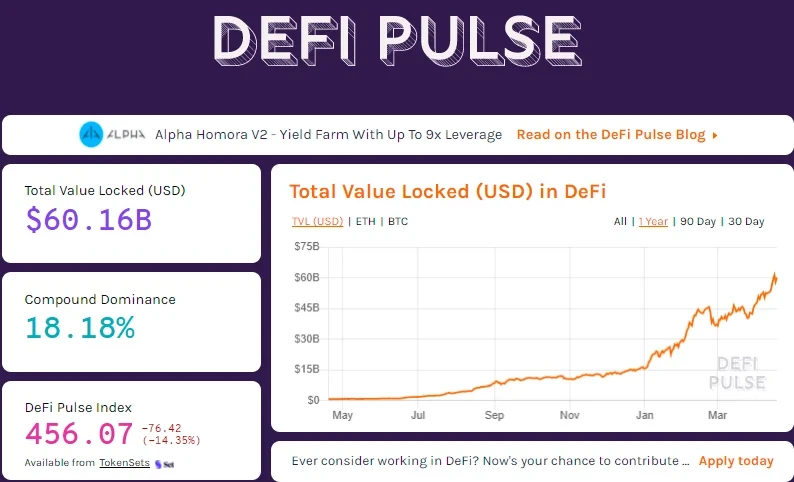
(DeFi Total Value Locked Changes, Source: DEFI PULSE)
Behind this data, while there are certainly speculative hot money flows, the trend basically confirms one message: DeFi (Decentralized Finance) has gained initial recognition from capital and markets.
At the same time, if we zoom in on the details of DeFi total value locked growth since September 2020, we can discover another message: compared to the rise from $10 billion to $40 billion, the growth rate of DeFi total value locked from $40 billion to $60 billion has gradually slowed.
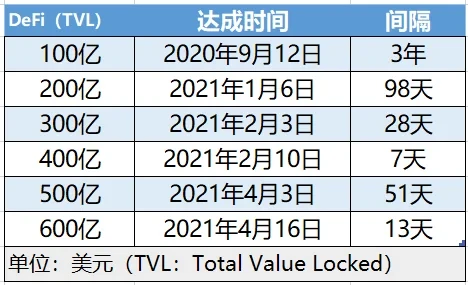
(DeFi TVL Growth Rate, Data Source: DEFI PULSE, Chart by OKX)
Looking at DeFi's development status from the present perspective — on one side, continuously growing total value locked; on the other, growth rate gradually slowing after short-term surges — we can see that the market still remains bullish on DeFi's future, but also interpret that DeFi seems to have reached a new consolidation plateau, needing new catalysts to attract more investors.
Next, this article will analyze from three parts: the rise of DeFi, DeFi's current challenges, and the future outlook for DeFi, to discuss the path of DeFi together.
Why Could DeFi Rise Quickly — Taking Maker DAO as an Example
When discussing DeFi's history, Maker DAO cannot be avoided. Founded in 2014, Maker DAO is a DeFi project built on Ethereum focusing on collateralized lending, widely regarded as the star project that opened the doors of DeFi. Maker DAO's core function allows users to use certain tokens from Ethereum as collateral to borrow digital assets pegged to the US dollar. Currently, Maker DAO supports multiple digital assets including ETH, BAT, USDC, WBTC, TUSD, KNC, ZRX, etc. as collateral for Dai. In June 2020, the Maker DAO community voted to support a new collateral proposal led by startup Centrifuge to use Real World Assets (RWA) as collateral, allowing users to convert real-world assets into interest-bearing ERC-20 tokens. Centrifuge has partnered with Paperchain and Consol Freight to tokenize music streaming royalties and trade invoices respectively.
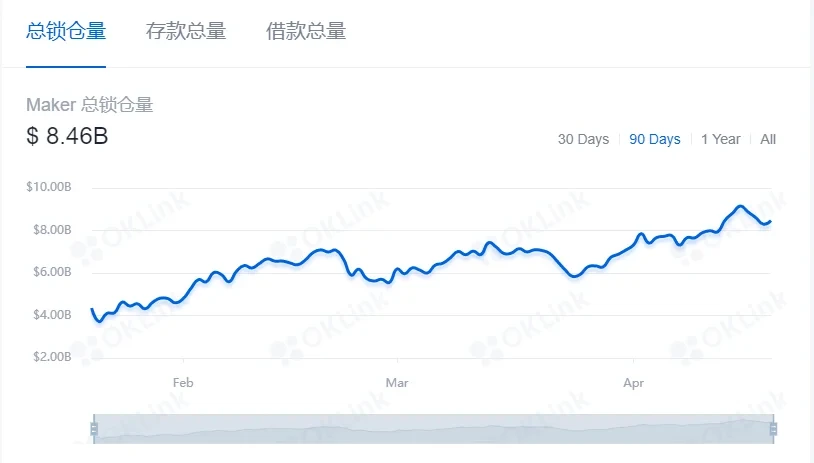
According to OK Link data, as of April 19, 2021, Maker DAO's TVL reached $8.46 billion. For comparison, let's look at the US banking sector. According to FDIC (Federal Deposit Insurance Corporation) official website information, as of April 17, 2021, there were 4,989 banks registered with the FDIC, with total deposits of $17.88 trillion, and an average deposit balance of $3.582 billion per bank — Maker DAO's strength is evident.
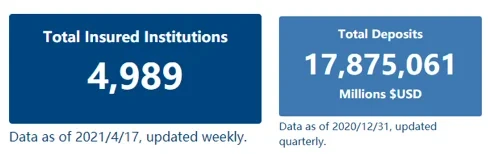
(Source: FDIC)
Of course, it must also be mentioned that the scale of the US banking industry today is the result of nearly 200 years of development, while Maker DAO is a startup project only in its seventh year.
So why could Maker DAO achieve such rapid development in just a few years? The core point is that Maker DAO provides people in the traditional financial world with a brand-new solution. Specifically, there are two main advantages: accessibility, and transparency and security.
How to understand accessibility? Let's take our example of collateralized lending in Maker DAO versus collateralized lending at a bank.
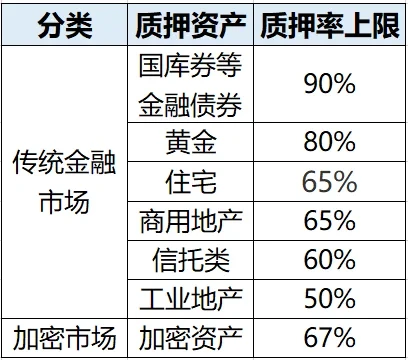
(Comparison of Collateralization Rates for Major Collateral Assets, Source: Internet, Chart by OKX)
Above, we made a simple comparison of collateralization rates for some common collateral assets. It can be found that except for financial bonds like treasury bills, and "hard assets" like gold and residential real estate, the collateralization rates of other assets are lower than those on Maker DAO.
In addition, when we go to a bank for a loan, besides requiring collateral, we must also accept comprehensive scrutiny from the bank, including detailed information about the collateral assets and the applicant's personal credit history, occupation, education, etc. In this process, the role played by the bank is often more about icing on the cake than providing help in times of need. DeFi, represented by Maker DAO, provides an uncensored, barrier-free financial service platform. DeFi protocols do not discriminate against anyone, and create a fair participation environment for everyone — everyone can participate without differentiation. This was undoubtedly difficult to imagine before, but it has indeed become a reality on Maker DAO.
Another factor enabling Maker DAO's rapid development lies in the transparency and security of the DeFi world. Or rather, because of transparency, there is security. To this day, among many voices opposing crypto assets, "unregulated and unsafe" is an important argument. But does this argument really hold water? Not necessarily.
Looking at traditional financial markets, banks and other regulated traditional financial institutions that follow government laws and regulations are ideal places considered among the safest for storing funds. But they have also "failed" — even large banks can fail. During the 2008 financial crisis, Washington Mutual, with over $188 billion in deposits, and Lehman Brothers, with over $639 billion in assets, both collapsed. In the US alone, there were records of over 500 banks failing during the financial crisis.
It must be admitted that concentrating power and funds in a single large central node like a bank is very dangerous. Because ordinary investors cannot fully understand their operational processes, they also cannot clearly understand where their money deposited in the bank ultimately flows, until they withdraw their money or until the avalanche arrives. However, Maker DAO has greatly improved this situation. As is well known, Maker DAO's protocol is built on Ethereum, is completely open-source, and has a decentralized governance organization to ensure everyone clearly knows what is happening, and to ensure no malicious actors can make malicious decisions alone. Similarly, because the code is open-source for public review, even if there are defects or vulnerabilities, they will quickly be revealed, nipping losses in the bud.
Why Has DeFi Slowed Down?
We know that currently, the vast majority of DeFi protocols are built on Ethereum, so every move on Ethereum is transmitted to DeFi, and its impact may be amplified. Of course, the most sensitive factor is gas fees.
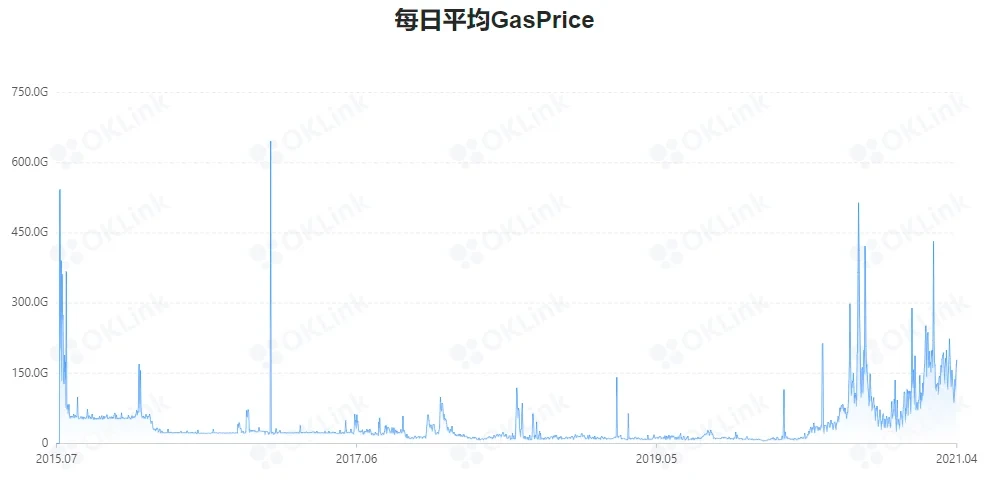
From the Ethereum network's daily average gas fees recorded by OK Link, it can be seen that from June to September 2020, the first gas fee peak appeared, which was clearly driven by active DeFi trading. Afterwards, a second gas fee peak appeared between January and March 2021, with the peak on February 22 reaching 220.02 Gwei, which coincides with the previously mentioned cycle of slowing growth in DeFi total value locked. This means high gas fees have had an inhibitory effect on the growth of DeFi total value locked. This is actually not difficult to understand. During last year's first gas fee peak, since DeFi projects and DeFi users in the market were basically all on Ethereum, they rose together. When gas fees rose again at the beginning of this year, multiple strong competitors had already appeared in the market, including OKX Chain and Polkadot. These competitors have obvious advantages in both throughput and gas fees, and are quite attractive to Ethereum-based DeFi projects, inevitably diverting some projects, users, and funds from Ethereum.
On the other hand, the reality that must be admitted is that although DeFi has achieved significant development since last June and has accumulated a first step, it is still in its early stages. Compared with more mature asset classes, liquidity remains too thin. For example, Uniswap — a leading decentralized exchange in DeFi — has a 24-hour trading volume of $1.2 billion, compared to OKX's 24-hour trading volume of $42.3 billion (trading volume information referenced from CoinMarketCap statistics). Uniswap's trading volume during the same period was only 2.8% of OKX's. Additionally, the high slippage losses that Uniswap's AMM market-making mechanism may bring is also an issue traders must consider, especially in less active trading pools. For institutional investors, in this situation, there is even less motivation to invest larger amounts of funds into DeFi.
However, the development of all things must follow its inherent laws — there will be an eruption period, then a consolidation period, then entering a new round of eruption. Therefore, we believe that DeFi's slowdown at this stage is healthy and reasonable. After a period of consolidation and accumulation, DeFi will have even broader space in the future.
Why Be Bullish on DeFi's Future Momentum?
Still the answer mentioned above — DeFi provides a brand-new solution for people in the traditional financial world who have not obtained better financial services.
Here, let's first pose a question: Do you know how many people in today's world don't have a bank account? Perhaps readers who can see this article will think this is a boring question — who doesn't have a bank account? Isn't this something you can have as many as you want? But the truth is not so.
According to a survey report released by the World Bank in 2017, there are over 1.7 billion adults worldwide without bank accounts, with half from developing countries and half from developed countries. That is to say, even residents living in developed countries like Europe and America have not fully accessed modern financial services. These 1.7 billion people mainly come from poor families. Their main reasons for not having bank accounts include poverty, geographical location, and trust issues. For them, accessing banking services remains difficult.
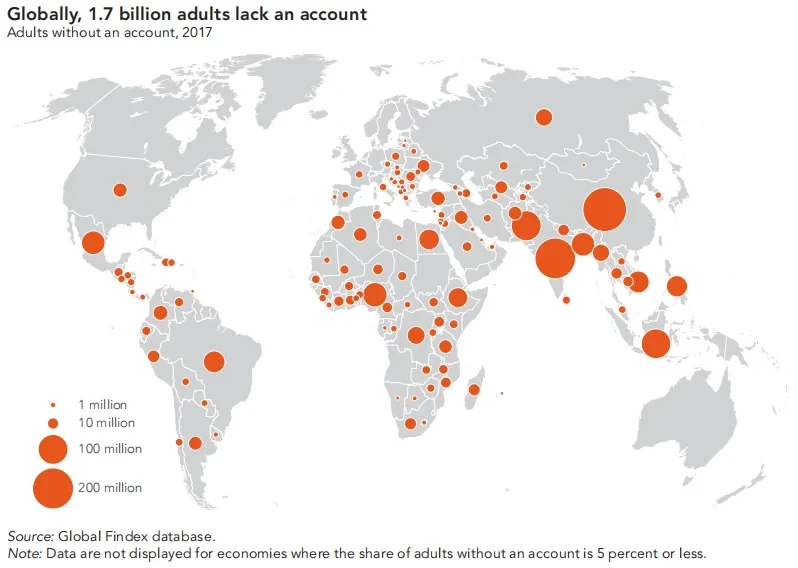
(Global Distribution of Unbanked Population, Source: World Bank)
In that report, the World Bank predicted that two-thirds of these 1.7 billion unbanked people own smartphones. This provides the possibility for them to access more fair financial services through DeFi. In short, enabling everyone to access financial services without accepting any form of censorship, unrestricted by race, religion, age, nationality, or geography when using various financial tools — this is both an opportunity for residents of all countries including these 1.7 billion people, and the potential for DeFi's continued development.
Finally, bringing our focus back to reality, to continue maintaining DeFi's attractiveness to investors, what else needs to be done?
First, we need to further improve the usability of DeFi products, converting complex protocols and code into user-friendly familiar interfaces, and strengthen user education. To deeply understand DeFi's complex nature, clear and concise educational content is needed. The goal of education is not only to let people understand basic knowledge about crypto assets and the broader development opportunities of this industry, lowering the barrier to entry for DeFi, but more importantly to emphasize让人们了解 DeFi will bring a fairer, more open, and inclusive new financial system.
Second, although DeFi has initially demonstrated that the financial industry can operate without gatekeepers or centralized intermediaries, creating an environment where anyone can safely lend and borrow and trade directly is possible. But it must be admitted that DeFi is still in its early stages. Compared to pursuing absolute freedom and self-correction, seeking compliance and attracting more institutional investors appears more urgent. In other words, how to find a balance point between free finance and safety regulation may be the key to DeFi achieving explosive growth in the next phase.
Finally, but equally importantly, for DeFi to achieve substantial development, it cannot do without continuous progress in underlying technology. At this stage, the top priority is Ethereum Layer 2 and Ethereum 2.0 progress — for example, adding more vitality to the DeFi market on the basis of reducing gas fees and increasing throughput is also a problem that needs to be solved now.
Disclaimer
This article may contain product-related content not applicable to your region. This article is intended to provide general information only and is not responsible for any factual errors or omissions contained therein. This article represents only the author's personal views and does not represent OKX's views. This article is not intended to provide any of the following advice, including but not limited to: (i) investment advice or investment recommendations; (ii) offers or solicitations to buy, sell, or hold digital assets; or (iii) financial, accounting, legal, or tax advice. Holding digital assets (including stablecoins) involves high risk, may fluctuate significantly, and may even become worthless. You should carefully consider whether trading or holding digital assets is suitable for you based on your financial situation. For questions about your specific situation, please consult your legal/tax/investment professional. The information appearing in this article (including market data and statistical information, if any) is for general reference only. Although we have taken all reasonable precautions in preparing these data and charts, we accept no responsibility for any factual errors or omissions expressed herein. © 2025 OKX. This article may be reproduced or distributed in its entirety, or excerpts of 100 words or less from this article may be used, provided such use is non-commercial. Any reproduction or distribution of the entire article must also prominently state: "Copyright © 2025 OKX, used with permission." Permitted excerpts must cite the article name and include attribution, for example "Article Name, [Author Name (if applicable)], © 2025 OKX". Some content may be generated or assisted by artificial intelligence (AI) tools. Derivative works or other uses of this article are not permitted.
Show More
Recommended Reading
OKX Pay: Opening a New Era of Next-Gen Crypto Payments
The choice of tens of millions of users. Register with OKX to enjoy the ultimate trading experience and diverse wealth management products. A letter from OKX CEO Star: Today, we are officially launching the first version of OKX Pay to over 100 million global users. As the industry's first payment application to truly achieve non-custodial and compliance integration, OKX Pay will be embedded in the OKX App, currently available to select markets, expected to fully launch within months
March 22, 2026

New Chapter: Building Next-Gen Financial Infrastructure Together
The partnership between OKX and Intercontinental Exchange (ICE) is an important moment for OKX and equally significant for the evolution of the entire digital asset market. ICE builds and operates the world's most important financial infrastructure, including the New York Stock Exchange and global derivatives and clearing platforms. ICE's selection of OKX as an investment and joining our board demonstrates both parties' shared belief — digital asset technology will be in financial markets
March 10, 2026
Tribute to Another Year of Forging Ahead
As OKX's CEO, and also a builder who stays true to our original mission, I am proud to look back on OKX's extraordinary growth and progress this year. Despite numerous challenges, 2024 was a year filled with focus, innovation, and resilience. We not only expanded and optimized our products, but also made significant progress in launching transparent and compliant localized operations, while further strengthening our global management team. Notably, after experiencing
January 29, 2026

2025: Steady Progress Toward Financial Freedom Together
— Annual Letter from OKX Founder and CEO Star to Global Users "Financial freedom" is often misunderstood. It doesn't mean no rules, but rather having the right to choose when rules exist — and, when the system is truly tested, it remains reliable and effective. This is exactly the direction we have consistently focused on in 2025. First, I want to extend sincere gratitude to our global clients, partners, and regulatory authorities
January 16, 2026
OKX Officially Launches in Germany and Poland
Author: Erald Ghoos, CEO of OKX Europe Today is significant for OKX — and for crypto users across Europe. We have officially launched fully compliant centralized cryptocurrency trading platforms in Germany and Poland! For us, this is not just a geographic expansion, but a commitment to building the cryptocurrency future the right way: secure, transparent, and meeting local needs. If you are in Germany
October 21, 2025
Partnership Upgrade! OKX Partners with Standard Chartered to Expand European Market
On October 15, OKX Europe CEO Erald Ghoos stated that OKX is expanding its strategic partnership with Standard Chartered to the European Economic Area (EEA). Earlier this year, OKX first partnered with Standard Chartered in the UAE to launch the collateral mirroring program — a
October 15, 2025