MEV has extracted $743 million — could it trigger explosive reorganizations in Ethereum?
AAVE+4. 59%
Following the successful activation of the Altair hard fork upgrade on the Ethereum Beacon Chain after Epoch 74240 last Wednesday, the Ethereum network has taken another step forward in the ETH2. 0 upgrade process. Since the Ethereum2. 0 deposit contract balance met the minimum requirement to launch the Ethereum2. 0 genesis block and successfully initiated the upgrade work in late November 2020, we can observe that, in addition to the DeFi and NFT trends that have successively sparked market investment fervor, as well as the various Layer 2 scaling solutions that have attracted significant attention, there is another issue that has been quietly emerging despite rarely being discussed — MEV (Miner Extractable Value, or Maximum Extractable Value). Because the MEV problem not only harms users' trading experience and blockchain network, congesting the network and increasing application costs, but may also hinder Ethereum's network effects and growth momentum.
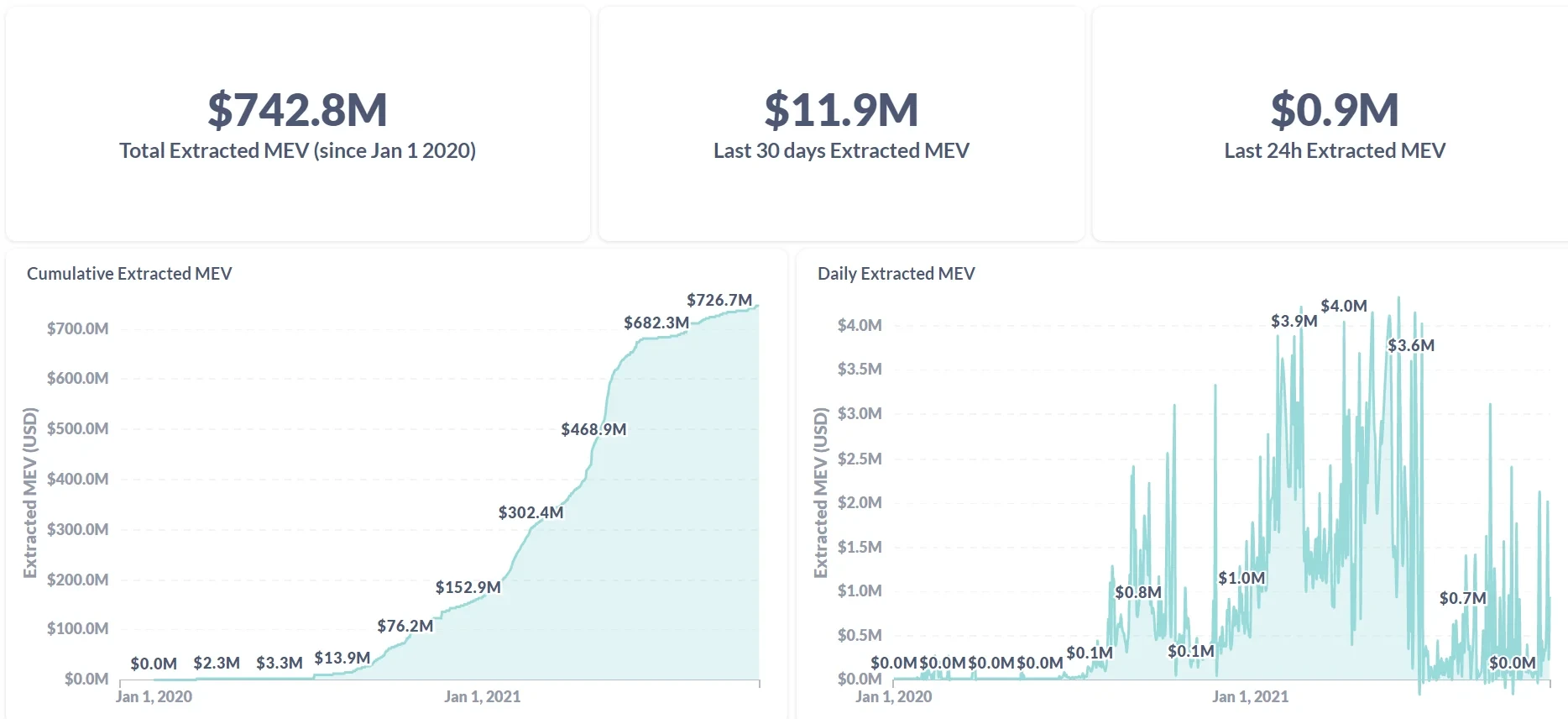
Figure 1: Ethereum network MEV data overview since January 2020, data source: flashbots
According to data from the third-party statistics website flashbots, from early January 2020 to now, MEV has extracted nearly $743 million. As shown in the chart above, 2020 July was a critical inflection point in the growth of MEV — prior to that, MEV growth was extremely slow, extracting only $3.5 million worth of digital assets over a six-month period. After that, it entered a fast-track development phase, climbing from $3.5 million to $743 million in less than a year and a half, an increase of over 212 times. Although a significant portion of this growth was driven by ETH price appreciation, considering the specific market conditions of that period, it is clear that the development of MEV is closely linked to the increasingly active and high-frequency on-chain interactions in DeFi, NFT, and other sectors.
Faced with this rapidly expanding market, ETH Global held a virtual MEV-themed summit on July 1 this year, where discussions centered around four key agendas: "The Evolution of MEV," "MEV Solutions," "Protocol-Level Responses to MEV," and "Application-Level Responses to MEV." This article will not elaborate on the specifics of this summit for now, but will instead revisit what MEV is, its co-evolution with DeFi, and its various potential impacts on the Ethereum network.
What is MEV?
At the beginning of this article, we provided two different Chinese translations for MEV — the two meanings are actually not very different. Here is a detailed explanation: the first — "Miner Extractable Value" — is a measure of the profit that miners obtain through their ability to arbitrarily include, exclude, or reorder transaction sequences within the blocks they produce. This concept was first introduced by Phil Daian and others in the "Flash Boys 2. 0" report published in 2019. It refers to the fact that since on-chain transactions on Ethereum first enter the Mempool before being packaged into blocks by miners, miners will prioritize packaging transactions that pay higher Gas fees. The act of offering a high fee to have one's transaction processed first is called "PGA (Priority Gas Auction)." The second — "Maximum Extractable Value" — emerged primarily because after the DeFi explosion in June and July 2020, not only miners but also many DeFi-focused traders and third-party arbitrage bots joined the MEV extraction行列, initiating the majority of MEV behaviors and capturing MEV through arbitrage strategies, giving rise to the broader concept of "Maximum Extractable Value."
For example, if a large trade on Uniswap creates a $10,000 arbitrage opportunity due to price slippage, a DeFi trader or arbitrage bot will execute the arbitrage trade. If multiple parties notice this arbitrage opportunity, a Priority Gas Auction begins. If the ultimate winner successfully gets the trade packaged into a block by paying $6,000 in fees, then $6,000 is the MEV earned by the miner for packaging this transaction, and the remaining $4,000 is the MEV extractable by the DeFi trader or arbitrage bot. Of course, arbitrage is not limited to large trade scenarios — it also occurs when premiums appear across different DEXs, or when engaging in other arbitrage strategies. Liquidation refers to the process triggered when collateral assets in DeFi lending protocols reach the liquidation threshold, at which point liquidators can obtain assets such as Ethereum at a certain discount, and this discount value represents MEV.
For a long time prior, the use of Mempool packaging mechanism privileges was widely known as the "Dark Forest" — an unfair, covert mechanism that was little understood by the public but widely practiced. Following the rise of DeFi, the Ethereum network expanded beyond supporting on-chain transfers and trading to include interactions with smart contracts for activities such as mining, lending, AMM, and derivatives — increasing the value available for capture on-chain and causing MEV extraction values to grow rapidly, while the potential impacts on the Ethereum network gradually came to the forefront, attracting increasing developer attention to this field.
MEV and DeFi
According to DeFi Llama data, as of November 4, 2021 at 24:00, the total value locked (TVL) in DeFi across the entire network had exceeded $250 billion, reaching $256.5 billion — a new all-time high. The top three DeFi protocols by TVL are Curve ($19.9 billion), Maker ($18.2 billion), and Aave ($15.4 billion).
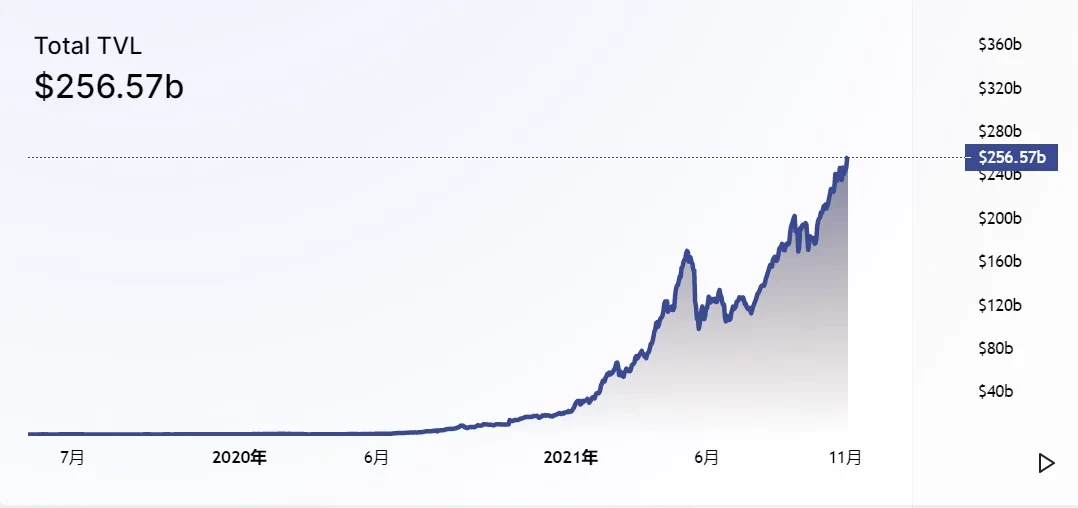
Figure 2: Total DeFi TVL across the network, data source: DeFi Llama
From Figure 2, one can not only see the current scale of total DeFi TVL across the network, but also the historical trends. If the MEV growth trend were to be plotted separately for comparison, one would find that the slopes of both curves share significant overlap in the time dimension.
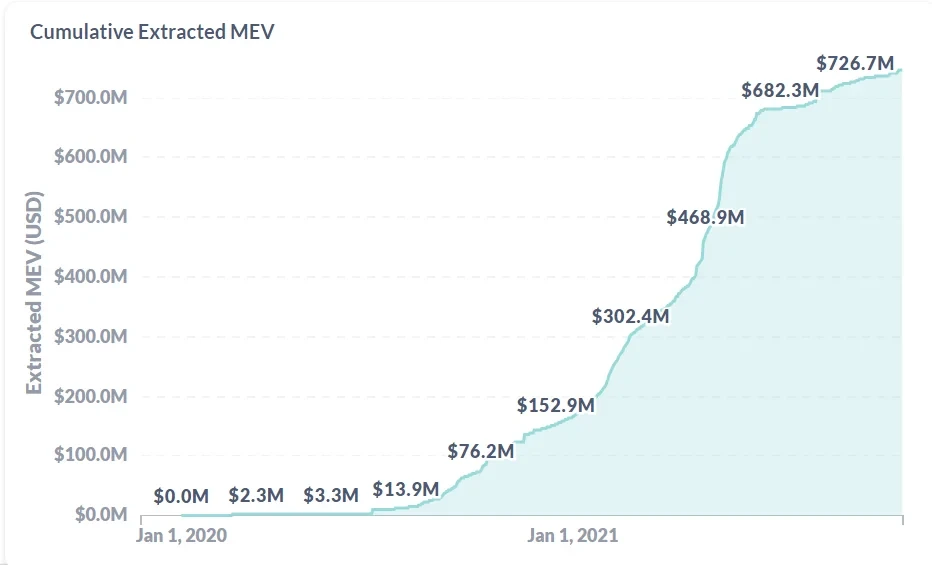
Figure 3: MEV value changes, data source: flashbots
Comparing Figure 3 with Figure 2, it can be observed that around July 2020, following the rise of DeFi, the extractable MEV value rose correspondingly. On February 1, 2020, the extractable MEV was only $200,000, while by February 1, 2021, this figure had surged to $220 million — an increase of 1,100 times.
Among these, the single-day peak MEV even reached $4 million.
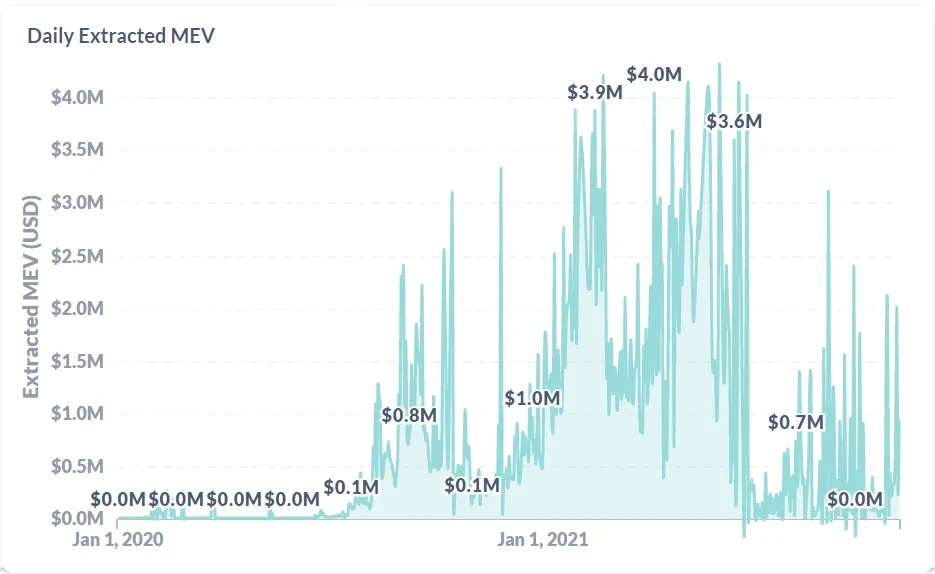
Figure 4: Daily extractable MEV changes, data source: flashbots
From the information provided by MEV-Explore v0 (Figure 5), it can be seen that currently, the extracted MEV has primarily occurred across 8 DeFi protocols — which are also the DeFi projects with the largest user bases and most concentrated trading activity in the Ethereum ecosystem: Uniswap (44%), SushiSwap (22%), Balancer (10%), Curve (9.5%), dYdX (8.5%), 0x (3%), Aave (1.9%), and Compound (1.4%). Uniswap and SushiSwap combined account for 66%.
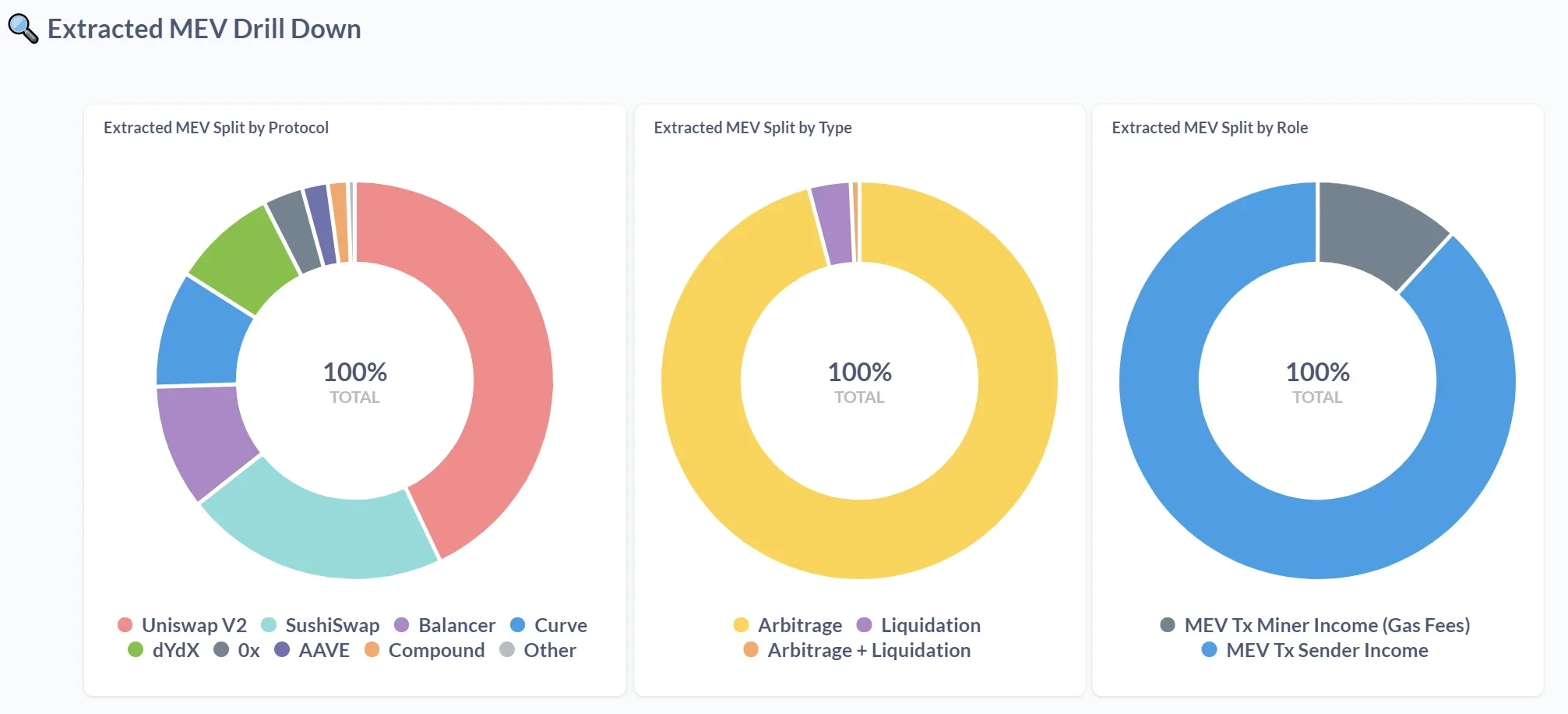
Figure 5: Ethereum MEV extractable value distribution, data source: flashbots
Classification and Impact of MEV
Based on the causes of MEV and their potential consequences, MEV can be broadly categorized into three types: benign MEV (inherent to certain protocols), harmful MEV, and catastrophic MEV.
1. Benign MEV: Some protocols rely on MEV capture for their operation, such as liquidations of DeFi lending protocols like Aave, Maker, and Compound, or arbitrage between Uniswap and SushiSwap to maintain market efficiency.
2. Harmful MEV: Mainly includes front-running and sandwich attacks. Front-running refers to an attack where, while a normal transaction is awaiting inclusion in a block, a front-running bot sets a higher Gas fee to execute the attack transaction first, thereby appropriating user profits. A notable front-running case exposed recently involved Punk 3860 from the CryptoPunk NFT series — valued at over $69,000 — being accidentally sold for less than 1 cent due to an operational error. According to Jonathan Clark, co-founder of the DeFi platform Float Capital, the owner intended to sell the NFT at a price under 1 cent in a whitelisted sale, but mistakenly listed it on the open market. The buyer who first discovered this flaw "bribed" an Ethereum miner with a fee of up to 22 ETH, thereby securing priority to have their transaction included in a block. Sandwich attacks is a vivid metaphor — it is also a popular front-running method in DeFi. To construct a "sandwich" trade, an attacker locates a pending victim transaction and attempts to夹击 the victim through preceding and following transactions.
3. Catastrophic MEV: Refers to threats to the consensus layer through reorganization (reorg) and time-bandit chain reorganization attacks. Although the probability of this occurring is low, logically this risk always exists. Because as long as the potential incentive is sufficiently attractive, miners have the ability to reorder transactions to capture MEV opportunities. As described by The Block: "Miners could see a lucrative transaction in a new block, then go back and reorganize the block before the transaction occurred, creating a new sequence — replacing the original transaction with their own, thereby capturing the profit. This is also called a 'time-bandit attack,' as it resembles a form of time travel for blockchain."
This potential risk can be概括 summarized by a familiar term — double spend. Double-spend risk is not unique to Ethereum; it is an unavoidable issue for all blockchain networks. However, the explosive growth of the Ethereum-based DeFi ecosystem over the past year or so has made this threat particularly prominent. Moreover, another hidden tension is that the launch of EIP-1559 has in fact harmed the interests of Ethereum miners. Although Ethereum miners and various stakeholders have thus far maintained amicable relations, as ETH2. 0 approaches, the question of what path Ethereum miners should take is also worthy of our attention.
Returning to the topic of MEV, in practical terms, MEV is clearly not going to disappear from Ethereum in the near term. However, this does not necessarily have to be something terribly alarming. Not only has the Ethereum development team recognized the aforementioned risks and proposed the EIP-3675 proposal as a safeguard, but several startup teams have also put forward viable improvement solutions to address these issues. Therefore, based on the current development trajectory, MEV is unlikely to cause explosive and sustained reorganizations in Ethereum. For the future of Ethereum, there remains much more for us to look forward to.
Disclaimer
This article may contain product-related content that does not apply to your region. This article is intended solely for providing general information and does not accept responsibility for any factual errors or omissions herein. This article represents only the author's personal views and does not constitute the views of OKX. This article is not intended to provide any advice, including but not limited to: (i) investment advice or investment recommendations; (ii) offers or solicitations to purchase, sell, or hold digital assets; or (iii) financial, accounting, legal, or tax advice. Holding digital assets (including stablecoins) involves a high degree of risk and may be subject to significant price fluctuations, and may even become worthless. You should carefully consider whether trading or holding digital assets is appropriate for you based on your financial situation. For questions about your specific circumstances, please consult your legal/tax/investment professional. The information in this article (including market data and statistics, where applicable) is provided for general reference purposes only. Although we have taken all reasonable precautions in preparing such data and charts, we do not accept any responsibility for any factual errors or omissions expressed herein. © 2025 OKX. This article may be reproduced or distributed in its entirety, or excerpts of 100 words or less may be used, provided that such use is non-commercial in nature. Any reproduction or distribution of the full article must prominently state: "This article is copyrighted © 2025 OKX, used with permission." Permitted excerpts must cite the article title and include the source, e.g., "Article title, [author name (if applicable)], © 2025 OKX." Portions of this content may have been generated or assisted by artificial intelligence (AI) tools. Derivative works and other uses of this article are not permitted.
Show More
Recommended Reading
OKX Pay: Ushering in the Next Generation of Cryptocurrency Payments
The preferred platform of tens of millions of users. Register with OKX to enjoy an exceptional trading experience and a diverse range of wealth management products. A message from OKX CEO Star: Today, we are officially launching the first version of OKX Pay to our global user base of over 100 million. As the industry's first truly non-custodial and compliant payment application, OKX Pay will be embedded directly within the OKX App, currently available to select markets with a full global rollout expected within the coming months.
2026年3月22日

A New Chapter: Building the Next Generation of Financial Infrastructure Together
The partnership between OKX and the Intercontinental Exchange (ICE) marks a significant milestone for OKX — and holds profound meaning for the evolution of the entire digital assets market. ICE builds and operates the world's most critical financial infrastructure, including the New York Stock Exchange and global derivatives and clearing platforms. ICE's strategic investment in OKX and joining our board reflects our shared conviction that digital assets technology will transform financial markets.
2026年3月10日
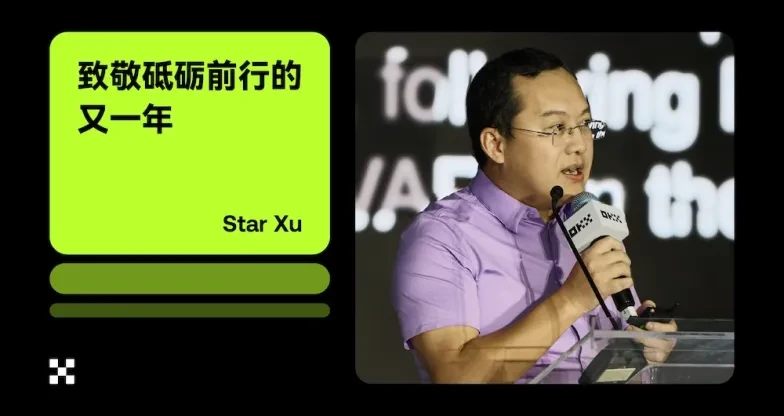
Reflecting on Another Year of Building
As OKX's CEO and a builder who stays true to his original vision, I take great pride in looking back on the extraordinary growth and progress OKX has achieved this year. Despite the challenges, 2024 was a year defined by focus, innovation, and resilience. We not only expanded and optimized our products, but also made significant strides in launching transparent and regulation-ready localized businesses, while further strengthening our global management team. It is worth noting that after going through
2026年1月29日

2025: Steady Progress Toward Financial Freedom
— An End-of-Year Letter to Global Users from OKX Founder and CEO Star "Financial freedom" is often misunderstood. It does not mean the absence of rules, but rather having the freedom to choose — even in the presence of rules — and ensuring that when the system is truly put to the test, it remains reliable and effective. This is what we remained focused on throughout 2025. First and foremost, I would like to express my sincere gratitude to our global customers, partners, and regulators.
2026年1月16日

OKX Officially Launches in Germany and Poland
By Erald Ghoos, CEO of OKX Europe. Today is a momentous day for OKX — and for cryptocurrency users across Europe. We have officially launched a fully compliant centralized cryptocurrency trading platform in Germany and Poland! For us, this is more than a geographic expansion — it is a commitment to building the future of cryptocurrency the right way: secure, transparent, and tailored to local needs. If you are in Germany
2025年10月21日

Partnership Upgrade! OKX and Standard Chartered Expand Into Europe
On October 15, Erald Ghoos, CEO of OKX Europe, stated that OKX is expanding its strategic partnership with Standard Chartered to the European Economic Area (EEA). Earlier this year, OKX first partnered with Standard Chartered in the UAE to launch the collateral mirroring program — an initiative that
2025年10月15日