OKX Research: Ethereum's Mid-Game Battle, The Reality and Illusion of Rollups
ARB +4.70%
Abstract
Since Ethereum's inception, its low transaction processing capacity has led to frequent network congestion and high gas fees, seriously limiting the development of the Ethereum ecosystem. Therefore, Ethereum scaling has always been a market concern. Against the backdrop of the DeFi explosion, Layer 2 scaling solutions such as sidechains, state channels, and Plasma could not meet market demands, making Rollup the favored solution of the era.
Of course, Rollup is not a pure Layer 2 solution, but rather more like a hybrid of Layer 1 and Layer 2: data is computed and packaged/compressed off-chain, then stored on-chain. Additionally, to address data authenticity and validity and ensure asset security, Rollup has introduced ZK-Rollup using "validity proofs," as well as Optimistic Rollup continuing Plasma's "fraud proofs."
In summary, ZK-Rollup and Optimistic Rollup each have advantages and disadvantages. ZK-Rollup is suitable for non-contract fields such as payments and trading, with low costs and high speed; while Optimistic Rollup, due to the existence of OVM, is currently suitable for smart contract application fields. However, with ZK-Rollup projects launching Turing-complete EVMs, ZK-Rollup may replace Optimistic Rollup in the future.
However, Rollup's scaling upper limit depends on the block gas consumption limit, so it can only serve as Ethereum's short-to-medium-term scaling solution to address the urgent needs of the DeFi ecosystem. In the long run, fundamentally solving Ethereum's scalability problem still relies on the successful implementation of Ethereum 2.0's sharding technology.
However, it's worth noting that Rollup protocols can capture value and are economically sustainable. It's foreseeable that tokens issued by Rollup projects will have tremendous investment potential.
After nearly two years of dormancy, Ethereum's Rollup scaling solution has finally reached the dawn of fruition: this February, Optimism announced completion of Series A funding and will launch mainnet in March; ZK Sync from Matter Labs, whose mainnet launched last year, will launch Turing-complete smart contracts this year; additionally, another Rollup solution garnering industry attention—Arbitrum—will also launch mainnet this year.
- Table 1. Rollup Solution Progress
Rollup Solution
Representative Projects
Potential Ecosystem Adopters
Launch Time
Optimistic Rollup
Optimism
Uniswap, Compound
March 2021
ZK Rollups
Matter Labs
Curve, SushiSwap
Testnet launched in 2020, Turing-complete smart contracts launching this year
Arbitrum
Offchain Labs
Bancor, Paraswap
Expected launch this year
Source: OKX Research
As dawn breaks for Rollup, the market is filled with anticipation and pursuit. But in reality, many investors and Ethereum users don't have a clear understanding of Rollup, though they've reached a general consensus: Rollup is important and is Ethereum's future.
The first part of this statement is correct—Rollup is indeed important for current Ethereum; but the second part is inaccurate—Rollup is not Ethereum's future. More precisely, Rollup only represents Ethereum's short-to-medium-term scaling solution, a mid-game battle in Ethereum's fight against network congestion. In the long run, fundamentally solving Ethereum's scalability problem still depends on the successful implementation of Ethereum 2.0's sharding technology.
To correctly understand and predict Rollup's future and grasp the wealth opportunities within, we need to analyze Rollup's historical context and underlying mechanisms.
1. Ethereum's Scaling War and the Rise of Rollup
Since Ethereum's inception, its inefficient performance has constantly been criticized by the market: Ethereum network's TPS (transaction processing capacity) is approximately 15 transactions/second, while Visa's network is 2000 transactions/second, and Alipay even reached 500,000 transactions/second during Double Eleven. Low transaction processing capacity has led to frequent Ethereum network congestion and high gas fees, especially during the 2017 bull market and the DeFi (Decentralized Finance) wave that began in 2020. This phenomenon has been particularly prominent, seriously limiting the further development of the Ethereum ecosystem.
Figure 1. Changes in Ethereum Network Daily Transaction Count and Gas Consumption
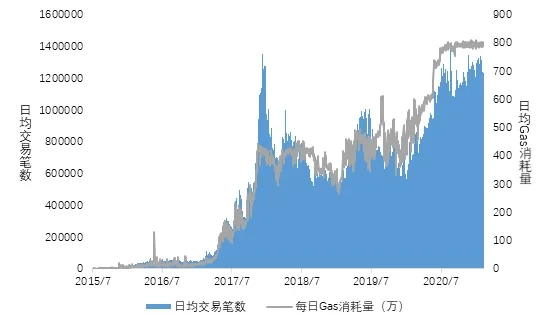
Source: Etherscan, OKX Research
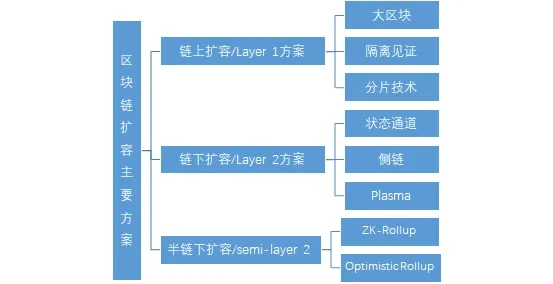
Solving blockchain network congestion and improving public chain scalability has gradually become an industry focus. Various blockchain scaling solutions have emerged, mainly falling into two categories:
On-chain scaling solutions, also called Layer 1 solutions, primarily achieve scaling by increasing the blockchain's own transaction capacity. Common Layer 1 solutions include increasing block capacity (such as BCH using 32M large blocks), Segregated Witness (BTC, separating digital signatures from transaction data, changing the original block structure to achieve scaling), and sharding technology (Ethereum 2.0, dividing the main chain's state and historical records onto different shards to achieve scaling).
Trading, to reduce costs and improve efficiency. Currently, mainstream Layer 2 solutions include state channels, sidechains, and Plasma.
Figure 2. Main Solutions for Blockchain Scaling
Source: OKX OKX Research Institute
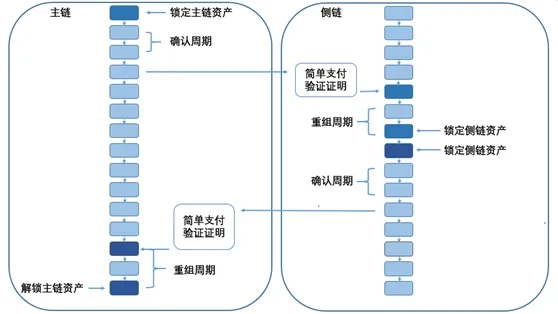
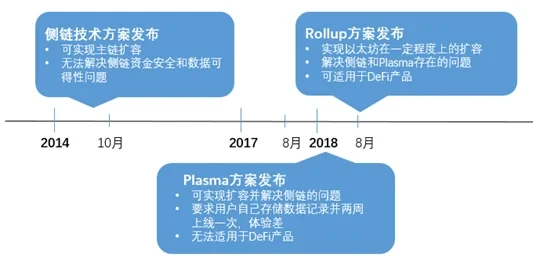
In the early development of Ethereum, people generally believed that sidechain technology was the best solution to the blockchain scaling problem. A sidechain is an independent blockchain running parallel to the main chain. By moving part of the Trading to the sidechain via a custodial method, the main chain can be scaled. However, this brings two serious problems: First, the security of funds on the sidechain cannot be guaranteed — once a hacker takes control of a sidechain, they can steal the funds on that sidechain; Second, sidechains cannot guarantee data availability — as long as a hacker controls the sidechain, they can refuse to share the underlying transaction data, dealing a major blow to the security of the main chain.
Figure 3. Sidechain Technical Solution Diagram
Source: OKX OKX Research Institute
To solve the problems of sidechains and achieve Ethereum scaling, Ethereum founder Vitalik launched a Layer 2 scaling solution called "Plasma" in 2017. What makes Plasma special is its fraud proof mechanism: Plasma sends specific underlying data to users for their own safekeeping, solving the data availability problem; Additionally, Plasma has an "exit period" design — even if a hacker gains control of the sidechain and attempts to withdraw funds, any user can submit evidence during the "exit period" to challenge the withdrawal. If the challenge succeeds, no one can withdraw those assets, and the operator will be penalized — thereby ensuring the authenticity, validity, and accuracy of data, and solving the fund security problem.
However, while Plasma solved the sidechain problems, it created new ones: First, users must go online at least once every two weeks to monitor the Plasma chain, otherwise if they miss the "exit period," hackers can withdraw the assets; Second, users must store the underlying transaction data themselves to ensure data availability, which imposes enormous storage costs on users. Therefore, Plasma is not user-friendly and provides a very poor experience. Against the backdrop of the 2018 bear market, the Plasma solution, which had been highly anticipated by the Ethereum community, was gradually abandoned.
In fact, even without the 2018 bear market, Plasma could hardly adapt to the development of the Ethereum ecosystem — starting in 2019, DeFi gradually rose, and AMMs represented by Uniswap became standout performers. For liquidity providers (LP) on Uniswap, the assets deposited in trading pools change frequently and easily, which cannot meet Plasma's requirement for challenge verification on every LP transaction. In fact, a large number of DeFi protocols can change account states without user consent, so Plasma was destined to decline in the DeFi era.
Figure 4. Evolution of Layer 2 Scaling Solutions
Source: OKX OKX Research Institute
Similarly, state channels also face the problems encountered by sidechains and Plasma: state channels cannot represent objects that do not have a clearly defined owner in their logic (such as Uniswap), and require that all objects have a clearly defined asset owner.
**Therefore, as DeFi becomes increasingly important to the Ethereum ecosystem today, state channels, sidechains, and Plasma are all unable to meet Ethereum's real-world needs. Rather than saying that Vitalik played a decisive role in promoting Rollup, it is more accurate to say that the era chose Rollup. **So what makes Rollup special?
2. Rollup Principle Analysis
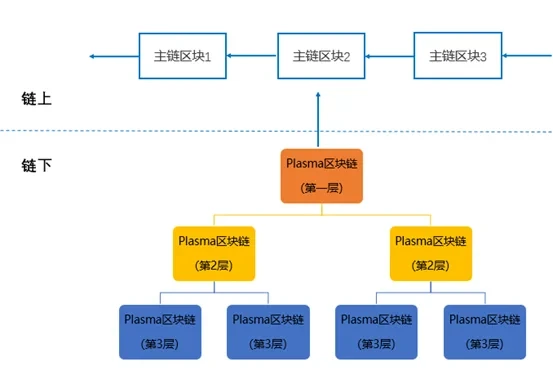
Before diving into Rollup, let us first understand Plasma's scaling method: off-chain, the Plasma operator aggregates transactions waiting for batch processing, generating a Merkle Tree, where each leaf in the tree can represent the information of one transaction's assets. If there is no Trading, the leaf value is 0. Subsequently, Plasma sends the Merkle Tree root to the main chain for on-chain storage, while sending the Merkle Tree branches to users for safekeeping.
Therefore, the main chain only stores the hash of the Merkle Tree root. Through the index of the Merkle Tree root, one can find the specific transaction information in the branch leaves. However, this specific transaction information is stored off-chain by users, thus saving a large amount of space on the on-chain blocks and achieving main chain scaling.
Figure 5. Plasma Scaling Principle
Source: Plasma Whitepaper, OKX OKX Research Institute
However, as mentioned earlier, having users store specific transaction information off-chain reduces data availability and is not suitable for DeFi applications. To address this, the Ethereum community proposed a new solution: compress transaction data and place it on-chain — this is the Rollup (Aggregation) solution.
Specifically, Rollup compresses transaction data into a Merkle Tree and stores it on-chain; at the same time, it stores the Merkle Tree root (state root) in the smart contract. Rollup operators can publish a batch of summarized transactions (Batch), which are compressed transaction sets and include both the previous state root and the new state root (after processing transactions). The smart contract will check and update the state root, thereby achieving the transfer of Assets.
Of course, from the above we can see that Rollup is not a pure Layer 2 solution, but rather more like a hybrid of Layer 1 and Layer 2: data is computed and packaged off-chain, but stored on-chain. Therefore, it is more appropriate to call Rollup a semi-off-chain scaling or semi-layer 2 solution.
Figure 6. Rollup Scaling Principle
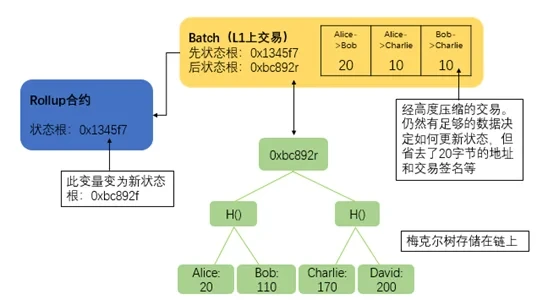
Source: Vitalik. An Incomplete Guide to Rollups, OKX Research
To use an analogy, suppose we need to store many movies. Plasma is like storing movies on a computer and only saving a directory file on a USB drive. With the guidance of this directory file, we can easily find the location of any movie on the computer. The Rollup approach, however, is to first compress the movies and then save them all to the USB drive. This way, we can store more movies on the USB drive.
So how does Rollup achieve compression? — Mainly by compressing transaction parameters, primarily including Nonce, Gasprice, Gas, To, Value, Signature, as shown in the following table:
- Table 2. Rollup Compression Method
Parameter
Original Storage Capacity (bytes)
Storage Capacity under Rollup (bytes)
Nonce
`>3`
Gasprice
`>8`
0-0.5
Gas
0-0.5
To
Value
`>9`
`>3`
Signature
`>68`
`>0.5`
From
O
Total Storage Capacity (bytes)
`>112`
`>12`
Source: Vitalik. An Incomplete Guide to Rollups, OKX Research
In the past, a transaction required 112 bytes of storage space, now it only needs 12 bytes. One byte costs approximately 16 Gas; on Ethereum, the gas limit is 12.5 million. Assuming Rollup requires 500,000 Gas, then on Rollup, its transaction processing capacity is:
(Block Gas Consumption Limit – Rollup Gas Consumption) / Gas Consumption per Byte / Bytes per Transaction / Block Time = (12,500,000 – 500,000) / 16 / 12 / 14 = 4464 transactions/second
Currently, a transfer on Ethereum consumes approximately 21,000 Gas, which means if used entirely for transfers, Ethereum's maximum transaction processing capacity is: Block Gas Consumption Limit / Gas Consumption per Single Transfer / Block Time = 12,500,000 / 21,000 / 13 = 45 transactions/second
This means Rollup improves Ethereum's TPS by 100 times in transfer scenarios. Similarly, according to Vitalik's calculations, in ERC20 transfers and Uniswap use cases, it can achieve 100-400 times Ethereum TPS expansion under the same conditions.
The previous analysis proceeded smoothly, but we overlooked an important issue similar to sidechain technology: How to prevent Rollup operators from forging data to steal assets? The Ethereum community proposed two solutions: ZK-Rollup using "validity proofs," and Optimistic Rollup using Plasma's "fraud proofs."
3. ZK-Rollup VS Optimistic Rollup
First, let's look at the ZK-Rollup solution implementing validity proofs. ZK-Rollup uses ZK-SNARK (Zero-Knowledge Succinct Non-Interactive Argument of Knowledge) to ensure transaction security.
"Zero-Knowledge Proof (ZKP)" was proposed by S. Goldwasser, S. Micali, and C. Rackoff in the early 1980s, referring to a prover's ability to convince a verifier that a statement is true without providing any useful information to the verifier.
A classic example: There is a circular corridor with a gap, where the exit and entrance are very close (within visible distance), but there is a door somewhere in the middle of the corridor that can only be opened with a key. Alice wants to prove to Bob that she owns the key. Using zero-knowledge proof, Bob watches Alice enter the corridor from the entrance, then exit from the exit. At this point, Bob has not received any information about the key, but can completely prove that Alice owns the key.
Figure 7. Zero-Knowledge Proof Example
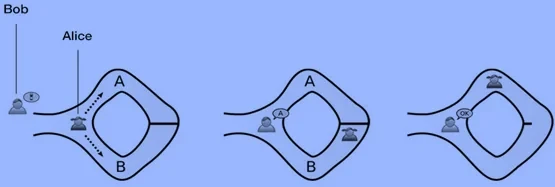
Source: OKX Research
From the above, we can see that ZKP has computational asymmetry. In the ZK-Rollup solution, the Rollup operator invests significant resources to execute ZK-SNARK calculations and place them in batched transactions, while the smart contract (verifier) can quickly and cost-effectively prove transaction security. Therefore, ZK-Rollup has many advantages: it can verify the authenticity and validity of data concisely and quickly while protecting privacy; however, its disadvantages are high computational complexity, high technical difficulty, and difficulty supporting virtual machines.
In the previous Plasma solution, we already introduced its "fraud proof" mechanism design, which can achieve the authenticity, validity, and accuracy of transaction data, ensuring asset security. Optimistic Rollups adopt this mechanism: These Rollups track all historical state roots and the hash value of each batch. If anyone discovers that a batch's post-state root is incorrect, they can publish a proof to the blockchain, proving that the b
Batch calculation errors. The smart contract verifies the proof and rolls back that batch and all subsequent batches.
Optimistic Select chose Plasma's fraud proof mechanism, which means there is a lengthy "exit period" (about one week), just like Plasma, greatly reducing the efficiency of capital utilization. However, the good news is that as the DeFi ecosystem matures, there can be numerous liquidity providers offering capital to users during the "exit period," effectively solving the problem of low capital utilization efficiency. Most importantly, Optimistic Rollup also inherits Plasma's OVM, which means that smart contracts compatible with Ethereum EVM can be deployed on the Optimistic Rollup network—this is particularly important for DeFi.
- Table 3. ZK-Rollup and Optimistic Rollup Performance Comparison
Feature
Optimistic Rollups
ZK Rollups
Fixed gas consumption per batch
~40,000 (lightweight transactions, mainly just changing the state root value)
~500,000 (ZK-SNARK verification requires significant computation)
Withdrawal period
~One week (withdrawals are delayed; time must be allowed for submitting fraud proofs, and withdrawals must be canceled if fraud occurs)
Extremely fast (only need to wait for the next batch)
Technical complexity
Low
High (ZK-SNARK is a very new and mathematically complex technology)
Generalizability
Easy to achieve (general-purpose EVM rollups are about to launch on mainnet)
Harder to achieve (using ZK-SNARK proofs for general-purpose EVM execution is more difficult than for simple calculations)
Gas consumption per on-chain transaction
Higher
Lower
Off-chain computation cost
Lower (despite requiring many full nodes to recompute)
Higher (ZK-SNARK proofs for general-purpose computation can be expensive, potentially thousands of times more costly than running the computation directly)
Source: Vitalik. An Incomplete Guide to Rollups, OKXOKX Research Institute
Overall, ZK-Rollup and Optimistic Rollup each have their own strengths and weaknesses. ZK-Rollup is suitable for non-contract fields such as payments and trading, with low cost and high speed; while Optimistic Rollup, due to the existence of OVM, is currently suitable for smart contract application fields. However, as ZK-Rollup projects launch Turing-complete EVMs, ZK-Rollup may replace Optimistic Rollup in the future.
4. Rollup's Future and Wealth Opportunities
As we can see from above, compared to other Layer2 solutions, Rollup can better ensure data security and data availability. However, is Rollup really the future of Ethereum?
Not quite. From Rollup's scaling approach, we can see that the upper limit of the block gas consumption is the upper limit of the Rollup solution. This is similar to taking the subway during morning rush hour—in order to fit more people in the subway car (block), we try to squeeze more people in (compression). However, no matter how much you compress, there is an upper limit. As blockchain applications continue to develop in the future, would we simply be satisfied with a maximum of 100x scaling? Therefore, in the long term, the future of Ethereum scaling still depends on the successful implementation of Ethereum 2.0 sharding technology.
However, according to Ethereum's official plan, the implementation of Ethereum 2.0 sharding may not happen until 2030. But even now, due to the popularity of DeFi, Ethereum is already congested and gas fees are high. State channels, Plasma, and other Layer 2 solutions from a few years ago cannot meet DeFi's requirements, and sharding technology remains a distant goal. It is precisely "the past cannot be recalled, and the future is yet to come." Rollup has naturally become the best solution for addressing Ethereum's scaling in the short to medium term, serving as the mid-field relay toward Ethereum 2.0.
Of course, another reason Vitalik advocates for Rollup is: Rollup protocols can capture value and are economically sustainable.
First, regarding economic value, Rollup can alleviate Ethereum's congestion and reduce gas fees. Part of the cost savings can be converted into Rollup protocol revenue (such as through fees and MEV[1] methods), with economic sustainability.
So why can Rollup capture value? This is related to Rollup's specificity: data is stored on the main chain, while only computation is done off-chain. This hybrid approach between Layer 1 and Layer 2 makes Rollup a special DApp on the main chain. Therefore, Rollup projects can issue tokens based on their Rollup protocol on the main chain and capture the protocol's value through tokens.
It is foreseeable that in the coming months after Rollup's big breakout, many Rollup projects will issue tokens. Projects willing to attach the protocol's economic value to their tokens will have tokens with significant investment potential.
[1]Note: MEV stands for Miner Extractable Value, a measure of the profit that miners (or validators, sequencers, etc.) can obtain through their ability to arbitrarily include, exclude, or reorder transactions within the blocks they produce.
Disclaimer: Digital asset trading involves significant risk. This material should not be construed as an investment decision-making basis or interpreted as investment trading advice. Please ensure you fully understand the risks involved and invest cautiously. OKXOKX Academy only provides information for reference and does not constitute any investment advice. All investment activities by users are unrelated to this site.
Disclaimer
This article may contain product-related content not applicable to your region. This article is committed to providing general information only and does not responsible for any factual errors or omissions. This article solely represents the author's personal views and does not represent OKX's views. This article does not intend to provide any advice, including but not limited to: (i) investment advice or investment recommendations; (ii) offers or solicitations to purchase, sell, or hold digital assets; or (iii) financial, accounting,
This is not legal or tax advice. Holding digital assets (including stablecoins) involves high risk, may fluctuate significantly, or even become worthless. You should carefully consider whether trading or holding digital assets is suitable for you based on your financial situation. For questions about your specific circumstances, please consult your legal/tax/investment professionals. The information appearing in this article (including market data and statistics, if any) is provided for general reference purposes only. While we have taken all reasonable precautions in preparing this data and charts, we do not accept any liability for any factual errors or omissions expressed herein. © 2025 OKX. This article may be reproduced or distributed in its entirety, and excerpts of 100 words or fewer from this article may be used, provided that such use is non-commercial. Any reproduction or distribution of the entire article must be accompanied by the following attribution: "This article is copyrighted © 2025 OKX, used with permission." Permitted excerpts must cite the article name and include the source, for example "Article name, [author name (if applicable)], © 2025 OKX". Some content may have been generated or assisted by artificial intelligence (AI) tools. Derivative works and other uses of this article are not permitted.
Show More
Recommended Reading
OKX Pay: Ushering in a New Era of Next-Generation Crypto Payments
The choice of tens of millions of users. Register with OKX to enjoy an exceptional trading experience and a wide range of wealth management products. A letter from OKX CEO Star: Today, we are officially launching the first version of OKX Pay for over 100 million global users. As the industry's first payment application to truly achieve a seamless blend of non-custodial and compliant services, OKX Pay will be embedded directly in the OKX App and is currently available in select markets, with a full global rollout expected within the coming months.
March 22, 2026

A New Chapter: Building the Next Generation of Financial Infrastructure Together
The partnership between OKX and Intercontinental Exchange (ICE) marks a significant milestone for OKX and is equally profound for the evolution of the entire digital assets market. ICE builds and operates the world's most critical financial infrastructure, including the New York Stock Exchange and global derivatives and clearing platforms. ICE's strategic investment in OKX and joining our board reflects our shared belief that digital assets technology will transform financial markets.
March 10, 2026
Tribute to Another Year of Relentless Building
As OKX's CEO and a builder who stays true to the original mission, I take great pride in reflecting on the remarkable growth and progress OKX achieved this year. Despite facing significant challenges, 2024 was a year marked by focus, innovation, and resilience. We not only expanded and improved our products, but also made significant strides in launching transparent and regulation-compliant localized businesses, while further strengthening our global management team. It is worth noting that after going through
January 29, 2026

2025: Steady Progress Toward Financial Freedom
— An End-of-Year Letter to Global Users from Star, Founder and CEO of OKX. "Financial freedom" is often misunderstood. It does not mean the absence of rules, but rather the right to make choices within a framework of rules — and, when the system is truly put to the test, it remains reliable and effective. This has been our unwavering focus throughout 2025. First and foremost, I would like to extend my heartfelt gratitude to our global customers, partners, and regulators for
January 16, 2026

OKX Officially Launches in Germany and Poland
By Erald Ghoos, CEO of OKX Europe. Today is a momentous day for OKX — and for crypto users across Europe. We have officially launched a fully compliant centralized cryptocurrency trading platform in Germany and Poland! For me
To put it simply, this is not just a geographical expansion, but a commitment to building the future of cryptocurrency with the right method: secure, transparent, and meeting local needs. If you are in Germany
October 21, 2025
Partnership Upgrade! OKX Partners with Standard Chartered to Expand European Market
On October 15, OKX Europe CEO Erald Ghoos stated that OKX is expanding its strategic partnership with Standard Chartered to the European Economic Area (EEA). Earlier this year, OKX first partnered with Standard Chartered in the UAE to launch a collateral mirroring program—this is a
October 15, 2025