Learn K-Line Charts from Zero - Lesson 1: From Price to K-Line
K-line charts are a fundamental tool for technical analysis. This series will take you through K-line analysis from scratch, systematically.
What is a K-Line?
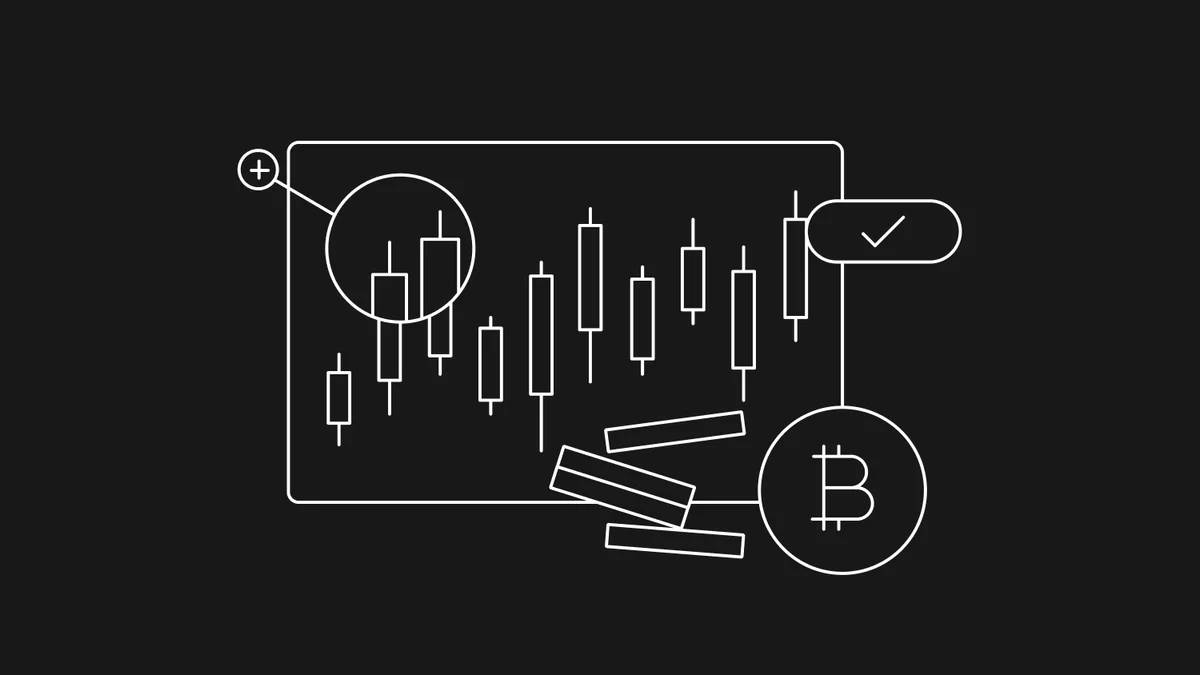
A K-line (Candlestick Chart), also known as a candlestick chart, is a type of chart used to display price movements. Each K-line represents the price change within a time period.
Origin of the K-Line
K-line charts originated in 18th-century Japan, invented by Japanese rice trader Munehisa Homma to record rice market price fluctuations. They were later introduced to financial markets and became the most widely used technical analysis tool.
The Four Elements of a K-Line
Each K-line contains four pieces of price information:
1. Open Price
The price of the first trade at the start of the time period.
2. Close Price
The price of the last trade at the end of the time period.
3. High Price
The highest traded price within the time period.
4. Low Price
The lowest traded price within the time period.
K-Line Structure
Body
The body is the rectangular area between the open and close prices.
Bullish Candle (Green/Red):
- Close Price > Open Price
- Indicates a price increase
- Displayed as green on OKX
Bearish Candle (Green/Red):
- Close Price < Open Price
- Indicates a price decrease
- Displayed as red on OKX
Shadow (Wick)
The shadow is the thin line extending above or below the body.
Upper Shadow:
- Extends from the top of the body to the high price
- Indicates resistance encountered during an upward move
Lower Shadow:
- Extends from the bottom of the body to the low price
- Indicates support gained during a downward move
K-Line Time Periods
K-lines can represent different time periods:
Common Periods
- 1-Minute K-Line: Each K-line represents 1 minute
- 5-Minute K-Line: Each K-line represents 5 minutes
- 15-Minute K-Line: Each K-line represents 15 minutes
- 1-Hour K-Line: Each K-line represents 1 hour
- 4-Hour K-Line: Each K-line represents 4 hours
- Daily K-Line: Each K-line represents 1 day
- Weekly K-Line: Each K-line represents 1 week
- Monthly K-Line: Each K-line represents 1 month
How to Select a Period?
Short-Term Trading:
- Use 1-minute, 5-minute, and 15-minute K-lines
- Suitable for intraday trading
Mid-Term Trading:
- Use 1-hour, 4-hour, and daily K-lines
- Suitable for swing trading
Long-Term Investing:
- Use daily, weekly, and monthly K-lines
- Suitable for trend investing
Basic K-Line Patterns
1. Marubozu (Bullish)
- No upper or lower shadows
- Open price = Low price
- Close price = High price
- Indicates strong buying pressure
2. Marubozu (Bearish)
- No upper or lower shadows
- Open price = High price
- Close price = Low price
- Indicates strong selling pressure
3. Doji
- Open price ≈ Close price
- Body is very small or nonexistent
- Long upper and lower shadows
- Indicates balanced buying and selling forces
4. Long Upper Shadow
- Very long upper shadow
- Small body
- Indicates strong resistance during an upward move
5. Long Lower Shadow
- Very long lower shadow
- Small body
- Indicates strong support during a downward move
How to View K-Line Charts on OKX
Step 1: Go to Trading Page
- Log in to your OKX account
- Click "Trade" → "Spot Trading" or "Derivatives Trading"
Step 2: Select Trading Pair
Enter the trading pair in the search box, such as "BTC/USDT"
Step 3: View K-Line Chart
- The K-line chart is located in the center of the page
- Daily K-line displayed by default
Step 4: Switch Time Period
Click the time period button above the K-line chart:
- Timeframe
- 1 Minute
- 5 Minutes
- 15 Minutes
- 1 Hour
- 4 Hours
- Daily
- Weekly
Step 5: Use Tools
The K-line chart offers various tools:
- Indicators: Add technical indicators (MA, MACD, RSI, etc.)
- Drawing Tools: Draw trendlines, support and resistance lines
- Annotations: Add text annotations
K-Line Color Settings
OKX supports two color schemes:
Scheme 1 (Default):
- Green = Increase (Bullish Candle)
- Red = Decrease (Bearish Candle)
Scheme 2 (Traditional):
- Red = Increase (Bullish Candle)
- Green = Decrease (Bearish Candle)
How to Change:
- Click the settings icon in the top-right corner of the K-line chart
- Select "Color Settings"
- Choose your preferred scheme
Practical Exercises
Exercise 1: Identify K-Line Elements
Observe a K-line and answer:
- Is this a bullish or bearish candle?
- What are the open and close prices?
- What are the high and low prices?
- Are there upper and lower shadows?
Exercise 2: Analyze K-Line Patterns
Observe recent K-lines and determine:
- Has a Doji appeared?
- Are there long upper or lower shadows?
- How large is the body?
- What do these patterns indicate?
FAQ
Q: Why do different platforms have different K-line colors?
A: Different regions have different conventions. Mainland China习惯红涨绿跌 (follows the red-for-up, green-for-down convention), while international markets习惯绿涨红跌 (use green-for-up, red-for-down). OKX supports customization.
Q: What is the difference between K-line charts and tick charts?
A: Tick charts display continuous price changes, while K-line charts segment time into intervals. K-line charts are more suitable for technical analysis.
Q: Which time period K-line should I look at?
A: Choose based on your trading style. It is recommended to reference multiple periods simultaneously, such as daily K-lines for trend and hourly K-lines for entry points.
Q: Can K-lines predict future prices?
A: K-lines reflect historical prices and cannot directly predict the future. However, by analyzing K-line patterns and combinations, you can gauge market sentiment and possible price movements.
Preview of Next Lesson
Lesson 2: The Meaning of Single K-Lines
We will learn:
- The market meaning of different K-line patterns
- How to judge buying and selling forces from single K-lines
- Important reversal K-line patterns
- Practical case studies
Learning Tips
- Practice Daily: Observe K-line charts every day to develop market intuition
- Keep Records: Document your analysis and compare with actual price movements
- Progress Gradually: Master the basics first, then move on to complex patterns
- Apply in Practice: Use simulated trading to verify what you have learned
Summary
K-line charts are the foundation of technical analysis:
- Each K-line contains four pieces of price information
- The body and shadows reflect buying and selling forces
- Different time periods suit different trading styles
- You can easily view and analyze K-lines on OKX
Mastering K-lines is Step 1 to becoming a successful trader. Continue to the next lesson, where we will dive deep into the practical application of K-lines!
Learn K-Line Charts from Zero Series will continue to update. Stay tuned!