Ethereum 2.0 First Anniversary: Key Highlights Worth Noting
At 8:00 PM Hong Kong time on December 1, 2020, Ethereum 2.0 launched its genesis block, marking the official launch of Phase 0 (the Beacon Chain). According to the established rules, before the Beacon Chain launch, the Ethereum 2.0 deposit contract needed to receive a minimum of 524,288 ETH, equivalent to at least 16,384 validators. To support this milestone in Ethereum's development, Vitalik Buterin, the founder of Ethereum, deposited 3,200 ETH in advance.
One year later, as we approach the first anniversary of the Ethereum 2.0 launch, let's review the achievements Ethereum 2.0 has made over the past year and highlight the information worth our attention.
According to statistics from OKLink On-Chain Master, as of 9:00 AM Hong Kong time on November 22, 2021, the total amount staked on Ethereum 2.0 reached 8.343 million ETH. Compared to the initial 520,000 ETH at the Beacon Chain launch, the total staked amount has increased by 7.819 million ETH over the past year, representing a growth of over 1,492.1%.
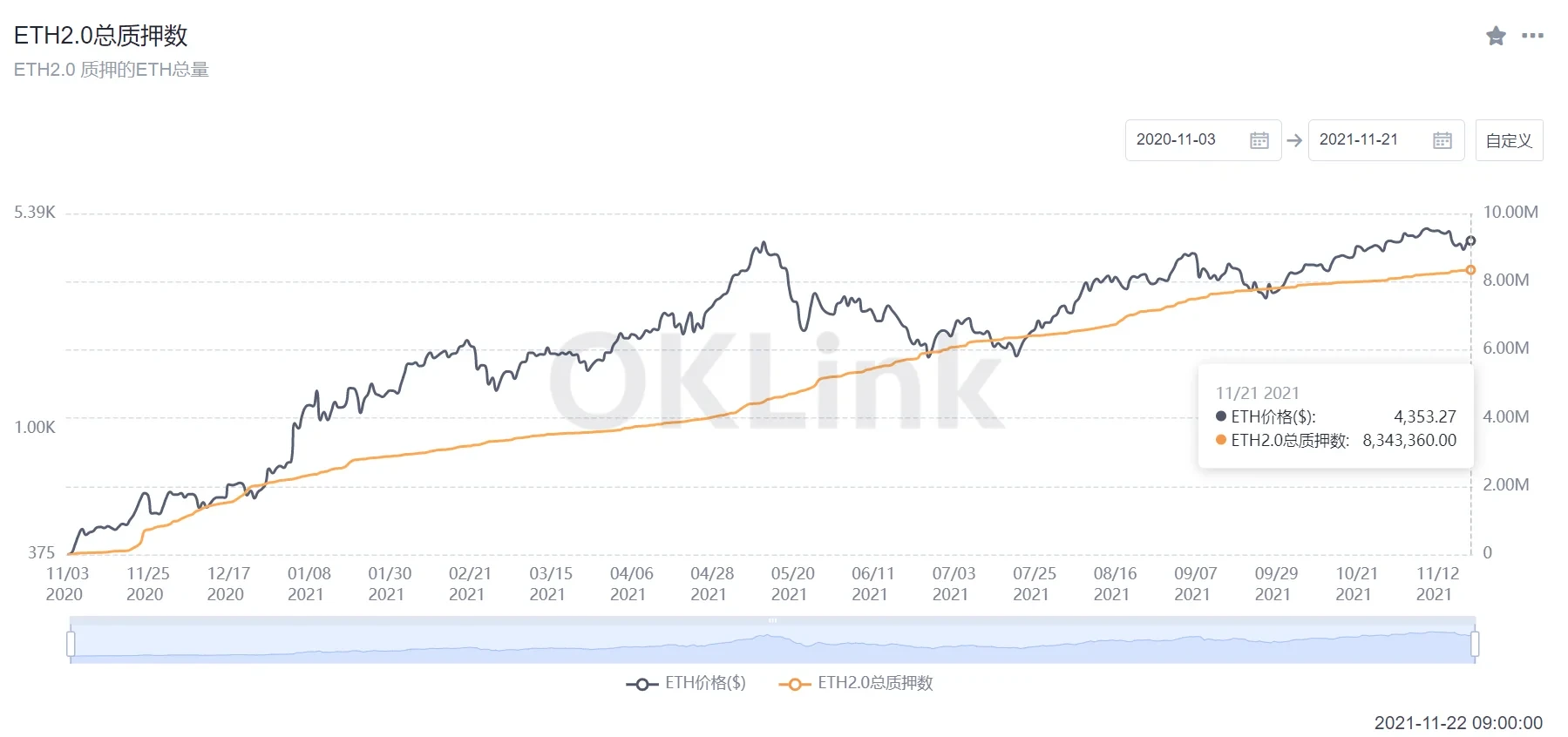
Changes in Total Ethereum 2.0 Staked Amount, Data Source: OKLink On-Chain Master
Correspondingly, the total number of deposit addresses and validators on Ethereum 2.0 reached 260,730 and 260,181 respectively, demonstrating the significant enthusiasm of market investors for Ethereum 2.0.
As a result, the Ethereum 2.0 staking rate has also risen steadily. According to OKLink On-Chain Master data, as of 9:00 AM Hong Kong time on November 22, 2021, the Ethereum 2.0 staking rate had reached 7.1%. This means that the amount of ETH locked in the Ethereum 2.0 deposit contract has reached 7.1% of the total ETH circulating supply. Particularly after the launch of EIP-1559, the slowdown in Ethereum's issuance rate due to the burning of base fees has further contributed to the increase in the Ethereum 2.0 staking rate.
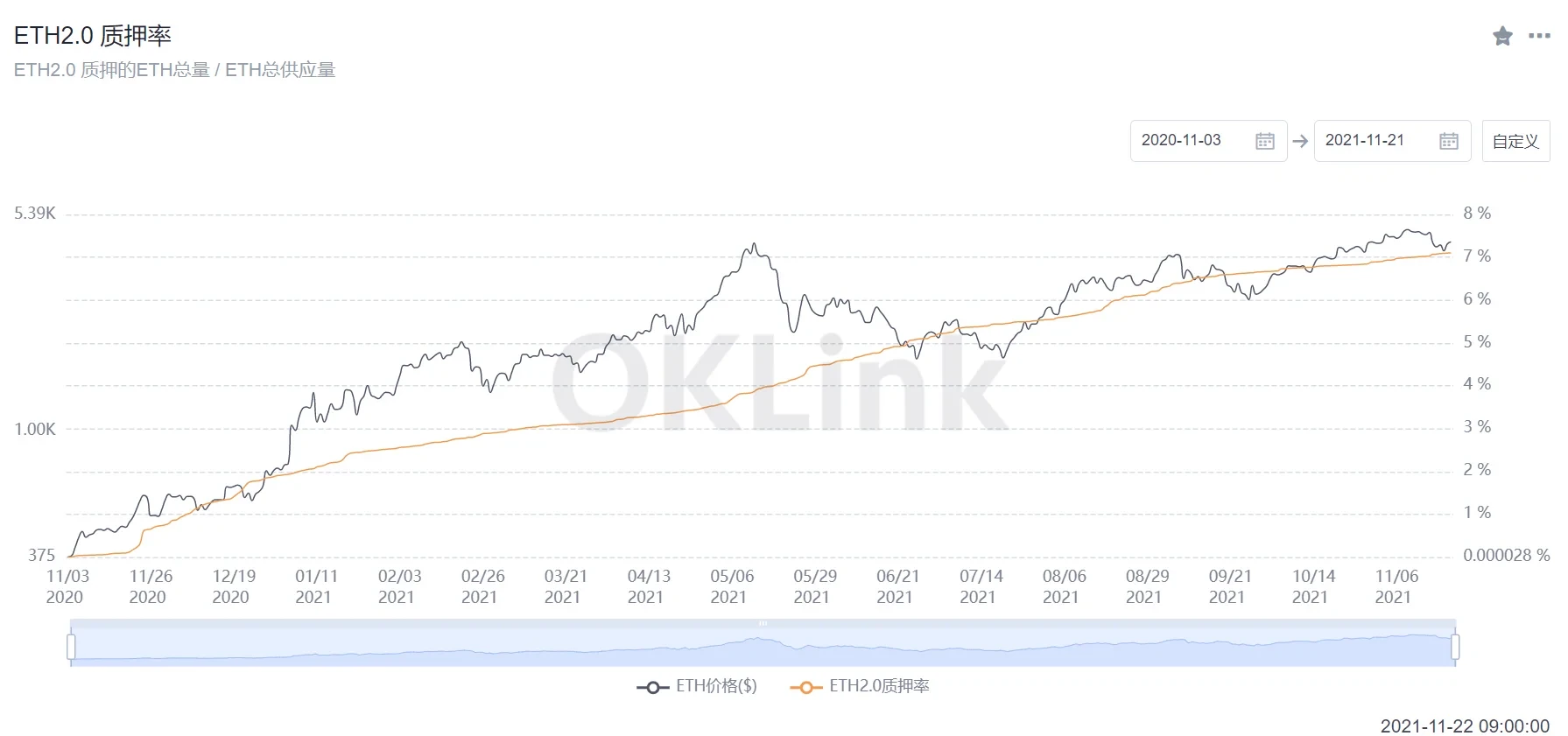
Changes in Ethereum 2.0 Staking Rate, Data Source: OKLink On-Chain Master
Next, let's compare the changes in ETH price over this year. On December 1, 2020, according to OKX platform quotes, the closing price of ETH was $618.88. Within the following year, ETH price reached a high of $4,871.42 (as of November 22, 2021), representing an increase of over 687.1%.
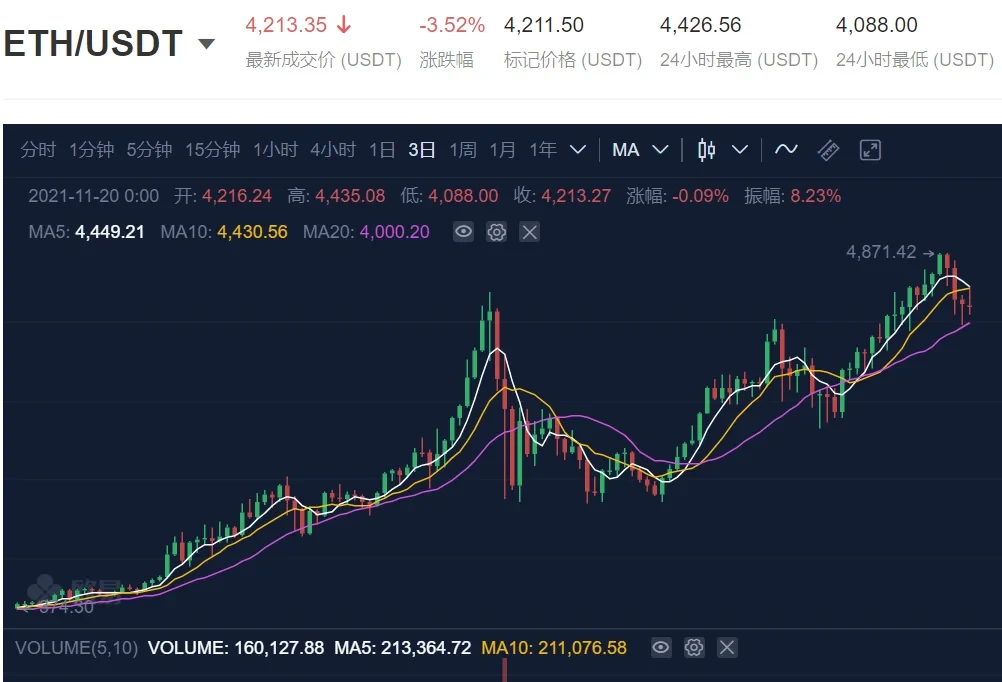
ETH Price Trend Over the Past Year, Data Source: OKX
In previous articles from the OKX Academy introducing Ethereum, we have mentioned the macro Ethereum development roadmap on multiple occasions. According to the planning of the Ethereum core development team, the Ethereum network will go through four development stages—Frontier, Homestead, Metropolis, and Serenity. Although the number of participants in digital asset investment has reached tens of millions or even hundreds of millions, the proportion of investors who have actually studied Bitcoin's design principles or Ethereum's technical roadmap is much smaller. On one hand, the ultra-high returns (theoretically) in the digital asset investment field have diluted the enthusiasm of most investors to delve deeper; on the other hand, blockchain, as the underlying technology supporting digital assets, has not yet appeared in the public eye as a professional and systematic discipline. Moreover, both in terms of technology and application, the evolution of blockchain and digital assets is proceeding at an extremely rapid pace, which has inadvertently created certain barriers for ordinary investors to gain in-depth understanding. When we look back at the development history of blockchain technology, it is not difficult to find that although cryptography, distributed storage, consensus mechanisms, and other important underlying technologies that constitute blockchain have been studied in academia for decades, blockchain technology has only been regarded as an independent technology for just over ten years. It was not until Satoshi Nakamoto's genius combination of the above technologies through Bitcoin that people believed it was indeed possible to build a distributed database through such a method. As a follower and improver of Bitcoin, Ethereum's history is even shorter. It was not until July 2015, after several months of stress testing, that the Ethereum mainnet finally went live, ushering in the "Frontier Era." However, early Ethereum only supported developers mining ETH, developing dApps, and some simple tools on it. At best, it could be considered a "usable" blockchain, far from the prosperous ecosystem we see today. Therefore, after "Frontier," the Ethereum developer team successively completed the "Homestead" and "Metropolis" upgrades, continuously advancing Ethereum network performance and ecosystem development. "Metropolis" was launched in two phases: Byzantium (October 2017) and Constantinople (January 2019). The primary goal of these upgrades was to make Ethereum lighter, faster, and more secure.
With the completion of the Constantinople upgrade in February this year, Ethereum arrived at the doorstep of "Serenity" (also known as ETH 2.0). After the Constantinople upgrade, the Ethereum network has successively undergone the Istanbul upgrade, Muir Glacier upgrade, Berlin upgrade, and London upgrade. Among these, the London upgrade in early August attracted the highest market attention and had the greatest impact, as it included several heavyweight improvement proposals such as EIP-1559 and EIP-3554. The core of EIP-1559 proposed reducing trading fee volatility by burning fees paid in ETH rather than distributing them to miners. Since its launch on August 5, a cumulative total of 974,000 ETH has been burned, accounting for 66.68% of the total Ethereum network issuance during the same period. On September 3, Ethereum officially welcomed its first deflationary day, with a net reduction of 352 ETH that day.
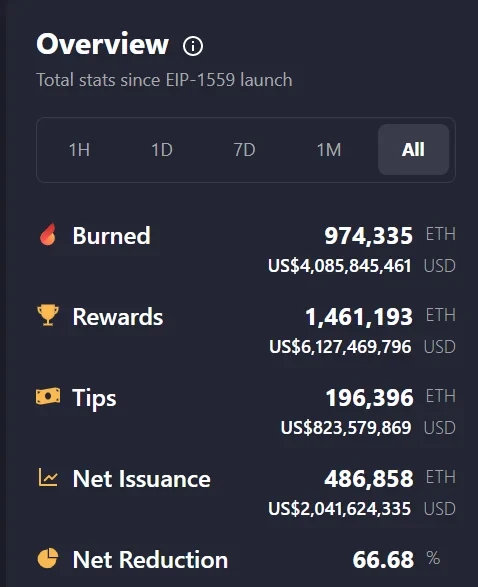
ETH Burned Since EIP-1559 Launch, Data Source: watchtheburn
Additionally, at 1:27 PM Hong Kong time on October 27, 2021, when the Ethereum Beacon Chain reached Epoch 74240, the Ethereum network underwent a minor upgrade—the Altair hard fork upgrade. Altair is a relatively minor update to Ethereum's Beacon Chain, with one important new feature being the "light client sync committee." Validators in this committee are periodically incentivized to provide block header information to light clients.
According to the latest news from the Ethereum core development team, when the block height reaches 13,773,000 (approximately December 8), the Ethereum Arrow Glacier network upgrade will be launched. This upgrade mainly includes EIP-4345, which postpones the difficulty bomb detonation plan from December 2021 (see EIP-3554) to June 2022. Meanwhile, Ethereum core developer Tim Beiko stated that if The Merge is ready before this, it can be implemented earlier, and a decision will be made again via conference call in February next year. Additionally, the difficulty bomb is based on current network hashrate; if hashrate drops rapidly before the merge, it may accelerate the appearance of the difficulty bomb.
Therefore, based on current progress, if no major unexpected events cause further delays, perhaps after just a few more hard fork upgrades and phased upgrades including the Shanghai upgrade, we will soon be able to see a brand new Ethereum—the arrival of the PoS era after the complete realization of Ethereum 2.0.
However, such an important historical moment will obviously not arrive quietly. During the intensive advancement of Ethereum 2.0, debates in the community have emerged from time to time. At around 1:00 PM Hong Kong time on November 20, Kain Warwick, founder of Synthetix, tweeted, "Early in this cycle, many people I respected sacrificed their reputations chasing opportunistic returns in pursuit of profit maximization. Remember this, once L2 scaling becomes inevitable, they will all flood into the Ethereum ecosystem." Su Zhu, founder of Three Arrows Capital, expressed a different view, stating, "Though I have supported Ethereum in the past, I have abandoned it, even though Ethereum once supported users, it has abandoned them. Newcomers can no longer afford to use this chain." "Ethereum culture is deeply affected by the founder's dilemma. Everyone has become too wealthy to remember their original aspirations. Perhaps a bear market is needed to remind them, or we must build new blockchains elsewhere that truly support blockchain users."
In this online debate, Su Zhu was heavily criticized for focusing on the shortcomings of the current Ethereum network such as high gas fees, while ignoring the efforts developers have made to advance ETH 2.0 and the achievements of numerous Layer 2 development teams. The debate ultimately concluded with Su Zhu's apology.
It is foreseeable that such debates are neither the first nor the last. As the Ethereum 2.0 process continues to advance, more conflicts between different interest groups will surface. However, objectively speaking, the birth and development of any new thing in history inevitably accompanies various conflicts. It is through resolving these conflicts time and again that we witness the transformation of new things, and Ethereum is likely no exception.
Disclaimer
This article may contain product-related content not applicable to your region. This article is dedicated to providing general information only and is not responsible for any factual errors or omissions. This article represents the author's personal views and does not represent the views of OKX. This article is not intended to provide any advice, including but not limited to: (i) investment advice or investment recommendations; (ii) offers or solicitations to buy, sell, or hold digital assets; or (iii) financial, accounting, legal, or tax advice. Holding digital assets (including stablecoins) involves high risk, may fluctuate significantly, and may even become worthless. You should carefully consider whether trading or holding digital assets is suitable for you based on your financial situation. For questions regarding your specific circumstances, please consult your legal/tax/investment professionals. Information appearing in this article (including market data and statistics, if any) is for general reference only. Although we have exercised all reasonable care in preparing this data and these charts, we assume no responsibility for any factual errors or omissions expressed herein. © 2025 OKX. This article may be reproduced or distributed in its entirety, or excerpts of 100 words or less may be used, provided such use is non-commercial. Any reproduction or distribution of the entire article must also prominently state: "Copyright © 2025 OKX, used with permission." Permitted excerpts must cite the article title and include attribution, such as "Article Title, [Author Name (if applicable)], © 2025 OKX." Some content may be generated or assisted by artificial intelligence (AI) tools. Derivative works or other uses of this article are not permitted.
Show More
Recommended Reading

2025 KOL Favorite OKX Products Roundup
In the cryptocurrency industry, professional players' choices are always direct and pure. In 2025, KOLs invested their funds and time throughout the year, casting the most authentic vote for industry tools and ecosystem development. We focused on four core questions—"What was your biggest achievement this year?", "What OKX product did you use and love most in 2025?", "Why do you like it?", and "This
January 5, 2026

2026 Investment Outlook: Asset Tokenization, Intelligence, and Privacy | OKX Year in Review
Three major trends in Crypto's future: Asset transformation, entity transformation, and rule transformation. As we approach 2026, the crypto industry is undergoing a profound paradigm shift, moving away from the past four years focused on "road-building" infrastructure. OKX Ventures defines this as the beginning of the "Kinetic Finance" era, where the core is no longer about how fast the network is, but about the flow and earning of on-chain assets.
December 31, 2025

Voting with Data: Insights into 2025's Hottest Trading Products | OKX Year in Review
If you only look at market conditions, it's difficult to explain the return differences among exchange users in 2025. What truly determines returns also depends on account-level operation methods, not just market volatility itself. OKX annual statements show that mainstream coins remain the core for capital turnover and return carrying, supporting trading and strategy execution; emerging coins are more used to amplify volatility, providing阶段性 opportunities, but are not stable, long-term sources of returns. What truly contributes to sustained returns,
December 30, 2025
Fusaka in Practice: What Ethereum's Latest Upgrade Means for L2, Nodes, and Users
The Ethereum mainnet has completed the Fusaka fork. From a protocol perspective, this upgrade mainly includes four parts, full text in Q&A format shows the core views and frontline experience of three guests: Ahmad (@smartprogrammer) – Nethermind execution client / Ethereum core developer Manu (@manunalepa) – Prysm / Of
December 16, 2025
OKX Research Institute | Why Did RWA Become a Key Narrative in 2025?
RWA (Real World Assets) is becoming the "new favorite" of global capital. Simply put, RWA moves valuable, ownership-verified things from the real world—such as real estate, bonds, stocks, and other traditional financial assets, and even art, private lending, carbon credits, and other assets that are not easily traded directly—onto the blockchain, turning them into tradable, programmable crypto assets. This way, not
November 20, 2025
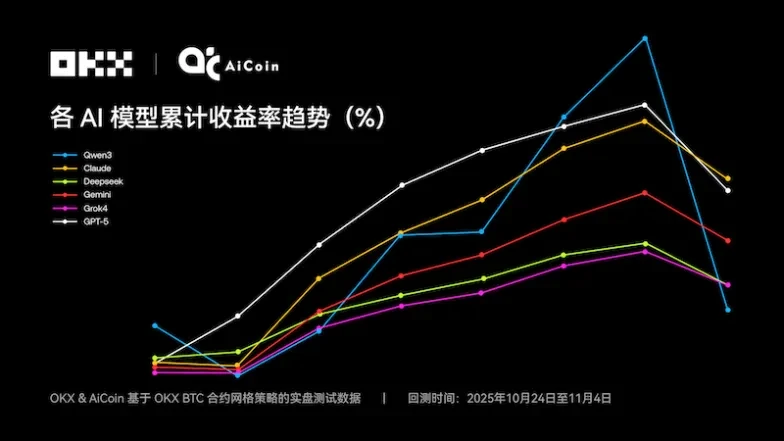
Claude Takes the Championship: The Truth Behind 6 Major AI Grid Strategy Showdowns | OKX & Ai Coin Live Trading Evaluation
Short-term trading champion , is it also the king in grid strategies? NOF1's "AI Trading Live Arena" Season 1 finally concluded at 6:00 AM on November 4, 2025, whetting the appetite of the crypto, tech, and finance circles. But the ending of this "AI IQ public test" was somewhat unexpected—the six models' combined $60,000 principal was reduced to just $43,000 at the close.
November 6, 2025