Four Reasons Ethereum Layer 2 Is a Must-Watch in 2021
The Ethereum network runs over 2,000 DApp applications of varying sizes. While the ecosystem may appear thriving, it faces a critical problem: an inefficient network has congestion plaguing the entire Ethereum ecosystem. From well-known DeFi projects like Uniswap and Sushiswap to lesser-known applications like Luck Vegas and Castle Buidl, all are experiencing congestion without exception.
With ETH2.0 unlikely to launch in the near term, Layer 2 naturally carries high expectations from the Ethereum community, making Ethereum Layer 2 undoubtedly the most noteworthy technology trend in the crypto industry in 2021. There are at least four reasons why Ethereum Layer 2 demands attention in 2021.
1. Ethereum Network Congestion Makes Gas Fees Unacceptable
On February 22, due to extreme ETH price volatility, the Ethereum network had over 150,000 unconfirmed transactions, with average Gas Fee exceeding 500 Gwei and some transactions' Gas surpassing 1,000 Gwei. Data shows that due to network congestion, Gas Fee once surged to 1,900 Gwei, reaching an all-time high.
Currently, the average transaction fee on the Ethereum network has also spiked to $30, more than 15 times higher than in 2018, setting a new record.
Ethereum urgently needs Layer 2 technology to improve the congested operating environment and reduce prohibitively high gas fees.
2. Layer 2 Technology Is Maturing — Time to Show More Applications
Currently, there are two most promising Layer 2 technologies: Optimistic Rollup and ZK Rollup, with the latter being the one Vitalik favors more.
First, let's look at Optimistic Rollup.
Optimistic Rollup was proposed by Consensys researcher John Adler at the Ethereum Foundation Research Forum in July 2019. It can increase TPS to 3,000, and Ethereum Layer 1 can well support DeFi applications built on Optimistic Rollup.
The term "Optimistic" implies a trust-based approach. Blockchains using Optimistic Rollup tend to assume that nodes will not act maliciously, meaning this technology carries relatively higher trust costs. When assets move from Layer 2 back to Layer 1, it takes 2 weeks (ZK Rollup only takes a few minutes). Teams currently working on Optimistic Rollup include Optimism (formerly Plasma Group), Fuel Labs, Arbitrum, and others.
Currently, this technology has entered the testing phase. On January 15, the Optimism team launched theOptimistic Ethereum mainnet trial network, and within a month, Synthetix had staked over 6.62 million tokens on the Optimistic Ethereum network, worth over $150 million.
Now let's look at ZK Rollup.
ZK Rollup was initially proposed by Ethereum Foundation senior researcher Barry White Hat in 2018, using zero-knowledge proofs to ensure the security of node verification. Its security is nearly identical to Layer 1 (Ethereum), and blocks can be produced within one minute with throughput increased to 2,000 TPS.
The downside of ZK Rollup is that Layer 1's existing smart contract system currently offers very limited support for ZK Rollup. DeFi application developers using ZK Rollup technology need to develop dedicated smart contracts to interface with Layer 1, and smart contracts developed by different DeFi teams are not interoperable. Projects implementing ZK Rollup include Matter Labs and Starkware, among others.
While Layer 2 technology does present some technical challenges, these will not become critical factors hindering its adoption.
3. Vitalik Supports Layer 2, and Layer 2 Has Been Incorporated into the Ethereum 2.0 Roadmap
As early as September 2020, Vitalik stated via Twitter: "Hybrid routing opens the door to deploying fully general Ethereum smart contracts relatively quickly in a 'quasi-layer-2' architecture."
He also indicated that Rollup technology would be used in Ethereum 2.0's "Phase 1." Here, Rollup refers to the most mature Layer 2 technology currently on Ethereum.
Additionally, in October 2020, Vitalik published "An Incomplete Guide to Rollup," calling for advancing Ethereum 1.x infrastructure with Rollups as the primary focus, establishing it as the key development priority for Ethereum in the medium term.
The Ethereum community has given Layer 2 sufficiently high attention, which is also an important reason why we must focus on this technology.
4. Many Leading DeFi Projects Are Building on Layer 2
1) Projects Based on Optimistic Rollup (by Optimism)
Optimism's Layer 2 network "Optimistic Ethereum" launched its test version based on the Ethereum mainnet in January this year, with a wider community public test scheduled for March.
Synthetix: Layer 2 Already Live
The first application to launch on Optimistic Ethereum is the synthetic assets protocol Synthetix. Since its January launch, nearly $160 million in assets have migrated to this Layer 2 network. Due to being at an early stage, the Layer 2 version of Synthetix currently supports only a very limited set of features, primarily covering collateralized asset minting.
However, the Layer 1 version of Synthetix is a full-featured DeFi protocol covering trading, derivatives, and asset management (dHEDGE), so we can look forward to significant growth potential in Synthetix's trading volume and trading scale once the Layer 2 version can support all Layer 1 functionalities.
Uniswap: Layer 2 Support Coming
Uniswap has long expressed research into Layer 2 protocols, focusing on developing its V3 version to address various community complaints. Uniswap is most likely to adopt Optimism's Layer 2 network, but the team has never provided any timeline expectations, though it should be at least around the time of Optimism's March public test, or even later.
Volmex: Layer 2 Support Coming
The Ethereum-based volatility index and non-custodial trading platform volmex.finance will integrate Optimism's Layer 2 scaling solution to enable cheaper and faster index queries and futures trading. The team has already launched two volatility indices: the Bitcoin Volatility Index (BTCV Index) and the Ethereum Volatility Index (ETHV Index), tracking the 30-day expected volatility of assets.
The volmex.finance team has already started development on Optimism's local testnet and will proceed with public testnet and mainnet implementation with support from the Optimism team.
Saddle: Layer 2 Support Coming
Saddle, an automated market maker tool designed for pegged crypto assets, announced it is migrating smart contracts to Optimism's Layer 2 scaling solution, though specific details and timelines have not been disclosed.
2) Projects Based on Arbitrum Rollup (by Offchain Labs) Technology
The Arbitrum Rollup scaling network launched by Offchain Labs is a conceptually similar technology to Optimism, but they aim to improve overall experience and efficiency through multi-round interactions. Technically, Arbitrum is EVM-compatible just like Optimism, making integration much easier compared to ZK Rollup.
Based on information from third parties and Vitalik Buterin, Arbitrum Rollup's earliest possible launch for the first public version is also March.
MCDEX (Arbitrum Rollup): Layer 2 Already Live (Beta)
The first application on Arbitrum is expected to be the decentralized contract exchange MCDEX, which launched its Layer 2 version testing last year, where users can test on the website using MetaMask.
Earlier this year, MCDEX also published an article explaining why they chose Arbitrum Rollup. In their view, the Arbitrum solution offers lower on-chain costs, higher technical maturity, and better developer-friendliness.
Bancor (Arbitrum Rollup): Layer 2 Support Coming
As one of the pioneers of the AMM concept, the decentralized trading protocol Bancor selected Arbitrum Rollup Complete for scaling, though specific timing and details have not been disclosed. Bancor can provide spot trading functionality for Arbitrum's early development.
Cometh (Arbitrum Rollup): Layer 2 Support Coming
The DeFi-based NFT game project Cometh announced its selection of Arbitrum Rollup as one of its scaling solutions. Recently, they also partnered with Aave Gotchi on the sidechain Polygon (Matic), so their game also supports the Polygon network.
Augur: Layer 2 Support Coming
The decentralized prediction market protocol Augur is one of the earliest projects in this space, and they have also announced their selection of the Arbitrum network, though many details have yet to be disclosed.
DA Ostack: Layer 2 Support Coming
The decentralized autonomous platform DA Ostack announced a partnership with Offchain Labs, the development team behind Ethereum scaling solution Arbitrum Rollup, to deploy the DApp Alchemy, built on DA Ostack, on Ethereum Layer 2 network Arbitrum, though many details have yet to be disclosed.
The fact that numerous mainstream DeFi projects are actively deploying on Layer 2 further underscores why this technology deserves our key attention.
Disclaimer
This article may contain product-related content that may not be applicable in your region. This article is only dedicated to providing general information and does not accept responsibility for any factual errors or omissions. This article represents only the author's personal views and does not represent OKX's views. This article does not intend to provide any of the following advice, including but not limited to: (i) investment advice or investment recommendations; (ii) offers or solicitations to buy, sell, or hold digital assets; or (iii) financial, accounting, legal, or tax advice. Holdings in digital assets (including stablecoins) involve a high degree of risk and may fluctuate significantly, or even become worthless. You should carefully consider whether trading or holding digital assets is suitable for you based on your financial situation. For questions specific to your circumstances, please consult your legal/tax/investment professional. The information in this article (including market data and statistics, if any) is provided for general reference purposes only. Although we have taken all reasonable precautions in preparing this data and these charts, we accept no responsibility for any factual errors or omissions expressed herein. © 2025 OKX. This article may be reproduced or distributed in its entirety, or excerpted in portions of 100 words or less, provided that such use is for non-commercial purposes only. Any reproduction or distribution of the full article must prominently state: "This article is copyrighted © 2025 OKX, used with permission." Permitted excerpts must cite the article title and include attribution, for example, "Article title, [author name (if applicable)], © 2025 OKX." Portions of this content may have been generated or assisted by artificial intelligence (AI) tools. Derivative works and other uses of this article are not permitted.
Show More
Recommended Reading

2025 KOL Most Used OKX Products Checklist
In the cryptocurrency industry, professional players' choices are always direct and pure. In 2025, KOLs cast the most authentic votes for industry tools and ecosystem development with a full year of fund allocation and time investment. We centered around four core questions — "What was your biggest achievement this year?", "Given your achievements, what OKX products do you use most and love in 2025?", "Why do you love it?", "This
January 5, 2026

2026 Investment Outlook: Asset On-Chaining, Intelligence & Privacy | OKX Annual Review
Three major trends for crypto's future: asset transformation, entity transformation, and rule transformation. As we are about to enter 2026, bidding farewell to four years of focusing on "road-building" infrastructure, the crypto industry is ushering in a profound paradigm shift. OKX Ventures defines this as the dawn of the "Kinetic Finance" era, where the core is no longer how fast the network is, but rather the flow and earning of on-chain assets
December 31, 2025

Let the Data Speak: A Look at 2025's Hottest Trading Products | OKX Annual Review
Looking only at market conditions, it is difficult to explain the return differences among exchange users in 2025. What truly determines returns also depends on account-level operation methods, not just market volatility itself. OKX's annual report shows that mainstream coins remain the core of capital turnover and return bearing, supporting trading and strategy execution; emerging coins are more used to amplify volatility and provide phased opportunities, but are not a stable, long-term source of returns. What truly continuously contributes to returns
December 30, 2025
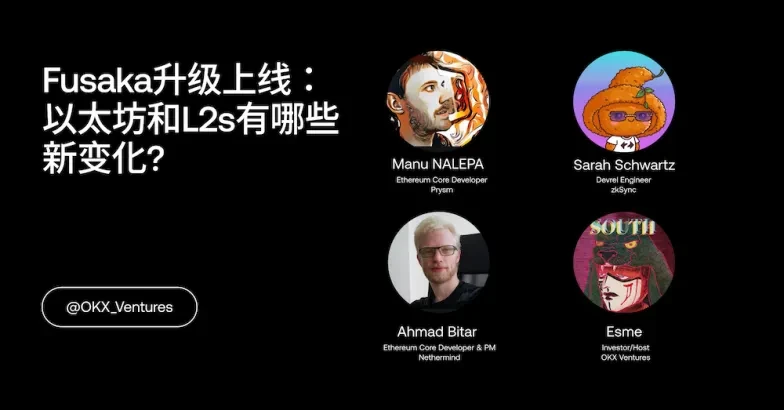
Fusaka in Practice: What Ethereum's Latest Upgrade Means for L2, Nodes, and Users
The Ethereum mainnet has completed the Fusaka fork. From the protocol level, this upgrade primarily covers four areas, the full article follows Q&A with three guests' core viewpoints and front-line experience: Ahmad (@smartprogrammer) – Nethermind Execution Client / Ethereum Core Dev Manu (@manunalepa) – Prysm / Of
December 16, 2025

OKX Research | Why Did RWA Become a Key Narrative in 2025?
RWA (Real World Assets) is becoming the "new favorite" of global capital. Simply put, RWA involves taking valuable, ownership-bearing things from the real world — such as houses, bonds, stocks, and other traditional financial assets, or even art, private lending, carbon credits, and other assets that are not typically easy to trade directly — and bringing them onto the blockchain, transforming them into tradeable, programmable crypto assets. This way
November 20, 2025
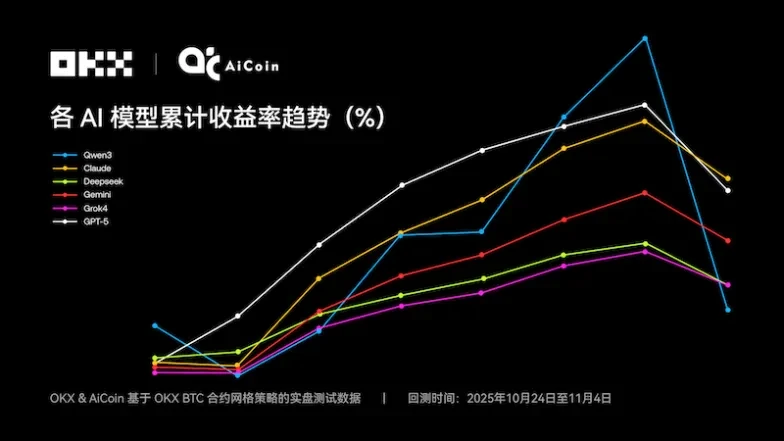
Claude Takes the Crown — 6 Major AI Grid Strategies Decided | OKX & Ai Coin Live Test
Is , the short-term trading champion, also the king of grid strategies? The first season of NOF1's "AI Trading Live Arena" finally concluded at 6 AM on November 4, 2025, whetting the appetite of the crypto, tech, and finance communities. But the outcome of this "AI intelligence public test" was somewhat unexpected — the six models' combined $60,000 principal totaled only $43,000 at
November 6, 2025