A $800 Billion Market? Tech Giants Like Facebook Race to Build the Metaverse
MANA+4. 17%
On October 29, 2021, tech giant Facebook announced it would rename itself "Meta," with the new name derived from the sci-fi term Metaverse, and laid out plans to become a metaverse company within five years. This move sent shockwaves through the entire internet and tech industry, and caught the attention of the crypto market—after all, the metaverse was one of the hottest trends in blockchain this past summer as well.
In addition to Facebook, tech companies including Microsoft, Baidu, and Tencent have also begun investing in metaverse-related businesses and racing to trademark the concept. Even Balenciaga and Lens Technology have entered the space, and numerous investors have been pouring funds into metaverse-related industries and concept stocks. Recently, metaverse concept stocks have heated up again collectively: on November 4, Visionox surged over 12%, while Hengxin Oriental and Yishang Display saw notable gains. Why is the metaverse so hot right now? Is it really the future, or just another round of speculative hype?
The Origins of the Metaverse Frenzy
The metaverse is actually not a brand-new concept—it has historical roots. The term Metaverse was first coined in 1992 by renowned American sci-fi author Neal Stephenson in his novel Snow Crash, which depicted a virtual world (Metaverse) parallel to reality, which he called the "Metaverse." In this world, every person from the real world has a network avatar. This "Metaverse" is what we now refer to as the metaverse. According to Wikipedia, the metaverse is defined as: a 3D virtual space based on the future internet, featuring convergence and physical persistence, with links to perceived and shared features through virtually enhanced physical reality. The scenes from the movie Ready Player One also illustrate this concept: in the future, people can switch identities anytime and freely穿梭于物理世界和数字世界, learning, working, and living in the metaverse.
Starting this year, "the metaverse" has become synonymous with a capital frenzy, as major players ramp up investment and investors chase after the concept. Why did the metaverse suddenly explode in popularity? The reasons can be explored from both the tech and crypto sectors.
In the tech sector, the metaverse frenzy may trace back to March 2021, when the American gaming company Roblox went public with a market cap approaching $30 billion, earning the title of "first metaverse stock." Its market cap quickly increased tenfold. This directly galvanized the capital markets and prompted an influx of major capital firms, corporations, and startup teams. This year, tech giants including Microsoft, Tencent, ByteDance, Alibaba, Facebook, and NVIDIA have all been investing heavily in the metaverse track and expanding into metaverse-related business. Even Luo Yonghao (罗永浩) recently posted online that his next startup venture would be a metaverse project, drawing significant attention from netizens.
In the crypto sector, the metaverse concept heated up primarily due to the breakout of several metaverse projects this past July, including The Sandbox, Decentraland, Axie Infinity, and Cryptovoxels, with their associated tokens also posting impressive gains. The reason the metaverse concept took off in the blockchain space is largely tied to the NFT boom this year. NFT technology can better help projects with asset ownership verification, authentication, and preservation. Additionally, the metaverse aligns perfectly with the decentralized ethos of crypto natives, allowing them to freely build their own worlds within it.
On October 29, Facebook founder Mark Zuckerberg stated that the company would invest billions of dollars in the metaverse, positioning it as the successor to the mobile internet. In a letter, he noted: "We hope that over the next decade, the metaverse will reach a billion people, host hundreds of billions of dollars in digital commerce, and support jobs for millions of creators and developers." Simply put, Zuckerberg's metaverse is a multi-dimensional internet space—a parallel digital world constructed alongside the physical one.
In fact, as early as July, Zuckerberg had already informed employees that Facebook would strive to build the kind of maximal, interconnected collection of experiences found in science fiction—a world known as the metaverse.
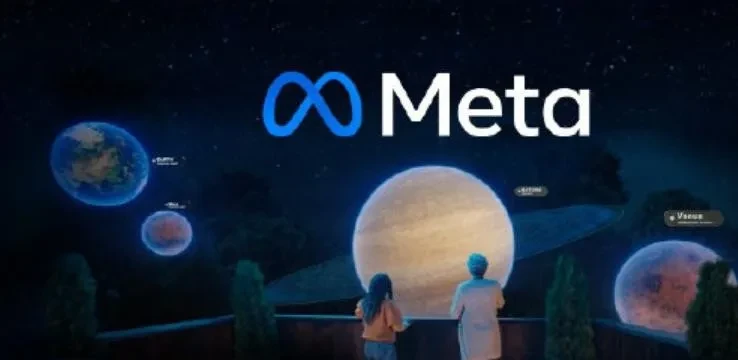
Many have expressed skepticism about Facebook's major decision and metaverse vision. Looking back, Facebook has previously championed grand visions in blockchain and other areas. Will this time be different?
There is no denying that as a leading global technology company, Facebook does demonstrate pioneering insight in anticipating future technologies and trends. Beyond the metaverse, Facebook continues to explore blockchain and the crypto space. Let's review Facebook's series of moves in the crypto sector.
Facebook's Persistence in the Crypto Space
As early as 2018–2019, Facebook made a big splash in blockchain business, making an ambitious attempt at a cryptocurrency project.
In 2018, Facebook first established a blockchain division and between August and October posted multiple job listings for blockchain-related talent, exploring how Facebook could maximize the use of blockchain. In December, Facebook targeted the Indian market with plans to launch a WhatsApp-centered blockchain product. In June 2019, Facebook officially published the whitepaper for its cryptocurrency project Libra, announcing the creation of a new division called "Calibra" and launching a new digital wallet usable within Facebook Messenger and WhatsApp. According to the whitepaper, Libra's vision was to establish a simple, borderless currency and financial infrastructure serving billions of people.
This ambitious vision drew intense attention from financial regulators worldwide and sparked concerns from regulatory bodies, ultimately leading to a collective "siege" of the Libra project. The U.S. Congress, central banks from multiple countries, legislators, and numerous global privacy organizations all raised questions about Libra, listing various potential issues including money laundering, terrorist financing, and threats to financial stability. Ultimately, due to regulatory obstacles, in October 2019, several key partners of the Libra project withdrew from the initiative, forcing Facebook to reconsider and adjust its plans.
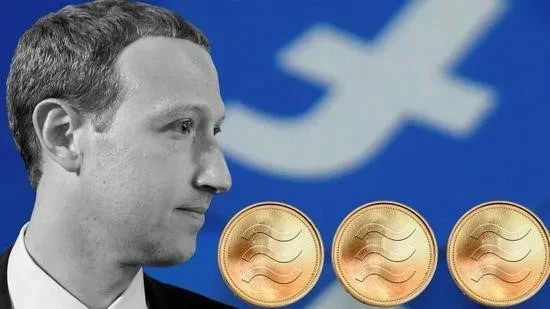
In mid-April 2020, the Libra project released Whitepaper 2.0, outlining several key changes, including dropping the term "borderless currency" in favor of "global payment system," positioning itself as a settlement coin rather than a basket of currencies, and avoiding challenges to monetary sovereignty, while also explicitly referencing money market fund management to prepare for potential bank runs.
On December 1, 2020, according to updates on Facebook's official website, the planned super-sovereign cryptocurrency Libra was renamed Diem, and the Calibra wallet was renamed Novi. The goal was to initially launch a cryptocurrency pegged to a single U.S. dollar, seeking regulatory approval. The Diem project also progressively showed more trials in 2021. On October 20, Diem's co-founder and Novi digital wallet lead David Marcus announced the launch of a small pilot program for the Novi digital wallet app between the United States and Guatemala, designed for currency trading between small business consumers. People can instantly, securely, and freely send and receive funds between the two countries. But as expected, every move Facebook makes is closely monitored by U.S. lawmakers. Shortly after the Novi digital wallet launched, multiple U.S. senators "called on" the company to immediately halt the cryptocurrency pilot program and pledged not to bring Diem to market. Lawmakers stated that the public cannot sufficiently trust Facebook to protect user data and manage payment networks.
As you can see, Facebook's path in cryptocurrency has been fraught with thorns and hardships. Despite repeated setbacks, Facebook seems unwilling to abandon its plans for a cryptocurrency and wallet. Facebook stated that launching Novi is a key Step 1 in the Diem plan, and they intend to migrate Novi to the Diem payment network once regulatory approval is obtained.
Is the Metaverse Really the Future?
Conversely, it appears Facebook's metaverse rollout has been considerably smoother so far. Beyond renaming the company, Facebook has also outlined some specific plans. The company not only aims to become a metaverse company within five years, but also announced on October 18 that it would recruit "10,000 people" in Europe to develop the metaverse business, and Zuckerberg has stated he will invest tens of billions of dollars in the metaverse.
Without a doubt, this looks like yet another grand and ambitious crusade. But is the metaverse that Facebook is betting on really the future?
First, from a market sentiment perspective, the public seems less than enthusiastic about Facebook's grand ambitions. Since the "data breach incident," Facebook has been mired in controversy, skepticism, and a swirl of negative impacts. Whether it's the blockchain push or the metaverse bet, many interpret these moves as Facebook trying to shake off negative press and divert attention from its platform governance and privacy protection issues.
Many tech executives and professionals have shared their views. For example, former Google CEO Eric Schmidt voiced skepticism about Facebook's metaverse business. He believes Facebook's metaverse may not be the best choice for human society, though he does believe the technology will become ubiquitous. Everyone talking about the metaverse talks about a future better than today's—you'll be richer, more handsome, more beautiful, more powerful, faster. In a few more years, people will be wearing headsets and spending more time in the metaverse. But who sets the rules? The world will become more digitized rather than physical, which may not be the best choice for humanity.
Famous Chinese sci-fi author Liu Cixin (刘慈欣), the creator of The Three-Body Problem, also stated that Zuckerberg's metaverse is not only not the future, but shouldn't be the future. "People of this era are gradually turning toward an intangible world. The number of people living in the intangible world has already surpassed that in the tangible world. Once you've experienced life in the intangible world, no one can go back to the tangible world."
Returning to the concept of the metaverse itself: it encompasses both the physical and virtual worlds. The metaverse ecosystem includes user-centered elements such as avatar identity, content creation, virtual economy, social acceptability, security and privacy, as well as trust and accountability. Therefore, it will be a fully functional and complex system, and full realization may not be so straightforward—it depends on the deployment of various digital infrastructure and matching end-user devices. Additionally, at the adoption level, there are questions about bringing device costs in line with public expectations and acceptance.
Of course, since the concept is still in its early stages, we can see that interpretations of the metaverse vary across different fields. Among the many explanations and interpretations of the term, Facebook has gradually narrowed the definition to "VR (Virtual Reality) / AR (Augmented Reality) + digital avatars + NFTs (Non-Fungible Tokens) and other digital assets." Issuing NFTs is also relatively less likely to attract regulatory scrutiny compared to issuing a cryptocurrency like Diem, so the obstacles during rollout may be much smaller.
So, can Facebook really build and present a metaverse world to the world on its projected timeline? No one can say for certain, but perhaps the world isn't counting on Facebook alone to drive the "metaverse" forward. The significance of this event, beyond revealing Facebook's metaverse ambitions, may be more about bringing a sense of hopeful expectation for the concept, and the underlying values that can truly bring about a "meta" world—including the portability of user avatars and digital assets. Much like how blockchain technology and the crypto world once broadened our perspectives.
To summarize, the metaverse itself represents an inevitable trend in future development, and its market value and growth rate could be quite substantial. According to Bloomberg Intelligence analysis, the global metaverse market is expected to reach $800 billion by 2024. However, at present, much of it is still in the concept-hype phase, and many companies' so-called "布局" (strategic positioning) cannot exclude the possibility of hype or riding the wave. The metaverse industry is still in its formative stage, and investment risks warrant vigilance. Once the frenzy subsides, companies that are truly committed will emerge.
For more metaverse-related content, please visit: Metaverse Column
Disclaimer
This article may contain product-related content not applicable in your region. This article is provided for general informational purposes only and we make no responsibility for any factual errors or omissions. The views expressed herein are solely those of the author and do not represent the views of OKX. This article is not intended to provide any advice, including but not limited to: (i) investment advice or investment recommendations; (ii) offers or solicitations to buy, sell, or hold digital assets; or (iii) financial, accounting, legal, or tax advice. Holdings in digital assets (including stablecoins) involve a high degree of risk and may fluctuate significantly, or even become worthless. You should carefully consider whether trading or holding digital assets is appropriate for you based on your financial situation. For questions specific to your circumstances, please consult your legal/tax/investment professional. Information appearing in this article (including market data and statistics, if any) is for general reference purposes only. While all reasonable precautions have been taken in preparing such data and charts, we accept no responsibility for any factual errors or omissions expressed herein. © 2025 OKX. This article may be reproduced or distributed in its entirety, or brief excerpts of 100 words or less may be used, provided that such use is non-commercial. Any reproduction or distribution of the full article must prominently state: "This article is copyrighted © 2025 OKX, used with permission." Authorized excerpts must cite the article title and include attribution, e.g., "Article title, [author name (if applicable)], © 2025 OKX". Some content may have been generated or assisted by artificial intelligence (AI) tools. Derivative works and other uses of this article are not permitted.
Show More
Recommended Reading

2025 KOL Most Used OKX Products Ranking
In the cryptocurrency industry, professional players' choices are always direct and clear-cut. In 2025, KOLs cast the most authentic votes for industry tools and ecosystem development with their year-round capital investment and time commitment. We focused on four core questions���"What was your biggest achievement this year?", "With that achievement in mind, what OKX product did you use most and love in 2025?", "Why do you like it?", "This product
January 5, 2026

2026 Investment Outlook: On-Chain Assets, Intelligence & Privacy | OKX Annual Review
The three major trends shaping crypto's future: asset transformation, entity transformation, and rule transformation. As we stand on the cusp of 2026, bidding farewell to four years of focusing on "building roads" for infrastructure, the crypto industry is welcoming a profound paradigm shift. OKX Ventures defines this as the dawn of the "Kinetic Finance" era, where the core no longer lies in how fast the network is, but rather in the flow of on-chain assets and earning
December 31, 2025

Vote with Data: A Deep Dive into 2025's Popular Trading Products | OKX Annual Review
Looking at price action alone, it's hard to explain the return differentials among OKX trading users in 2025. What truly determines returns equally depends on account-level operation methods, not just market volatility itself. The OKX annual report shows that mainstream coins remain the core of capital turnover and return generation, supporting trading and strategy execution; emerging coins are more used to amplify volatility and provide阶段性机会, but are not a stable, long-term source of returns. What truly and continuously contributes to returns is
December 30, 2025
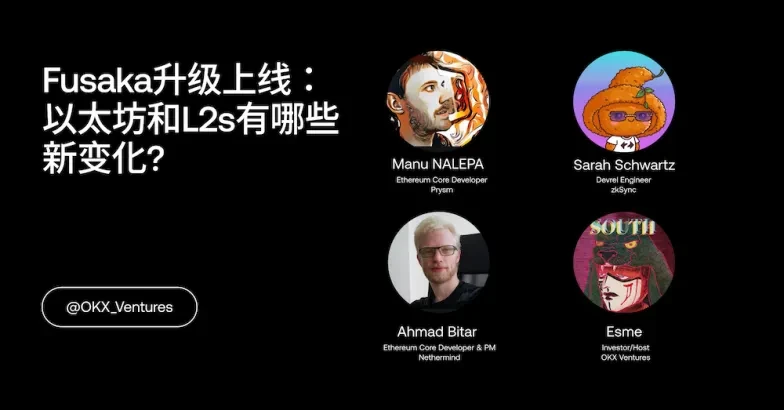
Fusaka in Practice: What Ethereum's Latest Upgrade Means for L2, Nodes, and Users
The Ethereum mainnet has already Complete the Fusaka fork. From a protocol perspective, this upgrade primarily covers four areas, full text 按 Q&A Show More three guests' core viewpoints and front-line experience: Ahmad (@smartprogrammer) – Nethermind Execution Client / Ethereum Core Dev Manu (@manunalepa) – Prysm / Of
December 16, 2025
OKX Research | Why Did RWA Become a Key Narrative in 2025?
RWA (Real World Assets) is becoming the "new favorite" of global capital. Simply put, RWA involves taking valuable, ownership-bearing things from the real world—such as real estate, bonds, stocks, and other traditional financial assets, even art, private lending, and carbon credits that aren't typically easy to trade directly—and bringing them onto the blockchain as tradeable, programmable crypto assets. This way, it be
November 20, 2025
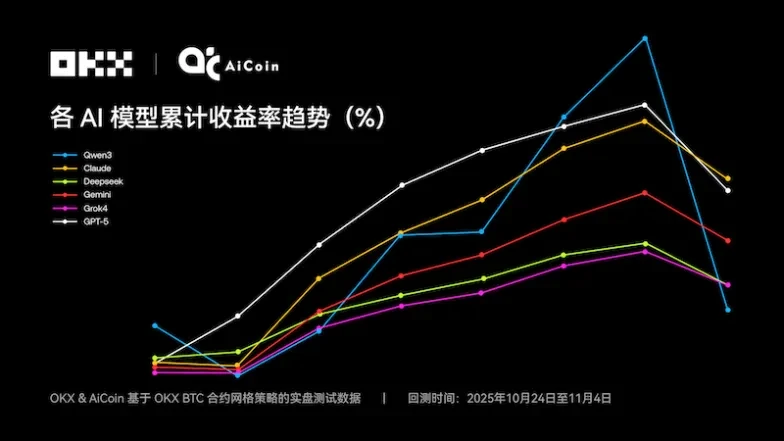
Claude Takes the Crown: 6 Major AI Grid Strategies Face Off | OKX & Ai Coin Live Test
The short-term trading champion —could it also reign supreme in grid strategies? The first season of NOF1's "AI Trading Live Arena" finally concluded on November 4, 2025 at 6:00 AM, whetting the appetite of the crypto, tech, and finance communities. But the outcome of this "AI IQ public test" turned out to be somewhat unexpected: the six models' combined $60,000 in starting capital had dwindled to just $4.3
November 6, 2025