DeFi Total TVL Reaches New High, How to Seize DeFi 2.0 Investment Opportunities?
Since entering the fourth quarter, the cryptocurrency market seems to have taken on new developments. Most notably is Bitcoin's significant surge earlier this month, rising from a low of $43,144.8 on October 1 to a high of $58,543.1 today (according to OKX BTC/USDT prices), representing a 35.69% increase. Accompanying Bitcoin's price rise, its market capitalization has once again returned to the trillion-dollar club, while Bitcoin's market dominance has also increased to 46.4% (referencing bybt data), the highest level since late July.
However, to date, apart from Bitcoin, most digital assets among the top thirty by market capitalization, including Ethereum, have shown relatively lackluster performance in secondary markets. Moreover, the NFT sector, which performed exceptionally well in Q3, continues to languish, while other sectors remain largely unremarkable.
DeFi Total TVL Reaches New High Again
Against this backdrop, we've also noticed that beneath the seemingly calm surface, the DeFi market is experiencing turbulent undercurrents. According to data from third-party statistics website defillama, the total value locked (TVL) in DeFi smart contracts across the network has recently surpassed $200 billion, once again reaching a historic high. As of October 13, 2021, the total TVL across the network has reached $213.18 billion.
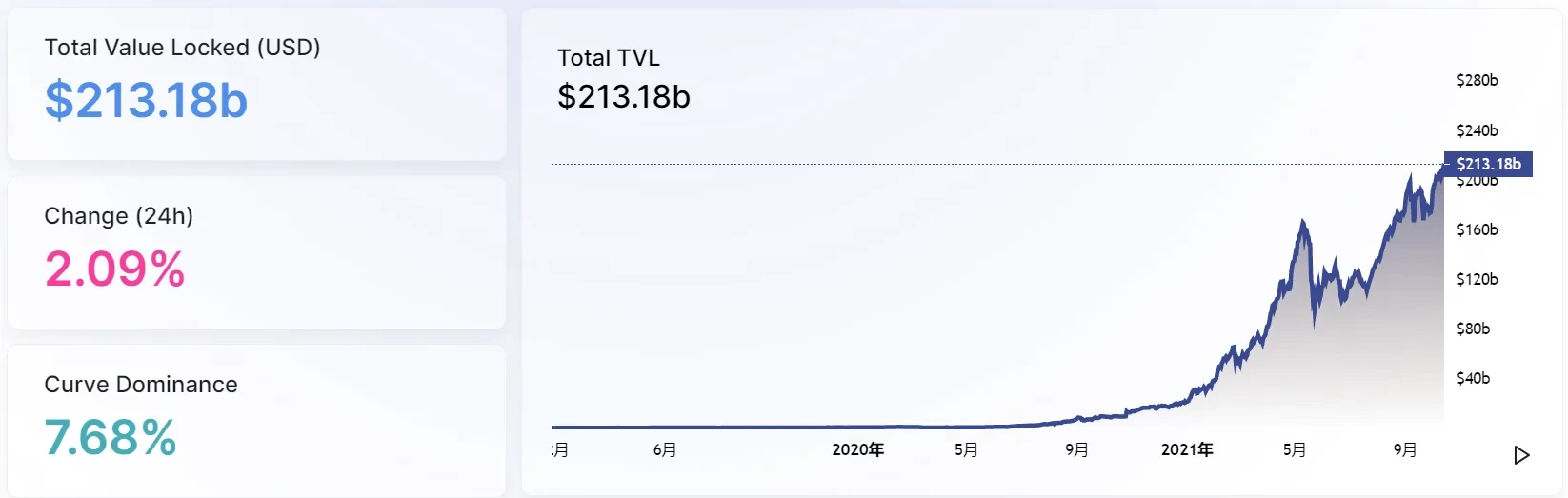
Total value of digital assets locked in DeFi smart contracts across the network, data source: defillama
In previous articles, we introduced the meaning of Total Value Locked (TVL) in DeFi smart contracts. TVL is one of the important metrics for measuring the scale of DeFi ecosystem development, calculated by summing the total value of all ETH and various other ERC-20 tokens and other digital assets locked in DeFi smart contracts. Simply put, it reflects how much real money investors of all sizes have put into DeFi smart contracts, earning returns for themselves while participating in DeFi ecosystem construction.
It should also be noted that the TVL data mentioned above is calculated in US dollar value, while investors invest various digital assets into DeFi smart contracts. This means the data fluctuates with price changes in digital assets such as ETH. This creates a scenario - where the quantity of locked digital assets remains unchanged but prices rise, TVL increases accordingly, and vice versa. Therefore, to more comprehensively and objectively understand investor sentiment changes toward the DeFi market, when using TVL to measure DeFi development scale, we can also reference the auxiliary metrics of ETH and BTC locked quantities in DeFi - that is, directly looking at whether the ETH and BTC investors put into DeFi are changing, regardless of market price fluctuations. According to statistics from defipulse website, the quantity of ETH locked in DeFi smart contracts on the Ethereum network alone has reached 7.5 million. In early January this year, this figure was at its lowest at 4.22 million, reached a yearly high of 7.98 million (occurring on April 9), then sharply decreased to 6.09 million by the end of May accompanying the overall cryptocurrency market decline, and has since slowly grown, approaching previous highs. Meanwhile, the quantity of Bitcoin locked in DeFi smart contracts on the Ethereum network has also reached 195,000, nearly matching the historic high of 205,000 set at the end of September this year. Of course, these are just the quantities of ETH and BTC locked on the Ethereum network, while the rapid development of locked scale on emerging public chains like OKTC, Solana, and Fantom cannot be ignored as forces. For example, OKTC saw its DeFi smart contract locked value soar from $99 million to over $2 billion in just one week between July 28 and August 4 this year, representing a nearly 20-fold weekly increase. Fantom's growth rate is equally impressive - on August 28, its DeFi smart contract locked value was only $548 million, but by October 10 it successfully surpassed $5.77 billion, representing nearly a 10-fold increase in less than a month. Beyond their rapid growth, the commonality among DeFi development trends on these emerging public chains is that they collectively exploded in Q3 and have maintained high-speed development momentum since. Therefore, the recent achievement of DeFi's total network TVL reaching new highs can be said to be the combined result of warming market conditions, rising prices of major locked assets like Bitcoin and Ethereum, and emerging public chains continuously attracting DeFi investors to participate in DeFi ecosystem construction.
DeFi 2.0?
In investment markets, new concepts are never lacking, especially in the emerging cryptocurrency market full of vitality and competition. As long as there is continuous capital inflow, market practitioners will be driven to rapidly explore new areas. DeFi can be called the "testing ground" of the cryptocurrency market. With recent total network TVL reaching new highs and the meteoric rise of decentralized derivatives exchanges, the concept of "DeFi 2.0" is being discussed by more and more people.
However, like the metaverse concept we discussed recently, as of now, there is no universally accepted unified definition of DeFi 2.0 within the industry. Most broadly refer to it as smart contracts that propose further solutions to current significant problems - such as low capital efficiency, unreasonable community organization forms and governance structures - on the basis of so-called DeFi 1.0, or original DeFi smart contracts. Under this approach, some common characteristics are summarized, such as reputation systems, connecting to the real world, achieving truly meaningful community governance structures, providing higher capital efficiency, and smoothing or transferring risk, etc. From the characteristics summarized above, it can be roughly discerned that the key to DeFi 2.0 lies in whether it truly leverages DeFi's greatest advantage - composability, or "financial Lego."
By this key metric, the NFT + DeFi + gaming combination created by GameFi, represented by Axie Infinity, can be considered bold innovation in DeFi 2.0. Looking further back, Uniswap V3, which launched in May of this year, not only creatively introduced the "concentrated liquidity" function but also further used NFTs to replace the original ERC20 as LP Tokens. In the long run, this is not only a key step for Uniswap but also a key step for Financial NFTs, making LP Tokens an investment contract between Uniswap and LPs. We know that in the Uniswap V2 era, this contract was represented by ERC20, with only differences in share quantities between different LPs, while contract terms were identical. Now in the V3 era, this contract is represented by ERC721, allowing different LPs to set different market-making terms, making it more suitable for expressing complex and variable financial contracts, undoubtedly greatly increasing investor freedom in participating in DeFi trading and capital utilization efficiency.
Conclusion
The above cases are merely a superficial analysis of what we call DeFi 2.0 at the current development stage, and do not necessarily represent DeFi's future development trends. We offer this as a starting point to provide readers with a new direction for thinking. As an unprecedented innovative experiment in human financial history, DeFi will inevitably see more disruptive concepts and approaches created in its future progress. This requires every DeFi investor to maintain a learning mindset that keeps pace with the times to better seize investment opportunities.
Disclaimer
This article may contain content related to products not available in your region. This article is intended to provide general information only and assumes no responsibility for any factual errors or omissions therein. This article represents only the author's personal views and does not represent the views of OKX. This article is not intended to provide any recommendations, including but not limited to: (i) investment advice or investment recommendations; (ii) offers or solicitations to buy, sell, or hold digital assets; or (iii) financial, accounting, legal, or tax advice. Holding digital assets (including stablecoins) involves high risk, may fluctuate significantly, and may even become worthless. You should carefully consider whether trading or holding digital assets is suitable for you based on your financial situation. For questions about your specific situation, please consult your legal/tax/investment professional. The information appearing in this article (including market data and statistics, if any) is for general reference only. While we have taken all reasonable precautions in preparing these data and charts, we assume no responsibility for any factual errors or omissions expressed herein. © 2025 OKX. This article may be reproduced or distributed in its entirety, or excerpts of 100 words or less from this article may be used, provided such use is non-commercial. Any reproduction or distribution of the entire article must prominently state: "Copyright © 2025 OKX. Used with permission." Permitted excerpts must cite the article name and include attribution, for example "Article Name, [Author Name (if applicable)], © 2025 OKX". Some content may be generated or assisted by artificial intelligence (AI) tools. Derivative works or other uses of this article are not permitted.
Show More
Recommended Reading

2025 KOLs' Most Used OKX Products List
In the cryptocurrency industry, professional players' choices are always direct and pure. In 2025, KOLs have cast the most genuine votes for industry tools and ecosystem development with a full year of capital investment and time accumulation. Centered around four core questions—"What was the biggest achievement this year?", "Given those achievements, what OKX products did you use most and like best in 2025?", "Why do you like it?", and "This
January 5, 2026

2026 Investment Outlook: Asset On-Chain, Intelligence & Privacy | OKX Annual Review
Three major trends for the future of crypto: asset transformation, entity transformation, and rule transformation. As we approach 2026, bidding farewell to the past four years of infrastructure focus on "building roads," the cryptocurrency industry is welcoming a profound paradigm shift. OKX Ventures defines this as the opening of the "Kinetic Finance" era, where the core is no longer how fast the network is, but the flow of on-chain assets and money-making
December 31, 2025

Voting with Data: Inside 2025's Hot Trading Products | OKX Annual Review
Looking only at market performance, it's difficult to explain the return differences between exchange users in 2025. What truly determines returns also depends on account-level operational methods, not just market volatility itself. The OKX annual statement shows that mainstream coins remain the core of capital turnover and returns承载, supporting trading and strategy execution; emerging coins are more used to amplify volatility and provide phased opportunities, but are not stable, long-term return sources. What truly continuously contributes returns is
December 30, 2025
Fusaka in Practice: What Ethereum's Latest Upgrade Means for L2s, Nodes, and Users
Ethereum mainnet has completed the Fusaka fork. At the protocol level, this upgrade mainly includes four components. Full text follows Q&A Show More with core insights and frontline experience from three guests: Ahmad (@smartprogrammer) – Nethermind execution client / Ethereum core developer Manu (@manunalepa) – Prysm / Of
December 16, 2025
OKX Research | Why Did RWA Become a Key Narrative in 2025?
RWA (Real World Assets) is becoming a global capital "favorite." Simply put, RWA involves moving valuable, ownership-bearing things from the real world - such as houses, bonds, stocks and other traditional financial assets, or even assets like artwork, private lending, and carbon credits that are normally difficult to trade directly - onto the blockchain to become tradable, programmable crypto assets. This way, no
November 20, 2025
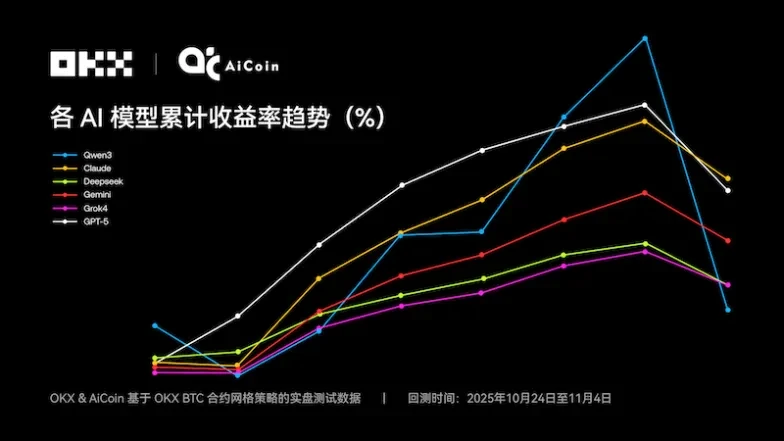
Claude Takes Championship, Truth About 6 Major AI Grid Strategy Showdown | OKX & Ai Coin Live Trading Review
Short-term trading champion Qwen3, is it also king in grid strategies? The first season of NOF1's "AI Trading Live Arena" finally concluded at 6 AM on November 4, 2025, whetting the appetites of the crypto, tech, and financial circles. But the ending of this "AI IQ public test" was somewhat unexpected - the total principal of $60,000 across six models was left with only 4.3
November 6, 2025