
Dancing in Chains: Can ETC Finally Turn Things Around This Time?
In the past two weeks, stimulated by two major catalysts—"halving" and "Ethereum transitioning to PoS"—ETC has risen nearly 100%, becoming the crypto asset with the largest gain and most attention among the top 30 by market cap.
However, the rally driven by short-term positives has not smoothed away people's fear of the "Doomsday Chariot" label associated with ETC. Combined with frequent double-spend attacks in the past, Ethereum Classic's "dark history" seems to suggest that this PoW public chain, which once inherited Ethereum's original philosophy, will continue to dance in chains for a long time to come.
So, in terms of long-term value, is Ethereum Classic worth our attention? What insights can this ETC halving rally bring to the crypto world? And when can ETC finally shed its "Doomsday Chariot" reputation?
1. Halving Remains the Protagonist of Crypto Narratives
Since the birth of blockchain, halving has always been one of the most important narrative themes in the crypto world. Bitcoin's four-year halving cycle drives the crypto world's four-year bull and bear cycles. The halving schedules of PoW crypto assets like Litecoin, Dash, ZEC, ZEN, RVN have also become important reference points and observation indicators for investment decisions.
Similarly, ETC's upcoming halving on April 29th is the primary driver of this rally. In the past two weeks, ETC has risen nearly 100%, becoming the crypto asset with the largest gain and most attention among the top 30 by market cap.
According to the consensus reached by the ETC community on May 1, 2017, the Ethereum Classic blockchain reduces block rewards by 20% every 5 million blocks, with a capped supply of 210 million ETC. This halving is no exception: ETC block rewards will decrease from the current 3.2 to 2.56, a 20% reduction.
Looking back at ETC's halving history, the last one occurred on March 17, 2020. At that time, the block reward was reduced from 4 to 3.2. Before the halving, ETC's price rose from 3.4 to a high of 13.2, an increase of nearly 300%. During the same period, Ethereum rose 100% and Bitcoin rose 70%.
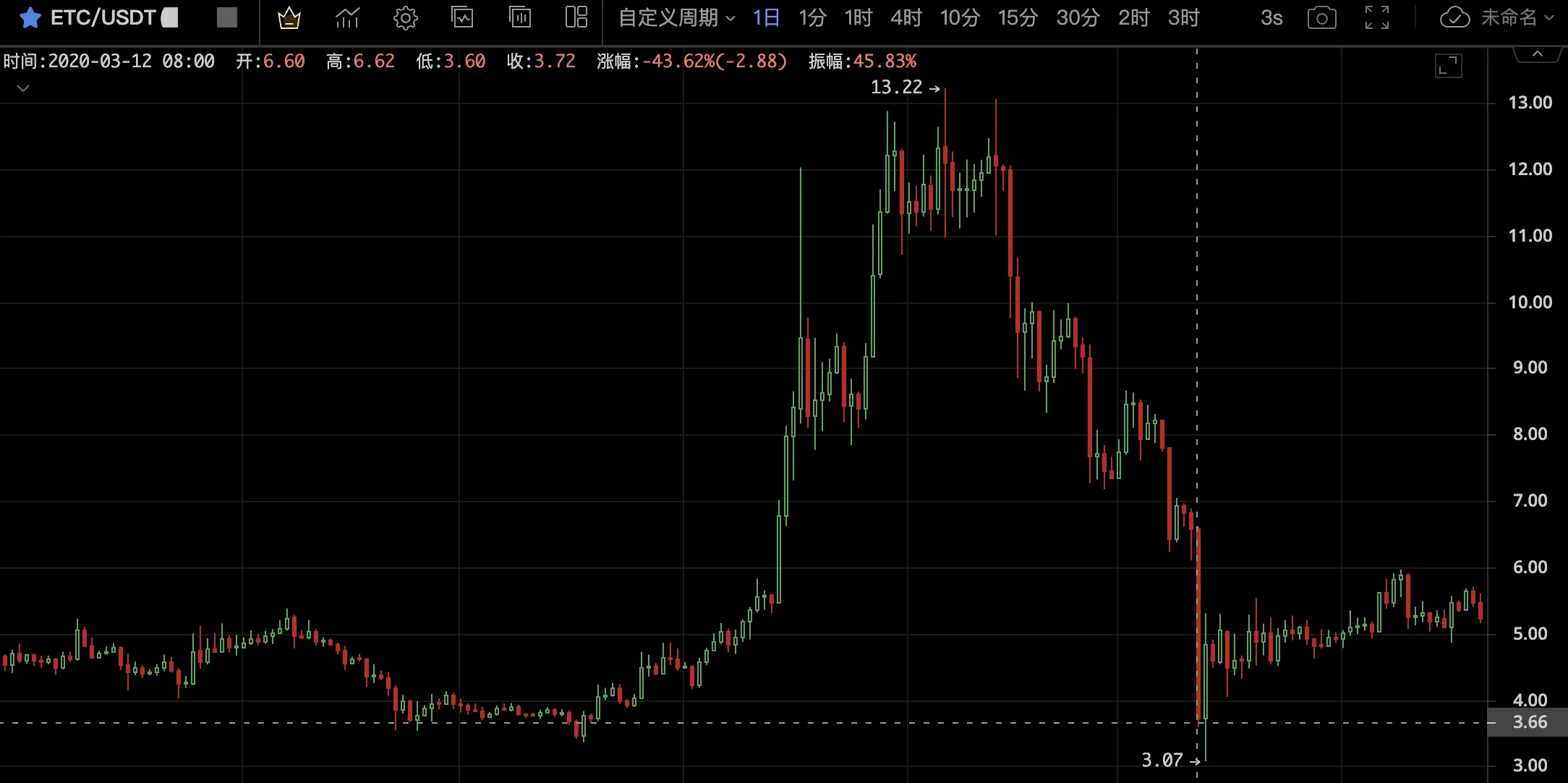
ETC's current halving rally demonstrates that halving remains a dominant narrative theme in the crypto world.
This point is even more vividly illustrated by BTC and LTC.
Take LTC as an example: since its inception in 2011, Litecoin has undergone two halvings, and each has brought rapid price increases before the event.
On August 28, 2015, LTC experienced its first halving since birth, with block rewards dropping from 50 LTC to 25 LTC. The price of LTC rose from 1.4 USD to 7 USD, a 400% gain. On August 5, 2019, Litecoin experienced its second halving, with block rewards dropping from 25 to 12.5. The price of LTC rose from 23 USD to 140 USD, a 500% gain.
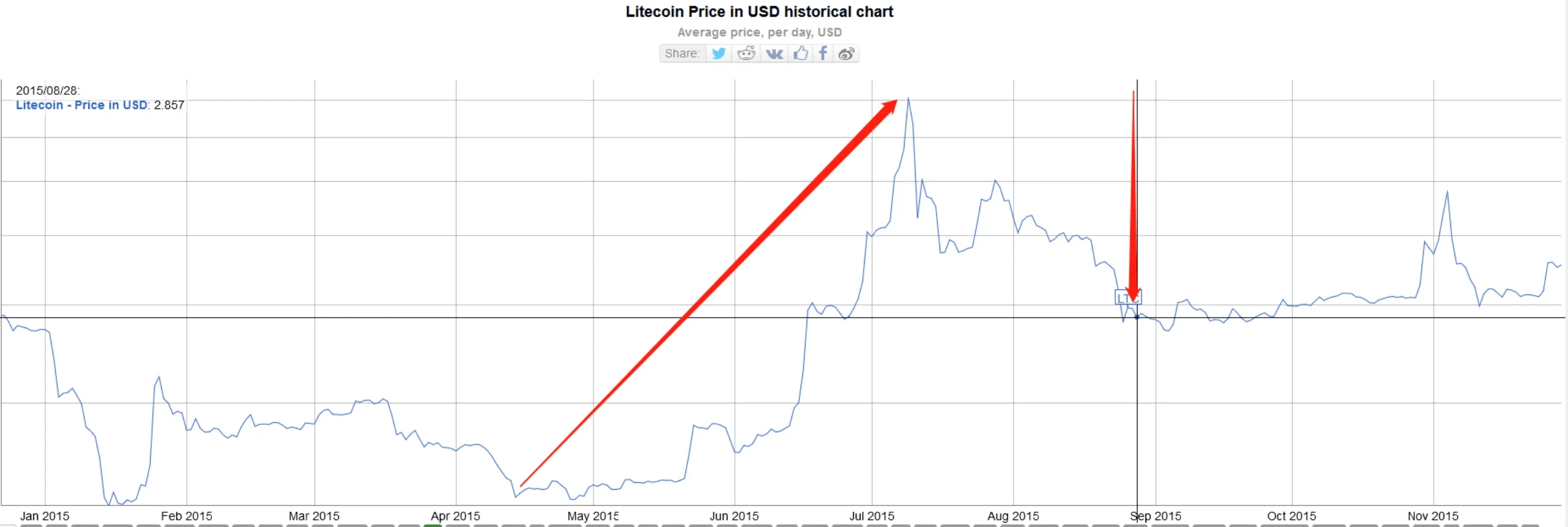
LTC's first halving
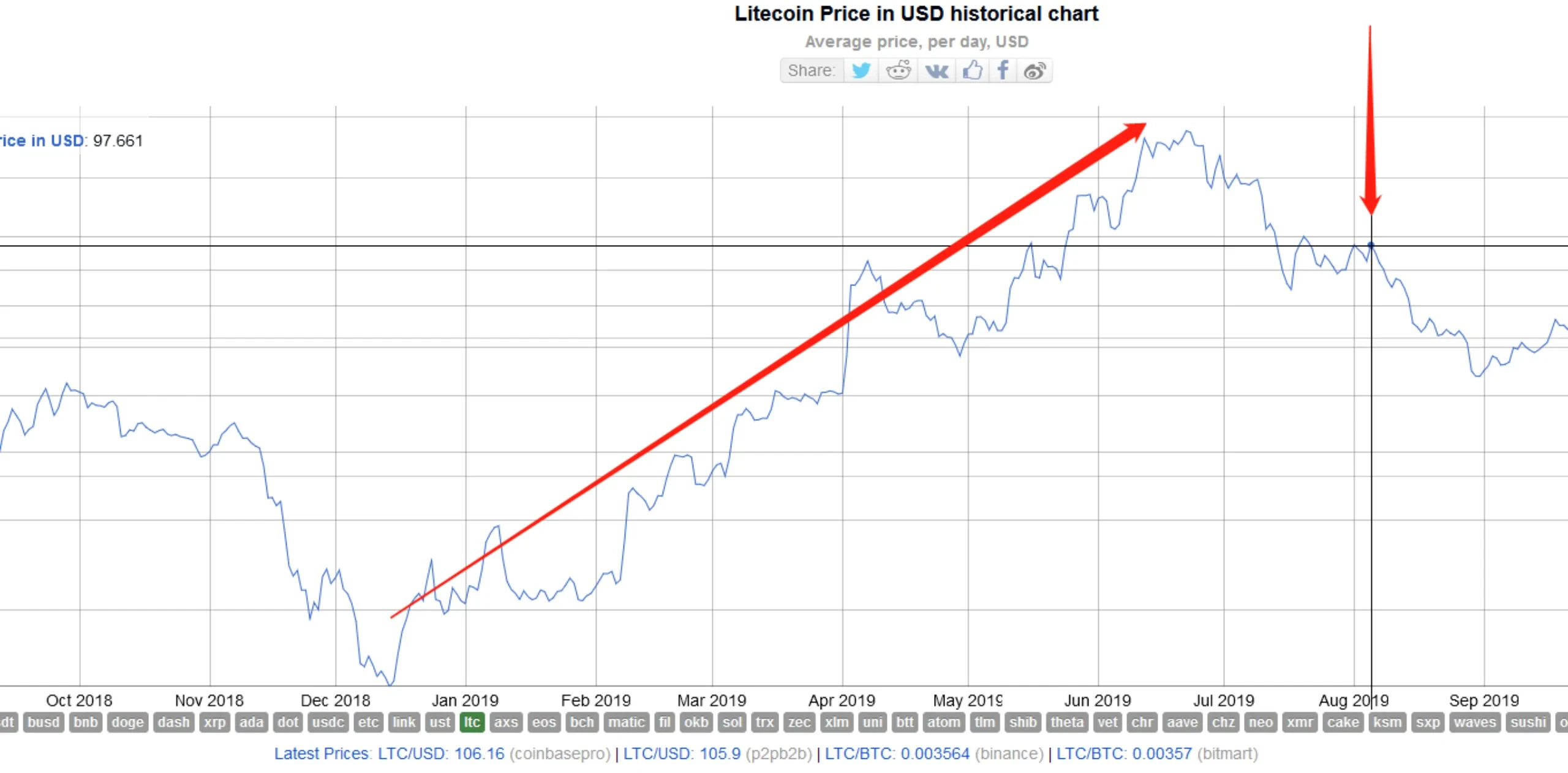
LTC's second halving
The same story plays out even more dramatically during Bitcoin halvings. As the king of cryptocurrencies, any change to its monetary supply marks both the end of a bear market and the beginning of a bull market.
Since Bitcoin's genesis block on January 3, 2009, it has undergone three halvings.
On November 28, 2012, Bitcoin's block reward was reduced from 50 to 25, and BTC price rose from 2 USD to 12 USD, a gain of 500%. On July 9, 2016, Bitcoin's block reward was reduced from 25 to 12.5, and price rose from 220 USD to 560 USD, a gain of 150%. On May 12, 2020, Bitcoin's block reward was reduced from 12.5 to 6.25, and price rose from 4000 USD to 8600 USD, a gain of 115%.
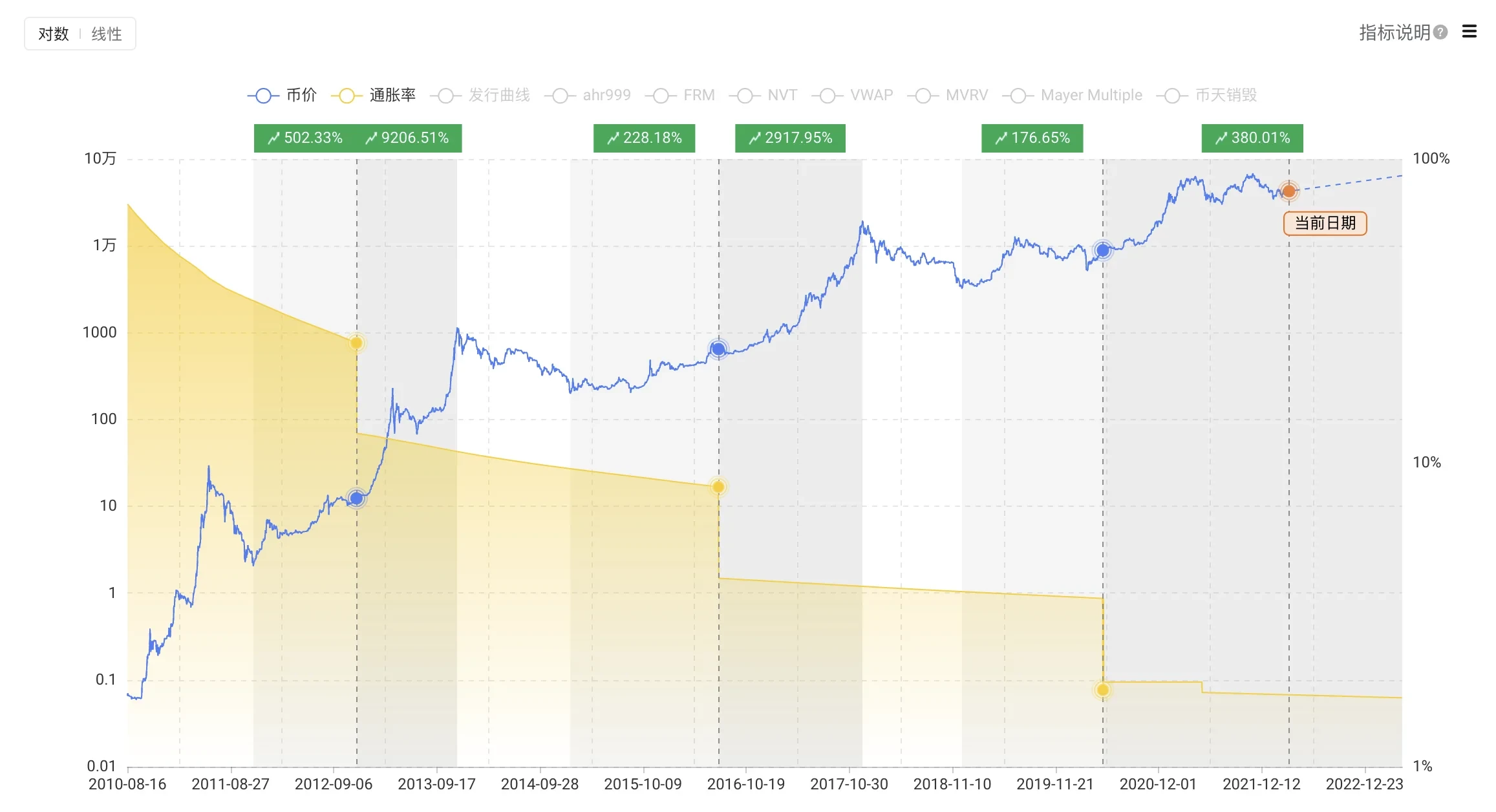
Therefore, based on historical data, halving remains a dominant narrative theme in the crypto market. It's only natural that ETC's price has risen significantly before this halving.
The underlying logic of the "halving drives price increase" narrative lies in "reduced monetary expansion increases scarcity, which in turn drives price increases." This is similar to the Federal Reserve controlling money supply by adjusting bond purchase scale, interest rates, and balance sheets.
The difference, however, is that crypto asset halvings are predetermined by blockchain protocols and are immutable, while Federal Reserve monetary policy adjusts according to inflation levels and economic development needs.
It's worth noting that while focusing on the price increase from ETC's halving, we must also pay attention to the long-term impact of Ethereum's transition to PoS on ETC.
2. Ethereum Transitions to PoS: Can ETC Turn Things Around?
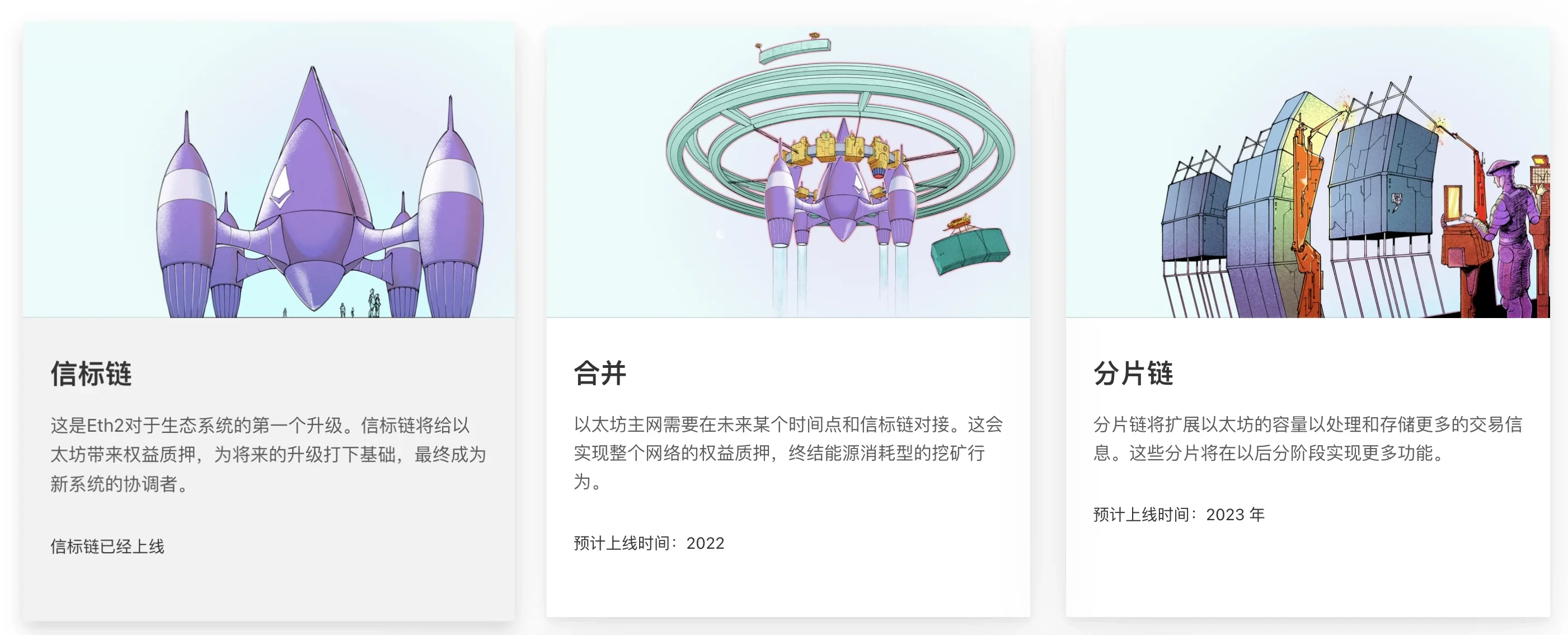
According to the Ethereum website, ETH 2.0 upgrade consists of three main steps: a) Beacon Chain launch; b) The Merge, combining the Beacon Chain with Eth1 and phasing out PoW through the difficulty bomb; c) Shard Chain launch.
Currently, the ETH 2.0 upgrade has entered the critical Step 2, expected to launch in late June 2022. At that time, the existing Ethereum will merge with the Beacon Chain, and PoW miners will be phased out through the difficulty bomb.
So, what impact will this have on ETC?
As is well known, ETH uses the Ethash mining algorithm, while ETC uses the Etchash mining algorithm. After simple configuration, miners can switch hashrate between the ETH and ETC networks.
Moreover, theoretically ETC's mining algorithm is more miner-friendly than ETH's.
This is because during ETC's Thanos upgrade in November 2020, the Etchash mining algorithm was activated. This upgrade slowed the growth rate of ETC's DAG, allowing GPU miners with lower-end devices to operate on the ETC network. This ensures that ETC can attract any mining equipment phased out from the Ethereum network, guaranteeing continuous growth in ETC's total hashrate.
However, even so, ETC's mining returns remain far lower than Ethereum's.
According to bitinfocharts data, current mining returns on the Ethereum network are 0.0422 USD/Day for 1 MH/s, meaning 1 MH/s of hashrate yields daily returns of 0.0422 USD, while mining returns on the ETC network are 0.0353 USD/Day for 1 MH/s.
ETH mining rewards are about 20% higher than ETC.
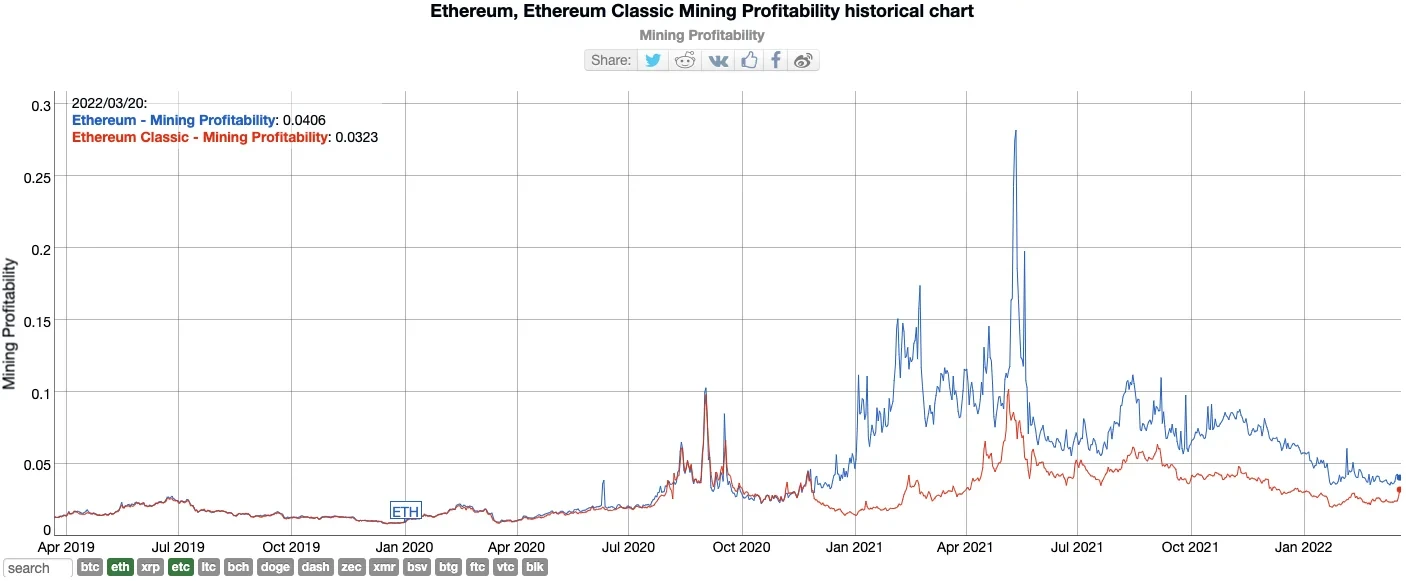
In terms of mining returns, take the representative high-performance graphics card NVIDIA GeForce RTX 3060 Ti as an example: this card has approximately 60 MH/s hashrate and sells for 600 USD. Mining on the Ethereum network yields daily returns of about 0.0422*60=2.53 USD. Without calculating electricity costs, the payback period is as long as 236 days.
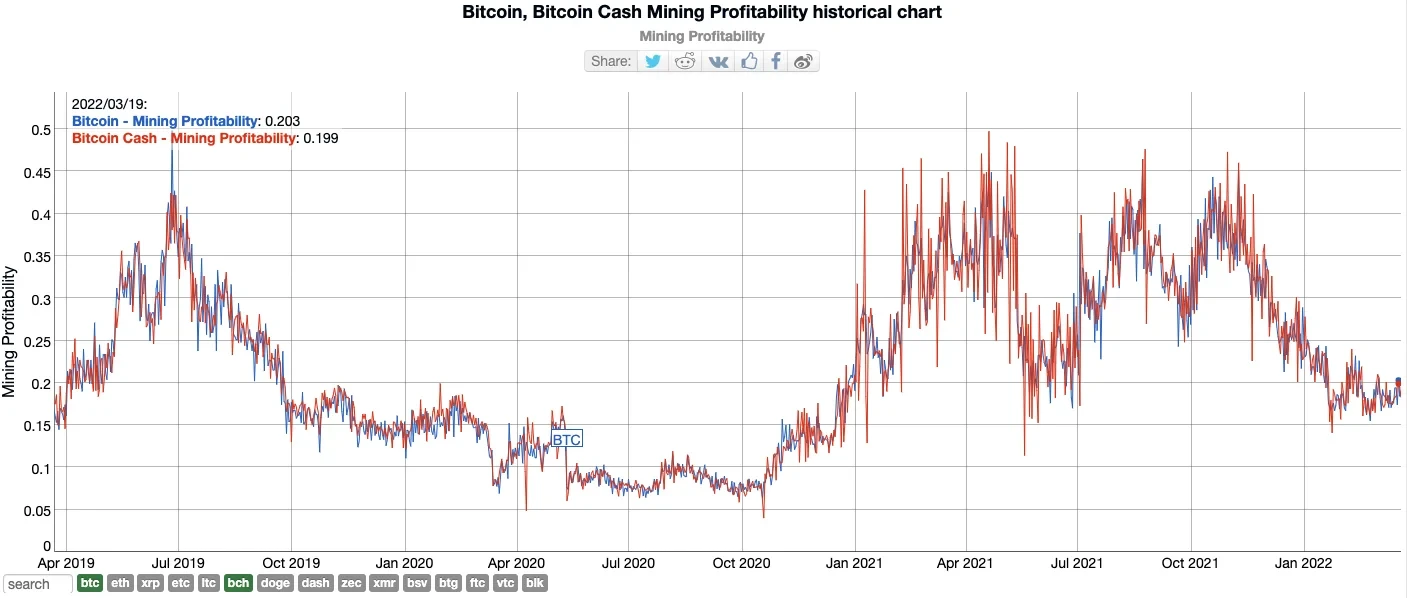
However, such differences don't exist between BTC and BCH because they use the identical SHA256 mining algorithm, allowing miners to seamlessly switch between the two networks.
This doesn't mean it's difficult for miners to switch from the ETH network to the ETC network.
For example, with the Ethereum Merge approaching in the near future, bringing an end to Ethereum PoW mining, the ETC official blog published a miner hashrate migration guide on March 18th, welcoming disenfranchised Ethereum miners. ETC officially suggests that before the Ethereum merge launches, Ethereum miners can migrate their equipment to Etchash to mine ETC instead.
Suppose Ethereum miners switch all their hashrate to the ETC network—what would happen?
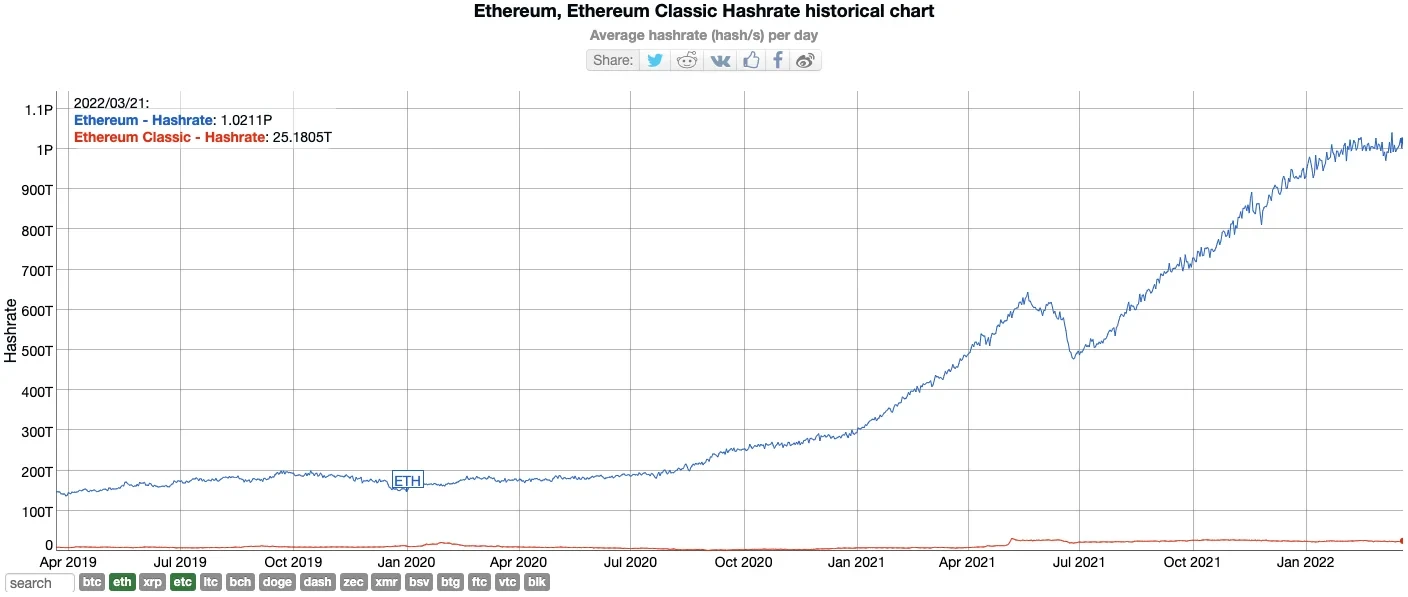
According to bitinfocharts data, ETH's current hashrate is 1.02 P, while ETC's hashrate is 25 T. The former's total hashrate is about 40 times the latter. ETH's token price is 69 times that of ETC. In other words, if ETH network miners switch all hashrate to the ETC network while maintaining equivalent returns, ETC's network hashrate would increase 40-fold, while the token price would need to increase 69-fold.
Of course, the above scenario would only occur under ideal conditions. So, can ETC deliver the perfect performance while "dancing in chains"? Can ETC finally shed the stigma of being a Doomsday Chariot?
3. ETC's Dark History Didn't Happen Overnight
In fact, ETC earned the "Doomsday Chariot" crown before 2018.
What made it famous was the incident on September 1, 2017, when Ethereum Classic suddenly rose more than 22% without any movement from Bitcoin. Afterward, the crypto market experienced the devastating "9.4" incident, and the reputation as an epic-level contrarian indicator was firmly established.
Later, on March 17, 2020, the ETC network was about to begin halving. In the more than a month prior, ETC's price rose from 3.4 USDT to a high of 13.2 USDT, a gain of nearly 300%. Then on March 12, the crypto market experienced the devastating "3.12" stampede.
This deepened people's impression of ETC as a Doomsday Chariot. Of course, ETC's contrarian reputation doesn't end there.
Additionally, ETC experienced multiple "double-spend attacks" in 2019. The most serious one occurred in January 2019, causing nearly $2 million in losses. Although the attacker later returned some of the tokens, this caused indelible reputational damage to the ETC network.
The root cause of the double-spend attacks was ETC's declining market cap, which led to decreased network hashrate. Attackers could easily launch hashrate attacks against ETC by renting ETH hashrate.
Beyond these negative impacts, ETC was in fact born from crisis.
Back in 2016, a vulnerability in the DAO contract led to the theft of approximately 3.6 million ETH, accounting for 4.4% of ETH's total supply. However, due to the contract's design method, these funds underwent a 28-day freeze before being transferred.
In this situation, Ethereum decided to implement a hard fork to recover the funds. The team then proposed EIP-779, allowing everyone to withdraw their ETH from the DAO contract. However, some community members opposed this proposal, believing it would harm the network's decentralized nature, and continued mining on the old Ethereum blockchain. This chain became Ethereum Classic.
In terms of originality, ETC is the true inheritor of Ethereum's original philosophy, which is why it's called ETC (Ethereum Classic).
So, can ETC leverage this halving and the historic opportunity of ETH's transition to PoS to successfully shake off the negative impacts of these "chains" and return to the mainstream crypto asset camp? Let's wait and see.
Disclaimer
This article may contain content about products that are not available in your region. This article is intended only to provide general information and does not assume responsibility for any factual errors or omissions herein. This article represents only the author's personal views and does not represent the views of OKX. This article is not intended to provide any advice, including but not limited to: (i) investment advice or investment recommendations; (ii) offers or solicitations to buy, sell, or hold digital assets; or (iii) financial, accounting, legal, or tax advice. Holding digital assets (including stablecoins) involves high risk, may fluctuate significantly, and may even become worthless. You should carefully consider whether trading or holding digital assets is suitable for you based on your financial situation. For questions about your specific situation, please consult your legal/tax/investment professional. The information appearing in this article (including market data and statistics, if any) is for general reference only. While we have taken all reasonable precautions in preparing these data and charts, we assume no responsibility for any factual errors or omissions expressed herein. © 2025 OKX. This article may be reproduced or distributed in full, or excerpts of 100 words or less from this article may be used, provided such use is non-commercial. Any reproduction or distribution of the entire article must prominently state: "Copyright © 2025 OKX. Used with permission." Permitted excerpts must cite the article name and include attribution, for example "Article Name, [Author Name (if applicable)], © 2025 OKX". Some content may be generated or assisted by artificial intelligence (AI) tools. Derivative works or other uses of this article are not permitted.
Show More
Recommended Reading

2025 KOLs' Most Used OKX Products: A Comprehensive Ranking
In the cryptocurrency industry, professional players' choices are always direct and pure. In 2025, KOLs voted with their full-year capital investment and time accumulation for the industry's tools and ecosystem development—the most genuine vote possible. Focusing on four core questions—"What was the biggest achievement this year?", "Given that achievement, what OKX products did you use most and like best in 2025?", "Why do you like it?", and "How
January 5, 2026

2026 Investment Outlook: Asset Tokenization, Intelligence & Privacy | OKX Year in Review
Three major trends for the future of crypto: asset transformation, entity transformation, and rule transformation. As we approach 2026, moving beyond the past four years of infrastructure-focused "road-building," the crypto industry is welcoming a profound paradigm shift. OKX Ventures defines this as the dawn of the "Kinetic Finance" era—where the focus shifts from how fast the network is to the flow of on-chain assets and profit generation
December 31, 2025

Voting with Data: Inside 2025's Hot Trading Products | OKX Year in Review
If you only look at market conditions, it's hard to explain the return differences among trading users in 2025. What truly determines returns also depends on account-level operational methods, not merely market volatility itself. OKX's annual statement shows that mainstream coins remain the core for capital turnover and returns, supporting trading and strategy execution; emerging coins are more used to amplify volatility and provide phased opportunities, but are not stable, long-term sources of returns. What truly continuously contributes returns is
December 30, 2025
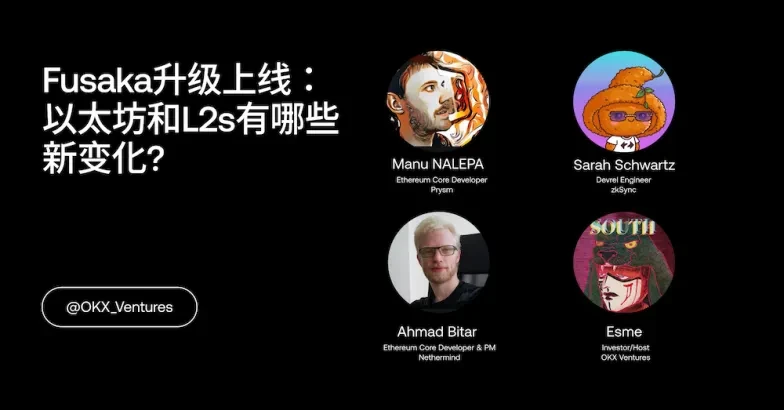
Fusaka in Practice: What Ethereum's Latest Upgrade Means for L2s, Nodes, and Users
Ethereum mainnet has completed the Fusaka fork. At the protocol level, this upgrade mainly includes four components. Full text: Q&A Show More core views and frontline experience from three guests: Ahmad (@smartprogrammer) – Nethermind execution client / Ethereum core developer Manu (@manunalepa) – Prysm / Of
December 16, 2025

OKX Research | Why Did RWA Become a Key Narrative in 2025?
RWA (Real World Assets) is becoming a global capital "favorite." Simply put, RWA brings valuable, ownership-backed assets from the real world—such as houses, bonds, stocks and other traditional financial assets, even art, private lending, carbon credits and other assets not easily traded directly—onto the blockchain, turning them into tradeable, programmable crypto assets. This way, not
November 20, 2025
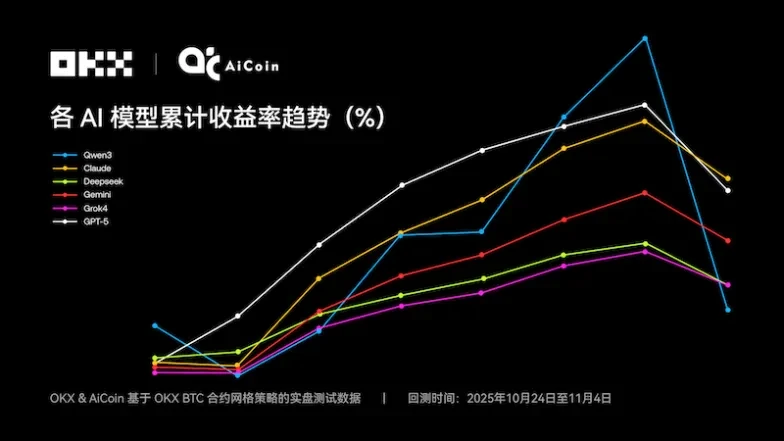
Claude Takes the Championship: The Truth Behind 6 Major AI Grid Strategy Showdowns | OKX & Ai Coin Live Trading Review
Short-term trading champion Qwen3—is it also a king in grid strategies? NOF1's "AI Trading Live Arena" first season finally concluded at 6 AM on November 4, 2025, whetting the appetites of the crypto, tech, and finance worlds. But the ending of this "AI IQ public test" was somewhat unexpected: the six models' total principal of 60,000 USD was only 4.3
November 6, 2025