GameFi Platforms Are Becoming the New Growth Engine for NFT
Recently, major events have been frequent in the NFT track. American TV host Jimmy Fallon, who has 52 million followers, changed his Twitter avatar to a BAYC artwork; NFT and NFT purchasing-related Google searches have hit all-time highs; total NFT sales on Ethereum have exceeded $9 billion; and the total market cap of NFT tokens has surpassed $55 billion—all reaching record highs. NFT is creating an entirely new era of cryptocurrency.
Alongside NFT, new concepts such as GameFi, TradeFi, and DeFi derivatives have also stepped into the center of this stage. Behind each new concept lies even more emerging fields, including GameFi platforms specifically built for GameFi.
1**, The Necessity of GameFi Platforms from a Traditional Gaming Perspective**
According to Newzoo's "2021 Global Games Market Report," driven by nearly 3 billion players worldwide, the global gaming market will generate $175.8 billion in revenue in 2021, with the market expected to exceed $200 billion and reach 3.3 billion players by 2024. For the emerging GameFi sector with a market cap of less than $10 billion, this represents a massive blue ocean market.
In the development of traditional gaming, gaming platforms play a pivotal "bridging" role.
From a user perspective, as the number of players increases and their needs continue to diversify, obtaining legitimate games through official channels has become a fundamental necessity, and purchasing games from overseas platforms has become a common practice. However, due to various factors, overseas platforms have been unable to provide players with a smooth gaming environment, leaving player needs unmet. This phenomenon has been particularly evident since 2017.
As a result, more and more studios and companies have begun to focus on the single-player gaming platform sector. Since 2017, Snail Games' Stone platform, Tencent's WeGame platform, Anhui Xinhua Media's Kuafu Games, and Oriental Pearl's joint initiative with Microsoft China and Bing Dong Interactive—four platforms collectively known as the "Four Golden Flowers"—have launched one after another. Together with overseas platforms such as Steam, EA, Ubisoft, CD Projekt, and Slither, they have genuinely met players' demand for high-quality gaming experiences.
Regarding profitability of gaming platforms, in April of this year, Emily Greer, Co-founder and CEO of Kongregate—a gaming platform specializing in web games—stated that Kongregate launches 130 new games every month, with a total library exceeding 95,000 titles. Four percent of paying users spend more than $500, with all platform revenue coming from the top 2.1% of paying players. Seventy-five percent of revenue comes from virtual items, with the remaining 25% coming from advertising monetization.
Additionally, according to Swrve's survey, by 2020, among all major gaming platforms, the top 10% of paying players accounted for more than half of the overall gaming revenue, while the remaining 90% of paying users contributed less than 50% of revenue. That is, the returns for gaming platforms come from three components: spending by top players, virtual items, and advertising fees.
Therefore, both players and game developers have a strong demand for gaming platforms, and gaming platforms themselves are a solid business. Therefore, GameFi gaming platforms are inevitably a fundamental necessity.
Since traditional gaming platforms are already mature, can GameFi not simply launch directly on traditional gaming channels?
The answer is no.
On October 16 of this year, Steam—the world's largest digital game distribution platform operated by Valve—began removing all games involving NFT or crypto assets. Steam's Getting Started page was updated to state that applications that should not be published on Steam include "applications built on blockchain technology that issue or allow the exchange of crypto assets or NFT." This directly led to the removal of previously listed GameFi games, including the NFT game My Neighbor Alice, the Bitcoin mining simulation game Real-Time Mining Simulator, and the blockchain-powered VR game ILCOIN.
The reason Steam removed all blockchain games is that Valve believes these in-game items hold real-world value, and the company does not allow items with real-world value on its platform.
In response to Steam's action, a digital rights organization sent Valve an open letter titled "Fighting for the Future," with the NFT gaming infrastructure platform Enjin and the Blockchain Game Alliance (BGA), along with 26 blockchain gaming studios, joining the "Fighting for the Future" initiative. The initiative implores Steam's creator and game developer Valve not to ban games that use cryptographic technology from its marketplace, with the goal of persuading Steam to reverse its blockchain gaming ban. However, Valve has not provided any feedback on this request so far.
Therefore, whether from the perspective of game developers' and players' fundamental needs, or from the future development of GameFi, the crypto industry needs to develop its own dedicated gaming platform.
2**, How Will GameFi Platforms Develop?**
On November 13, GameFi platform Forte completed a $725 million Series B funding round—this was the largest single-project financing event in the crypto space over the past two months, demonstrating institutional confidence in the future development of this track.
The roster of investors is stellar, including industry giants such as Andreessen Horowitz (a16z), Cosmos, Polygon Studios, and Solana Ventures. This round was co-led by Sea Capital and Kora Management, with multiple gaming and media publishers participating, including Animoca Brands, Big Bets, Overwolf, Playstudios, Warner Music Group, and z Ventures. The funds will be used to expand Forte's products and services, as well as to accelerate onboarding for emerging game studios and content publishers. Earlier in May of this year, Forte raised $185 million in a Series A round at a valuation of $1 billion.
According to its design mechanism, game publishers can use Forte's platform to integrate blockchain technology into their games, and the platform also allows for the minting and selling of NFT.
It is clear that GameFi platforms are fully embracing and inclusive of NFT assets and cryptographic technology—which is completely different from traditional gaming platforms like Steam.
Regarding the current state of GameFi platforms, the known ones currently in operation include Ronin, Immutable X, Gala, and others.
All of these gaming platforms are backed by prominent names.
Take Gala as an example. The project's founder, Eric, is one of the founders of Zynga—a well-established social gaming company listed on the stock exchange with a market cap close to $10 billion. As early as 2010, the gaming company Zynga leveraged Facebook's powerful social network to perfect web-based game development, establishing itself as the world's largest gaming company through breakout hits like CityVille.
Gala positions itself as a "gaming arcade" for the blockchain industry. Gala combines community tokens, gaming tokens, game development, land auctions, game launches, and NFT Marketplace functionalities, offering 100% compatibility with GameFi. Currently, Gala has integrated more than a dozen original built-in games, including the farm-building game Town Star, Spider Tank Project, Mirandus, Fortified, Echoes of Empire, and others.
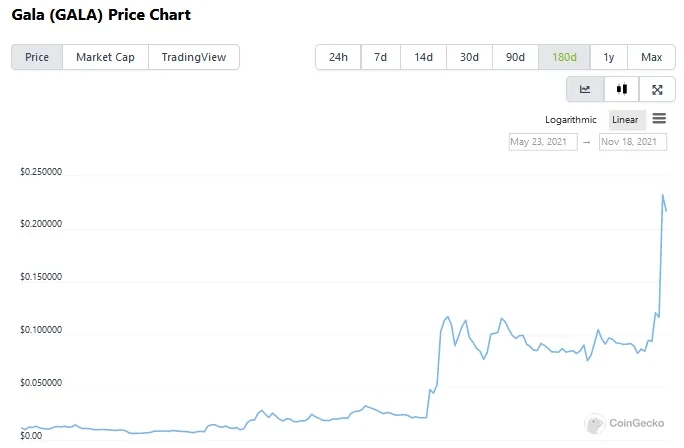
Over the past three months, the Gala token price has risen by nearly 40 times—capital is voting with its feet for sectors that belong to the future.
Take Immutable X as another example. This project is an Ethereum Layer 2 project purpose-built for GameFi. It uses StarkWare's zero-knowledge proof scaling solution (StarkNet) as its underlying technology, perfectly avoiding the inefficiencies and lower performance of Optimistic Rollup technology (relatively speaking). The well-known Illuvium game will be launched on this platform.
This project is also "born into a prestigious family." The project team originated from the renowned chain game company Gods Unchained. Its legendary development team, Fuel Games, created a record of earning 400 ETH in 5 days during the 2019 bear market. During the game's open beta, they created over 4 million NFT gaming cards, and in the same year, they produced a "sky-high priced" NFT gaming card—the Mythic card worth $62,000. Backed by strong investors such as Coinbase, FTX, and Animoca, it has become a star team born with a silver spoon in its mouth.
Regarding the future development of GameFi, on November 15, Katie Haun, Partner at a16z, said in an interview with TechCrunch that the currently concentrated NFT user base is about to see an explosion, which will greatly transform the internet business model for consumers and content creators. NFT enables consumers to break free from platform dependency—even if a platform (such as a game) shuts down, users can still transfer the associated benefits to other platforms. Content creators can program digital goods to continuously earn financial returns in future trading, while eliminating intermediary commissions. The technology is still in its early stages, with many NFT being used for the purpose of showing off wealth. She believes more real-world basic goods will be developed in digital form in the future.
In summary, as the NFT market is about to bloom everywhere, GameFi platforms will become the common choice for users, developers, and capital.
Disclaimer
This article may contain product content that is not applicable to your region. This article is only committed to providing general information and is not responsible for any factual errors or omissions. This article represents only the author's personal views and does not constitute the views of OKX. This article is not intended to provide any advice, including but not limited to: (i) investment advice or investment recommendations; (ii) offers or solicitations to buy, sell, or hold digital assets; or (iii) financial, accounting, legal, or tax advice. Holding digital assets (including stablecoins) involves high risk and prices may fluctuate significantly or even become worthless. You should carefully consider whether trading or holding digital assets is suitable for you based on your financial situation. For questions about your specific circumstances, please consult your legal/tax/investment professional. The information in this article (including market data and statistical information, if any) is provided for general reference purposes only. Although we have taken all reasonable precautions in preparing this data and these charts, we assume no responsibility for any factual errors or omissions expressed herein. © 2025 OKX. This article may be reproduced or distributed in its entirety, or excerpts of 100 words or less may be used, provided that such use is non-commercial. Any reproduction or distribution of the full article must prominently state: "This article is copyrighted © 2025 OKX, used by permission." Permitted excerpts must cite the article name and include attribution, for example: "Article name, [author name (if applicable)], © 2025 OKX". Portions of this content may have been generated or assisted by artificial intelligence (AI) tools. Derivative works and other uses of this article are not permitted.
Show More
Recommended Reading

2025 KOL Most Used OKX Products Ranking
In the cryptocurrency industry, professional traders' choices are always direct and pure. In 2025, KOLs cast the most authentic votes for industry tools and ecosystem development by investing their funds and time throughout the year. We centered around four core questions—"What was your biggest achievement this year?", "Under the premise of achieving results, what are your most used and favorite OKX products in 2025?", "Why do you like it?", "Does this
January 5, 2026

2026 Investment Outlook: Asset On-Chaining, Intelligence & Privacy | OKX Annual Review
The three major trends of crypto's future: asset transformation, entity transformation, and rule transformation. As we are about to enter 2026, after four years of focusing on "road-building" infrastructure, the crypto industry is ushering in a profound paradigm shift. OKX Ventures defines this as the beginning of the era of "Kinetic Finance," whose core is no longer how fast the network is, but the flow and earning of on-chain assets.
December 31, 2025

Vote with Data: A Deep Dive into the Most Popular Trading Products of 2025 | OKX Annual Review
If you only look at market conditions, it's hard to explain the return differences among trading users in 2025. What truly determines returns also depends on account-level operation methods, not just market volatility itself. The OKX annual report shows that mainstream coins remain the core of capital turnover and return bearing, supporting trading and strategy execution; emerging coins are more used to amplify volatility and provide stage-based opportunities, but are not a stable, long-term source of returns. What truly and consistently contributes to returns is
December 30, 2025
Fusaka In Practice: What Ethereum's Latest Upgrade Means for L2, Nodes, and Users
The Ethereum mainnet has completed the Fusaka fork. From the protocol level, this upgrade primarily covers four areas, full article Q&A Show More Three guests' core viewpoints and front-line experience: Ahmad (@smartprogrammer) – Nethermind Execution Client / Ethereum Core Dev Manu (@manunalepa) – Prysm / Of
December 16, 2025
OKX Research | Why Did RWA Become a Key Narrative in 2025?
RWA (Real World Assets) is becoming the "new favorite" of global capital. Simply put, RWA refers to bringing valuable, ownership-bearing things from the real world—such as houses, bonds, stocks, and other traditional financial assets, and even art, private lending, and carbon credits that are not typically easy to trade directly—onto the blockchain, transforming them into tradeable, programmable crypto assets. This way,
November 20, 2025
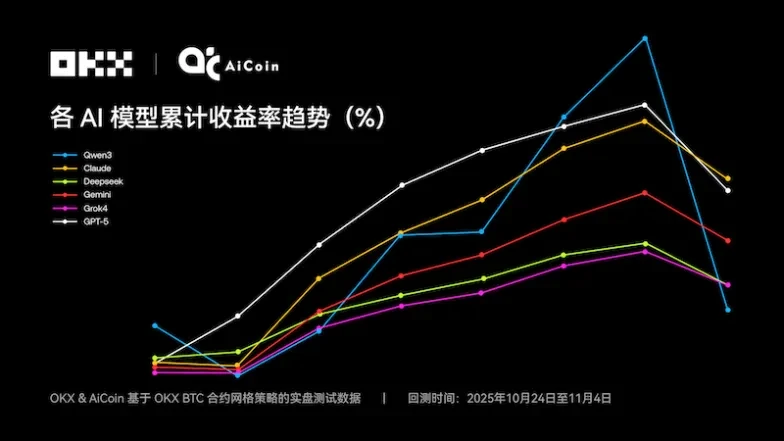
Claude Wins the Championship: The Truth Behind 6 Major AI Grid Strategies | OKX & Ai Coin Live Trading Review
Short-term trading champion —is it also the king of grid strategies? The first season of NOF1's "AI Trading Live Arena" finally concluded on November 4, 2025, at 6 AM, whetting the appetite of the crypto, tech, and finance communities. However, the outcome of this "AI IQ public test" was somewhat unexpected—the total principal of $60,000 across six models was reduced to only $4.3
November 6, 2025