Meta Sells stablecoin Project Diem: Is Betting on the Metaverse the Right Move?
Recently, tech giant Meta (formerly Facebook) announced the sale of its cryptocurrency project Diem, drawing attention from the crypto market and tech circles. Once firmly committed to betting on cryptocurrency stablecoins, Facebook has repeatedly faced setbacks. After selling Diem, into which it had poured considerable effort, how will Meta continue its crypto layout? On the other hand, after Facebook officially transformed into a metaverse (Meta) company, its financial reports show that metaverse performance is less than ideal, with operating losses continuing to increase. Riding the metaverse wave, where will Meta go from here with its metaverse business direction?
Multiple Setbacks, Diem Finally Sold
On January 31, 2022, Meta Platforms Inc. (formerly Facebook) officially announced it would sell the intellectual property and other assets of its cryptocurrency payment network Diem (formerly Libra) to Silvergate Capital Corporation. These assets include the development, deployment, and operational infrastructure and tools used to run the blockchain-based payment network, with a total value of $182 million.
On February 1, this acquisition was officially completed. The Diem Association and crypto bank Silvergate announced that Silvergate had confirmed the acquisition of Diem stablecoin project intellectual property and other assets. According to Silvergate's statement, they will also obtain "proprietary software elements essential to operating a regulatory-compliant stablecoin network." Additionally, Bloomberg reported that insiders previously revealed the Diem Association considered selling their assets as a way to return funds to investor members and monetize any remaining value in the project.
Speaking of the Diem project, it has suffered multiple setbacks and faced a difficult fate. As early as June 2019, Meta released the Libra whitepaper, planning to launch a stablecoin pegged to a basket of fiat currencies, as well as a global payment network. However, since Libra was proposed, it faced a series of regulatory "crackdowns," almost causing the Libra project to be "stillborn." Later, Meta had to compromise and rein in its ambitions. In December 2020, it renamed the project to Diem, operating only as a USD-pegged stablecoin project, yet it still failed to gain favor with regulatory authorities. Until today, Diem was finally sold to Silvergate Bank. So, what is the background of this Silvergate that acquired Diem? Why did Meta choose to transfer Diem to this bank?
Silvergate is a Federal Reserve member bank founded in 1988, located in La Jolla, California. As a Federal Reserve member, Silvergate accepts Federal Reserve regulation, but this bank has long been involved in the cryptocurrency space and became a Diem partner. In January 2014, Silvergate became one of the first banks willing to open accounts for cryptocurrency trading. Currently, the bank serves 750 cryptocurrency trading platforms, and its clients include some well-known crypto asset trading platforms such as Gemini and Circle, as well as investment companies like Polychain Capital. In 2017, Silvergate also launched a 24/7 real-time payment network for crypto trading called the Silvergate Exchange Network (SEN), allowing investors to move funds between cryptocurrency exchanges worldwide. Data shows that in just the fourth quarter of 2021, SEN processed over $200 billion in trading.
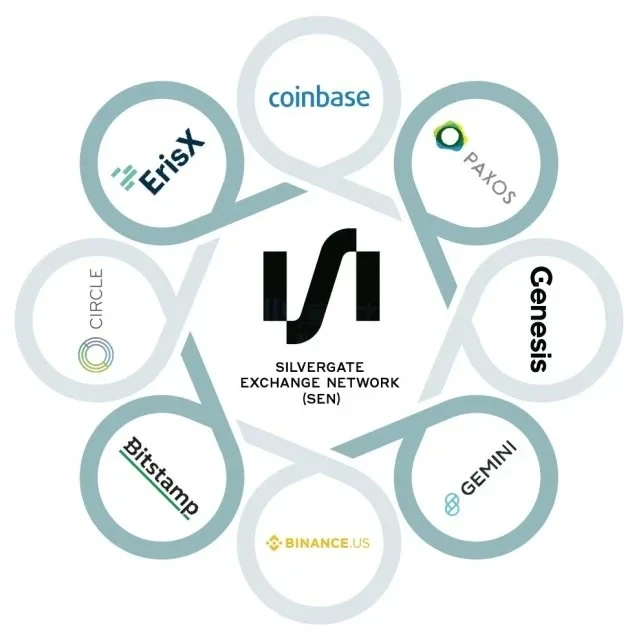
Silvergate CEO Alan Lane also purchased his first Bitcoin as early as 2013 and began leading Silvergate to continuously provide related services to the digital asset sector. The above background of Silvergate was the main reason Meta chose to partner with them. Last year, after the Diem project made compromises but still faced a series of regulatory obstacles, on May 12, 2021, the Diem Association announced it was abandoning its registration plans with the Swiss financial regulator (FINMA) and announced a partnership with Silvergate, making Silvergate the exclusive issuer of its stablecoin Diem USD. Meta perhaps believed that partnering with Silvergate would help it gain regulatory approval.
However, last November, the President's Working Group on Financial Markets stated in a report that collaboration between stablecoin issuers and wallet providers or commercial companies could lead to excessive concentration of economic power, and such combinations could adversely affect competition. This was also one of the reasons Meta ultimately made the decision to sell Diem.
Is Betting on the Metaverse the Right Direction?
Regarding Meta's move, Block founder and former Twitter CEO Jack Dorsey shared his views. On February 2, at the "2022 Enterprise Bitcoin" conference hosted by Bitcoin "whale" MicroStrategy, Jack Dorsey was interviewed by Michael Saylor (MicroStrategy CEO). Dorsey stated that Meta's failed cryptocurrency project Diem "wasted energy and time," and it should have used open protocols like Bitcoin rather than trying to create its own currency.
It has been over two and a half years since the Diem project plan was announced, yet it has been unable to progress and launch due to regulatory obstruction from various parties. Before officially selling Diem, Facebook had already announced its rebranding to "Meta" and announced plans to transform into a metaverse company within five years, dedicated to integrating Facebook and its social media platforms like Instagram to build a brand new Meta platform. This means Meta has chosen to go all-in on the metaverse business, and the sale of Diem may not have been a sudden move.
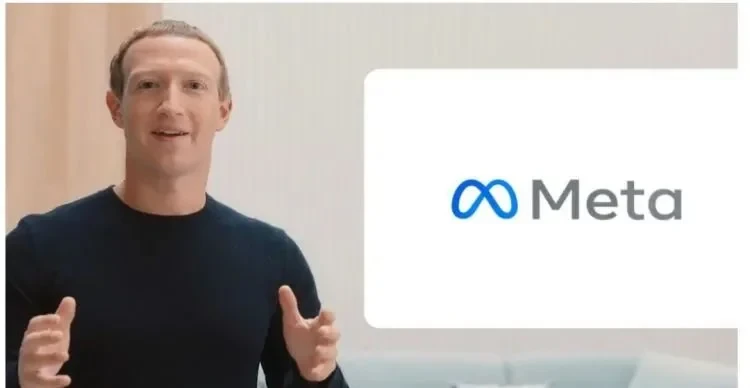
However, looking at the current situation, Meta's metaverse business has not yet achieved ideal results. On February 2, 2022, local time, Meta released its Q4 2021 financial report, which for the first time disclosed the financial status of its Reality Labs division. Data shows that Reality Labs lost over $10 billion in 2021 alone, with a net loss of $1.019 billion and revenue of $2.27 billion (revenue includes hardware such as Meta Quest virtual reality headsets). Although Reality Labs has lost money for three consecutive years, last year's losses were very significant compared to 2019 ($4.5 billion) and 2020 ($6.62 billion), with net losses increasing by 126% and 53.9% respectively.
This was the first time Reality Labs reported financials as an independent division, and also the first metaverse financial report released by Facebook after rebranding to Meta. Reality Labs is Facebook's former AR/VR division, established in 2018, primarily researching VR/AR technology and products. The division is responsible for realizing Meta's metaverse vision. Beyond losses, the financial report showed that daily active users declined by 1 million during the period, the first consecutive quarterly decline in daily active users since the company's founding. The market reacted to these core data disclosed in the financial report. On February 3, local time, Meta's stock price plummeted over 26%, with approximately $237 billion (about 1.5 trillion RMB) in market value evaporating. In response, Meta CFO Mark Zuckerberg stated that in 2022, Meta's metaverse business operating losses would continue to increase. Without Reality Labs' losses, Meta's full-year profit could have reached $56 billion.
From the current situation, Meta's metaverse journey has not started smoothly. Many investors have questioned Facebook's plan to transform into the metaverse. As Meta shifted its focus from flagship products to stablecoin projects and then to building a metaverse platform, its platform user growth began to face stagnation.
As the currently hottest field, will the metaverse be the right direction for Meta to bet on? It's still too early to give an answer, after all, the metaverse is still in the early stages of development, and requires profound technological accumulation and time to truly achieve explosive adoption. It has only been three months since Facebook announced its rebranding to the metaverse, and there will still be many challenges ahead on the road to metaverse transformation.
Even though Meta will focus primarily on the metaverse field, its crypto ambitions will not end with the sale of Diem. On January 25 this year, Meta filed a trademark registration application with Brazil's National Institute of Industrial Property (INPI) for "designing, developing, and implementing software for third-party verification services for cryptocurrency trading, including (but not limited to) Bitcoin currency trading." Meta's trademark application was originally filed in Jamaica on October 5, 2021.
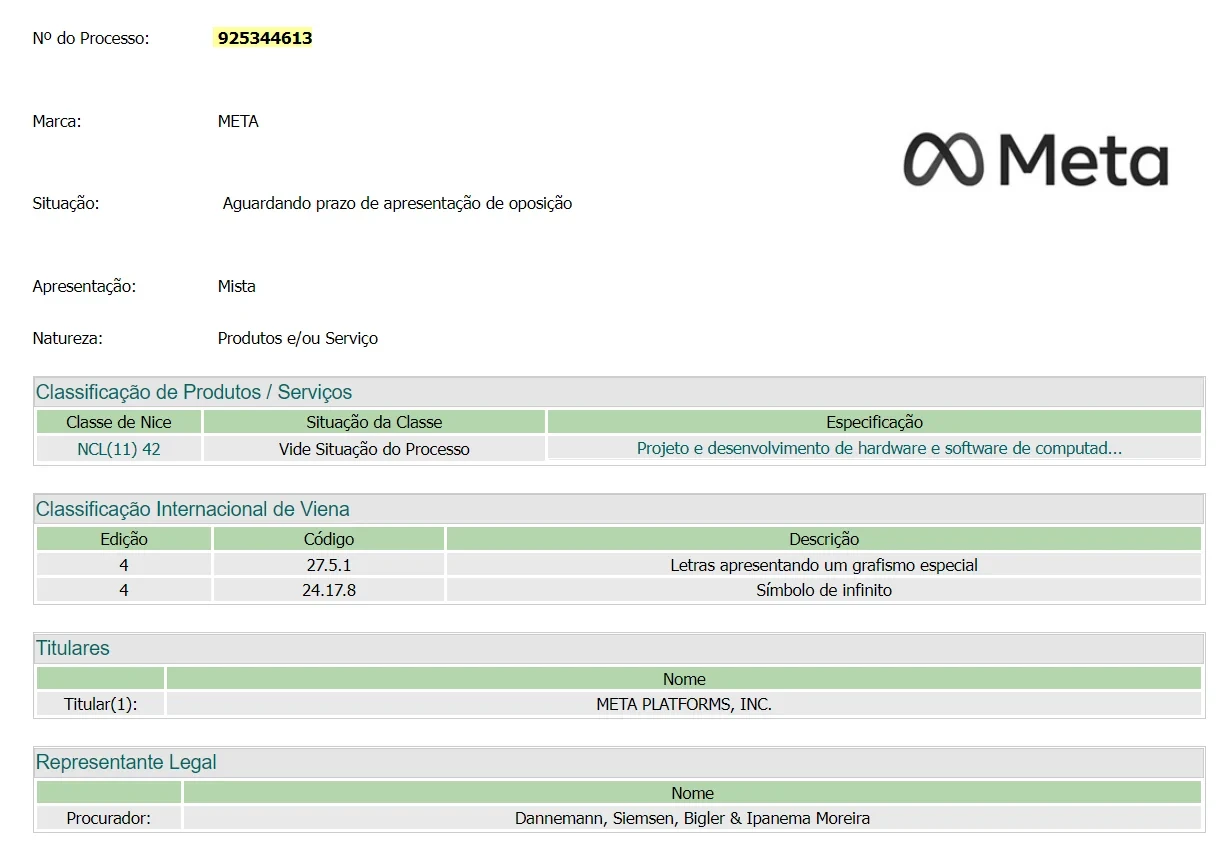
This means Meta will continue to provide other Bitcoin trading-related services in the future, demonstrating its determination to continue exploring the crypto space. As a leading global tech giant, will Meta's metaverse plan become an industry benchmark like when it first launched the stablecoin project Diem? And while exploring the metaverse, will Meta's crypto path bring us unexpected surprises?
Disclaimer
This article may contain content related to products not available in your region. This article is intended to provide general information only and does not take responsibility for any factual errors or omissions herein. This article represents only the author's personal views and does not represent the views of OKX. This article is not intended to provide any advice, including but not limited to: (i) investment advice or investment recommendations; (ii) offers or solicitations to buy, sell, or hold digital assets; or (iii) financial, accounting, legal, or tax advice. Holding digital assets (including stablecoins) involves high risk, may fluctuate significantly, and may even become worthless. You should carefully consider whether trading or holding digital assets is suitable for you based on your financial situation. For questions about your specific situation, please consult your legal/tax/investment professional. The information appearing in this article (including market data and statistics, if any) is for general reference only. Although we have taken all reasonable precautions in preparing these data and charts, we accept no responsibility for any factual errors or omissions expressed herein. © 2025 OKX. This article may be reproduced or distributed in its entirety, or excerpts of 100 words or less from this article may be used, provided such use is non-commercial. Any reproduction or distribution of the entire article must also prominently state: "Copyright © 2025 OKX. Used with permission." Permitted excerpts must cite the article name and include attribution, such as "Article Name, [Author Name (if applicable)], © 2025 OKX". Some content may be generated or assisted by artificial intelligence (AI) tools. Derivative works or other uses of this article are not permitted.
Show More
Recommended Reading

2025 KOL Most Used OKX Products List: A Comprehensive Review
In the cryptocurrency industry, professional players' choices are always direct and pure. In 2025, KOLs used a full year of capital investment and time accumulation to cast the most genuine votes for industry tools and ecosystem development. We focused on four core questions—"What was the biggest achievement this year?", "Given the achievements, what was your most used and favorite OKX product in 2025?", "Why do you like it?", "How does this
January 5, 2026

2026 Investment Outlook: Asset Tokenization, Intelligence and Privacy | OKX Annual Review
Three major trends in crypto's future: asset transformation, entity transformation, and rule transformation. As we approach 2026, saying goodbye to the past four years of infrastructure-focused "road building," the cryptocurrency industry is welcoming a profound paradigm shift. OKX Ventures defines this as the opening of the "Kinetic Finance" era, where the core is no longer how fast the network is, but the flow of on-chain assets and wealth generation
December 31, 2025

Voting with Data: Insights into 2025's Hot Trading Products | OKX Annual Review
If you only look at market trends, it's hard to explain the difference in returns between exchange users in 2025. What truly determines returns also depends on account-level operational methods, not just market volatility itself. The OKX annual statement shows that mainstream coins remain the core of fund turnover and returns generation, supporting trading and strategy execution; emerging coins are more used to amplify volatility and provide phased opportunities, but are not a stable, long-term source of returns. What truly consistently contributes returns,
December 30, 2025
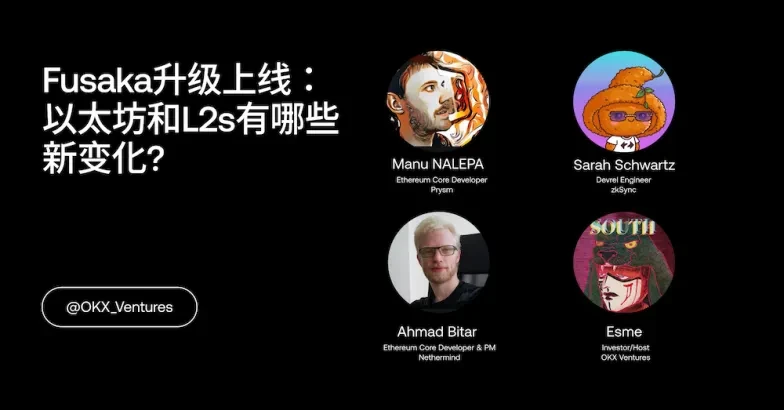
Fusaka in Practice: What Does Ethereum's Latest Upgrade Mean for L2s, Nodes, and Users?
The Ethereum mainnet has completed the Fusaka fork. At the protocol level, this upgrade mainly includes four parts. The full text presents the core views and frontline experience of three guests in Q&A format: Ahmad (@smartprogrammer) – Nethermind execution client / Ethereum core developer Manu (@manunalepa) – Prysm / Of
December 16, 2025

OKX Research | Why Did RWA Become a Key Narrative in 2025?
RWA (Real World Assets) is becoming a global capital "favorite." Simply put, RWA involves moving valuable, ownership-based assets from the real world—such as houses, bonds, stocks and other traditional financial assets, as well as assets that are usually difficult to trade directly like art, private lending, carbon credits—onto the blockchain to become tradable, programmable crypto assets. This way, not
November 20, 2025
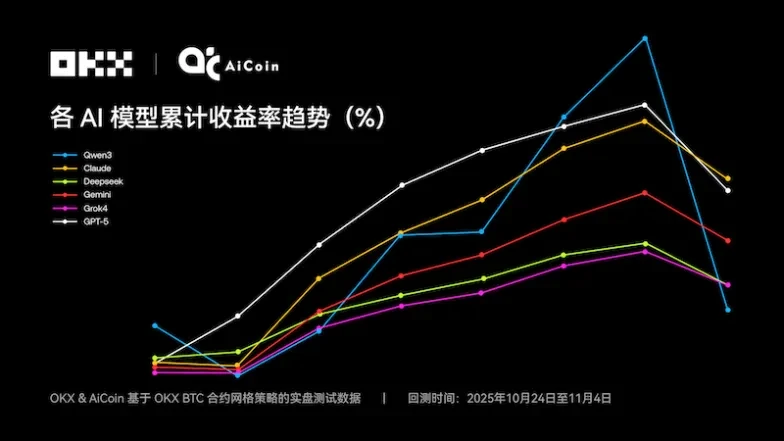
Claude Takes the Crown: Truth Behind 6 Major AI Grid Strategy Showdown | OKX & Ai Coin Live Trading Review
Short-term trading champion Qwen3—is it also a king in grid strategies? The first season of the "AI Trading Live Arena" launched by NOF1 finally concluded at 6 AM on November 4, 2025, whetting the appetites of the crypto, tech, and financial circles. But the ending of this "AI IQ public test" was somewhat unexpected—six models with a total principal of $60,000 were left with only $43,000 at conclusion
November 6, 2025