Are Music NFTs the New Breakthrough of 2022?
2021 was a breakout year for the NFT market, bringing an unprecedented joint movement to the cryptocurrency, financial markets, and art circles, pushing the total market cap of NFT-related assets to a record high of $42 billion, while also giving rise to many well-known NFT projects (CryptoPunks/loot/Art Blocks, etc.) and artists (Beeple/PAK/Rafael Grassetti, etc.).
However, people seem to have overlooked one of the most valuable growth segments in the NFT space—music NFTs. As a category that quietly gained momentum in 2021, music NFTs are considered one of the most inspiring testing grounds for blockchain technology in facilitating co-created intellectual property and shared ownership. Additionally, the COVID-19 pandemic almost completely halted musicians' live commercial performances, and the breakout of NFTs has also shown independent musicians a new path forward.
As 2022 has arrived, will music NFTs become the new stars of this NFT wealth celebration? And how will music NFTs influence the digital art space?
1. The Development History of Music NFTs
Looking back at 2021, in the development history of music NFTs, we witnessed musician Justin Blau (3LAU) raising $11.7 million through an Ultraviolet NFT album auction at the end of February 2021, setting an industry record. We also witnessed CryptoPunk rapper Spottie WIFI earn $190,000 in just a few seconds with community support in August 2021.
However, the true breakout of music NFTs began in early February 2021.
At that time, UK-based record label Lucky Me announced that its Canadian electronic music pioneer Jacques Greene would auction the publishing rights to his new single "Promise" in the form of an NFT. Although bidders could only hear the first 6 seconds of the full track before the auction, this auction conducted in partnership with Foundation was ultimately successful, with the work selling for 13 ETH.
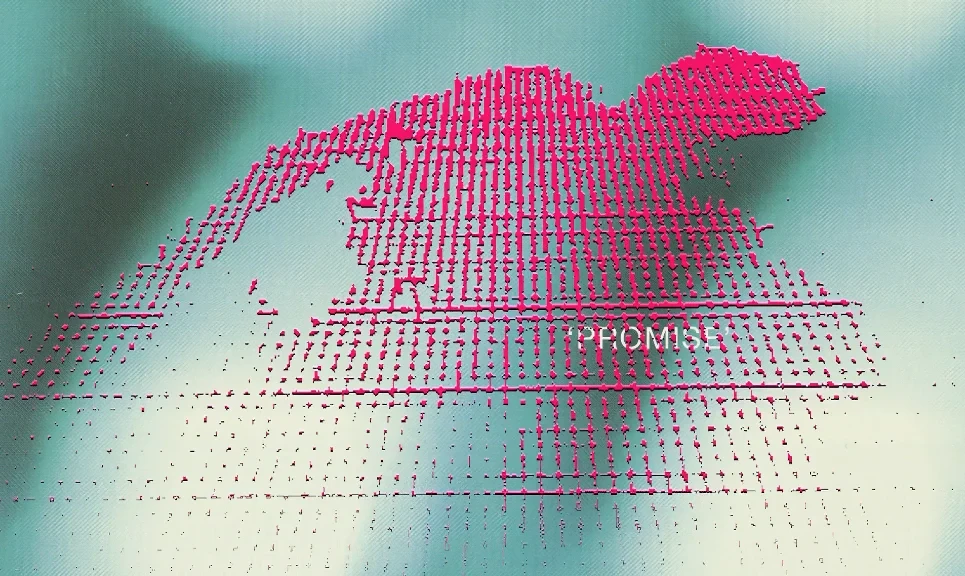
After the auction, Jacques Greene said, "I'm excited (and scared) about the possibilities and prospects of the NFT space and the entire art and cultural scene. I have a lot of hope and fear about this. Instead of sitting in fear, let's think and talk about what could happen."
Foundation commented on the auction, saying, "As we explore the possibilities of on-chain art and the Web3 landscape, we may be able to start letting go of the old systems."
It is worth noting that this music NFT auction by Lucky Me and Foundation even predated Beeple's Everydays – The First 5000 Days auction, which took place in March 2021. That NFT artwork was sold at Christie's for $69 million.
Thereafter, in early March of that year, Canadian singer Grimes and her partner Mac Boucher sold a music NFT collection called War Nymph Collection, Vol. 1 on Nifty Gateway for $5.8 million.
The story was far from over. In late March, British electronic music duo Disclosure sold their music NFT EP The Face for $140,000. In August, Audius, which launched a Web3 music platform in 2018, became the first streaming service to partner with TikTok. Also in August, CryptoPunk rapper Mig Mora sold his music NFT work for $190,000 in just a few seconds. In early November, Universal Music announced the formation of the Bored Ape virtual band Kingship…
The rapid breakout of NFTs has shown musicians困于COVID-19 a new way to make a living, enabling independent musicians to sustain themselves around the concept of digital ownership.
However, you might be wondering, how do music NFTs actually work?
2. Returning Rights and Interests to Musicians
As we all know, the music industry has undergone tremendous changes over the years, from early records, cassettes, compact cassettes, reel-to-reel tapes, and CDs, to downloadable streaming platforms that emerged two decades ago, enabling music lovers to listen to popular music directly over the internet. This art form has become increasingly diversified.
Currently, although streaming platforms provide music lovers with a vast amount of high-quality music and greatly enrich entertainment activities, and music lovers can listen to most original music for free with just a smartphone, this sounds like a win-win situation—on one hand, creators can build fan bases more quickly, and on the other hand, music lovers have access to more diverse music.
But in reality, this process is not as perfect as it appears on the surface, because the profits of artistic creators are completely unprotected. They have to rely on touring, merchandise sales, and brand endorsements to earn returns. In reality, only a very small number of top music producers and singers can earn returns through these means. According to 2019 and 2020 data, 90% of traffic is monopolized by the top 1% of musicians. However, the emergence of music NFTs has changed all this.
So, how do NFTs help musicians reclaim their rightful interests?
We know that NFTs are assets that can be stored and traded on the blockchain, with characteristics of indivisibility, scarcity, non-counterfeitability, and public verifiability. With the help of NFT tokens, music will also acquire these properties. Artists can sell indivisible digital content to fans for returns, ensure this music content cannot be counterfeited, and directly bypass the exploitation of streaming platforms and agencies, thereby increasing returns.
Overall, music NFTs will play a role in three main areas.
First is album distribution. The fact that American pop music legend 3LAU sold his tokenized album for over $11.6 million in February 2021 is the best example. The success of this sale also set a precedent for other musical artists. All music creators can distribute their music albums on the blockchain in the form of limited editions, then sell them to their fans. More importantly, music creators can earn returns from every secondary sale of music NFT albums, which undoubtedly greatly stimulates creators' enthusiasm for creation.
Second is artwork sales. Different from previous sales methods, creators can sell music NFTs directly to the community, rather than through streaming platforms and agencies. Moreover, creators can still earn royalties from secondary sales.
Third is fractional artwork distribution. This is a new approach through which NFTs help diversify sales methods in the music industry. The implementation method involves selling a portion of the rights to an upcoming album in NFT form—for example, 30%. While the creator receives the sales revenue, fans who hold this music NFT can profit from the sales returns generated by the music. Sales channels may include streaming, TV partnerships, adaptations, covers, and other forms. If the 30% NFT is still too expensive, an extreme approach would be to further divide the album's 30% share into 10,000 pieces for sale to fans, bringing income to a wider range of fans. Through this approach, a virtuous ecosystem centered on music creators will form, and loyal fans will all benefit.
Music NFTs do sound great. So, could this format achieve success in 2022?
3. Will Music NFTs Explode in 2022?
The transformation of profit distribution methods by music NFTs can be described as an innovation driven by advanced technology—advanced distribution methods versus the outdated distribution methods of Web2.
We know that in the streaming era, most musicians struggle to survive. Original music creators earn only a few cents per click, and most creators cannot find a large audience, resulting in meager income. The phenomenon where 90% of traffic is monopolized by the top 1% of artists is commonplace in Web2. Even for well-known artists' albums after millions of clicks, they received only a few hundred dollars in income in 2020, while artists need to pay high costs for expensive recording equipment.
However, the emergence of NFTs seems to be changing this situation.
As mentioned earlier, 3LAU earned as much as $11.6 million in a single auction. The rock band Kings of Leon's NFT album earned $2.5 million in revenue. Musician and visual artist Grimes' music NFT collection called War Nymphs generated approximately $7 million in revenue. All of this happened in 2021. Some of them were top-tier musicians, while others were not.
Under the overarching trend of NFTs, although the music NFT market is small, the music market itself is enormous, and there is plenty of room for growth.
Earlier, when making predictions about NFT sector development in 2022, Cao Yin, Managing Director of Digital Renaissance, said that in the Web2 world, the music market is larger than the image market. In the Web3 world, the music NFT market scale will be on par with image NFTs.
As of 2021, the Chinese digital music market alone reached a scale of $12 billion, accounting for only 9% of the global digital music market. In the music NFT sector, the number of artists with verifiable records is less than 200, and the number of records sold is only about 350—compared to the scale of the traditional music market, this is truly negligible.
Therefore, music NFTs will achieve tremendous growth under the NFT wave.
Additionally, Cao Yin also predicted that the special nature of music consumption habits cannot be ignored. For music NFTs, sharing is more important than collecting, and community is more important than individuality. The long-tail market will dominate, and there will be many music + DAO playstyles, such as Web3 music talent shows.
The music + DAO playstyle may be a new direction.
When Coindesk looked ahead at the development of music NFTs in 2022, it believed that 2022 could be a crucial year for music NFTs. There are currently many protocols and platforms launching, preparing for the music sector. Coindesk also believed that DAOs, as a hot topic in the cryptocurrency space, must also be included in observations about music NFTs. If you are tired of the same old agencies and record labels, DAOs can serve as pioneering alternatives for the new music era. This coincides perfectly with Cao Yin's observations.
In summary, against the backdrop of the continuous breakout of NFTs and the recognition of digital art by more practitioners and investors, music NFTs as a segmented sector will inevitably receive wider attention. They will bring greater cash returns to many original music artists. At the same time, guided by DAO governance concepts and empowered by NFTs, a more advanced fan-shared returns business model will emerge. Music NFTs are very likely to achieve a breakout in 2022.
Disclaimer
This article may contain product-related content not applicable to your region. This article is only dedicated to providing general information and does not responsible for any factual errors or omissions. This article represents only the author's personal views and does not represent OKX's views. This article does not intend to provide any advice, including but not limited to: (i) investment advice or investment recommendations; (ii) offers or solicitations to purchase, sell, or hold digital assets; or (iii) financial, accounting, legal, or tax advice. Holdings of digital assets (including stablecoins) involve high risk and may fluctuate significantly, or even become worthless. You should carefully consider whether trading or holding digital assets is suitable for you based on your financial situation. For questions about your specific circumstances, please consult your legal/tax/investment professionals. The information appearing in this article (including market data and statistical information, if any) is for general reference purposes only. Although we have taken all reasonable precautions in preparing such data and charts, we do not accept any responsibility for any factual errors or omissions expressed herein. © 2025 OKX. This article may be reproduced or distributed in full, or excerpts of 100 words or less may be used, provided that such use is non-commercial. Any reproduction or distribution of the full article must prominently state: "This article is copyrighted © 2025 OKX, used with permission." Permitted excerpts must cite the article name and include attribution, for example, "Article name, [author name (if applicable)], © 2025 OKX". Some content may be generated or assisted by artificial intelligence (AI) tools. Derivative works or other uses of this article are not permitted.
Show More
Recommended Reading

2025 KOL Most Used OKX Products Ranking
In the cryptocurrency industry, professional traders' choices are always direct and pure. In 2025, KOLs invested their funds and time throughout the year, casting the most authentic votes for industry tools and ecosystem development. We focused on four core questions—"What was your biggest achievement this year?", "With that achievement in mind, what are your most used and favorite OKX products in 2025?", "Why do you like it?", "What
January 5, 2026

2026 Investment Outlook: Asset On-Chaining, Intelligence & Privacy | OKX Year in Review
Three major trends for crypto's future: asset transformation, entity transformation, and rule transformation. As we are about to enter 2026, after four years of focusing on "building roads" for infrastructure, the crypto industry is ushering in a profound paradigm shift. OKX Ventures defines this as the beginning of the "Kinetic Finance" era, whose core is no longer about how fast the network is, but the flow and earning of on-chain assets.
December 31, 2025

Vote with Data: A Deep Dive into 2025's Popular Trading Products | OKX Year in Review
Looking at market conditions alone, it is difficult to explain the returns differences among 2025 trading users. What truly determines returns also depends on account-level operation methods, not just market volatility itself. The OKX annual report shows that mainstream coins remain the core for fund turnover and returns carrying, supporting trading and strategy execution. Emerging coins are more used to amplify volatility and provide phased opportunities, but they are not a stable, long-term source of returns. What truly and continuously contributes to returns is
December 30, 2025
Fusaka in Practice: What Ethereum's Latest Upgrade Means for L2, Nodes, and Users
The Ethereum mainnet has completed the Fusaka fork. At the protocol level, this upgrade mainly includes four components, with the full article presenting the core viewpoints and front-line experiences of three guests in Q&A format: Ahmad (@smartprogrammer) – Nethermind Execution Client / Ethereum Core Developer Manu (@manunalepa) – Prysm / Of
December 16, 2025
OKX Research | Why Did RWA Become a Key Narrative in 2025?
RWA (Real World Assets) is becoming the "new favorite" of global capital. Simply put, RWA is about taking valuable, ownership-bearing things from the real world—such as houses, bonds, stocks, and other traditional financial assets, as well as artworks, private lending, carbon credits, and other assets that are not normally easy to trade directly—and moving them onto the blockchain to become tradeable, programmable crypto assets. This way, n
November 20, 2025
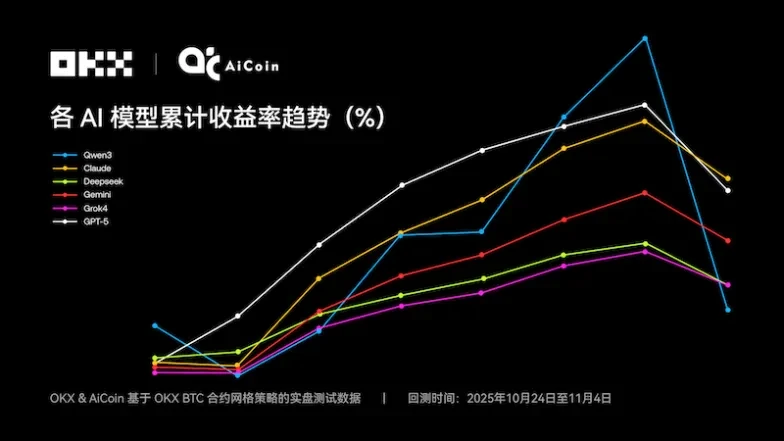
Claude Takes the Crown: Truth Behind 6 Major AI Grid Strategies | OKX & Ai Coin Live Test
Short-term trading champion , is it also the king of grid strategies? The first season of NOF1's "AI Trading Live Arena" finally concluded on November 4, 2025 at 6 AM, whetting the appetite of the crypto, tech, and finance circles. But the outcome of this "AI IQ open test" was somewhat unexpected—the six models' combined $60,000 principal was only 4.3
November 6, 2025