NFTs and GameFi Take Center Stage, Why Has DeFi Remained Silent?
Since the second half of 2021, we've noticed significantly less activity in the cryptocurrency market, particularly in the secondary market regarding DeFi. Market leadership was first assumed by the NFT trading market represented by OpenSea, then shifted to the GameFi sector represented by Axie Infinity, while the DeFi Summer scene that was hugely popular in 2020 has not reappeared in the past six months. Although during this period, the total value of assets locked in DeFi smart contracts on mainstream public chains including OKTC and Ethereum has continued to climb, the market still presents a situation of "critical acclaim but not commercial success." What is the reason for this?
Total DeFi Smart Contract TVL Breaks $200 Billion, Hitting New High
In previous articles by the OKX tutorial team introducing the scale of DeFi development, we have repeatedly mentioned the significance of Total Value Locked (TVL) in DeFi smart contracts. Simply put, TVL is calculated by summing the total value of all ETH locked in DeFi smart contracts, including various other ERC-20 tokens, as well as Bitcoin bridged to DeFi and all other digital assets - showing how much real money investors of all sizes have invested in DeFi smart contracts, continuously driving the development and growth of the DeFi ecosystem while participating in DeFi liquidity mining.
According to data from OKLink's On-Chain Master, as of November 30, 2021, the total value of assets locked in DeFi smart contracts across the entire network reached $203.67 billion, hitting a new historical high.
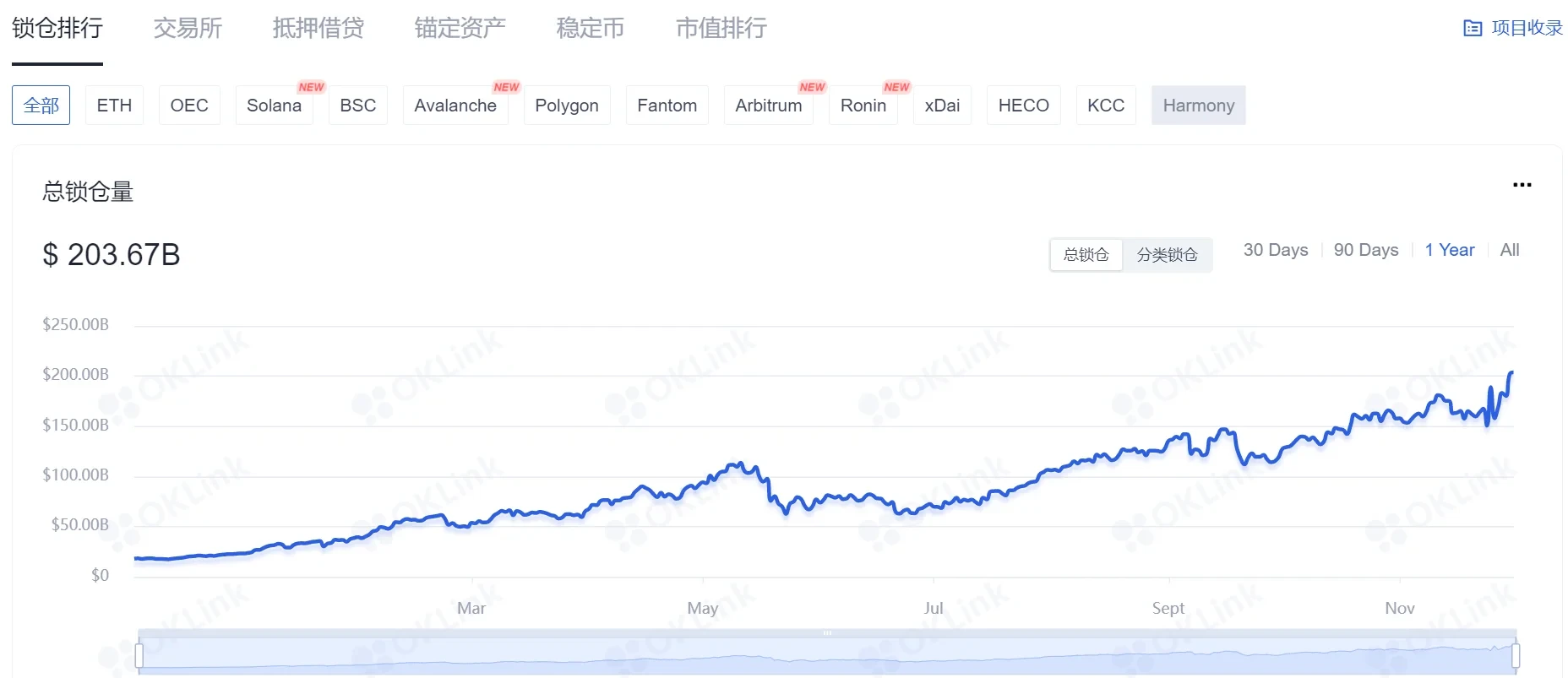
Changes in total value of assets locked in DeFi smart contracts across the network over the past year, data source: OKLink's On-Chain Master
Looking at data changes within the year, at the beginning of this year, the total value of assets locked in DeFi smart contracts across the network was only $23.67 billion, then reached a阶段性 high of $113.57 billion in mid-May. Although experiencing a correction period from May to August, it quickly recovered losses and rose all the way in the following months. So far this year, it has recorded a gain of 760.5%. However, while DeFi development remains booming from on-chain data, the performance of most DeFi leading protocol tokens in the secondary market does not reflect the same situation. For example, leading tokens in collateralized lending protocols such as MKR and COMP, and top performers in DEXs such as UNI, 1INCH, and SUSHI have still not broken out of the consolidation range since the May 19 decline. In comparison, Bitcoin and Ethereum have both successfully broken out and hit new historical highs.
Comparing horizontally, from June 2020 to the end of Q1 2021, the total value of assets locked in DeFi smart contracts across the network surged from just over $1 billion to above $65 billion, a gain of more than 60 times. Correspondingly, most mainstream DeFi leading token prices also achieved gains of over 10 times. However, in the more than six months since then, although the total value of assets locked in DeFi smart contracts has continued to rise, most DeFi token prices have not broken the records set in the first half of the year. This has created the situation where TVL continues to rise but cannot drive up DeFi token prices.
Why Does Continuously Rising TVL Fail to Drive DeFi Token Prices Higher?
The reasons for this can generally be attributed to the following two points. First, the newly added locked asset value mostly benefits from the development of DeFi ecosystems on emerging public chains and the price increase of major digital assets, rather than a significant increase in locked ETH or important mechanism innovations in DeFi. The total value of locked assets we often refer to is calculated in US dollars, while what investors invest in DeFi smart contracts are various digital assets. This means changes in total locked asset value are simultaneously affected by both the amount of assets investors invest in DeFi smart contracts and price changes of those assets. This creates a situation where - if the quantity of locked digital assets remains unchanged, a rise in digital asset prices will correspondingly increase the locked asset value; conversely, if digital asset prices fall, even if investors invest more digital assets than before, as long as the price decline exceeds the increase in newly added assets, the total locked asset value will show a downward trend. In this process, what investors can control is only the amount of digital assets invested - adjusting based on returns, while corresponding asset price changes are unpredictable and uncontrollable, so observing changes in the quantity of various digital assets in DeFi smart contracts is more credible.
According to statistics from DefiPulse, as of December 1, 2021, the amount of ETH locked in DeFi smart contracts on the Ethereum network is 9.7 million, slightly below the peak of 11 million in the second quarter of this year.
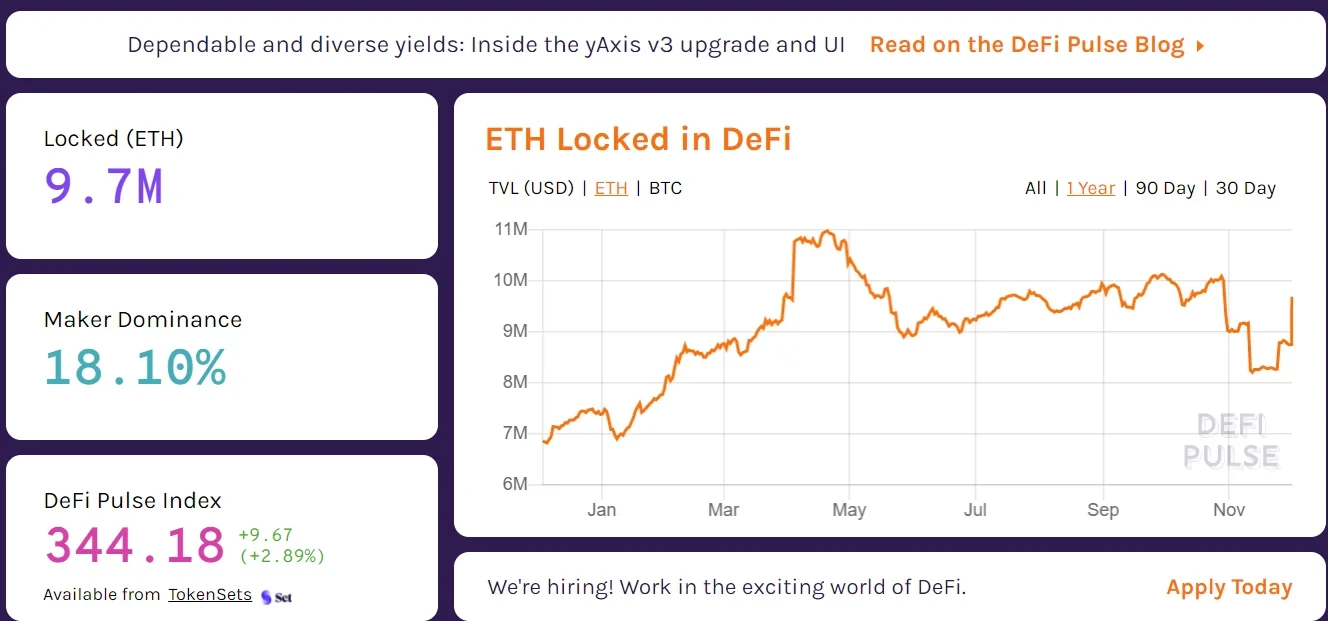
Changes in the amount of ETH locked in DeFi smart contracts on the Ethereum network over the past year, data source: DefiPulse
Meanwhile, the amount of Bitcoin locked in DeFi smart contracts reached 228,000, showing a steady upward trend since the beginning of this year, representing an increase of about 50% compared to second quarter data. At the same time, accompanied by the rise of DeFi ecosystems on emerging public chains such as OKTC and the recovery in prices of major digital assets such as Ethereum and Bitcoin, the combination of multiple factors has led to the disparity between DeFi on-chain and secondary market performance.
Second, DeFi development is currently in an accumulation phase for its second explosion, whether from the attention of capital markets or from the perspective of technology and mechanism development stages, it still needs some time. Whether it's the internet that emerged in the early 2000s or the later Bitcoin, every development cycle goes through several stages: accumulation phase - accelerated development phase - bubble phase - cooling phase (re-accumulation), and DeFi is no exception. Looking back at DeFi development, counting from MakerDAO, it went through more than three years of accumulation from 2017 to 2020, then welcomed a period of rapid development and a bubble phase, just as we saw the magnificent liquidity mining boom from last year's DeFi Summer to Q2 2021. It should be noted that for new things, the bubble phase is not a "derogatory term." On the contrary, in the early stages of a new thing's emergence, it largely needs to rely on a large amount of funds pouring in in the short term to inflate a bubble, then under the strong wealth effect, attract more investors and entrepreneurs to enter the market, driving continuous innovation in underlying technology and application mechanisms, and in this process, constantly trial and error, ultimately verifying the usefulness and practicality of the new thing.
Returning to the topic of DeFi, after more than a year of rapid development, millions of investors have understood and participated in the DeFi ecosystem, recognizing the significance and infinite prospects of decentralized finance. The censorship-resistant collateralized lending pioneered by MakerDAO, and innovative mechanisms such as liquidity mining and range market-making represented by Uniswap have brought unprecedented impact and entirely new perspectives to financial markets. The impact of these major changes is far more significant than the meaning of DeFi tokens appreciating in secondary markets. On the other hand, as more and more users participate in DeFi investment, overall returns have tended to stabilize, while DeFi's overly high participation barriers and slightly crude interaction design have also become obstacles preventing more ordinary users from participating.
In summary, at DeFi's current stage of development, on one hand it is limited by the lack of further breakthroughs in application mechanisms, and the problems exposed earlier, such as insufficient liquidity and lagging community governance, have not been properly resolved. Progress on DeFi 2.0 is still in the accumulation phase and has not formed a widely recognized development direction. On the other hand, it is limited by the slowing pace of expansion of the overall DeFi user group and the lack of continuous incremental funds entering the market. Merely relying on the TVL increase brought by emerging public chains such as OKTC cannot fundamentally push DeFi into the next cycle's accelerated development phase. The recent NFT and GameFi boom is clearly following the path of the original DeFi Summer. There's nothing new under the sun - whether DeFi, NFTs, or GameFi, they are all advancing along the unsurpassable laws of development of new things.
**>>>**To thank users for their support and help users learn more blockchain knowledge, the OKX official Chinese Telegram group (https://t.me/OKXTelegram_Chines) has launched special group benefits. For a limited time, joining the group gives you free access to premium trading series courses. The group also features irregular lucky draws, AMA airdrops, and many other benefits. Welcome to join the group to learn more~Click to read the group joining tutorial
Disclaimer
This article may contain content related to products that are not available in your region. This article is intended only to provide general information and does not accept responsibility for any factual errors or omissions therein. This article represents only the author's personal views and does not represent the views of OKX. This article is not intended to provide any of the following advice, including but not limited to: (i) investment advice or investment recommendations; (ii) offers or solicitations to buy, sell, or hold digital assets; or (iii) financial, accounting, legal, or tax advice. Holding digital assets (including stablecoins) involves high risk, may fluctuate significantly, and may even become worthless. You should carefully consider whether trading or holding digital assets is suitable for you based on your financial situation. For questions about your specific situation, please consult your legal/tax/investment professional. The information appearing in this article (including market data and statistics, if any) is for general reference only. Although we have taken all reasonable precautions in preparing these data and charts, we accept no responsibility for any factual errors or omissions expressed herein. © 2025 OKX. This article may be reproduced or distributed in its entirety, or excerpts of 100 words or less from this article may be used, provided such use is non-commercial. Any reproduction or distribution of the entire article must also prominently state: "Copyright © 2025 OKX, used with permission." Permitted excerpts must cite the article name and include attribution, for example "Article Name, [Author Name (if applicable)], �� 2025 OKX". Some content may be generated or assisted by artificial intelligence (AI) tools. Derivative works or other uses of this article are not permitted.
Show More
Recommended Reading

2025 KOL Most Used OKX Products List Roundup
In the cryptocurrency industry, professional players' selections are always direct and pure. In 2025, KOLs used a full year of capital investment and time accumulation to cast the most genuine votes for industry tools and ecosystem development. We centered around four core questions - "What was the biggest achievement this year?", "Given the achievements, what OKX product did you use most and like best in 2025?", "Why do you like it?", and "How this
January 5, 2026

2026 Investment Outlook: Asset On-Chain, Intelligence & Privacy | OKX Annual Record
Three major trends for the future of crypto: asset transformation, entity transformation, and rule transformation. As we are about to enter 2026, saying goodbye to the past four years of infrastructure focused on "road building," the cryptocurrency industry is welcoming a profound paradigm shift. OKX Ventures defines this as the opening of the "Kinetic Finance" era, where the core is no longer how fast the network is, but the flow of on-chain assets and making money
December 31, 2025

Voting with Data: Insights into 2025 Hot Trading Products | OKX Annual Record
If you only look at market conditions, it's hard to explain the return differences between trading users in 2025. What really determines returns also depends on account-level operational methods, not just market volatility itself. The OKX annual statement shows that mainstream coins remain the core of capital turnover and returns, supporting trading and strategy execution; emerging coins are more used to amplify volatility and provide staged opportunities, but are not stable, long-term sources of returns. What truly consistently contributes returns is
December 30, 2025
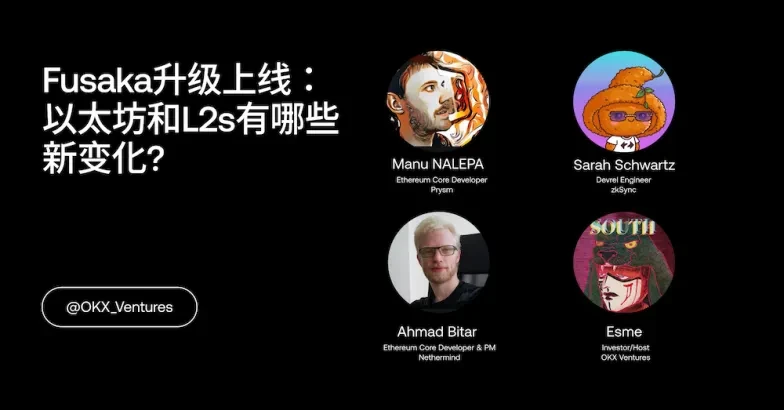
Fusaka in Practice: What Does Ethereum's Latest Upgrade Mean for L2, Nodes, and Users?
Ethereum mainnet has completed the Fusaka fork. At the protocol level, this upgrade mainly includes four components. The full text presents the core viewpoints and frontline experience of three guests in Q&A format: Ahmad (@smartprogrammer) - Nethermind execution client / Ethereum core developer Manu (@manunalepa) - Prysm / Of
December 16, 2025
OKX Research | Why Did RWA Become a Key Narrative in 2025?
RWA (Real World Assets) is becoming the global capital's "new favorite." Simply put, RWA means taking valuable, ownership-bearing things from the real world - such as traditional financial assets like houses, bonds, stocks, and even assets like artwork, private lending, and carbon credits that are usually not easily traded - and moving them onto the blockchain to become tradable, programmable crypto assets. This way, not
November 20, 2025
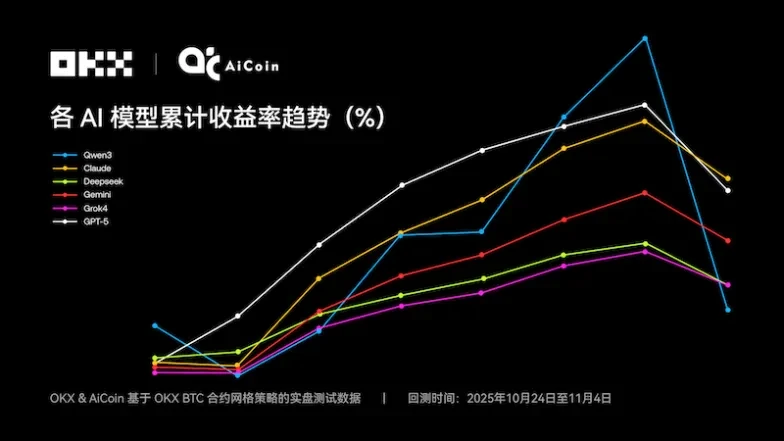
Claude Takes the Championship, Truth Behind 6 Major AI Grid Strategy Showdown | OKX & Ai Coin Live Trading Review
Short-term trading champion Qwen3, is it also king in grid strategies? The first season of the "AI Trading Live Arena" launched by NOF1 finally concluded at 6 AM on November 4, 2025, whetting the appetite of the cryptocurrency, technology, and finance circles. But the ending of this "AI IQ public test" was somewhat unexpected. The six models' total principal of $60,000 was left with only $4.3
November 6, 2025