Terra Public Chain's Surge Reflects the Narrative Logic of Web3.0
At the end of 2021, Terra emerged as the final dark horse to break through from the public chain track. Its token LUNA surpassed $100 for the first time on December 24, representing a nearly 30x increase from its highest point at the beginning of the year. According to CoinGecko data, Terra's stablecoin UST market cap has exceeded $9 billion, overtaking DAI to become the fourth-largest stablecoin by market cap. In the more niche algorithmic stablecoin sector, UST is unequivocally the leader.
Additionally, according to data from crypto assets firm Crypto Rank, Terra was the fastest-growing blockchain by total value locked (TVL) in 2021, with approximately $17.9 billion in total TVL and a year-over-year growth rate of 35,700%. Currently, Terra ranks second in total TVL across the industry, behind Ethereum's $154 billion, having surpassed Solana ($11.5 billion), Avalanche ($12 billion), and BSC ($16.7 billion) by year-end.
In reality, the crypto market's行情 and trends change rapidly, with public chains, DeFi, and NFTs all experiencing fierce competition, and the cycles for significant ranking changes may shorten to months, weeks, or even days. However, Terra's ability to stand out amid a recent downturn in the broader market naturally reflects a different narrative logic compared to previously dominant industry darlings.
This article aims to use a moderately concise篇幅 to analyze the reasons behind Terra's recent surge while attempting to deconstruct the paths by which leading or emerging players in the crypto world ascend. This is intended solely as a reference for traders and does not constitute any form of investment advice.
1. Targeting Algorithmic Stablecoins as the Entry Point to Build an On-Chain Payment宝
As is well known, South Korea, with its relatively developed information technology industry, has also cultivated a considerable internet economy in recent years. However, due to its limited population and market size, it has had little presence in this round of commercial revolution dominated by China and the US. Furthermore, with conglomerates controlling economic lifelines and ordinary people finding it difficult to rise through the ranks, Korean youth have begun to view crypto assets as their寄托 for a turnaround, with crypto trading enthusiasm rarely matched by any other country globally. These two backgrounds jointly gave rise to Terra as a "new species."
Both core founders of Terra have impressive traditional internet backgrounds—one previously worked at Microsoft, then founded Anyfi, a peer-to-peer network sharing service tool, while the other founded TMON, Korea's earliest group-buying website. Perhaps the shared dream of building a blockchain-based financial ecosystem brought the two together, founding the project in 2018. From launch, Terra positioned itself as a blockchain version of Payment宝 and issued the algorithmic stablecoin UST as the hard currency within its ecosystem.
Worth noting is that UST, as an algorithmic stablecoin, is not collateralized by fiat currency or other physical assets. Its value stabilization mechanism is linked to the token Luna: for every UST minted, $1 worth of Luna must be burned, and Luna's arbitrage mechanism ensures UST's peg to the US dollar. Additionally, UST is pegged to the legal tender of the US, South Korea, Mongolia, and other countries, with derived细分 stablecoins. In early 2019, Terra had already become Mongolia's first blockchain payment system.
Following the launch of this key stablecoin infrastructure, CHAI, the first application backed by Terra—a decentralized payment gateway system—found success in South Korea. According to media reports, as of late December 2021, CHAI's API had helped businesses integrate up to 20 payment options, seamlessly connecting local payment gateways, digital wallets, wire transfers, carrier billing, PayPal, and debit and credit card payment channels. This saved enterprises significant time and web engineering costs, backed by CHAI's fee rates far below those of traditional institutions. Regarding compliance, CHAI holds a fiat payment gateway regulated by the South Korean government and can connect to approximately 15 major banks. CHAI also provides debit card services for regular users.
Of course, applications like CHAI are merely Terra's触手 extending into the traditional financial world of the future. In the early stages, the team focused more on building the on-chain DeFi application ecosystem. To date, Terra has over 70 Dapps, constructing a relatively comprehensive DeFi landscape including fixed-rate protocols Anchor and Lido, decentralized Robinhood Mirror, decentralized insurance protocol Ozone, and decentralized exchanges Terraswap and Astroport. According to the latest data from DeFi Llama, Lido and Anchor's TVL stand at $12 billion and $8.74 billion respectively, ranking 6th and 9th among DeFi protocols.
In fact, when it comes to decentralized network payment systems, XRP must be mentioned. However, the unfortunate reality is that over the past two years, XRP has gradually moved away from community governance and has been hit by SEC lawsuits and investigations, missing the wave of DeFi growth, and had no presence in the 2021 bull market. Of course, compared to Terra's on-chain financial ecosystem, XRP's single-application approach also appears thin. It is clear that in today's crypto industry, ecosystem development is a hotspot favored by capital and represents a topic of future imagination.
2. Quietly Completing Technical Upgrades to Enhance Cross-Chain Interoperability
All new public chains share a common dream: to replace Ethereum. They provide lower fees while focusing more on refining cross-chain and scaling technologies and optimizing developer experience. In terms of enhancing cross-chain interoperability, Terra has this ambition as well.
This September, Terra announced the completion of the "Columbus-5" upgrade, which optimized its core system and facilitated on-chain asset transfers supporting IBC—this was viewed by supporters as the decisive catalyst for the ecosystem's explosion. Additionally, the improvements from this upgrade include: burning all seigniorage; upgrading to Stargate; integrating Ozone (Terra's ecosystem insurance protocol) and Wormhole. Terra's Inter-Blockchain Communication (IBC) integration is expected to boost its stablecoin Terra USD (UST) adoption across the entire Cosmos ecosystem.
Specifically, Terra, developed based on Cosmos SDK, formally activated the IBC standard (Inter-Blockchain Communication) through a governance proposal vote on "Enable IBC Transfer." Users in the Terra ecosystem can cross-chain connect to other blockchain networks supporting the IBC standard and send and receive assets. Currently, blockchain networks supporting the IBC standard include Cosmos Hub (ATOM), IRISnet (IRIS), Osmosis (OSMO), and Crypto.com (CRO), among others—this combination is called Stargate. Enhanced compatibility with Cosmos's "Internet of Blockchains" means data can be shared between Terra and other Cosmos-integrated blockchains, such as Polkadot and Solana, and even Ethereum. The Stargate integration opens Terra to hundreds of Dapps in the Cosmos ecosystem. In summary, Terra's reliance on Cosmos has strengthened its cross-chain capabilities.
Another set of data is equally noteworthy: by the end of 2021, Cosmos reported that since IBC launched 8 months ago, 25 public chains have connected to the IBC protocol, with their ecosystem tokens (ATOM, OSMO, LUNA, CRO, SCRT, etc.) having a combined market cap exceeding $60 billion, and over 5.8 million IBC transactions have been累计. In 2022, the IBC protocol also plans to cross-chain connect Bitcoin, Ethereum, Polkadot, Avalanche, Harmony, Celo, and other public chain networks, further unlocking massive liquidity in the blockchain space.
IBC is an interoperability protocol and the primary communication protocol used within the Cosmos ecosystem, designed to transfer arbitrary data between any state machines. IBC can be used to build a wide range of cross-chain applications, including but not limited to token transfers, cross-chain accounts (delegated calls between two chains), non-fungible token transfers, and oracle data feeds.
Cosmos, often paired with Polkadot as the "twin giants of cross-chain technology," was unusually quiet during the 2021 DeFi+NFT boom and bull market, garnering little attention. However, based on this data, Cosmos may have been quietly laying the groundwork for cross-chain technology—after all, this is one of the most imaginative tracks in the crypto world. The core pain points of cross-chain—expensive, slow, congested, and difficult—once solved, will unlock massive incremental value for the industry. As Cosmos's cross-chain technology and ecosystem mature, Terra's returns will only grow larger.
Terra's promotional style is broadly similar to Cosmos's, favoring a low-key and understated approach rather than aggressive marketing, which contrasts sharply with Polkadot, Solana, BSC, and Avalanche. However, one noteworthy detail is that enthusiastic Terra community members have compared it to the next Y Combinator (the renowned US startup incubator), especially as the ecosystem gained momentum in the latter half of the year. Around December 21, 2021, former Y Combinator employee Natalie Luu announced her role as Head of Terra Ecosystem Development, providing services for new distributed applications built on Terra.
3. Public Chain Ranking Rotation Has Become the Norm—Following Web3.0 Logic May Be the New Year's Wind Direction
Setting aside esoteric technical logic, using massive spending to stimulate the ecosystem may be more convincing, at least for investors. In September 2021, Terra officially launched a $150 million ecosystem incentive program to support on-chain projects and developers. Judging from the data, Terra's TVL explosion also began around September and October.
Based on this, in the context of an overall bullish crypto market in 2021, as DeFi applications on Ethereum's public chain frequently overflowed, emerging public chains like BSC, Solana, and Avalanche, while providing more cost-effective basic services, staggered the launch of ecosystem reward policies, attracting large numbers of on-chain developers in turn, causing the seat for second-ranked public chain to change hands repeatedly. It can be said that Terra's current dominant position may be temporary, cyclical, and even a常规操作 for new public chain players to take turns leading in the years that follow. This is because as the US interest rate hike expectations strengthen in 2022, the digital assets bull market may not be sustainable.
At the same time, the following factors also determine that Terra may not always be able to maintain the narrative of being an "on-chain Payment宝" and an "Ethereum disruptor":
1. UST is essentially an algorithmic stablecoin without physical asset collateral, making it highly susceptible to price fluctuations, especially during extreme market conditions. For example, during the May 19 crash, UST's volatility far exceeded that of USDT and other centralized stablecoins, nearly causing community collapse. If the fundamental attribute of price stability is compromised, UST will lose credibility, leading to the collapse of the entire Terra ecosystem;
2. Currently, Terra's ecosystem is overly concentrated in the DeFi sector, with little to show in NFT and GameFi—areas with greater traffic-generating potential—and has not produced any well-known native applications, which will severely limit future user growth. DeFi Llama data shows that the top five protocols by TVL on Terra are Lido, Anchor, Terraswap, Astroport, and Mirror. These five DeFi protocols alone have locked up close to $16 billion, accounting for over 91% of Terra's total on-chain TVL. By contrast, BSC and Tron had hosted several influential NFT auctions as early as the first half of 2021 and subsequently launched NFT marketplaces. Therefore, Terra's action on NFTs has been lagging and sluggish;
3. As mentioned earlier, lavish spending is like a shot of adrenaline that quickly energized the Terra ecosystem. But when subsidies phase out and the tide recedes, can Terra continue to surge forward? Terra's native lending rate protocol Anchor's TVL once surged into the top ten, but the core growth factor was the high interest rate of 20%. When capital finds new public chain projects with more compelling narratives, Terra may ultimately be abandoned, and on-chain hot money will seek out new value洼地;
4. Although CHAI, the financial payment application backed by Terra, is regulatorily friendly and growing rapidly, compared to other local payment giants, it is completely unable to pose a threat in terms of scale. Of course, this is also caused by the incompleteness of blockchain technology itself and the insufficient acceptance of distributed applications by the global business community. But this is enough to show that Terra's vision of being an on-chain Payment宝 is destined to be a long and arduous journey.
The crypto market is ever-changing, and amid the interweaving of various uncertainties, what can be determined is that few emerging projects today can maintain popularity for long, and Terra is no exception. However, Terra's rise can actually be understood as follows: under this brand-new narrative logic of Web3.0, crypto developers, to prove the feasibility of the Web3.0 concept and the growth potential of their projects, are actively embracing the traditional financial world while continuously enhancing cross-chain interoperability to pursue a user experience comparable to traditional internet products—yet their economic models and distribution mechanisms are Crypto-natured. As Terra's founder stated in the 2022 industry forecast: the cognitive shift toward Web3 has already begun.
Currently, Web3.0 may be the biggest opportunity of 2022. In this process, can more imaginative players emerge? In the new year, we remain hopeful and continue our pursuit.
Disclaimer
This article may contain product content not applicable to your region. This article is only intended to provide general information and does not accept responsibility for any factual errors or omissions. This article represents the author's personal views only and does not represent the views of OKX. This article does not intend to provide any advice, including but not limited to: (i) investment advice or investment recommendations; (ii) offers or solicitations to buy, sell, or hold digital assets; or (iii) financial, accounting, legal, or tax advice. Holding digital assets (including stablecoins) involves high risk and may fluctuate significantly, or even become worthless. You should carefully consider whether trading or holding digital assets is suitable for you based on your financial situation. For questions specific to your circumstances, please consult your legal/tax/investment professional. The information in this article (including market data and statistics, where applicable) is provided for general reference only. Although all reasonable precautions have been taken in preparing this data and these charts, we do not accept any responsibility for any factual errors or omissions expressed herein. © 2025 OKX. This article may be reproduced or distributed in its entirety, or excerpts of 100 words or less may be used, provided that such use is non-commercial. Any reproduction or distribution of the entire article must prominently state: "This article is copyrighted © 2025 OKX, used with permission." Permitted excerpts must cite the article title and include attribution, for example, "Article title, [author name (if applicable)], © 2025 OKX". Some content may have been generated or assisted by artificial intelligence (AI) tools. Derivative works and other uses of this article are not permitted.
Show More
Recommended Reading

2025 KOL 最常用 OKX 产品榜大盘点
In the cryptocurrency行业, professional players' Select is always direct and pure. In 2025, KOLs invested their Funds and time throughout the year, casting the most authentic votes for industry tools and ecosystem development. We explored four core questions—"What was your biggest achievement this year?", "Given your achievements, what OKX products do you use most frequently and love in 2025?", "Why do you like it?", and "This
2026年1月5日

2026年Investment Outlook: Assets上链, Intelligence & Privacy | OKX Annual
The three major trends shaping Crypto's future: asset transformation, subject transformation, and rule transformation. At this moment as we bid farewell to 2026, having spent the past four years focused on "building roads" for infrastructure, the cryptocurrency industry is ushering in a profound paradigm shift. OKX Ventures defines this as the dawn of the "Kinetic Finance" era, where the core is no longer about network speed, but about the flow and赚钱
2025年12月31日

Vote with Data: A Deep Dive into 2025's Hottest Trading Products| OKX Annual
Looking at market conditions alone, it's difficult to explain the returns差异 among exchange users in 2025. What truly determines returns also depends on account-level操作method, not just market volatility itself. OKX Annual Report shows that mainstream coins remain the core for fund周转 and returns承载, supporting trading and strategy execution; emerging coins are more often used to amplify波动, providing阶段性 opportunities, but are not a stable, long-term source of returns. What truly and continuously generates returns is
2025年12月30日
Fusaka in Practice: What Ethereum's Latest Upgrade Means for L2, Nodes, and Users
Ethereum mainnet has completed the Fusaka fork. At the protocol level, this upgrade primarily covers four areas. Full text按 Q&A Show More Three guests' core viewpoints and一线经验: Ahmad (@smartprogrammer) – Nethermind Execution Client / Ethereum Core Dev Manu (@manunalepa) – Prysm / Of
2025年12月16日
OKX Research | Why RWA Became a Key Narrative in 2025?
RWA (Real World Assets) is becoming the "new favorite" of global capital. Simply put, RWA takes valuable, ownership-bearing things from the real world—such as houses, bonds, stocks, and other traditional financial assets, even art, private lending, and carbon credits that are usually difficult to trade directly—and brings them onto the blockchain, turning them into tradeable, programmable crypto assets. This way, n
2025年11月20日
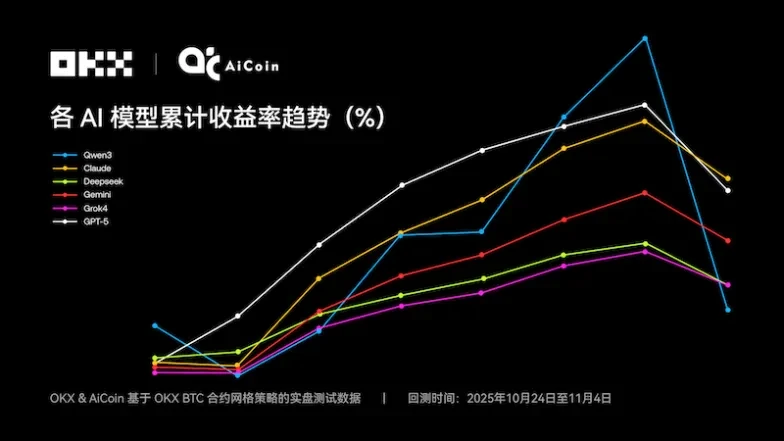
Claude Takes the Crown—6 Major AI Grid Strategies Go Head-to-Head | OKX & Ai Coin Live Test
Short-term trading champion , is it also the king of grid strategies? NOF1's "AI Trading Live Arena" first season finally concluded on November 4, 2025, at 6 AM, whetting the appetite of the crypto, tech, and finance circles. But the outcome of this "AI intelligence public test" was somewhat unexpected—the $60,000 total capital across six models was only worth 4.3
2025年11月6日