Under the Metaverse Boom, How Can Web3. 0 Break Through in the Future?
AR+5. 91%
Many readers have likely been hearing a term constantly this year: Web3. 0. Especially with this year's metaverse boom, Web3. 0 has become a hot topic and was a high-frequency term at the recent U.S. House cryptocurrency finance hearing. According to Google Trends data, global search volume for "web3" has risen significantly over the past 12 months. The increase was particularly pronounced during November and December.
Web3. 0 is a relatively broad term that still represents a vision and idea for the future. People have different views on the specific definition of Web3. 0, leading to many discussions and even controversies surrounding this topic.
So, as ordinary investors, how should we understand and view Web3. 0? What is its connection to the cryptocurrency field? What can the current metaverse and NFTs bring to Web3. 0?
What Exactly is Web3. 0?
Web3. 0 is a concept relative to Web1. 0 and Web2. 0. To understand Web3, we first need to understand Web1. 0 and Web2. 0. Here, "Web" refers to the Internet.
Simply put, Web1. 0 refers to the first generation of the Internet, represented by early portals and search websites. Its main characteristic was that network platforms unidirectionally provided content to users. Users at this stage could only passively receive content transmitted by the network and could not participate in the network.
Web2. 0 (the second generation of the Internet) began to shift toward interaction. Users were no longer passive recipients of content but could create their own content on network platforms (including text, images, videos, etc.) and interact with other users on the network. At this stage, the Internet evolved from unidirectional broadcasting to bidirectional interaction. This is the social media era we are currently in.
Web3. 0 is called the next generation of the Internet. The reason for proposing this idea is that Web2. 0 has exposed some problems. The biggest problem is that most control of the Internet is concentrated in various centralized companies, and user information and data have almost no privacy. Web3. 0 aims to solve Web2. 0's problems by using blockchain and other decentralized technologies to return the value created by users during interactions to users and participants. This is the economic significance of Web3. 0. Therefore, compared to Web2. 0, Web3. 0 represents a more profound transformation. Its key lies not in performance and interaction changes, but in control—returning control to users.
The person who first formally proposed the Web3. 0 concept was Gavin Wood, founder of Polkadot and the Web3 Foundation. In 2014, while serving as Ethereum CTO, Gavin created the term Web3. 0 and described his vision for the Web3. 0 era. He emphasized that Web3 aims to evenly distribute online power, wresting control from large tech platforms and distributing it to everyone on the blockchain.
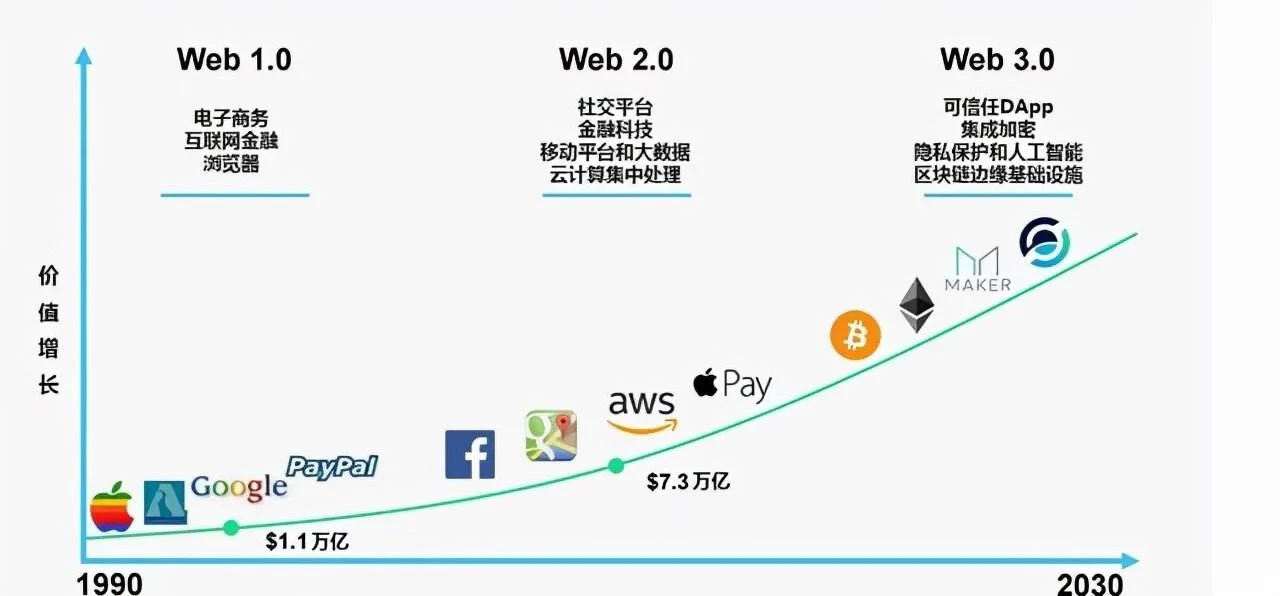
The evolution process from Web1. 0 to Web2. 0 to Web3. 0
Therefore, true Web3. 0 is an Internet controlled by people. "Decentralization" is the core concept of Web 3. 0, while privacy, data, rights, censorship, identity, and more are topics that Web 3. 0 cares about. These align extremely well with the essence of current blockchain technology. The decentralized storage, immutability, and information encryption features of blockchain technology can subvert the monopoly of current Internet giants, change the problem of data service providers abusing permissions, and return Internet rights to individual network participants. From this concept, many in the cryptocurrency community broadly understand that most current blockchain projects fall within the Web3. 0 category.
Current Development Status of Web3. 0
Although Web3. 0 is still in its infancy, the proposal of this concept has brought a very significant leap to the blockchain industry, especially at the application level. Under the vision of Web3. 0, many solutions and protocols carrying this concept have been spawned.
In the previous article "Five Aspects of Web3 Infrastructure Status", we introduced the current status of infrastructure for the initially scaled Web3. 0. Web3. 0 development relies on infrastructure for computing, indexing, data management, hosting, storage, and other important services. With the support of blockchain technology, the components of the Web2. 0 era—storage, domains, payments, social communication, and content platforms—can all be presented in a decentralized manner, bringing better experiences and higher user permissions.
In Web3. 0, there are distributed storage protocols such as Sia, Filecoin, and Arweave; data processing protocols such as Ocean Protocol, Streamr, and Erasure; relatively mature domain name systems like ENS, TNS, and Handshake; payment tools like Metamask; content distribution platforms like Mirror; and decentralized social tools like Telegram and Discord. It can be considered that Web3. 0 protocols have begun to take shape.
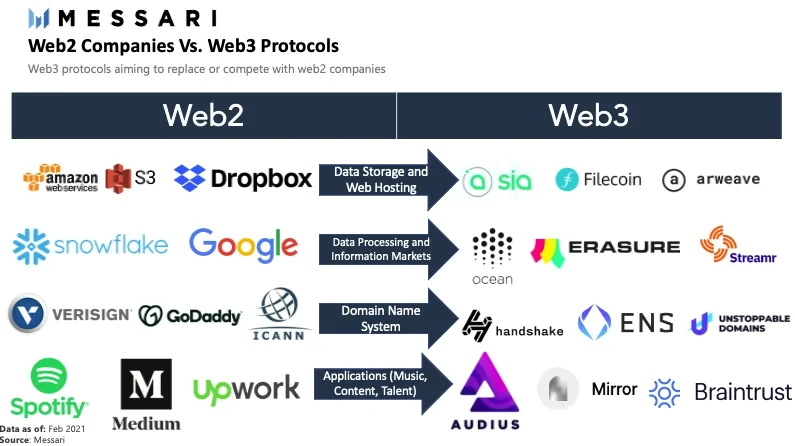
In Web3. 0, data is the most important production factor, so data processing and data storage are essential infrastructure. Among them, data protocols like Filecoin, Arweave, and Sia have developed rapidly in recent years. As of December 17, data stored on Arweave increased 20-fold compared to January, currently at 4. 04 TB; total data stored on Filecoin now exceeds 22 PB; and storage capacity used on Sia reached a historical high of 1. 94 PB (1 PB = 1, 000 TB), with current total network capacity at 5. 12 PB. Additionally, The Graph, as Web3's indexing and query layer, currently generates thousands of dollars in weekly revenue.
With the maturation and accumulation in this field, many companies and institutions have recently chosen to focus on the Web3 direction. For example, blockchain infrastructure company Alchemy is launching an investment department focused on Web3; South Korean blockchain company Hashed announced that its new fund, Hashed Venture Fund II, raised $200 million from undisclosed investors and will invest in Web3 projects. Many Web3 startups such as Mem Protocol, CyberConnect, and software development company Thirdweb have recently raised tens of millions of dollars in funding, with well-known investment institutions (individuals) including a16z, Multicoin Capital, Mark Cuban, and others.
The trend we see is that in the era leading to Web3, everyone recognizes that Web3. 0 is a revolution, is the future, and is the general trend. Messari's latest annual report points out: Web3 is imperative. Moreover, the term Web3 became a high-frequency term at the U.S. cryptocurrency finance hearing held on December 8. U.S. Republican Representative Patrick Mc Henry stated at the meeting that cryptocurrency may have a greater impact on the future than the Internet, and asked how we can ensure that the Web3. 0 revolution happens in the United States. Former Acting Comptroller of the Currency and Bitfury Group CEO Brian Brooks explained at the meeting what Web3. 0 is and stated that Web3. 0 is the future of the Internet.
However, behind the rapid expansion of these Web3. 0 protocols, there are still challenges, controversies, and questions about how to break through. As Messari previously pointed out in an analysis report, although Web3's independent components are flourishing, a complete stack has not yet found ways to interoperate with DeFi, NFTs, or other Web3 protocols. Additionally, some in the tech community are not optimistic about the future represented by Web3.
How Can Web3. 0 Break Through in the Future?
Recently, with the explosion of the metaverse, discussions about Web3 have been endless. But whether traditional tech circles or cryptocurrency people have their own understanding. Most people recognize the Web3 trend, but there are also completely opposite views. The most typical example is Tesla CEO Elon Musk, who recently posted an image on Twitter with sarcastic intent about Web3, and even directly replied to a Twitter user saying, "Web3 is bullshit."
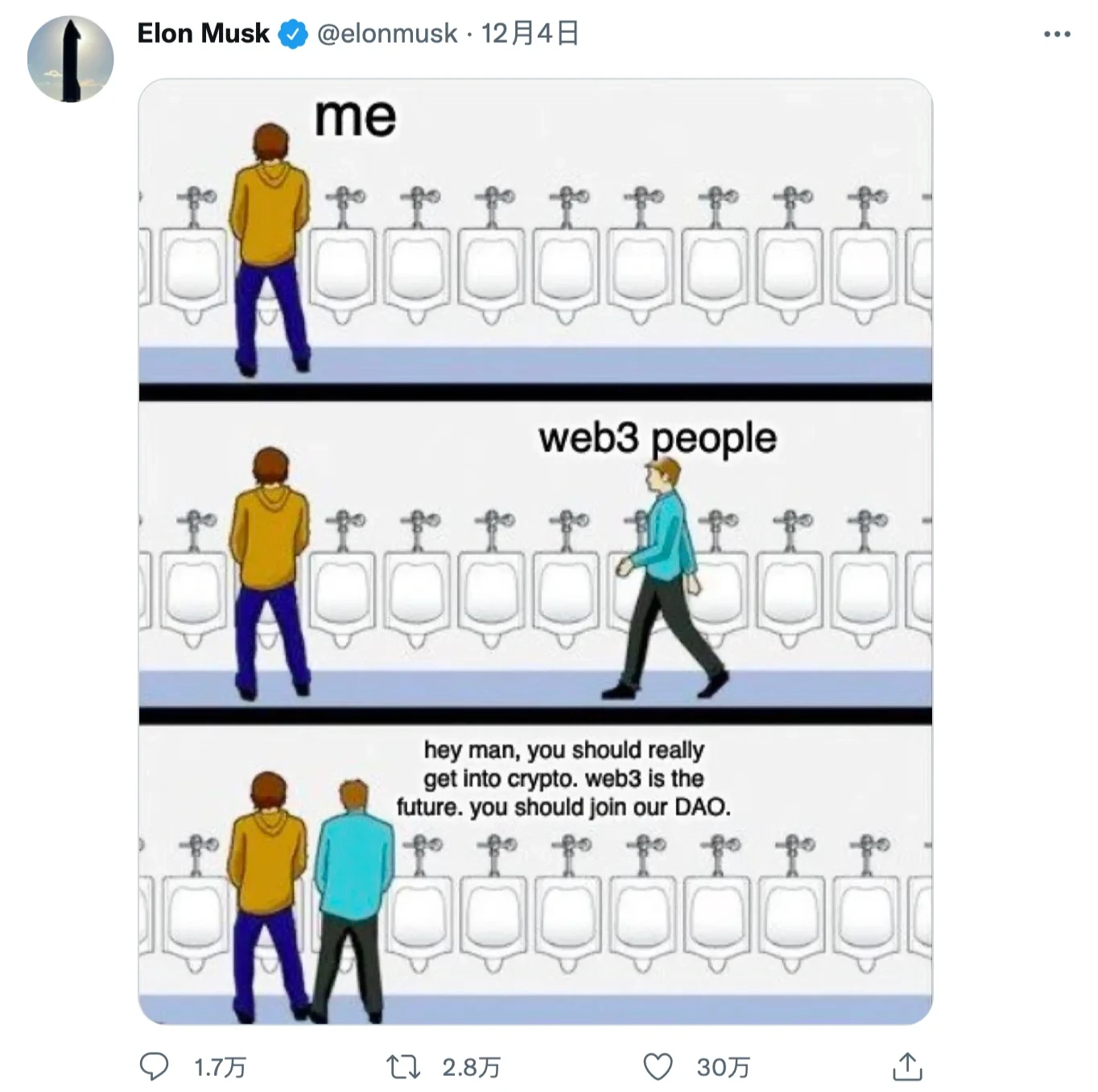
In response, Ethereum core developer eric. eth replied that most people in the current market don't like Elon Musk anymore, and Web 3 and crypto DeFi don't need Musk.
Of course, in the cryptocurrency field, more people firmly believe that Web3 is the future, just as many people now believe in the metaverse. Benedict Evans, former a16z partner and renowned analyst, recently released a new presentation titled "Trilogy to the Future" about technology in 2021 and 2022. He stated that the most exciting themes in today's tech field are the transformation visions for 2025 or 2030—namely, cryptocurrency shifting to Web3, and VR shifting to the metaverse. The goal of the cryptocurrency industry has shifted from original value storage, payments, transfers (and speculation) to building new models of software, Internet business, and networks in Web3; while the goal of VR/AR has shifted from (creating) gaming headsets, niche industrial tools, and science projects to the next generation platform of smartphones—metaverse.
So, how to build new models of software, Internet business, and networks in Web3, and how can Web3 find its breakthrough? Earlier we said that the proposal of Web3. 0 has enabled a relatively significant leap in application development in the blockchain industry. Conversely, it can also be said that practitioners in the cryptocurrency industry have placed higher expectations on Web3. 0.
In the eyes of Polkadot founder Gavin Wood, Web3 is a "post-Snowden" era network and a very interesting social experiment. It is a reimagining of various things we have already used the Web for, but fundamentally different in interaction models between parties. The post-Snowden Web contains four components: static content publishing, dynamic messaging, trustless trading, and integrated user interfaces. Many current Web protocols are working together to build Web3 infrastructure around these core components. But looking to the future, where will the Web3 revolution find its breakthrough? Will it be the metaverse? DeFi? Or NFTs? How do we grasp control over data, the primary production factor?
In this regard, Cao Yin, Managing Director of the Digital Renaissance Foundation, has an interesting perspective worth exploring here. Cao Yin believes that in the short term, crypto art is most likely to be the breakthrough of the Web3 revolution. Art is naturally content-focused, has no technical or financial barriers, and most importantly, is fun and diverse with community attributes where everyone can find like-minded people. "Compared to tracks like DeFi, gaming, and social, crypto art becoming the Web3 breakthrough has its inevitability. Since the Renaissance, art and artists have played the role of standard-bearers in every social revolution, and this time will be no different."
Looking at current development trends, the metaverse and NFTs are the areas that will most mutually benefit Web3. But overall, Web3. 0 is still in a relatively early stage, mostly at the level of application exploration. For Web3. 0, as members of the crypto ecosystem, we can perhaps maintain patience and expectation, witnessing and participating in building a Web that truly belongs to us.
Disclaimer
This article may contain product-related content that is not applicable to your region. This article is intended to provide general information only and does not take responsibility for any factual errors or omissions contained herein. This article represents only the author's personal views and does not represent the views of OKX. This article is not intended to provide any advice, including but not limited to: (i) investment advice or investment recommendations; (ii) offers or solicitations to buy, sell, or hold digital assets; or (iii) financial, accounting, legal, or tax advice. Holding digital assets (including stablecoins) involves high risk, may fluctuate significantly, and may even become worthless. You should carefully consider whether trading or holding digital assets is suitable for you based on your financial situation. For questions about your specific situation, please consult your legal/tax/investment professional. The information appearing in this article (including market data and statistics, if any) is for general reference only. Although we have taken all reasonable precautions in preparing these data and charts, we assume no responsibility for any factual errors or omissions expressed herein. © 2025 OKX. This article may be reproduced or distributed in its entirety, or excerpts of 100 words or less from this article may be used, provided such use is non-commercial. Any reproduction or distribution of the entire article must also prominently state: "Copyright © 2025 OKX. Used with permission." Permitted excerpts must cite the article name and include attribution, such as "Article Name, [Author Name (if applicable)], © 2025 OKX". Some content may be generated or assisted by artificial intelligence (AI) tools. Derivative works or other uses of this article are not permitted.
Show More
Recommended Reading

2025 KOLs' Most Used OKX Products List: A Comprehensive Review
In the cryptocurrency industry, professional players' choices are always direct and pure. In 2025, KOLs used a full year of capital investment and time accumulation to cast the most genuine votes for industry tools and ecosystem development. We focused on four core questions—"What was the biggest achievement this year?", "Given the achievements, what OKX products did you use most and like most in 2025?", "Why do you like it?", "How did this
January 5, 2026

2026 Investment Outlook: Asset On-Chain, Intelligence and Privacy | OKX Annual Record
Three major trends in Crypto's future: Asset transformation, entity transformation, and rule transformation. As we are about to enter 2026, bidding farewell to the past four years of infrastructure focus on "building roads," the cryptocurrency industry is welcoming a profound paradigm shift. OKX Ventures defines this as the opening of the "Kinetic Finance" era, where the core is no longer how fast the network is, but the flow of on-chain assets and earnings
December 31, 2025

Voting with Data:透视 2025 Hot Trading Products | OKX Annual Record
If you only look at market conditions, it's hard to explain the difference in returns between 2025 trading users. What truly determines returns also depends on account-level operational methods, not just market volatility itself. The OKX annual statement shows that mainstream coins remain the core of capital turnover and returns bearing, supporting trading and strategy execution; emerging coins are more used to amplify volatility and provide phased opportunities, but are not a stable, long-term source of returns. What truly continuously contributes returns is
December 30, 2025
Fusaka in Practice: What Ethereum's Latest Upgrade Means for L2, Nodes, and Users
The Ethereum mainnet has completed the Fusaka fork. From a protocol perspective, this upgrade mainly includes four components. The full text presents the core viewpoints and frontline experience of three guests in Q&A format: Ahmad (@smartprogrammer) – Nethermind execution client / Ethereum core developer Manu (@manunalepa) – Prysm / Of
December 16, 2025

OKX Research | Why Did RWA Become a Key Narrative in 2025?
RWA (Real World Assets) is becoming a global capital "favorite." Simply put, RWA involves taking valuable, ownership-bearing things from the real world—such as houses, bonds, stocks, and other traditional financial assets, as well as assets like art, private lending, and carbon credits that are not easily traded directly—and moving them onto the blockchain to become tradeable, programmable crypto assets. This way, not
November 20, 2025
Claude Takes the Championship, Truth About 6 Major AI Grid Strategy Showdown | OKX & Ai Coin Live Trading Review
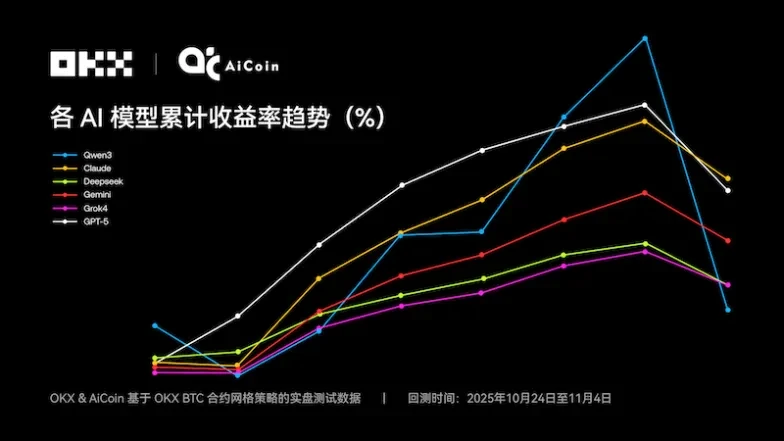
Short-term trading champion —is it also a king in grid strategies? The first season of the "AI Trading Live Arena" launched by NOF1 finally concluded at 6 AM on November 4, 2025, whetting the appetite of the cryptocurrency, tech, and finance circles. But the ending of this "AI IQ Public Test" was somewhat unexpected—of the six models' total $60,000 principal, only $43 remained at the finish
November 6, 2025