
OKX Blockchain 60 Lectures | Episode 14: What is the Byzantine Generals Problem?
"OKX Blockchain 60 Lectures" is a blockchain educational animation series jointly produced by OKX and Sina Technology. Aimed at users with zero knowledge of blockchain, it uses articles, animated videos, and other formats to vividly explain blockchain concepts through five major sections and 60 knowledge points, covering concepts, technology, and applications. The content of this episode was guided and reviewed by Xiongma, founder of FIBOS.
Hello everyone, I'm Xiao K. Today we're going to talk about: "What is the Byzantine Generals Problem"?
As we mentioned before, the distributed ledger can be considered the framework of blockchain — everyone can freely participate and collectively process data in the blockchain. Based on this, blockchain is essentially a large distributed computing network.
There is no central command center issuing orders. The entire network is completely decentralized, relying on different nodes exchanging information with each other, reaching consensus, and acting in unison — the whole process is like an unstructured group discussion.
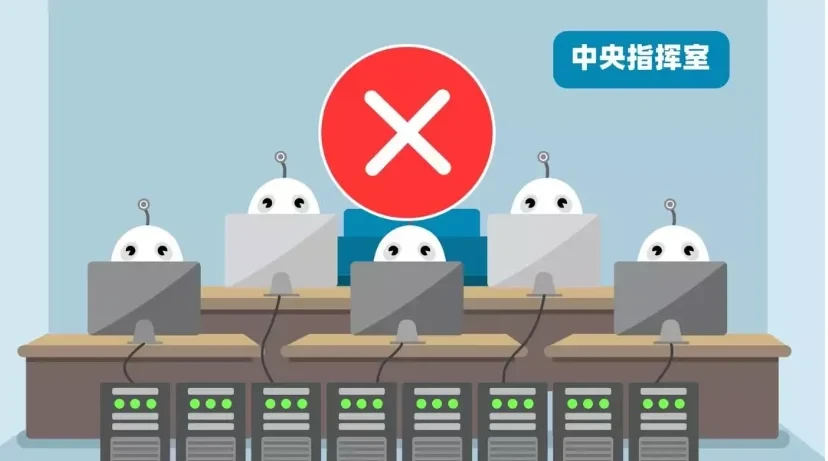
Someone raised a question: what if a node sends erroneous information that disrupts the normal operation of the network, or what if everyone disagrees? So scholars established a model to uniformly describe such problems concerning consistency in distributed systems, calling it the Byzantine Generals Problem.
The Byzantine Generals Problem is as follows:
The Byzantine Empire wanted to attack a country, sending multiple armies to besiege it. But the enemy nation also had strong military strength, and the generals had to launch their attacks simultaneously at the same time to win.
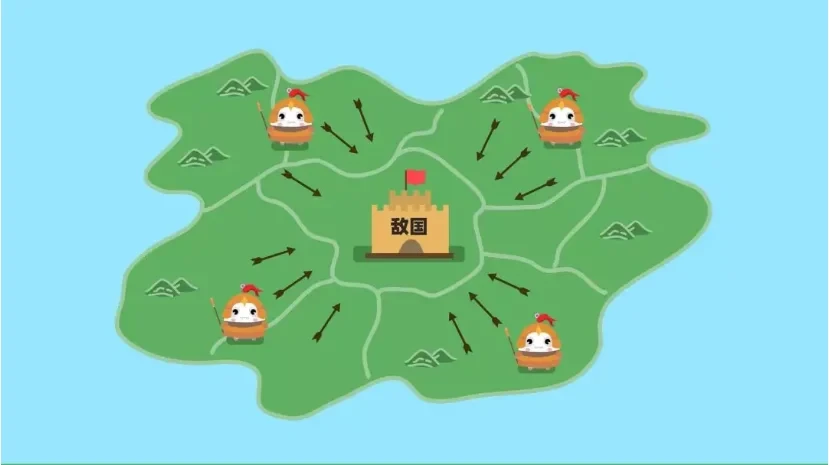
The problem is that each general is scattered around the enemy nation and can only communicate with each other via messengers on horseback to determine the time of attack. However, on one hand, messengers may be killed by the enemy during delivery, and on the other hand, according to unreliable reports, there are traitors among these generals. Traitors may arbitrarily change their attack intentions or timing and deliver false orders to other generals, affecting their judgment.
If the entire distributed network corresponds to the Byzantine Empire, and each node corresponds to a general within it, then under such conditions, how can all nodes in the network reach agreement on something? (That is, the generals launch their attacks simultaneously at the same time to win the battle.) This is the Byzantine Generals Problem.

So in simple terms, the Byzantine Generals Problem describes two issues that distributed networks face:
1) How to solve the synchronization problem between nodes. For example, in the case without traitors, when General A passes an attack plan to other generals (e.g., "attack tomorrow at 2 PM"), General B might also be passing an attack plan (e.g., "attack tomorrow at 3 PM").
2) How to solve the problem of malicious nodes deliberately sending erroneous information to disrupt network operation. For example, in the case with traitors, traitors will send different attack proposals to different generals, preventing other generals from reaching consensus.
Later, people realized that it is impossible for every node in a distributed network to be error-free, so someone proposed the concept of "Byzantine Fault Tolerance" to solve the Byzantine Generals Problem. The key insight of this solution is that the forging or error of information is not important — as long as the number of honest generals exceeds two-thirds of the total, even with a minority of dishonest generals, the entire system can reach consensus.
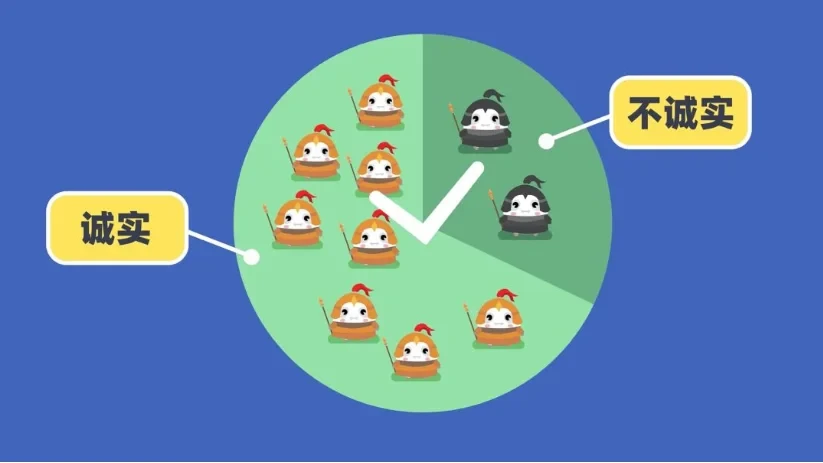
Based on this, people designed many solutions.
The consensus mechanism — one of the four core technologies of blockchain — was born to solve this problem. As for how exactly it solves the problem, allow Xiao K to leave you in suspense. We'll cover that in the next lesson.
Special thanks to Teacher Xiongma for his assistance and guidance on this episode.
Disclaimer
This article may contain product-related content not applicable to your region. This article is committed to providing general information only and accepts no responsibility for any factual errors or omissions. This article represents the author's personal views only and does not represent the views of OKX. This article is not intended to provide any advice, including but not limited to: (i) investment advice or investment recommendations; (ii) offers or solicitations to buy, sell, or hold digital assets; or (iii) financial, accounting, legal, or tax advice. Holdings in digital assets (including stablecoins) involve a high degree of risk and may fluctuate significantly, or even become worthless. You should carefully consider whether trading or holding digital assets is suitable for you based on your financial situation. For questions specific to your circumstances, please consult your legal/tax/investment professional. Any information appearing in this article (including market data and statistical information, if applicable) is provided for general reference purposes only. Although we have taken all reasonable precautions in preparing such data and charts, we assume no liability for any factual errors or omissions expressed herein. © 2025 OKX. This article may be reproduced or distributed in full, or excerpts of 100 words or less may be used, provided that such use is non-commercial in nature. Any reproduction or distribution of the full article must prominently state: "This article is copyrighted © 2025 OKX, used with permission." Permitted excerpts must cite the article title and include attribution, e.g., "Article Title, [Author Name (if applicable)], © 2025 OKX." Portions of this content may have been generated or assisted by artificial intelligence (AI) tools. Derivative works and other uses of this article are not permitted.
Show More
Recommended Reading
OKX Blockchain 60 Lectures | Episode 43: The Rise of the Mining Industry (Part 2) — Bitmain's Ascendance
Hello everyone, I'm Xiao K. Today we're going to talk about: "The Rise of the Mining Industry (Part 2) — Bitmain's Ascendance." In the last lesson, we discussed two people who opened the door to capitalization and commercialization of the mining industry. One was "Pumpkin Zhang" — Zhang Nan-geng, and the other was "Fried Cat" — Jiang Xinyu. Although together they inaugurated the golden age of the mining industry, the one who truly propelled mining to its peak was someone else — and his name is Wu Jihan.
2025年9月18日

OKX Blockchain 60 Lectures | Episode 2: Why is Blockchain Called Blockchain?
"OKX Blockchain 60 Lectures" is a blockchain educational animation series jointly produced by OKX and Sina Technology. Aimed at users with zero knowledge of blockchain, it uses articles, animated videos, and other formats to vividly explain blockchain concepts through five major sections and 60 knowledge points, covering concepts, technology, and applications. The content of this episode was guided and reviewed by Meng Yan, Deputy Dean of the Digital Assets Research Institute. In 2008, a global financial crisis erupted. On October 31st, "
2025年9月18日

OKX Blockchain 60 Lectures | Episode 16: What is the PoW Consensus Mechanism
"OKX Blockchain 60 Lectures" is a blockchain educational animation series jointly produced by OKX and Sina Technology. Aimed at users with zero knowledge of blockchain, it uses articles, animated videos, and other formats to vividly explain blockchain concepts through five major sections and 60 knowledge points, covering concepts, technology, and applications. The content of this episode was guided and reviewed by Huang Fangyu, Co-founder of Wanyou Computing Power. Hello everyone, I'm Xiao K. Today we're going to talk about:
2025年9月18日

OKX Blockchain 60 Lectures | Episode 51: 2019, Giants Enter the Scene — Facebook's Cryptocurrency Dream
Previously, we discussed how in 2018, as blockchain was being hyped beyond sustainability, a massive de-bubbling process began and the entire industry entered a winter. However, danger and opportunity coexist — this periodic downturn in the industry also happened to provide international giants with the best opportunity to enter the market. In February 2019, JPMorgan Chase, the Wall Street financial giant, sounded the horn for international giants entering the blockchain space. Subsequently, giants such as Goldman Sachs, UBS, Citibank, and Microsoft
2025年9月18日

OKX Blockchain 60 Lectures | Episode 7: What Does a Fork in the Blockchain Mean?
"OKX Blockchain 60 Lectures" is a blockchain educational animation series jointly produced by OKX and Sina Technology. Aimed at users with zero knowledge of blockchain, it uses articles, animated videos, and other formats to vividly explain blockchain concepts through five major sections and 60 knowledge points, covering concepts, technology, and applications. The content of this episode was guided and reviewed by Boolean Fees, an Austrian School economist.所谓的区块链的分叉, 可以说是区块链网络中独有的一
2025年9月18日

OKX Blockchain 60 Lectures | Episode 25: What is the Lightning Network?
Hello everyone, I'm Xiao K. Today we're going to talk about: "What is the Lightning Network"? The Lightning Network is a technology first proposed in 2015 by Joseph Poon and Thaddeus Dryja in a whitepaper to solve Bitcoin trading congestion. This technology originated from a problem left over from Bitcoin's early days. Because when Bitcoin was first designed,
2025年9月18日