OKX Blockchain 60 Lessons | Episode 15: What is a Consensus Mechanism?
"OKX Blockchain 60 Lessons" is a blockchain educational animated video series produced jointly by OKX and Sina Technologies. Targeting users with zero knowledge of blockchain, it uses articles and animated content to vividly explain blockchain concepts from the perspectives of concepts, technology, and applications through 5 major sections and 60 knowledge points. The course content for this episode was guided by Instructor Cao Yin, Advisor to Estonia's Digital Nation Initiative.
Hello everyone, I'm Xiao K. Today we're going to talk about: "What is a Consensus Mechanism?"
As we discussed in the previous lesson, a critical issue that distributed networks must solve is the "Byzantine Generals Problem." As a typical representative of distributed networks, blockchain employs a series of new technologies to solve this problem — and this technology is the Consensus Mechanism.
In simple terms, a consensus mechanism is a set of rules that every node must follow. It is also one of the four core technologies of blockchain. The consensus mechanism primarily serves to coordinate all nodes to maintain consistent ledger records.
Why is that the case? As we all know, blockchain is decentralized and built on distributed ledger technology, so anyone can freely join and become a node. But think about it — absolute freedom inevitably leads to absolute chaos. If everyone freely processes data in the network, what would happen to the entire network?
For example, when I join as a node and some data is generated in the network, I process it using Method A, while another person processes it using Method B. Since our processing methods differ and our permissions are equal, whose processed data should be used? Once we cannot reach consensus, the entire network can easily diverge and become chaotic.
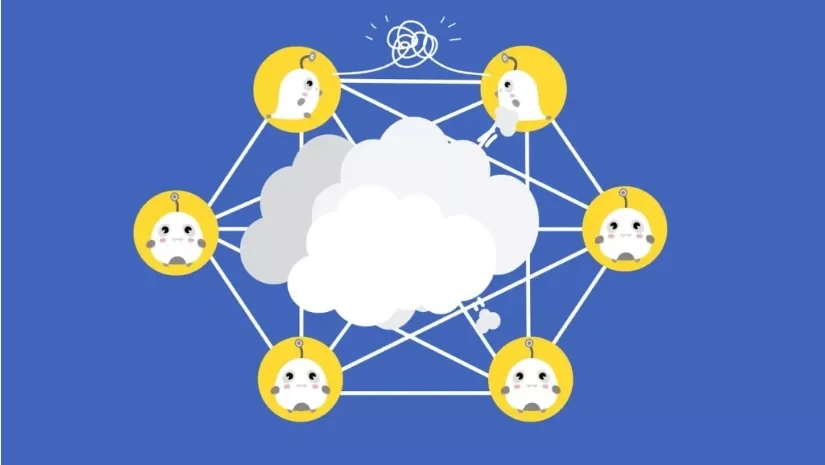
Additionally, in this environment, I don't know the other nodes and there's no centralized authority to provide guarantees — so how can I be certain that the data processed by other nodes is correct?
In other words, in a decentralized environment without a central node to make decisions and assist network operations, the network can hardly run autonomously in a free environment.
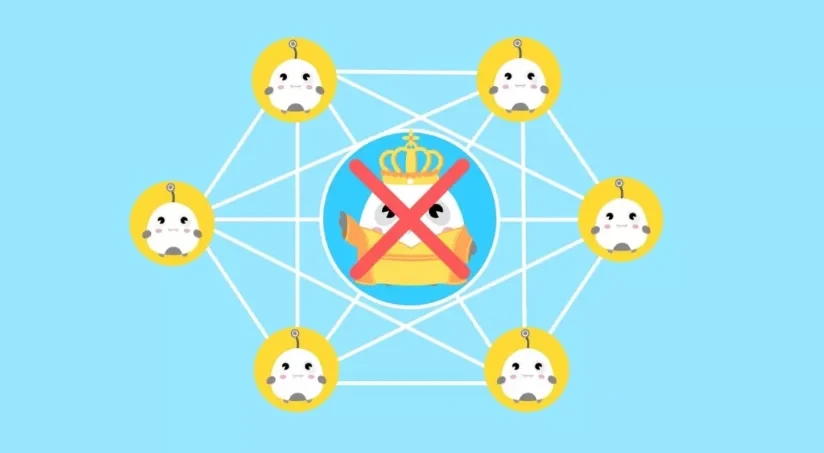
To solve this problem, Satoshi Nakamoto came up with an idea: although there is no central node in the entire network to make decisions, a set of rules can be established so that this rule becomes a centralized mechanism that every node must follow, helping the network run autonomously — much like how laws constrain every member of society.
The rule should cover two key points: First, how each node in the distributed ledger should keep records; second, how different nodes can exchange information and reach consensus.

Specifically, through a certain method, it determines who obtains the bookkeeping rights in the blockchain. Whoever holds the bookkeeping rights, the entire network uses the data processed by that person. Moreover, this person can also receive rewards for packaging blocks, while anyone who attempts to harm the network will face corresponding penalties.
This way, even without a centralized node, every node can act in a relatively unified manner, and the small databases of each node can maintain consistent data. This enables a distributed network to run in a relatively orderly fashion.
Overall, a consensus mechanism is a system that constrains every dispersed node in a decentralized network, maintaining the system's operational order and fairness, enabling every unrelated node to verify and confirm the data in the network, thus building trust and reaching consensus.
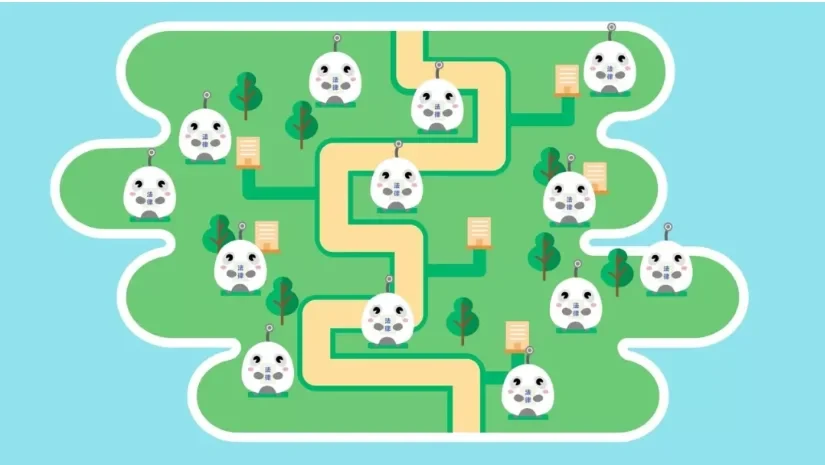
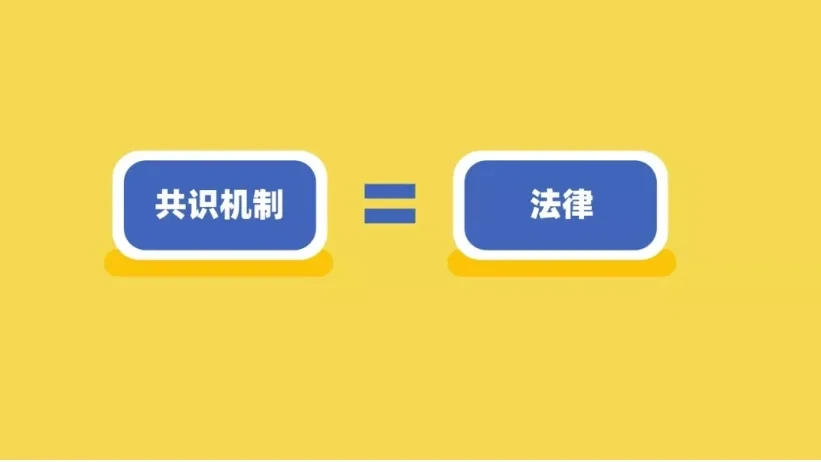
If we think of blockchain as a society, then the consensus mechanism is the law of that world — everyone must abide by it. It not only solves the problem of trust but also maintains the normal operation of the entire blockchain society.
Special thanks to Instructor Cao Yin for his assistance and guidance on the content of this episode.
Disclaimer
This article may contain product-related content that does not apply to your region. This article is dedicated to providing general information and does not accept responsibility for any factual errors or omissions. This article represents only the author's personal views and does not constitute the views of OKX. This article is not intended to provide any advice, including but not limited to: (i) investment advice or investment recommendations; (ii) offers or solicitations to buy, sell, or hold digital assets; or (iii) financial, accounting, legal, or tax advice. Holdings of digital assets (including stablecoins) involve a high degree of risk and may fluctuate significantly, or even become worthless. You should carefully consider whether trading or holding digital assets is appropriate for you based on your financial situation. For questions specific to your circumstances, please consult your legal/tax/investment professional. The information in this article (including market data and statistical information, if any) is provided for general reference purposes only. Although we have taken all reasonable precautions in preparing such data and charts, we assume no responsibility for any factual errors or omissions expressed herein. © 2025 OKX. This article may be reproduced or distributed in full, or excerpts of 100 words or fewer may be used, provided that such use is non-commercial in nature. Any reproduction or distribution of the full article must prominently state: "This article is copyrighted © 2025 OKX, used with permission." Permitted excerpts must cite the article title and include attribution, e.g., "Article title, [author name (if applicable)], © 2025 OKX." Some content may have been generated or assisted by artificial intelligence (AI) tools. Derivative works and other uses of this article are not permitted.
Show More
Recommended Reading
OKX Blockchain 60 Lessons | Episode 43: The Rise of the Mining Circle (Part 2) — The Rise of Bitmain
Hello everyone, I'm Xiao K. Today we're going to talk about: "The Rise of the Mining Circle (Part 2) — The Rise of Bitmain." In the previous lesson, we discussed two people who opened the door to mining circle capitalization and commercialization. One was "Pumpkin Zhang" — Zhang Nangeng, and the other was "Fried Cat" — Jiang Xinyu. Although together they initiated the golden age of the mining circle, the one who truly propelled the mining industry to its peak was someone else — and his name is Wu Jihan.
September 18, 2025
OKX Blockchain 60 Lessons | Episode 2: Why is Blockchain Called Blockchain?
"OKX Blockchain 60 Lessons" is a blockchain educational animated video series produced jointly by OKX and Sina Technologies. Targeting users with zero knowledge of blockchain, it uses articles and animated content to vividly explain blockchain concepts from the perspectives of concepts, technology, and applications through 5 major sections and 60 knowledge points. The course content for this episode was guided by Meng Yan, Deputy Dean of the Digital Assets Research Institute. In 2008, a global financial crisis erupted. On October 31st, "
September 18, 2025
OKX Blockchain 60 Lessons | Episode 16: What is the PoW Consensus Mechanism
"OKX Blockchain 60 Lessons" is a blockchain educational animated video series produced jointly by OKX and Sina Technologies. Targeting users with zero knowledge of blockchain, it uses articles and animated content to vividly explain blockchain concepts from the perspectives of concepts, technology, and applications through 5 major sections and 60 knowledge points. The course content for this episode was guided by Huang Fangyu, Co-founder of Wanyou Computing Power. Hello everyone, I'm Xiao K. Today we're going to talk about:
September 18, 2025

OKX Blockchain 60 Lessons | Episode 51: 2019, Giants Enter the Market, Facebook's Cryptocurrency Dream
As we discussed previously, in 2018, as blockchain was hyped to an unsustainable peak, it underwent a dramatic de-bubbling process and the entire industry entered a winter. However, crisis and opportunity coexist — this cyclical pullback in the industry also happened to provide the optimal timing for international giants to enter the market. In February 2019, JPMorgan Chase, the Wall Street financial giant, sounded the horn for international giants to enter the blockchain space, followed by Goldman Sachs, UBS, Citigroup, Microsoft, and other giants.
September 18, 2025
OKX Blockchain 60 Lessons | Episode 7: What Does a Fork in the Blockchain Mean?
"OKX Blockchain 60 Lessons" is a blockchain educational animated video series produced jointly by OKX and Sina Technologies. Targeting users with zero knowledge of blockchain, it uses articles and animated content to vividly explain blockchain concepts from the perspectives of concepts, technology, and applications through 5 major sections and 60 knowledge points. The course content for this episode was guided by Boolean费墨 (Burlf), an Austrian School economist.所谓的区块链的分叉, can说是区块链网络中独有的一
September 18, 2025

OKX Blockchain 60 Lessons | Episode 25: What is the Lightning Network?
Hello everyone, I'm Xiao K. Today we're going to talk about: "What is the Lightning Network?" The Lightning Network is a technology first proposed in 2015 by Joseph Poon and Thaddeus Dryja in a whitepaper to solve Bitcoin trading congestion. This technology originated from a problem left over from Bitcoin's early days. Because when Bitcoin was first designed, a
September 18, 2025