
OKX Blockchain 60 Lessons | Episode 16: What Is the PoW Consensus Mechanism
The "OKX Blockchain 60 Lessons" is a blockchain educational animated video series jointly produced by OKX and Sina Tech. Designed for users with zero knowledge of blockchain, it uses articles and animated content to vividly explain blockchain concepts across five major sections and 60 key topics, covering concepts, technology, and applications. The content of this episode was guided and reviewed by Huang Fangyu, Co-founder of Wanyou Computing Power.
Hello everyone, I'm Xiao K. Today we're going to talk about: "What Is the PoW Consensus Mechanism"?
As we discussed previously, a consensus mechanism is a set of rules that all nodes in a blockchain network must follow. There are currently two mainstream consensus mechanisms: one is the PoW consensus mechanism, and the other is the PoS consensus mechanism. Today, we'll introduce what the PoW consensus mechanism is.
The PoW mechanism, short for Proof of Work, is a consensus algorithm where participants prove their computational effort to earn the right to add blocks.

Originally, this technology was used to solve the problem of spam emails — the system required senders to perform a certain amount of computational work for each email sent, thereby increasing the cost of mass发送垃圾邮件. Later, Nakamoto discovered that this technology could effectively solve the "Byzantine Generals Problem," so he introduced it into the Bitcoin blockchain network, and gradually, the PoW mechanism became one of the mainstream consensus mechanisms in today's blockchain.
To put it simply, the PoW mechanism primarily solves the consistency problem among nodes in a blockchain network through competitive bookkeeping. Here's how it works:
As we all know, every node in the blockchain can freely participate in data processing, i.e., packaging blocks. To ensure that all nodes in the network can reach consensus, PoW stipulates that when a transaction occurs, every node that wants to keep accounts must compete with others using its own computational power to win the记账的权力.
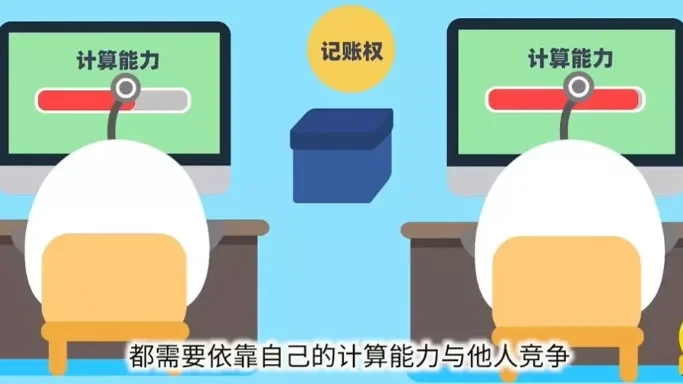
The competitive method is that approximately every 10 minutes, a round of computational competition takes place. Participating nodes continuously search for a random number (Nonce) through算力. Whoever first finds aNonce value that meets certain conditions and notifies the entire network, gaining recognition, wins the right to keep accounts.
In the end, the person who wins the记账权 will have their packaged block connected to the blockchain, and their processed data will also be recorded by all other nodes in their own ledgers.
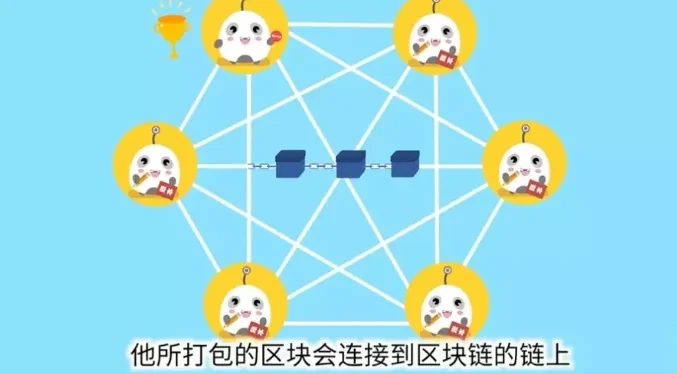
In the Bitcoin network, the PoW mechanism is the原理 behind Bitcoin mining. It gives nodes that win the记账权 a certain amount of Bitcoin as a reward, thereby encouraging more people to participate.
The advantage of the PoW mechanism is that it involves every node's computational power in verifying network transactions. Based on PoW's competitive mechanism, to act maliciously in a blockchain network, one must control absolute computational power over the entire network; otherwise, they must face computational competition from others. Theoretically, unless someone controls more than 51% of the network's computational power, nothing on the entire network can be tampered with. This makes the network more decentralized and increases the cost of malicious node behavior.

Therefore, the more people join, the greater the network's computational power, the harder it becomes for anyone to control more than 51% of it, and the safer the entire network becomes.
Of course, the PoW mechanism is not perfect. To ensure the network's strong decentralization, it has paid a heavy price. For example, it has been criticized for wasting significant resources and having low processing performance.
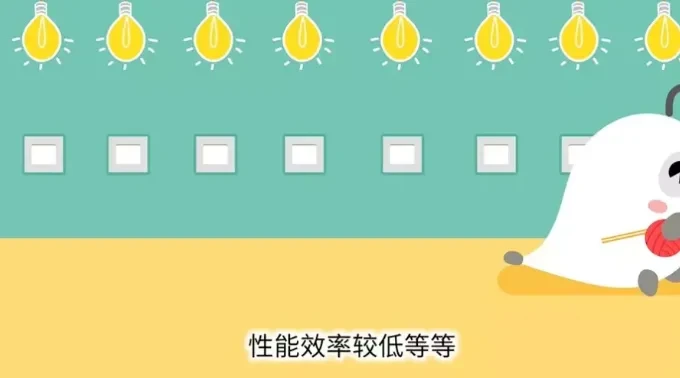
This is because in the PoW mechanism, everyone can freely join the network as a node to process data, and every node must compete computationally to win the记账权. Just think — a piece of data needs to be viewed by everyone on the network, and for that single piece of data, everyone must spend a lot of computational effort, which naturally leads to resource waste and low efficiency.
However, one success outweighs many flaws. The PoW mechanism has indeed made a decentralized internet a reality. Perhaps in the future, with technological progress, consensus mechanisms will break the impossible triangle of decentralization, efficiency, and security — let's wait and see.
Thanks to Teacher Huang Fangyu for his help and guidance on the content of this episode.
Disclaimer
This article may contain product-related content not applicable to your region. This article is committed to providing general information only and does not accept responsibility for any factual errors or omissions herein. This article represents the author's personal views only and does not represent OKX's views. This article is not intended to provide any advice, including but not limited to: (i) investment advice or investment recommendations; (ii) offers or solicitations to buy, sell, or hold digital assets; or (iii) financial, accounting, legal, or tax advice. Holding digital assets (including stablecoins) involves high risk and may fluctuate significantly or even become worthless. You should carefully consider whether trading or holding digital assets is appropriate for you based on your financial situation. For questions about your specific circumstances, please consult your legal/tax/investment professional. The information contained in this article (including market data and statistics, if any) is for general reference purposes only. Although we have taken all reasonable precautions in preparing such data and charts, we assume no responsibility for any factual errors or omissions expressed herein. © 2025 OKX. This article may be reproduced or distributed in its entirety or used in excerpts of 100 words or less, provided that such use is non-commercial in nature. Any reproduction or distribution of the full article must prominently state: "This article is copyrighted © 2025 OKX, used by permission." Permitted excerpts must cite the article name and include attribution, e.g., "Article name, [author name (if applicable)], © 2025 OKX". Some content may have been generated or assisted by artificial intelligence (AI) tools. Derivative works and other uses of this article are not permitted.
Show More
Recommended Reading

OKX Blockchain 60 Lessons | Episode 43: The Rise of the Mining Circle (Part 2) — The Rise of Bitmain
Hello everyone, I'm Xiao K. Today we're going to talk about: "The Rise of the Mining Circle (Part 2) — The Rise of Bitmain". In the previous lesson, we talked about two people who opened the door to capitalization and commercialization of the mining circle: one was Pumpkin Zhang — Zhang Nangeng, and the other was Fried Cat — Jiang Xinyu. Although together they initiated the golden age of the mining circle, it was someone else who truly pushed the mining industry to its peak, and that person's name is Wu Jihan.
September 18, 2025

OKX Blockchain 60 Lessons | Episode 2: Why Is the Blockchain Called Blockchain?
The "OKX Blockchain 60 Lessons" is a blockchain educational animated video series jointly produced by OKX and Sina Tech. Designed for users with zero knowledge of blockchain, it uses articles and animated content to vividly explain blockchain concepts across five major sections and 60 key topics, covering concepts, technology, and applications. The content of this episode was guided and reviewed by Meng Yan, Deputy Dean of the Digital Assets Research Institute. In 2008, a global financial crisis erupted. On October 31st, "Bitcoin: A Peer-to-Peer Electronic Cash System" was published by the mysterious Satoshi Nakamoto...
September 18, 2025

OKX Blockchain 60 Lessons | Episode 51: 2019, Giants Enter the Arena, Facebook's Cryptocurrency Dream
Previously, we discussed how in 2018, as blockchain was overly hyped and flourishing, it began a vigorous process of de-bubbling, and the entire industry entered a winter. However, crisis and opportunity coexist — this periodic downturn in the industry happened to give international giants the best opportunity to enter the market. In February 2019, JPMorgan Chase, the Wall Street financial giant, sounded the horn for international giants to enter the blockchain field. Subsequently, Goldman Sachs, UBS, Citigroup, Microsoft, and other giants followed suit.
September 18, 2025

OKX Blockchain 60 Lessons | Episode 7: What Does a Fork in the Blockchain Mean?
The "OKX Blockchain 60 Lessons" is a blockchain educational animated video series jointly produced by OKX and Sina Tech. Designed for users with zero knowledge of blockchain, it uses articles and animated content to vividly explain blockchain concepts across five major sections and 60 key topics, covering concepts, technology, and applications. The content of this episode was guided and reviewed by Boolberry Mo, an Austrian School economist. A fork in the blockchain can be said to be a unique phenomenon in blockchain networks...
September 18, 2025

OKX Blockchain 60 Lessons | Episode 25: What Is the Lightning Network?
Hello everyone, I'm Xiao K. Today we're going to talk about: "What Is the Lightning Network"? The Lightning Network is a technology first proposed in 2015 by Joseph Poon and Thaddeus Dryja in a white paper, designed to solve Bitcoin transaction congestion. The reason for this technology stems from a problem left over from Bitcoin's early days. Because when Bitcoin was first designed, a...
September 18, 2025

OKX Blockchain 60 Lessons | Episode 22: What Is a Timestamp?
The "OKX Blockchain 60 Lessons" is a blockchain educational animated video series jointly produced by OKX and Sina Tech. Designed for users with zero knowledge of blockchain, it uses articles and animated content to vividly explain blockchain concepts across five major sections and 60 key topics, covering concepts, technology, and applications. The content of this episode was guided and reviewed by Shao Jianliang, General Manager of Blockchain at Canaan Creative. Hello everyone, I'm Xiao K. Today we're going to talk about...
September 18, 2025