OKX Blockchain 60 Lectures | Episode 18: What Is a Smart Contract?
The "OKX Blockchain 60 Lectures" is a blockchain educational animated video series jointly produced by OKX and Sina Technology. Designed for users with zero knowledge of blockchain, it uses articles, animated explanations, and other formats to vividly explain blockchain concepts from the perspectives of concepts, technology, and applications through 5 major sections and 60 knowledge points. The content of this episode was guided and reviewed by Heiren, the Head of BitPie China.
Hello everyone, I'm Xiao K. Today we're going to talk about: "What Is a Smart Contract"?
Smart contracts are one of the core technologies of blockchain. This concept was first introduced in 1994 by Nick Szabo, a renowned computer scientist and cryptographer. He defined it as: a set of digitally-formalized promises designed to disseminate, verify, or execute contractual agreements through computer protocols, including parties who can execute on them.
Simply put, a smart contract is a technology that digitizes the contracts from our daily life and can be automatically executed by a program when certain conditions are met. It's like if you and I make an agreement, we set rewards and penalties, then record the agreement on the blockchain in the form of code — once the agreed conditions are triggered, the program will automatically execute. That's a smart contract.
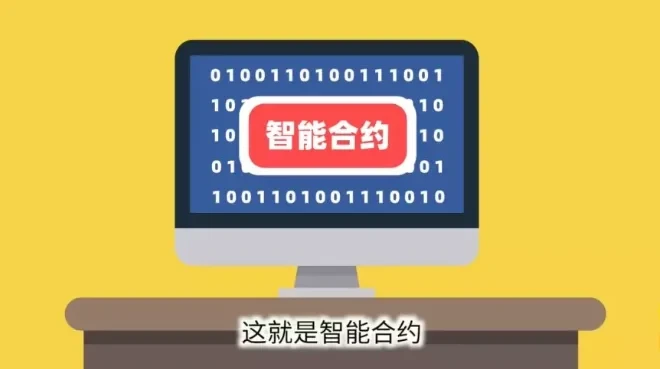
Although the concept of smart contracts was proposed quite early, large-scale deployment hadn't occurred due to technology and other reasons. Even today, while smart contracts have many applications on the internet — such as automatic loan repayments and unmanned vending — they are mostly limited to smart contracts between users and institutions, with almost no smart contracts between users and users.
Ultimately, the "trust" issue remains the barrier to smart contract development. We notice that despite the advancement of the internet, industrial technologies, and more, these technologies themselves are designed to handle relationships between things and solve efficiency problems.
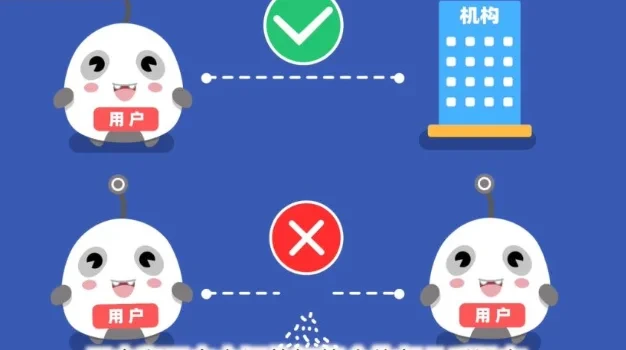
In daily life, when we talk about contracts, most involve strangers, and the contracts are often related to money. If we don't know each other and there's no third-party institution guaranteeing us, and we make an agreement — I send you money, but you break the contract and deny it — what do we do? This brings us to the trust issue between users.
This problem cannot be solved by the internet, industrial technologies, or technology itself, which is why third-party institutions were introduced, resulting in the current situation where smart contracts are mostly limited to institutions and users.

It wasn't until the emergence of blockchain technology that large-scale deployment of smart contracts between users became possible. Why is that? Because blockchain has many features, such as decentralization and immutability of data, which align perfectly with smart contracts. If we establish a smart contract through blockchain, you may not trust me, but all our contract data will be transparently recorded on the chain — data is traceable and cannot be tampered with. This solves the trust issue between strangers from a technical perspective.
It is precisely for this reason that, over time, smart contracts have become one of the core technologies of blockchain and serve as a key application focus for blockchain.
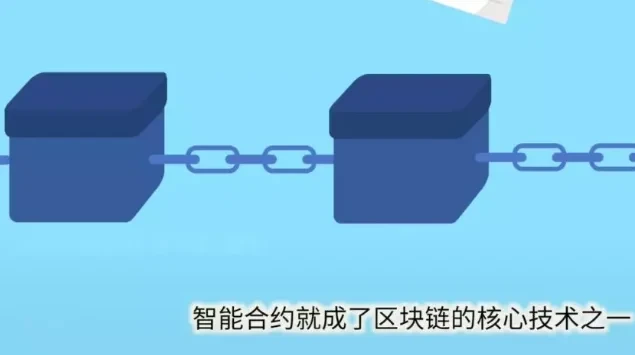
Smart contracts have many advantages. First, they eliminate intermediaries and can rely entirely on technology to allow users to independently establish contracts. Second, they are transparent and fair — smart contracts clearly state conditions in code and record them on the blockchain, with the entire process executed entirely by the program, so not even the developer who wrote the code can alter it. Third, they are flexible — allowing users to freely establish contracts with each other, even with a stranger from another country, through smart contracts.
Overall, smart contracts are one of the core technologies of blockchain. They not only play an execution role in blockchain but also represent a direction for blockchain applications, expanding blockchain's use cases. It is precisely because of their existence that blockchain has a broader stage.
Special thanks to Teacher Heiren for his assistance and guidance on the content of this episode.
Disclaimer
This article may contain product-related content not applicable to your region. This article is committed to providing general information only and does not accept responsibility for any factual errors or omissions. This article represents the author's personal views only and does not represent the views of OKX. This article is not intended to provide any advice, including but not limited to: (i) investment advice or investment recommendations; (ii) offers or solicitations to buy, sell, or hold digital assets; or (iii) financial, accounting, legal, or tax advice. Holding digital assets (including stablecoins) involves high risk and may fluctuate significantly or even become worthless. You should carefully consider whether trading or holding digital assets is appropriate for you based on your financial situation. For questions specific to your situation, please consult your legal/tax/investment professional. The information contained in this article (including market data and statistical information, if any) is for general reference only. While all reasonable precautions have been taken in preparing this data and these charts, we assume no responsibility for any factual errors or omissions expressed herein. © 2025 OKX. This article may be reproduced or distributed in its entirety, or excerpts of 100 words or less may be used, provided that such use is non-commercial. Any reproduction or distribution of the full article must prominently state: "This article is copyrighted © 2025 OKX, used with permission." Permitted excerpts must cite the article title and include the source, e.g., "Article title, [author name (if applicable)], © 2025 OKX." Some content may have been generated or assisted by AI tools. Derivative works and other uses of this article are not permitted.
Show More
Recommended Reading
OKX Blockchain 60 Lectures | Episode 43: The Rise of the Mining Circle (Part 2) — Bitmain's Rise
Hello everyone, I'm Xiao K. Today we're going to talk about: "The Rise of the Mining Circle (Part 2) — Bitmain's Rise". In the last class, we discussed that two people opened the door to mining circle capitalization and commercialization: Pumpkin Zhang — Zhang Nanjing, and Fried Cat — Jiang Xinyu. Although they jointly ushered in the golden age of the mining circle, the one who truly pushed the mining industry to its peak was someone else — and his name is Wu Jihan.
2025年9月18日
OKX Blockchain 60 Lectures | Episode 2: Why Is Blockchain Called Blockchain?
The "OKX Blockchain 60 Lectures" is a blockchain educational animated video series jointly produced by OKX and Sina Technology. Designed for users with zero knowledge of blockchain, it uses articles, animated explanations, and other formats to vividly explain blockchain concepts from the perspectives of concepts, technology, and applications through 5 major sections and 60 knowledge points. The content of this episode was guided and reviewed by Meng Yan, Deputy Dean of the Digital Assets Research Institute. In 2008, a global financial crisis erupted. On October 31st, "
2025年9月18日
OKX Blockchain 60 Lectures | Episode 16: What Is the PoW Consensus Mechanism?
The "OKX Blockchain 60 Lectures" is a blockchain educational animated video series jointly produced by OKX and Sina Technology. Designed for users with zero knowledge of blockchain, it uses articles, animated explanations, and other formats to vividly explain blockchain concepts from the perspectives of concepts, technology, and applications through 5 major sections and 60 knowledge points. The content of this episode was guided and reviewed by Huang Fangyu, Co-founder of Wanyou Computing Power. Hello everyone, I'm Xiao K. Today we're going to talk about:
2025年9月18日

OKX Blockchain 60 Lectures | Episode 51: 2019, Giants Enter the Scene — Facebook's Cryptocurrency Dream
Previously we discussed how, in 2018, as blockchain was overly hyped, a massive de-bubbling process began, and the entire industry entered a winter. But crisis and opportunity coexist. This cyclical downturn in the industry coincidentally gave international giants the best opportunity to enter the market. In February 2019, Wall Street financial giant JPMorgan Chase sounded the trumpet for international giants entering the blockchain space, followed by Goldman Sachs, UBS, Citibank, Microsoft, and other giants.
2025年9月18日
OKX Blockchain 60 Lectures | Episode 7: What Does a Fork in the Blockchain Mean?
The "OKX Blockchain 60 Lectures" is a blockchain educational animated video series jointly produced by OKX and Sina Technology. Designed for users with zero knowledge of blockchain, it uses articles, animated explanations, and other formats to vividly explain blockchain concepts from the perspectives of concepts, technology, and applications through 5 major sections and 60 knowledge points. The content of this episode was guided and reviewed by Boolean费墨, an Austrian School economist.所谓的区块链分叉, can说是区块链网络中独有的一
2025年9月18日
OKX Blockchain 60 Lectures | Episode 25: What Is the Lightning Network?
Hello everyone, I'm Xiao K. Today we're going to talk about: "What Is the Lightning Network"? The Lightning Network is a technology first proposed in 2015 by Joseph Poon and Thaddeus Dryja in a white paper, designed to solve Bitcoin trading congestion. This technology originated from a problem left over from Bitcoin's early days, because when Bitcoin was originally designed, a
2025年9月18日