
OKX Blockchain 60 Lectures | Episode 19: What Are the Functions of the Four Core Technologies?
"OKX Blockchain 60 Lectures" is a blockchain educational animated video co-produced by OKX & Sina Tech, targeting blockchain beginners. Through series articles, educational animations, and other forms, it explains blockchain concepts vividly from the perspectives of concepts, technology, and applications, covering 5 major sections and 60 knowledge points. The content of this episode was completed under the guidance of Wang Feng, founder of Mars Finance and Consensus Lab.
Hello everyone, I'm Little K. In previous lessons, I've already introduced to you how the four core technologies of blockchain actually work. So today, let's connect these four core technologies and summarize how do the four core technologies play their roles in blockchain?
Simply put, the four core technologies of blockchain are distributed ledger, consensus mechanism, cryptography, and smart contracts. They play the roles of data storage, data processing, data security, and data application in blockchain respectively. Specifically, their relationship is as follows:
First, the distributed ledger builds the framework of blockchain. It is essentially a distributed database. When a piece of data is generated and processed by everyone, it will be stored in this database. Therefore, the distributed ledger plays the role of data storage in blockchain.

Secondly, due to the decentralized nature of the distributed ledger, the blockchain network is determined to be a distributed structure where everyone can freely join and participate in data recording together. But at the same time, this has derived the headache-inducing "Byzantine Generals Problem," which means the more people participate in the network, the harder it is for the entire network to reach unity.
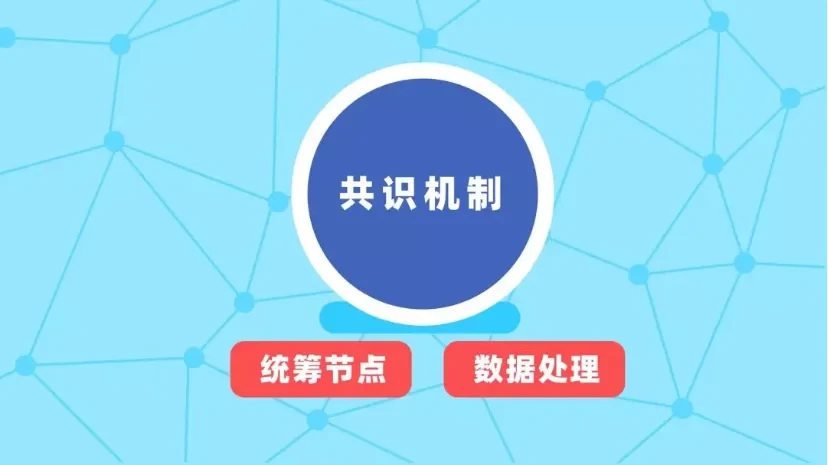
Thus, another mechanism is needed to coordinate all nodes to keep their accounts consistent. The consensus mechanism establishes a set of rules that clarifies the way everyone processes data, and achieves unity of opinions between nodes by competing for accounting rights. Finally, whoever obtains the accounting rights, the entire network uses the data processed by that person. Therefore, the consensus mechanism plays the role of coordinating node behavior and clarifying data processing in blockchain.
In addition, when data enters the distributed database, it's not simply packed in and done. The underlying data architecture is determined by blockchain cryptography.
The packed data blocks are processed into a chain-like structure through hash functions in cryptography. The latter block contains the hash value of the previous block. Because hash algorithms possess characteristics such as one-wayness and tamper resistance, once data is on the chain in the blockchain network, it cannot be tampered with and is traceable.
In addition, your account will also be encrypted through asymmetric encryption methods, thereby ensuring data security and verifying data ownership.

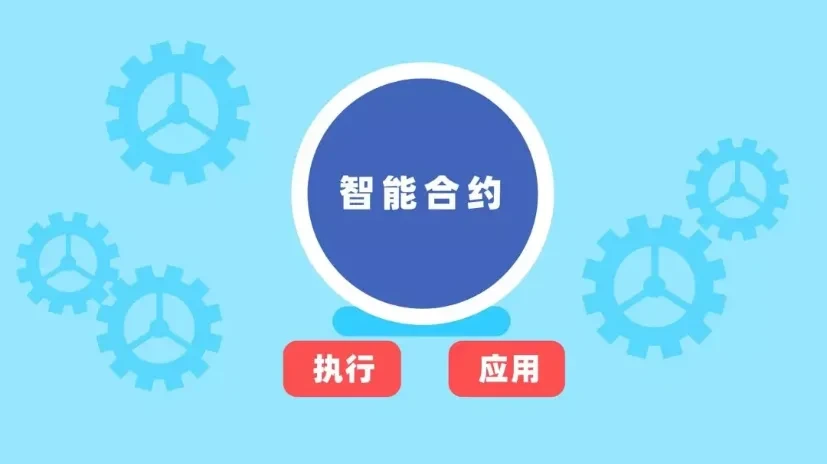
Finally, smart contracts at the application layer can be built on top of the distributed ledger. When we want to solve some trust issues, we can use smart contracts to clearly list the conditions between users in the form of code and execute them through programs. The data in blockchain can be called through smart contracts. Therefore, smart contracts play the role of data execution and application in blockchain.
In summary, the four core technologies each have their own roles in blockchain. Together they build the foundation of blockchain, and we are fortunate to be in it, welcoming a wave of belonging to the blockchain era.
Thanks to Teacher Wang Feng for his help and guidance with this episode's content.
Disclaimer
This article may contain product-related content that is not applicable to your region. This article is intended only to provide general information and does not accept responsibility for any factual errors or omissions therein. This article represents only the author's personal views and does not represent the views of OKX. This article is not intended to provide any of the following advice, including but not limited to: (i) investment advice or investment recommendations; (ii) offers or solicitations to buy, sell or hold digital assets; or (iii) financial, accounting, legal or tax advice. Holding digital assets (including stablecoins) involves high risk, may fluctuate significantly, and may even become worthless. You should carefully consider whether trading or holding digital assets is suitable for you based on your financial situation. For questions regarding your specific situation, please consult your legal/tax/investment professional. The information appearing in this article (including market data and statistics, if any) is for general reference only. Although we have taken all reasonable precautions in preparing these data and charts, we assume no responsibility for any factual errors or omissions expressed herein. © 2025 OKX. This article may be reproduced or distributed in its entirety, or excerpts of 100 words or less from this article may be used, provided that such use is non-commercial. Any reproduction or distribution of the entire article must also prominently state: "This article is copyrighted © 2025 OKX, used with permission." Permitted excerpts must cite the article name and include attribution, for example "Article Name, [Author Name (if applicable)], © 2025 OKX". Some content may be generated or assisted by artificial intelligence (AI) tools. Derivative works or other uses of this article are not permitted.
Show More
Recommended Reading
OKX Blockchain 60 Lectures | Episode 43: The Rise of the Mining Circle (Part 2) — The Rise of Bitmain
Hello everyone, I'm Little K. Today we're going to talk about: "The Rise of the Mining Circle (Part 2) — The Rise of Bitmain". In the last lesson, we talked about two people who pushed open the door to mining capital and commercialization. One is Pumpkin Zhang—Zhang Nangeng, and the other is Fried Cat—Jiang Xinyu. Although they jointly opened the golden era of the mining circle, the person who really pushed the mining industry to its peak was someone else, and this person's name is Wu Jihan.
September 18, 2025
OKX Blockchain 60 Lectures | Episode 2: Why Is Blockchain Called Blockchain?
"OKX Blockchain 60 Lectures" is a blockchain educational animated video co-produced by OKX & Sina Tech, targeting blockchain beginners. Through series articles, educational animations, and other forms, it explains blockchain concepts vividly from the perspectives of concepts, technology, and applications, covering 5 major sections and 60 knowledge points. The content of this episode was completed under the guidance of Teacher Meng Yan, Vice Dean of the Digital Assets Research Institute. In 2008, a global financial crisis broke out. On October 31, "
September 18, 2025

OKX Blockchain 60 Lectures | Episode 16: What Is PoW Consensus Mechanism
"OKX Blockchain 60 Lectures" is a blockchain educational animated video co-produced by OKX & Sina Tech, targeting blockchain beginners. Through series articles, educational animations, and other forms, it explains blockchain concepts vividly from the perspectives of concepts, technology, and applications, covering 5 major sections and 60 knowledge points. The content of this episode was completed under the guidance of Mentor Huang Fangyu, Co-founder of Universal Computing Power. Hello everyone, I'm Little K. Today we're going to talk about:
September 18, 2025

OKX Blockchain 60 Lectures | Episode 51: 2019, Giants Enter, Facebook's Cryptocurrency Dream
Previously we talked about how in 2018, as blockchain was hyped into excessive prosperity, it began a vigorous process of de-foaming, and the entire industry entered a cold winter. But danger and opportunity coexist. This cyclical decline of the industry also happened to give international giants the best timing to enter. In February 2019, Wall Street financial behemoth JPMorgan Chase thoroughly sounded the clarion call for international giants entering the blockchain field. Thereafter, Goldman Sachs, UBS, Citigroup, Microsoft, and other giants
September 18, 2025

OKX Blockchain 60 Lectures | Episode 7: What Does Fork in Blockchain Mean?
"OKX Blockchain 60 Lectures" is a blockchain educational animated video co-produced by OKX & Sina Tech, targeting blockchain beginners. Through series articles, educational animations, and other forms, it explains blockchain concepts vividly from the perspectives of concepts, technology, and applications, covering 5 major sections and 60 knowledge points. The content of this episode was completed under the guidance of Mentor Buer Feimo, an Austrian School economist. The so-called blockchain fork can be said to be unique in the blockchain network, a
September 18, 2025

OKX Blockchain 60 Lectures | Episode 25: What Is Lightning Network?
Hello everyone, I'm Little K. Today we're going to talk about: "What Is Lightning Network"? The so-called Lightning Network was first proposed in a white paper in 2015 by Joseph Poon and Thaddeus Dryja to solve the problem of Bitcoin trading congestion. The origin of this technology stems from a problem left over from Bitcoin's early days. Because when Bitcoin was first designed, a
September 18, 2025