OKX Blockchain 60 Lectures | Episode 2: Why is Blockchain Called Blockchain?
"OKX Blockchain 60 Lectures" is a blockchain educational animated video series co-produced by OKX & Sina Tech, aimed at users with zero blockchain knowledge. Through series articles, educational animations, and other forms, it vividly explains blockchain concepts from the perspectives of concept, technology, and applications, covering 5 major sections and 60 knowledge points. The content of this episode was completed under the guidance of Teacher Meng Yan, Vice Dean of the Digital Assets Research Institute.
In 2008, a global financial crisis erupted. On October 31, "Satoshi Nakamoto" published a paper titled "Bitcoin: A Peer-to-Peer Electronic Cash System," describing the working model of Bitcoin.
On January 3, 2009, Satoshi Nakamoto mined the first batch of Bitcoin on a small server in Helsinki, Finland, marking the birth of Bitcoin.
On May 22, 2010, a programmer spent 10,000 Bitcoin to purchase two pizzas, giving Bitcoin a price for the first time.
Bitcoin, as the first application of blockchain, is well-known to everyone. However, as an underlying technology, blockchain is certainly not well understood by everyone. Why is blockchain called blockchain?
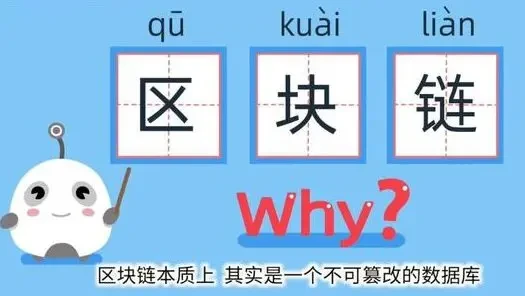
To understand this problem, we need to start with the data structure of blockchain. Blockchain is called blockchain because it is composed of data blocks and "chains" - the data blocks formed during data upload are linked together in chronological order, forming a chain structure.
Simply put, we all know that the internet world is a huge network database, and blockchain is essentially an immutable database. During the data upload process, data is packaged together to form individual data blocks. This is somewhat like a factory packing fruit into glass bottles to produce canned fruit. The packaged data blocks also have another academic name called "blocks."
A block is the basic storage unit of this database, recording all trading information between nodes that participate in maintaining the network within a certain period of time. Each time a series of transactions is generated for bookkeeping, they are packaged into a block. For example, when Bitcoin was first born, on January 3, 2009, Satoshi Nakamoto established the first block on a small server in Helsinki, Finland, also known as the genesis block, and then mined the first batch of Bitcoin.
Since it is a database, the data within needs to be verified and protected. Therefore, the blockchain database links each block together through a cryptographic method in chronological order, making the entire database more secure and trustworthy.
The specific cryptographic method used here is the hash algorithm, also known as the hash function, which can be used to calculate something called a hash value. Each block must attach the hash value of the previous block at the beginning to achieve association.
The characteristic of this function is that as long as the input data changes, even if only one small character is changed, the entire hash value will be completely different. This means that once someone wants to maliciously tamper with data in previous blocks, the subsequent hash values will change, thereby being discovered by others, thus ensuring the security of the database.
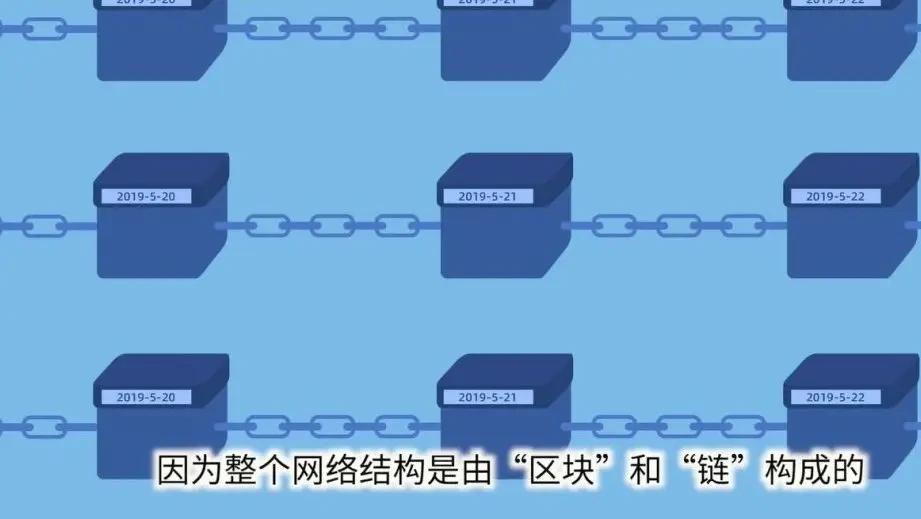
When all blocks are connected one by one through the hash algorithm, like an iron chain, a chain data structure is formed. Because of blockchain's chain structure, in the original English version of the Bitcoin white paper, it was vividly called "chain of blocks," that is, a chain composed of blocks. Later, in the earliest Chinese translation of the Bitcoin white paper, it was translated as "区块链" (blockchain), and over time it became known as blockchain,即blockchain.
As a new technology, although blockchain's name is somewhat unique, its prospects are very broad. Its special chain structure determines that this technology has the characteristics of data immutability and traceability. These characteristics are widely favored by financial institutions. For example, when banks conduct amount settlements and record information, blockchain's immutability and traceability characteristics can make records unalterable and trace the flow of every fund, thereby making financial trading more secure and trustworthy.
Therefore, blockchain and finance are inherently complementary. Finance provides application scenarios for blockchain, while blockchain provides secure soil for finance. In addition, in today's information internet age, there are indeed many information security issues that cause trust costs between users and users, and between users and enterprises to continue to grow. Blockchain's characteristics正好 provide technical support for solving these trust issues. If the internet led the revolution of information transmission, then perhaps one day, blockchain will lead the revolution of data trust like the internet. Let us look forward to it together!
Thank you to Mentor Meng Yan for his help and support with this episode's content.
Disclaimer
This article may contain product-related content that is not applicable to your region. This article is intended to provide general information only and does not take responsibility for any factual errors or omissions therein. This article represents only the author's personal views and does not represent the views of OKX. This article is not intended to provide any of the following advice, including but not limited to: (i) investment advice or investment recommendations; (ii) offers or solicitations to buy, sell, or hold digital assets; or (iii) financial, accounting, legal, or tax advice. Holding digital assets (including stablecoins) involves high risk, may fluctuate significantly, and may even become worthless. You should carefully consider whether trading or holding digital assets is suitable for you based on your financial situation. For questions about your specific situation, please consult your legal/tax/investment professional. The information appearing in this article (including market data and statistics, if any) is for general reference only. Although we have taken all reasonable precautions in preparing these data and charts, we accept no responsibility for any factual errors or omissions expressed herein. © 2025 OKX. This article may be reproduced or distributed in its entirety, or excerpts of 100 words or less from this article may be used, provided that such use is non-commercial. Any reproduction or distribution of the entire article must also prominently state: "This article is copyrighted © 2025 OKX, used with permission." Permitted excerpts must cite the article name and include the source, for example "Article Name, [Author Name (if applicable)], © 2025 OKX". Some content may be generated or assisted by artificial intelligence (AI) tools. Derivative works or other uses of this article are not permitted.
Show More
Recommended Reading
OKX Blockchain 60 Lectures | Episode 43: The Rise of the Mining Circle (Part 2) — The Rise of Bitmain
Hello everyone, I'm Xiao K Jun. Today we're going to talk about: "The Rise of the Mining Circle (Part 2) — The Rise of Bitmain." In the last class, we mentioned that there were two people who opened the door to capital and commercialization in the mining circle: one was Pumpkin Zhang—Zhang Nan Geng, and the other was Roast Cat—Jiang Xinyu. Although they jointly started the golden era of the mining circle, the person who truly pushed the mining industry to its peak was someone else, and this person's name is Wu Jihan.
September 18, 2025
OKX Blockchain 60 Lectures | Episode 16: What is the PoW Consensus Mechanism
"OKX Blockchain 60 Lectures" is a blockchain educational animated video series co-produced by OKX & Sina Tech, aimed at users with zero blockchain knowledge. Through series articles, educational animations, and other forms, it vividly explains blockchain concepts from the perspectives of concept, technology, and applications, covering 5 major sections and 60 knowledge points. The content of this episode was completed under the guidance of Mentor Huang Fangyu, co-founder of Wanyou Computing Power. Hello everyone, I'm Xiao K Jun. Today we're going to talk about:
September 18, 2025

OKX Blockchain 60 Lectures | Episode 51: 2019, Giants Enter, Facebook's Cryptocurrency Dream
Previously we mentioned that in 2018, as blockchain was hyped into excessive prosperity, it began a vigorous de-bubbling process, and the entire industry entered a cold winter. However, crisis and opportunity coexist. This cyclical decline in the industry恰好 gave international giants the best opportunity to enter. In February 2019, Wall Street financial beast JP Morgan Chase thoroughly blew the horn for international giants entering the blockchain field. Thereafter, Goldman Sachs, UBS, Citi, Microsoft, and other giants
September 18, 2025
OKX Blockchain 60 Lectures | Episode 7: What Does Fork in Blockchain Mean?
"OKX Blockchain 60 Lectures" is a blockchain educational animated video series co-produced by OKX & Sina Tech, aimed at users with zero blockchain knowledge. Through series articles, educational animations, and other forms, it vividly explains blockchain concepts from the perspectives of concept, technology, and applications, covering 5 major sections and 60 knowledge points. The content of this episode was completed under the guidance of Mentor Buer Feimo, an Austrian school economist. The so-called blockchain fork can be said to be unique to blockchain networks
September 18, 2025

OKX Blockchain 60 Lectures | Episode 25: What is Lightning Network?
Hello everyone, I'm Xiao K Jun. Today we're going to talk about: "What is Lightning Network"? The so-called Lightning Network was first proposed in a white paper in 2015 by Joseph Poon and Thaddeus Dryja as a technology to solve Bitcoin trading congestion. The origin of this technology stems from a problem left over from Bitcoin's early days. Because when Bitcoin was first designed, one
September 18, 2025
OKX Blockchain 60 Lectures | Episode 22: What is a Timestamp?
"OKX Blockchain 60 Lectures" is a blockchain educational animated video series co-produced by OKX & Sina Tech, aimed at users with zero blockchain knowledge. Through series articles, educational animations, and other forms, it vividly explains blockchain concepts from the perspectives of concept, technology, and applications, covering 5 major sections and 60 knowledge points. The content of this episode was completed under the guidance of Mentor Shao Jianliang, General Manager of Canaan Creative Blockchain. Hello everyone, I'm Xiao K Jun. Today we're going to talk about
September 18, 2025