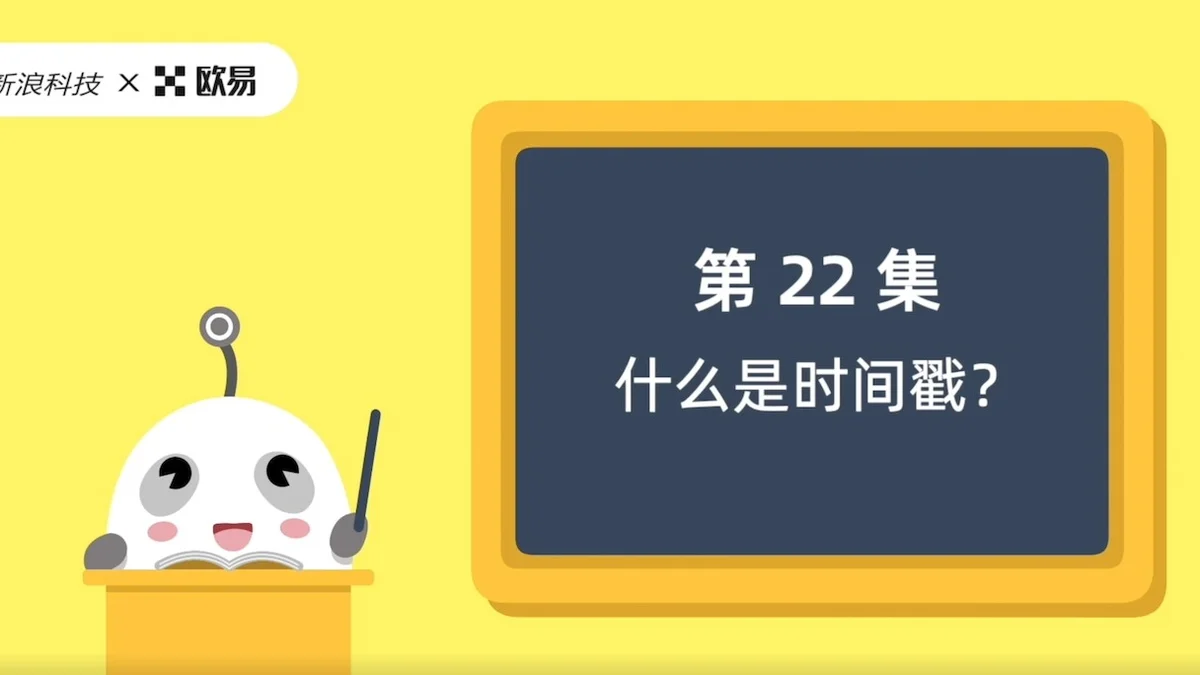
OKX Blockchain 60 Lectures | Episode 22: What is a Timestamp?
"OKX Blockchain 60 Lectures" is a blockchain educational animated video co-produced by OKX and Sina Tech, targeting users with zero blockchain knowledge. Through series articles, educational animations, and other forms, it explains blockchain concepts vividly from the perspectives of concepts, technology, and applications, covering 5 major sections and 60 knowledge points. The content of this episode was completed under the guidance of instructor Shao Jianliang, General Manager of Cannao Blockchain.
Hello everyone, I'm Little K. Today we're going to talk about: "What is a timestamp"?
Previously, we explained that UTXO is the first type of solution to the double-spending problem, but there's another scenario in the double-spending problem: double spending after recording. That is, although a sum of money was only used once, what if someone copies it through hacking a bank or using fake methods and uses it again? To solve this problem, blockchain introduces the concept of timestamps.
According to the official definition, a timestamp is a type of data that can indicate that other data existed completely at a specific time and can be verified. It is generally a character sequence that uniquely identifies a specific moment in time.
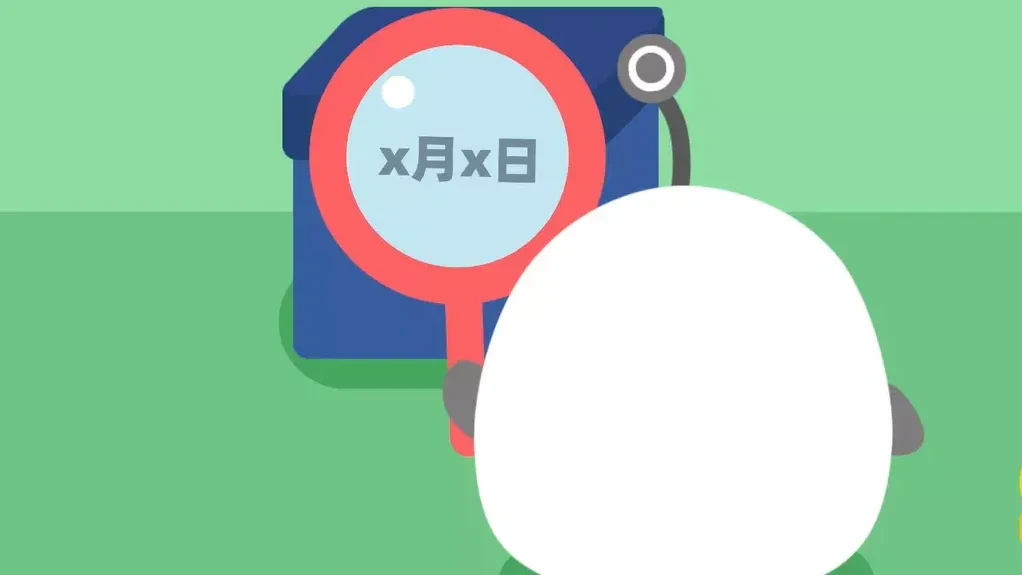
There are two key points in this sentence: First, a timestamp is also a type of data; Second, a timestamp can prove that other data already existed completely at what time point. So, simply put, a timestamp is equivalent to the production date of data and serves as a means of data verification.
In blockchain, timestamps have a very close relationship with cryptography. It can actually be said to be an application of cryptography. Its working principle is as follows:

Step 1, nodes first perform hash encryption on the information in the block to generate an information digest, which is the hash value.
Step 2, after generation, the node sends a timestamp request to the relevant timestamp server, which then extracts the hash value and time information of the data.
Step 3, the timestamp server signs these extracted hash values and time information, which means encrypting them again, stamping them with a time mark, and generating a timestamp.
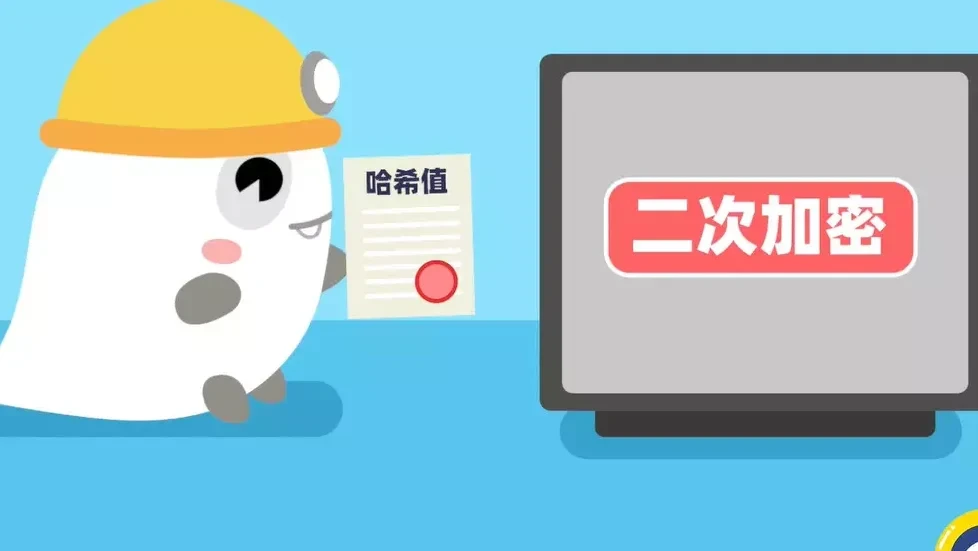
The final step is that the generated timestamp data is bound with transaction information and returned to the system.
The entire process in blockchain is: we first encrypt the data, then place it in another location for notarization, using secondary encryption as proof, and then put the proven information into the next block for packaging. This process is continuously repeated, finally forming a decentralized distributed system that has undergone both hash algorithm and timestamp encryption.
The advantage of this is that it improves the immutability of the blockchain, because every piece of data has been encrypted a second time in the timestamp, with relevant time records. And when blocks are connected, time ordering is performed on top of the hash algorithm. If someone wants to tamper with the data, they not only need to break the hash algorithm but also change the timestamp.
The reason timestamps can solve the second type of problem in double spending is that they serve an anti-counterfeiting function. On one hand, timestamps improve the security of the blockchain, making it difficult for hackers to tamper with. On the other hand, the system automatically stamps time marks on every block's transaction information as identification. What time you spent how much money is all recorded. Anything without this mark is obviously "fake money."
In summary, timestamps play a very important role in blockchain. They make each block nested layer by layer in chronological order, further strengthening the security factor of blockchain. It is precisely because of their existence that the "fake money" problem in blockchain is no longer a problem.
Thank you to Teacher Shao Jianliang for his help and guidance with this episode.
Sina Weibo: @邵建良kevinshao
Disclaimer
This article may contain product-related content that is not applicable to your region. This article is intended to provide general information only and does not assume responsibility for any factual errors or omissions herein. This article represents only the author's personal views and does not represent the views of OKX. This article is not intended to provide any of the following advice, including but not limited to: (i) investment advice or investment recommendations; (ii) offers or solicitations to buy, sell, or hold digital assets; or (iii) financial, accounting, legal, or tax advice. Holding digital assets (including stablecoins) involves high risk, may fluctuate significantly, and may even become worthless. You should carefully consider whether trading or holding digital assets is suitable for you based on your financial situation. For questions regarding your specific situation, please consult your legal/tax/investment professional. The information appearing in this article (including market data and statistics, if any) is for general reference only. Although we have taken all reasonable precautions in preparing these data and charts, we assume no responsibility for any factual errors or omissions expressed herein. © 2025 OKX. This article may be reproduced or distributed in full, or excerpts of 100 words or less from this article may be used, provided that such use is non-commercial. Any reproduction or distribution of the entire article must also prominently state: "© 2025 OKX, used with permission." Permitted excerpts must cite the article name and include attribution, for example "Article Name, [Author Name (if applicable)], © 2025 OKX". Some content may be generated or assisted by artificial intelligence (AI) tools. Derivative works or other uses of this article are not permitted.
Show More
Recommended Reading
OKX Blockchain 60 Lectures | Episode 43: The Rise of the Mining Circle (Part 2) — The Rise of Bitmain
Hello everyone, I'm Little K. Today we're going to talk about: "The Rise of the Mining Circle (Part 2) — The Rise of Bitmain". In the last lesson, we mentioned that there were two people who opened the door to mining capital and commercialization: one was Pumpkin Zhang—Zhang Nangeng, and the other was Roasted Cat—Jiang Xinyu. Although they jointly started the golden age of the mining circle, the person who truly pushed the mining industry to its peak was someone else, and that person's name is Wu Jihan.
September 18, 2025
OKX Blockchain 60 Lectures | Episode 2: Why is Blockchain Called Blockchain?
"OKX Blockchain 60 Lectures" is a blockchain educational animated video co-produced by OKX and Sina Tech, targeting users with zero blockchain knowledge. Through series articles, educational animations, and other forms, it explains blockchain concepts vividly from the perspectives of concepts, technology, and applications, covering 5 major sections and 60 knowledge points. The content of this episode was completed under the guidance of Teacher Meng Yan, Vice Dean of the Digital Assets Research Institute. In 2008, a global financial crisis broke out. On October 31, "
September 18, 2025
OKX Blockchain 60 Lectures | Episode 16: What is the PoW Consensus Mechanism
"OKX Blockchain 60 Lectures" is a blockchain educational animated video co-produced by OKX and Sina Tech, targeting users with zero blockchain knowledge. Through series articles, educational animations, and other forms, it explains blockchain concepts vividly from the perspectives of concepts, technology, and applications, covering 5 major sections and 60 knowledge points. The content of this episode was completed under the guidance of instructor Huang Fangyu, co-founder of WanYou Computing Power. Hello everyone, I'm Little K. Today we're going to talk about:
September 18, 2025
OKX Blockchain 60 Lectures | Episode 51: 2019, Giants Enter, Facebook's Cryptocurrency Dream
Previously we mentioned that in 2018, as blockchain was hyped into excessive prosperity, a vigorous de-foaming process began, and the entire industry entered a cold winter. But crisis and opportunity coexist. This cyclical downturn in the industry happened to give international giants the best opportunity to enter. In February 2019, Wall Street financial behemoth JP Morgan Chase sounded the clarion call for international giants to enter the blockchain field. Since then, Goldman Sachs, UBS, Citigroup, Microsoft, and other giants
September 18, 2025
OKX Blockchain 60 Lectures | Episode 7: What Does Fork Mean in Blockchain?
"OKX Blockchain 60 Lectures" is a blockchain educational animated video co-produced by OKX and Sina Tech, targeting users with zero blockchain knowledge. Through series articles, educational animations, and other forms, it explains blockchain concepts vividly from the perspectives of concepts, technology, and applications, covering 5 major sections and 60 knowledge points. The content of this episode was completed under the guidance of instructor Buer Feimo, an Austrian School economist. The so-called blockchain fork can be said to be unique to the blockchain network, a
September 18, 2025
OKX Blockchain 60 Lectures | Episode 25: What is Lightning Network?
Hello everyone, I'm Little K. Today we're going to talk about: "What is Lightning Network"? The so-called Lightning Network is a technology first proposed in a white paper by Joseph Poon and Thaddeus Dryja in 2015 to solve Bitcoin transaction congestion. The origin of this technology stems from a problem left over from Bitcoin's early days. Because when Bitcoin was first designed, one
September 18, 2025