
OKX Blockchain 60 Lectures | Episode 29: What is Bitcoin?
Hello everyone, I'm Xiao K, and today we're going to talk about: "What is Bitcoin"?
Bitcoin is the pioneer of cryptocurrency. Originally, Bitcoin held the ideal of becoming "currency," but over time, more and more people have treated it as an investment commodity. Currently, many national governments define it as a virtual asset—similar to gold—making it an investment vehicle.
For example, in 2013, the People's Bank of China and four other ministries issued the "Notice on Preventing Bitcoin Risks," stating: "Bitcoin is not a currency in the true sense and cannot be used as currency in market circulation. Financial payment institutions shall not engage in Bitcoin-related transactions. However, Bitcoin trading as a commodity buying and selling activity on the internet is a matter of free participation for ordinary citizens, provided they bear the risks themselves."
Bitcoin's theoretical foundation is Hayek's "Denationalization of Money" (Nobel Prize in Economics, 1974). Hayek believed that just as competition among TV manufacturers allows us to buy better TVs, currencies also need market competition. Competition among different currencies can prevent hyperinflation and provide us with better, more stable currencies.
For a long time, Hayek's vision remained a fantasy, because issuing currency requires credibility, and no privately issued currency could compete in credibility with government-issued legal tender. It wasn't until Bitcoin—based on mathematical algorithms—was born that Hayek's vision became a reality.
Bitcoin's birth was set against the backdrop of the 2008 financial crisis. The US was experiencing a subprime crisis, and the financial markets erupted in a liquidity crisis. To rescue the crisis, the US came up with a rather恶劣 measure: printing money, euphemistically called "quantitative easing (QE)." So in the period that followed, the quantity of US dollars rapidly increased. Since the entire international system uses the US dollar as the settlement tool, the result of the US printing money was that the US levied seigniorage from the entire world, the world collectively bore the consequences of US dollar depreciation, and together helped the US pay off its debts.

At this time, a mysterious figure named "Nakamoto" wondered whether it was possible to design a currency with a fixed total supply, a completely transparent issuance mechanism, executed entirely by algorithmic code, and not controlled by any government or institution—wouldn't that fundamentally solve the problem of currency over-issuance?
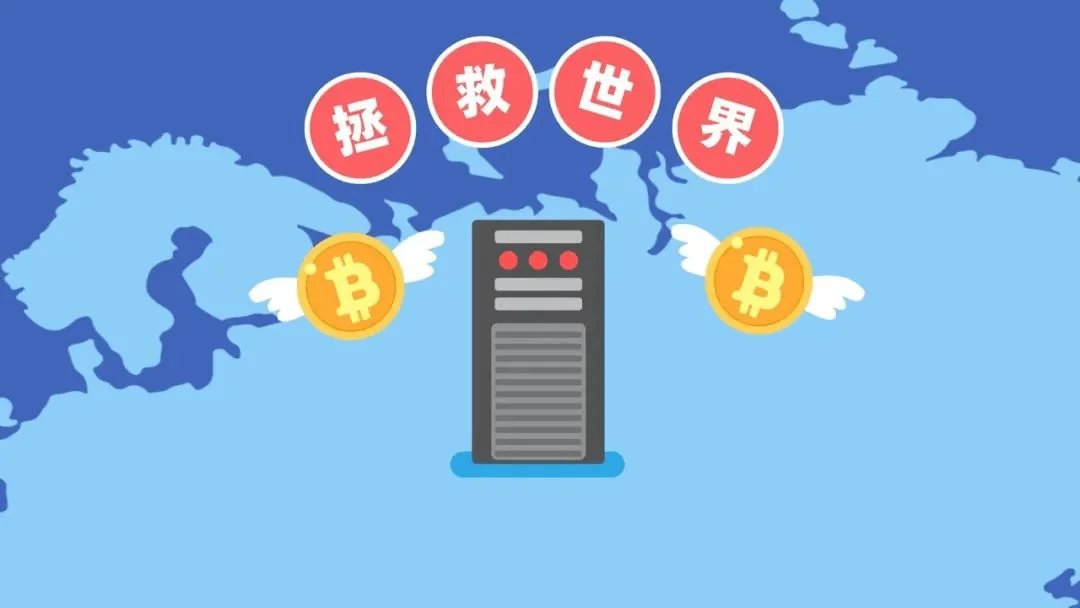
So on November 1, 2008, Nakamoto published Bitcoin's whitepaper on the internet — "A Peer-to-Peer Electronic Cash System." And on January 3, 2009, Nakamoto created the first block of the Bitcoin system—the Bitcoin Genesis Block. And thus, Bitcoin—carrying the dream of saving the world—was born.
As a non-political, non-centralized alternative to fiat currency systems, Bitcoin—as Hayek envisioned—has indeed played a role in payment and settlement in certain areas. For example, Iran is rich in oil, and according to the principles of international division of labor and economic freedom, Iran should trade oil with other countries. But due to the US blockade of Iran, Iran cannot use the US dollar for international trade settlement. Therefore, many Iranians use Bitcoin for foreign trade settlement. These needs constitute genuine刚需 demand for Bitcoin.
On November 29, 2018, the US Treasury Department announced the blocking of two Bitcoin addresses belonging to Iranians in the "Specially Designated Nationals List." However, due to Bitcoin's decentralized nature, even a government as powerful as the US cannot block Iranians' Bitcoin addresses the way it can block bank accounts. Decentralized Bitcoin, unlike banks, has no central point that the US government can order or strike at. This has made Bitcoin Iran's only global foreign trade settlement channel not blocked by the US.
But at the same time, due to Bitcoin's decentralized nature and the lack of a central bank to stabilize its value, Bitcoin's price has experienced extreme highs and lows, making it difficult to use for pricing goods. Therefore, at the current stage, for most users, Bitcoin is more like an investment speculative vehicle rather than a currency.
Bitcoin's polarizing evaluations—"blockchain revolution" versus "scam bubble"—combined with an unregulated global trading market, cause Bitcoin to frequently experience extreme price swings. For example, during Bitcoin's 2016–2017 halving bull market, it first surged 100x from 1,300 yuan to 130,000 yuan, then crashed 85% to 20,000 yuan. Therefore, there are far more people "trading Bitcoin" than there are "using Bitcoin."
Currently, due to Bitcoin's characteristics of "fixed total supply" and "economic freedom," some investors treat it as an investment vehicle similar to "digital gold" or "first-tier city real estate." This represents a deviation from Hayek's and Nakamoto's ideal of a "global currency" and "electronic cash." This is also an interesting result of free market development.

Overall, Bitcoin is a groundbreaking product. It was born with beautiful aspirations but has been regarded by many as a scam. What cannot be denied is that it has indeed brought many innovations in internet and financial services in areas such as blockchain technology. In 2020, the financial crisis occurred once again, and Bitcoin—which was born from the 2008 financial crisis—once again entered the public eye.
To this day, Bitcoin has gone through 10 years and has become a trillion-dollar market. I believe that as Bitcoin gradually enters our daily lives, more and more people will come to understand the ideals and aspirations behind Bitcoin.
"OKX Blockchain 60 Lectures" is a blockchain educational animated video series jointly produced by OKX and Sina Technology. Aimed at users with zero knowledge of blockchain, it uses articles, animated explanations, and other formats to vividly introduce blockchain concepts through five major sections and 60 knowledge points, covering concepts, technology, and applications. The content of this episode was reviewed and completed by Jiang Zhuo'er, founder of the Btc.top Mining Pool.
Disclaimer
This article may contain product-related content not applicable to your region. This article is committed to providing general information only and does not accept responsibility for any factual errors or omissions. This article represents the author's personal views only and does not represent the views of OKX. This article is not intended to provide any advice, including but not limited to: (i) investment advice or investment recommendations; (ii) offers or solicitations to buy, sell, or hold digital assets; or (iii) financial, accounting, legal, or tax advice. Holdings of digital assets (including stablecoins) involve high risk and may experience significant volatility or even become worthless. You should carefully consider whether trading or holding digital assets is suitable for you based on your financial situation. For questions about your specific circumstances, please consult your legal/tax/investment professional. The information contained in this article (including market data and statistical information, if any) is for general reference purposes only. Although we have taken all reasonable precautions in preparing this data and these charts, we do not accept any responsibility for factual errors or omissions expressed herein. © 2025 OKX. This article may be reproduced or distributed in its entirety, or excerpts of 100 words or less may be used, provided that such use is non-commercial in nature. Any reproduction or distribution of the full article must prominently state: "This article is copyrighted © 2025 OKX, used with permission." Permitted excerpts must cite the article name and include attribution, e.g., "Article name, [author name (if applicable)], © 2025 OKX." Some content may have been generated or assisted by artificial intelligence (AI) tools. Derivative works or other uses of this article are not permitted.
Show More
Recommended Reading
OKX Blockchain 60 Lectures | Episode 43: The Rise of the Mining Circle (Part 2) — The Rise of Bitmain
Hello everyone, I'm Xiao K, and today we're going to talk about: "The Rise of the Mining Circle (Part 2) — The Rise of Bitmain." In the last lesson, we talked about the two people who opened the door to capitalization and commercialization of the mining circle. One was "Pumpkin Zhang"—Zhang Nan-geng, and the other was "烤猫"—Jiang Xin-yu. Although they jointly ushered in the golden age of the mining circle, the one who truly pushed the mining industry to its peak was someone else—and that person's name is Wu Jie-han.
2025年9月18日

OKX Blockchain 60 Lectures | Episode 2: Why Is Blockchain Called Blockchain?
"OKX Blockchain 60 Lectures" is a blockchain educational animated video series jointly produced by OKX and Sina Technology. Aimed at users with zero knowledge of blockchain, it uses articles, animated explanations, and other formats to vividly introduce blockchain concepts through five major sections and 60 knowledge points, covering concepts, technology, and applications. The content of this episode was reviewed and completed by Meng Yan, Deputy Dean of the Digital Assets Research Institute. In 2008, a global financial crisis erupted. On October 31, "
2025年9月18日

OKX Blockchain 60 Lectures | Episode 16: What Is the PoW Consensus Mechanism
"OKX Blockchain 60 Lectures" is a blockchain educational animated video series jointly produced by OKX and Sina Technology. Aimed at users with zero knowledge of blockchain, it uses articles, animated explanations, and other formats to vividly introduce blockchain concepts through five major sections and 60 knowledge points, covering concepts, technology, and applications. The content of this episode was reviewed and completed by Huang Fang-yu, Co-founder of Wanyou Computing Power. Hello everyone, I'm Xiao K. Today we're going to talk about:
2025年9月18日

OKX Blockchain 60 Lectures | Episode 51: 2019, Tech Giants Enter the Market, Facebook's Cryptocurrency Dream
Previously, we discussed how in 2018, as blockchain was hyped beyond its means, a grand wave of de-bubbling began, and the entire industry entered a winter. However, where there is danger, there is also opportunity. This periodic downturn in the industry also coincidentally gave international giants the best timing to enter the market. In February 2019, Wall Street financial beast JPMorgan Chase completely sounded the horn for international giants to enter the blockchain field. From then on, giants such as Goldman Sachs, UBS, Citibank, and Microsoft
2025年9月18日

OKX Blockchain 60 Lectures | Episode 7: What Does a Fork in the Blockchain Mean?
"OKX Blockchain 60 Lectures" is a blockchain educational animated video series jointly produced by OKX and Sina Technology. Aimed at users with zero knowledge of blockchain, it uses articles, animated explanations, and other formats to vividly introduce blockchain concepts through five major sections and 60 knowledge points, covering concepts, technology, and applications. The content of this episode was reviewed and completed by Boolean费墨, an Austrian School economist. The so-called fork in the blockchain can be said to be a unique occurrence in blockchain networks.
2025年9月18日

OKX Blockchain 60 Lectures | Episode 25: What Is the Lightning Network?
Hello everyone, I'm Xiao K, and today we're going to talk about: "What Is the Lightning Network"? The Lightning Network was first proposed in 2015 by Joseph Poon and Thaddeus Dryja in a whitepaper as a technology to solve Bitcoin trading congestion. This technology originated from a problem left over from Bitcoin's early days. Because when Bitcoin was first designed,
2025年9月18日