OKX Blockchain 60 Lectures | Episode 33: What is Ethereum?
Hello everyone, I'm Xiao K. Today we're going to talk about: "What is Ethereum".
Ethereum is the most groundbreaking project in cryptocurrency after Bitcoin, because in the early days, blockchain technology was limited to cryptocurrency, and not many people paid attention to this technology. It wasn't until the emergence of Ethereum that this situation changed. So, if Bitcoin is the origin of blockchain, then Ethereum propelled the development of blockchain.
Simply put, Ethereum is an open-source blockchain public platform that allows everyone to freely develop smart contracts. Just like Android or Windows in the internet world, it provides a dedicated scripting language that allows everyone to freely develop various blockchain applications on it.
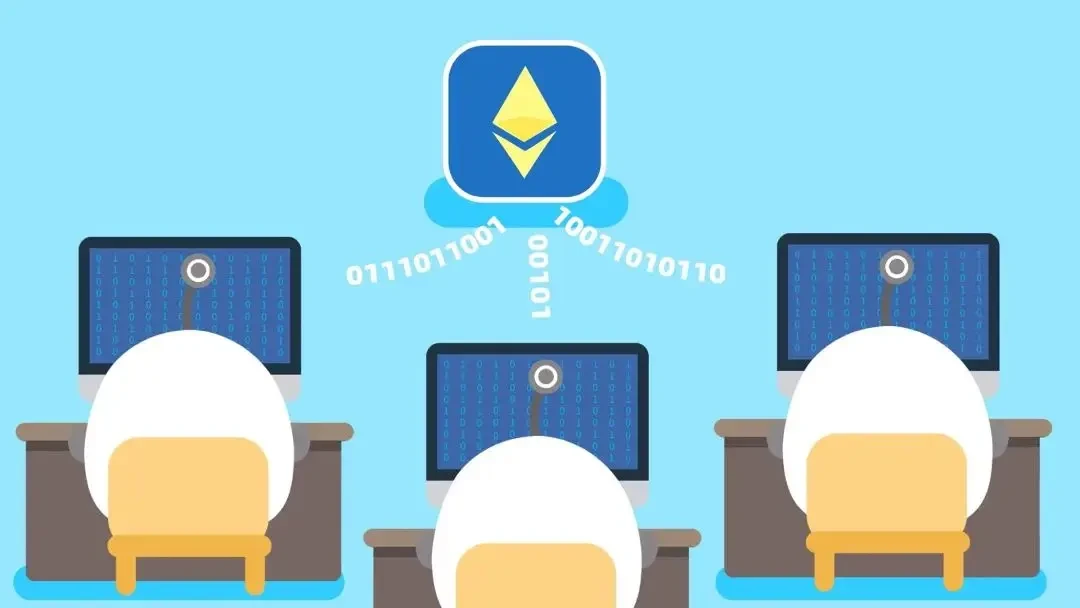
Moreover, this platform is not like traditional internet platforms that concentrate power. Ethereum is strongly decentralized. Changes to the entire system are decided by the developers and users on the platform. Programs developed on it, whether in terms of permissions or data, are entirely owned by individual users. Even the founder cannot modify the code without the community's consent.
Gas Mechanism and Ether
Some of you might be wondering: Since Ethereum is a platform, what does it have to do with cryptocurrency? This is where Ethereum's Gas mechanism comes in.
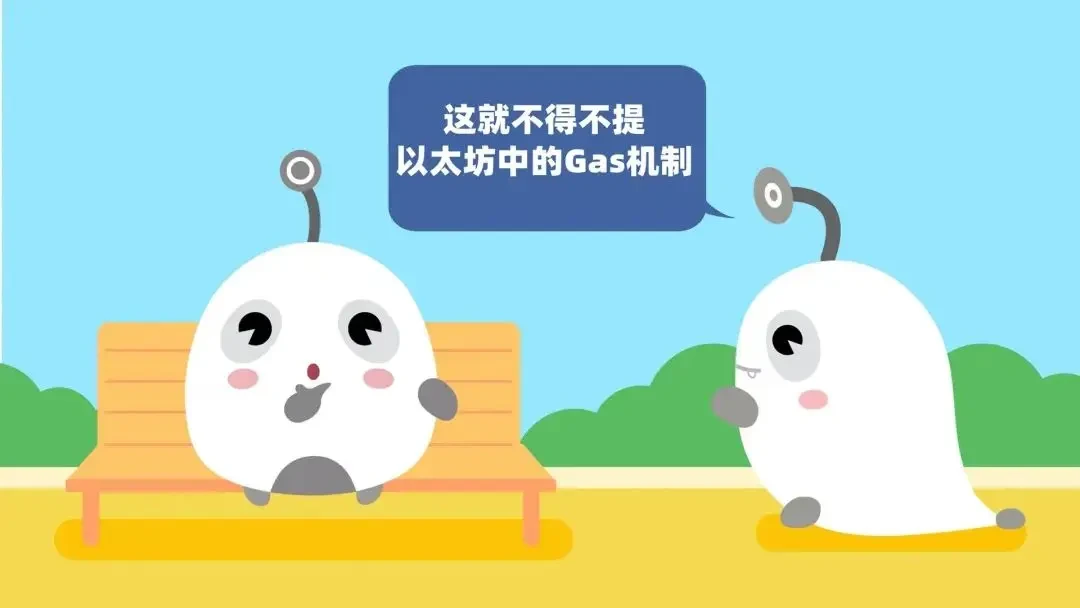
For Ethereum, smart contracts are an absolutely critical core. However, in Ethereum's operating mechanism, all user-written smart contracts need to be executed through a thing called a virtual machine as the medium, and this medium is maintained by all participating miners in the Ethereum network, forming a computing network belonging to Ethereum.
When users want to execute smart contracts, they all need to go through this computing network for processing, while also consuming a certain amount of network resources. Naturally, users need to bear the corresponding costs. In the Ethereum network, the standard for measuring the operating cost of smart contracts is Gas.
Ethereum's specific definition of Gas is: Gas is the fuel for running smart contracts, and it is consumed according to certain rules.

As such, if users want to execute smart contracts, they need to purchase Gas from miners. However, since Ethereum's users are spread across the globe, trading through fiat currency channels poses problems, whether it's cross-border transfers or currency exchange rates.
Therefore, Ethereum followed Bitcoin's mechanism and created its own internal cryptocurrency system (because the essence of cryptocurrency trading is information transmission, which can perfectly solve cross-border payment issues). It can serve as an incentive mechanism, obtained by miners through mining, motivating miners, and it can also serve as a payment method to purchase Gas, acting as a handling fee.
So, while Ethereum's positioning is that of a blockchain-based operating system, it has also established its own cryptocurrency system. And what we usually refer to as Ethereum cryptocurrency is exactly this.

From the release of Ethereum's whitepaper in 2013 to today, it has been over five years. It has had a very clear roadmap from the very beginning. Ethereum development is divided into four phases: Frontier, Homestead, Metropolis, and Serenity.

Frontier is the first phase of the Ethereum network. This phase is the initial stage of the Ethereum network, and the entire system is not yet fully mature. At this stage, there is only a command-line interface, no graphical interface, and it is mainly suitable for developers.
The second phase, Homestead, optimized Ethereum's protocol, making the Ethereum network run more smoothly and securely, speeding up the network's trading speed, and lowering the barrier to entry for ordinary users.
The third phase, Metropolis, is divided into two parts: Byzantium and Constantinople. The Byzantium upgrade mainly improved Ethereum's trading efficiency and security, making Ethereum smart contracts suitable for commercial trading. The Constantinople upgrade mainly reduced block rewards, lowered development difficulty, sped up network processing, and delayed the difficulty bomb.
The fourth phase, Serenity, will completely transition from PoW to PoS mechanism, officially entering the Ethereum 2.0 era.
Overall, Ethereum has had a milestone impact on the entire blockchain industry. The reason is that it opened the door to blockchain 2.0 and uncovered more possibilities for blockchain. As for how it achieved this? Let me keep you in suspense — we'll talk more about it in the next lesson~
Disclaimer
This article may contain product-related content that does not apply to your region. This article is only committed to providing general information and does not accept responsibility for any factual errors or omissions. This article represents only the author's personal views and does not represent OKX's views. This article is not intended to provide any advice, including but not limited to: (i) investment advice or investment recommendations; (ii) offers or solicitations to buy, sell, or hold digital assets; or (iii) financial, accounting, legal, or tax advice. Holding digital assets (including stablecoins) involves high risk and may fluctuate significantly or even become worthless. You should carefully consider whether trading or holding digital assets is appropriate for you based on your financial situation. For questions about your specific circumstances, please consult your legal/tax/investment professional. The information contained in this article (including market data and statistics, if any) is for general reference purposes only. Although we have taken all reasonable precautions in preparing such data and charts, we do not accept any responsibility for any factual errors or omissions expressed herein. © 2025 OKX. This article may be reproduced or distributed in its entirety, or excerpts of 100 words or less may be used, provided that such use is non-commercial. Any reproduction or distribution of the full article must prominently state: "This article is copyrighted © 2025 OKX, used with permission." Permitted excerpts must cite the article title and include the source, for example, "Article title, [Author name (if applicable)], © 2025 OKX". Some content may be generated or assisted by artificial intelligence (AI) tools. Derivative works and other uses of this article are not permitted.
Show More
Recommended Reading
OKX Blockchain 60 Lectures | Episode 43: The Rise of the Mining Circle (Part 2) — The Rise of Bitmain
Hello everyone, I'm Xiao K. Today we're going to talk about: "The Rise of the Mining Circle (Part 2) — The Rise of Bitmain". In the last lesson, we talked about two people who opened the door to the capitalization and commercialization of the mining circle. One of them was Nanogu Zhang (Zhang Nangeng), and the other was Crypto Kitty (Jiang Xinyu). Although they jointly opened the golden age of the mining circle, the person who truly pushed the mining industry to its peak was someone else, and his name is Wu Jihan.
September 18, 2025
OKX Blockchain 60 Lectures | Episode 2: Why is Blockchain Called Blockchain?
"OKX Blockchain 60 Lectures" is a blockchain popular science animation video jointly produced by OKX and Sina Technology. Aimed at users with zero knowledge of blockchain, through series articles, popular science animations, and other forms, from the perspectives of concepts, technology, and applications, through 5 major sections and 60 knowledge points, it vividly and clearly popularizes blockchain concepts. The content of this lesson was guided by Meng Yan, Deputy Dean of the Digital Assets Research Institute. In 2008, a global financial crisis erupted. On October 31st, "
September 18, 2025

OKX Blockchain 60 Lectures | Episode 16: What is the PoW Consensus Mechanism?
"OKX Blockchain 60 Lectures" is a blockchain popular science animation video jointly produced by OKX and Sina Technology. Aimed at users with zero knowledge of blockchain, through series articles, popular science animations, and other forms, from the perspectives of concepts, technology, and applications, through 5 major sections and 60 knowledge points, it vividly and clearly popularizes blockchain concepts. The content of this lesson was guided by Huang Fangyu, Co-founder of Wanyou Computing Power. Hello everyone, I'm Xiao K. Today we're going to talk about:
September 18, 2025

OKX Blockchain 60 Lectures | Episode 51: 2019, Giants Enter, Facebook's Cryptocurrency Dream
Previously, we talked about how in 2018, as blockchain was hyped beyond sustainability, it began a vigorous de-bubble process, and the entire industry entered a winter. However, danger and opportunity coexist. This periodic downturn in the industry just gave international giants the best time to enter the market. In February 2019, JPMorgan Chase, the Wall Street financial beast, completely sounded the horn for international giants to enter the blockchain field. Subsequently, giants such as Goldman Sachs, UBS, Citigroup, and Microsoft
September 18, 2025
OKX Blockchain 60 Lectures | Episode 7: What Does a Fork in the Blockchain Mean?
"OKX Blockchain 60 Lectures" is a blockchain popular science animation video jointly produced by OKX and Sina Technology. Aimed at users with zero knowledge of blockchain, through series articles, popular science animations, and other forms, from the perspectives of concepts, technology, and applications, through 5 major sections and 60 knowledge points, it vividly and clearly popularizes blockchain concepts. The content of this lesson was guided by Boolean Fee Ink (Bure Feimo), an Austrian School economist. The fork in the blockchain can be said to be a unique feature of the blockchain network.
September 18, 2025

OKX Blockchain 60 Lectures | Episode 25: What is the Lightning Network?
Hello everyone, I'm Xiao K. Today we're going to talk about: "What is the Lightning Network"? The Lightning Network is a technology first proposed in 2015 by Joseph Poon and Thaddeus Dryja in a whitepaper to solve Bitcoin trading congestion. This technology arose from a problem left over from Bitcoin's early days. Because when Bitcoin was first designed,
September 18, 2025