
OKX Blockchain 60 Lessons | Episode 34: What Impact Has Ethereum Brought?
Hello everyone, I'm Xiao K. Today we're going to talk about: "What Impact Has Ethereum Brought?"
Many people don't understand why Ethereum is the project with the greatest impact on the industry after Bitcoin, or why Ethereum is considered the creator of Blockchain 2.0. The reason is that Ethereum is an innovator—it was the first to apply blockchain technology to other industries and to find new directions for the blockchain space.
Before the emergence of Ethereum, blockchain product applications were very limited. Aside from Bitcoin, there were only some "altcoin" projects whose source code was very similar to Bitcoin's, meaning blockchain technology had essentially made no substantial progress. It wasn't until Ethereum appeared that this fixed pattern was broken.

So what did Ethereum do? Vitalik Buterin, Ethereum's founder, proposed building an operating system-level platform similar to Android or iOS using blockchain technology. Ethereum's core has two aspects:
On one hand, at the underlying data management layer, Ethereum built a decentralized database using the PoS consensus mechanism, giving users ownership of their own data rather than having it controlled by centralized third-party institutions, thereby creating a truly public network infrastructure.
On the other hand, at the application layer, Ethereum provided a programming language allowing developers to create blockchain applications (dApps) of varying complexity tailored to their needs. These applications can be social, trading, gaming, and more. The core of blockchain application development is smart contracts. Smart contracts are a technology that defines rules through code methods—once the conditions of a "smart contract" are triggered, the code is automatically executed by the program.
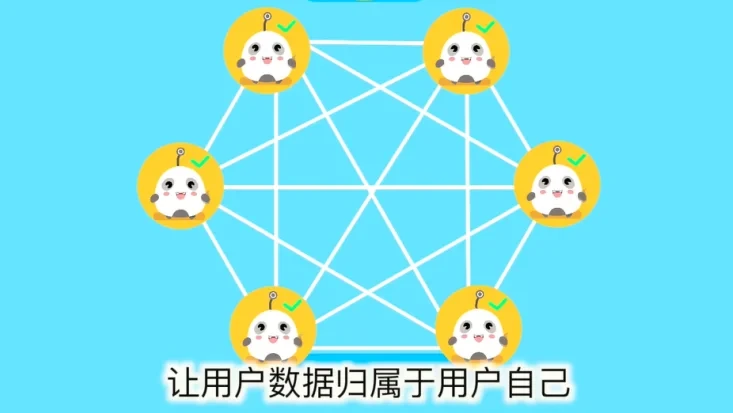
This model brought two very important impacts. The first was freeing blockchain from the limitations of cryptocurrency and achieving complete independence, because Ethereum proved that blockchain's approach to data management has its own unique advantages: traceable and immutable data, and the ability to establish trust between users without third-party involvement.
The other impact is that Ethereum enabled a leap forward in blockchain technology application. Because the combination of smart contracts and the underlying decentralized database can fully bypass third-party institutions through technical means, allowing direct user-to-user relationships and solving the trust problem. Therefore, any activity that requires trust as a foundation can utilize the Ethereum platform.
Since then, whether it's applications of smart contracts by financial institutions like banks and cross-border payment providers, or research in data infrastructure by public institutions like hospitals, logistics companies, and governments—all signify that Ethereum has made the commercialization of blockchain technology a reality.

If we say that Bitcoin—providing new ideas and technical means for value transfer—represented the era of cryptocurrency, i.e., Blockchain 1.0, then public chain projects after Ethereum represent the Blockchain 2.0 era, greatly expanding blockchain application scenarios and making commercial blockchain applications a reality. That's why we say Ethereum is the first blockchain project to open the door to Blockchain 2.0 and bring it to the world.
Overall, as Ethereum has developed to this day, it has had its highs and lows, been praised and also faced controversy, but it has always stayed on the path of being a "smart contract platform," continuously iterating without ever straying. Perhaps one day in the future, Ethereum will truly fulfill the platform dream it has described.
Disclaimer
This article may contain product content that does not apply to your region. This article is only committed to providing general information and is not responsible for any factual errors or omissions. This article represents the author's personal views only and does not represent OKX's views. This article is not intended to provide any advice, including but not limited to: (i) investment advice or investment recommendations; (ii) offers or solicitations to buy, sell, or hold digital assets; or (iii) financial, accounting, legal, or tax advice. Holdings of digital assets (including stablecoins) involve high risk and may fluctuate significantly, or even become worthless. You should carefully consider whether trading or holding digital assets is suitable for you based on your financial situation. For questions about your specific circumstances, please consult your legal/tax/investment professional. Any information appearing in this article (including market data and statistical information, if any) is for general reference purposes only. Although we have taken all reasonable precautions in preparing such data and charts, we do not accept any responsibility for any factual errors or omissions expressed herein. © 2025 OKX. This article may be reproduced or distributed in its entirety, or excerpts of 100 words or less may be used, provided that such use is non-commercial. Any reproduction or distribution of the full article must prominently state: "This article is copyrighted © 2025 OKX, used with permission." Permitted excerpts must cite the article name and include the source, e.g., "Article name, [author name (if applicable)], © 2025 OKX". Some content may have been generated or assisted by artificial intelligence (AI) tools. Derivative works and other uses of this article are not permitted.
Show More
Recommended Reading

OKX Blockchain 60 Lessons | Episode 43: The Rise of the Mining Circle (Part 2) — The Rise of Bitmain
Hello everyone, I'm Xiao K. Today we're going to talk about: "The Rise of the Mining Circle (Part 2) — The Rise of Bitmain." In the last class, we talked about two people who opened the door to mining circle capitalism and commercialization. One was "Pumpkin Zhang"—Zhang Nangeng, and the other was "Fried Cat"—Jiang Xinyu. Although they jointly ushered in the golden age of the mining circle, the one who truly elevated mining to its peak was someone else—and that person's name is Wu Jihan.
2025年9月18日

OKX Blockchain 60 Lessons | Episode 2: Why Is Blockchain Called Blockchain?
"OKX Blockchain 60 Lessons" is a blockchain educational animation series jointly produced by OKX and Sina Technology, targeting users with zero blockchain knowledge. Through articles, educational animations, and other formats, it covers blockchain concepts from multiple angles—from ideas to technology to applications—using 5 major sections and 60 knowledge points to vividly explain blockchain concepts. The content of this episode was guided by Meng Yan, Deputy Dean of the Digital Assets Research Institute. In 2008, a global financial crisis erupted. On October 31st, "
2025年9月18日

OKX Blockchain 60 Lessons | Episode 16: What Is the PoW Consensus Mechanism
"OKX Blockchain 60 Lessons" is a blockchain educational animation series jointly produced by OKX and Sina Technology, targeting users with zero blockchain knowledge. Through articles, educational animations, and other formats, it covers blockchain concepts from multiple angles—from ideas to technology to applications—using 5 major sections and 60 knowledge points to vividly explain blockchain concepts. The content of this episode was guided by Huang Fangyu, Co-founder of Wanyou Computing Power. Hello everyone, I'm Xiao K. Today we're going to talk about:
2025年9月18日

OKX Blockchain 60 Lessons | Episode 51: 2019, Giants Enter the Arena, Facebook's Cryptocurrency Dream
Previously, we discussed how in 2018, as blockchain was being overly hyped, a dramatic de-bubbling process began and the entire industry entered a winter. However, where there is danger, there is also opportunity. This cyclical downturn恰好给了国际巨头们入场的最佳时机. In February 2019, Wall Street financial giant JPMorgan Chase sounded the horn for international giants to enter the blockchain space. Subsequently, giants such as Goldman Sachs, UBS, Citi, and Microsoft
2025年9月18日

OKX Blockchain 60 Lessons | Episode 7: What Does a Fork in the Blockchain Mean?
"OKX Blockchain 60 Lessons" is a blockchain educational animation series jointly produced by OKX and Sina Technology, targeting users with zero blockchain knowledge. Through articles, educational animations, and other formats, it covers blockchain concepts from multiple angles—from ideas to technology to applications—using 5 major sections and 60 knowledge points to vividly explain blockchain concepts. The content of this episode was guided by Boolean Fee Mo, an Austrian School economist. A fork in the blockchain can be said to be a unique phe
2025年9月18日

OKX Blockchain 60 Lessons | Episode 25: What Is the Lightning Network?
Hello everyone, I'm Xiao K. Today we're going to talk about: "What Is the Lightning Network"? The Lightning Network is a technology first proposed in 2015 by Joseph Poon and Thaddeus Dryja in a whitepaper to solve Bitcoin trading congestion. The reason for this technology stems from a problem left over from Bitcoin's early days. Because when Bitcoin was originally designed, a
2025年9月18日