
OKX Blockchain 60 Lectures | Episode 36: The Origin of Bitcoin
Hello everyone, this is Xiao K. Today we'll be talking about: "The Origin of Bitcoin"
Just like the stories in all great novels, great things always have a hidden past. Bitcoin is no exception. Bitcoin originated from a mysterious organization known as the Cypherpunks.
Initially, this organization was simply a private gathering in 1992, organized by three retired tech veterans: Eric Hughes, a mathematician at UC Berkeley; Tim May, a former Intel employee; and John Gilmore, a computer scientist; along with twenty friends they invited, primarily to discuss programming and cryptography.

After this gathering, participants felt this format worked well, and it gradually evolved into a monthly meeting. At the first meeting, Judy Milhon, a hacker and cryptography writer, officially named this organization Cypherpunk.
Once an organization is formed, it usually has a shared belief. The belief of the Cypherpunk organization can be understood from the Cypherpunk manifesto—a foundational document written by co-founder Eric Hughes, which includes this passage: "In the digital age, privacy is essential for open societies. Privacy is not the same as secrecy. Privacy is something you don't want the world to know about, but secrecy is something you don't want anybody to know. Privacy is a power. It gives individuals the right to decide what to disclose and what to keep private."

Therefore, the shared belief of this organization is to use cryptographic methods to create a world where freedom and personal privacy are perfectly protected, thereby achieving spiritual freedom for individuals in cyberspace.
The organization then began to grow and develop. They established an open mailing list forum to reach cryptography enthusiasts worldwide. In a very short time, this mailing list attracted the attention of other enthusiasts. Geeks from around the globe freely expressed their views, discussing topics ranging from mathematics and cryptography to politics and philosophy—all-encompassing. Everyone shared the common beliefs of personal privacy protection and libertarianism.
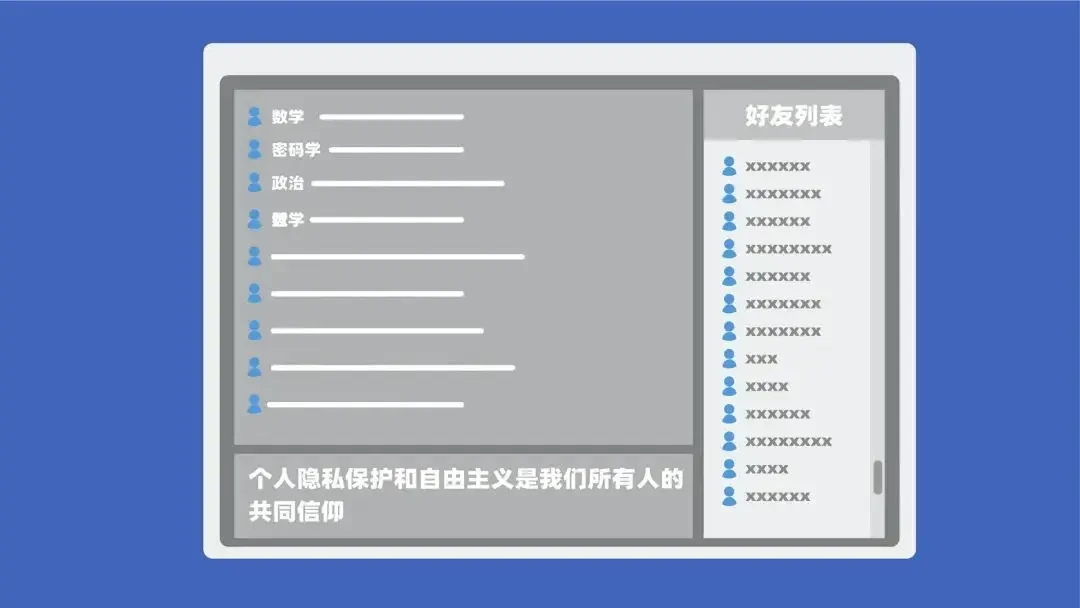
Under such an atmosphere, it came as no surprise that some Cypherpunks began considering the decentralization of "currency." In fact, as early as 1982, a pioneer named David Chaum proposed a groundbreaking idea: he wanted to enable traditional currency to exist in a fully digital form, transferred freely and anonymously over the network. He designed Ecash based on Chaumian blinding technology, but Ecash never gained popularity because it relied on a centralized intermediary.
Over the next decade, from 1997 to 2007, Cypherpunks began陆续 attempting to turn this vision into reality:
● 1997, Adam Back designed Hashcash, introducing the concept of computational difficulty (the precursor to PoW).
● 1998, Chinese-American cryptographer Wei Dai designed B-Money, proposing the idea of creating currency through decentralized consensus.
● 1998, Nick Szabo designed Bit Gold, introducing the proof-of-work mechanism (PoW) and the concept of smart contracts.
● 2005, Hal Finney introduced the concept of "Reusable Proof of Work" (RPOW), which combined the ideas of B-money with Adam Back's Hashcash computational puzzle to create a cryptographic currency.
Although all these projects ultimately failed, their efforts were not in vain. The underlying technologies were accumulated over generations—PoW, digital signatures, smart contracts, and other foundational technologies and concepts were pioneered by successive generations of Cypherpunks over twenty years. The concept of digital cryptocurrency was passed on like a sacred flame, from one torchbearer to the next, finally blooming in 2008.

The 2008 financial crisis erupted, and on November 1, 2008, building on the theories and practices of those who came before, the mysterious figure Satoshi Nakamoto published the Bitcoin whitepaper, "Bitcoin: A Peer-to-Peer Electronic Cash System," on the Cypherpunk mailing list, opening the door to the next decade.
Disclaimer
This article may contain product-related content that does not apply to your region. This article is intended solely to provide general information and does not accept responsibility for any factual errors or omissions. The views expressed herein are those of the author and do not represent the views of OKX. This article is not intended to provide any advice, including but not limited to: (i) investment advice or investment recommendations; (ii) offers or solicitations to buy, sell, or hold digital assets; or (iii) financial, accounting, legal, or tax advice. Holding digital assets (including stablecoins) involves high risk and may be subject to significant price fluctuations, and may even become worthless. You should carefully consider whether trading or holding digital assets is appropriate for you based on your financial situation. For questions specific to your circumstances, please consult your legal/tax/investment professional. Any information contained in this article (including market data and statistics, if applicable) is provided for general reference purposes only. Although we have taken all reasonable precautions in preparing such data and charts, we accept no responsibility for any factual errors or omissions expressed herein. © 2025 OKX. This article may be reproduced or distributed in its entirety, or excerpts of 100 words or less may be used, provided that such use is non-commercial. Any reproduction or distribution of the full article must prominently state: "This article is copyrighted © 2025 OKX, used with permission." Permitted excerpts must cite the article title and include the source, for example, "Article Title, [Author Name (if applicable)], © 2025 OKX." Some content may have been generated or assisted by artificial intelligence (AI) tools. Derivative works or other uses of this article are not permitted.
Show More
Recommended Reading

OKX Blockchain 60 Lectures | Episode 43: The Rise of the Mining Industry (Part 2) — The Rise of Bitmain
Hello everyone, this is Xiao K. Today we'll be talking about: "The Rise of the Mining Industry (Part 2) — The Rise of Bitmain." In the last lesson, we discussed that two people opened the door to the commercialization of the mining industry: "Pumpkin Zhang" (Zhang Nangeng) and "Fried Cat" (Jiang Xinyu). Although together they ushered in the golden age of the mining industry, the person who truly propelled the mining business to its peak was someone else—Wu Jihan.
September 18, 2025

OKX Blockchain 60 Lectures | Episode 2: Why Is Blockchain Called Blockchain?
"OKX Blockchain 60 Lectures" is a blockchain education animation series jointly produced by OKX and Sina Technology, designed for users with zero knowledge of blockchain. Through articles, animated videos, and other formats, it covers blockchain concepts from the perspectives of concepts, technology, and applications through 5 major sections and 60 key points, vividly explaining blockchain concepts. The content for this episode was guided by Meng Yan, Deputy Dean of the Digital Assets Research Institute. In 2008, a global financial crisis erupted. On October 31, "
September 18, 2025

OKX Blockchain 60 Lectures | Episode 16: What Is the PoW Consensus Mechanism
"OKX Blockchain 60 Lectures" is a blockchain education animation series jointly produced by OKX and Sina Technology, designed for users with zero knowledge of blockchain. Through articles, animated videos, and other formats, it covers blockchain concepts from the perspectives of concepts, technology, and applications through 5 major sections and 60 key points, vividly explaining blockchain concepts. The content for this episode was guided by Huang Fangyu, Co-founder of Wanyou Computing Power. Hello everyone, this is Xiao K. Today we'll be talking about:
September 18, 2025

OKX Blockchain 60 Lectures | Episode 51: 2019, Giants Enter the Arena — Facebook's Cryptocurrency Dream
Previously, we discussed how 2018 saw blockchain being excessively hyped, leading to a vigorous de-bubble process, and the entire industry entered a winter. However, danger and opportunity coexist. This periodic downturn in the industry happened to provide the optimal timing for international giants to enter the market. In February 2019, Wall Street financial giant JPMorgan Chase sounded the horn for international giants entering the blockchain space, followed by Goldman Sachs, UBS, Citibank, Microsoft, and other giants.
September 18, 2025

OKX Blockchain 60 Lectures | Episode 7: What Does a Fork in the Blockchain Mean?
"OKX Blockchain 60 Lectures" is a blockchain education animation series jointly produced by OKX and Sina Technology, designed for users with zero knowledge of blockchain. Through articles, animated videos, and other formats, it covers blockchain concepts from the perspectives of concepts, technology, and applications through 5 major sections and 60 key points, vividly explaining blockchain concepts. The content for this episode was guided by Austrian School economist Bulfeimo. A fork in the blockchain can be said to be unique to blockchain networks—
September 18, 2025

OKX Blockchain 60 Lectures | Episode 25: What Is the Lightning Network?
Hello everyone, this is Xiao K. Today we'll be talking about: "What Is the Lightning Network"? The Lightning Network refers to a technology first proposed in 2015 by Joseph Poon and Thaddeus Dryja in a whitepaper, designed to solve Bitcoin trading congestion. This technology originated from a problem left over from Bitcoin's early days. Because when Bitcoin was originally designed, each
September 18, 2025