
OKX Blockchain 60 Lectures | Episode 48: The Story of Bitcoin Forks
BCH-1. 67%
In our last lesson, we discussed how in 2017, with Ethereum's gradual rise, a wave of blockchain revolution was approaching. In addition to this, another major event occurred that year that would influence Bitcoin's future trajectory: Bitcoin's first fork.
The story begins with Bitcoin's block capacity. When Satoshi Nakamoto first designed Bitcoin in 2008, to ensure stable synchronization of the Bitcoin network, the block capacity was set at 1M. However, some pointed out that a 1M block every ten minutes could only accommodate 2,000 trading transactions. If Bitcoin succeeded and many people worldwide used Bitcoin, this would clearly be insufficient. Satoshi proposed increasing this capacity limit one year before the expected 1M would be full, to avoid Bitcoin network congestion.

In 2010, after Satoshi Nakamoto's departure, Bitcoin's code updates and maintenance were handed over to Gavin. In 2012, following a decentralized direction, Gavin transferred code permissions to the Bitcoin core development team—Bitcoin Core's four main developers—while focusing himself on writing code.
In 2015, Bitcoin trading growth predicted that 1M blocks would be full by January 2016, putting capacity expansion on the agenda. But it wasn't proposed by Bitcoin Core; rather, it was put forward by the already retired veteran Gavin, while Core's core members opposed expansion. Beyond concerns about hard fork upgrade security and the belief that small blocks are easier for ordinary people to run, the key reason was that several Core members raised $72 million to form their own company Blockstream to engage in sidechain development. If the main chain expanded, sidechains would have no market demand for several years. Therefore, they advocated Bitcoin not expanding, instead achieving expansion through the Lightning Network and sidechains.

Gavin's expansion proposal faced strong resistance from Core's main developers. For this reason, he came to China to seek support from Chinese miners. As block capacity became increasingly exhausted, most Chinese miners recognized the importance of expansion but also had to rely on the Core development team's technical strength, preferring expansion under Core's leadership.
By 2016, due to Bitcoin's second bull market, Bitcoin prices rose from approximately 2,800 yuan at the beginning of the year to over 6,800 yuan, reaching a three-year high, with total market capitalization exceeding $15 billion. User numbers and trading volumes increased significantly. Starting in July, the Bitcoin system began experiencing persistent congestion, with confirmation times generally exceeding 10 minutes, and trading fees rising to several times their original levels.

Chinese miners widely recognized the urgency of expansion. On February 20, 2016, Chinese miners invited overseas developers to a meeting at Hong Kong's Cyberport to discuss expansion issues. The developers agreed to expand Bitcoin to 8M, and in exchange, Chinese miners agreed to run only Core, no longer supporting Gavin's version—the so-called "Hong Kong Consensus."
The sidelined Gavin, in the 2016 fake Satoshi Nakamoto incident, saw his reputation ruined after naively believing CSW was Satoshi Nakamoto. The expansion faction lost an important force. The Hong Kong Consensus was not honored by Core's main developers, and expansion code made virtually no progress. Chinese miners were greatly disappointed. Wu Jihan and others began seeking new teams to develop Bitcoin's expansion version independently of Core, including later BU and ABC teams, who began developing their own Bitcoin versions.

At this point, block congestion had made commercial enterprises in the Bitcoin ecosystem universally recognize the urgency of expansion. At a New York meeting attended by more than 50 important global companies, the "New York Consensus" to expand to 2M was reached. However, Core's main members firmly opposed the New York Consensus and announced they would never support 2M blocks. In this situation, if the New York Consensus were implemented, it would inevitably lead to a Bitcoin fork.
Concerned about the possible failure of the New York Consensus, Wu Jihan proposed creating an expansion fork version as a backup plan in case the New York Consensus failed. In June 2017, the ABC development team completed the Bitcoin version expanded to 8M—Bitcoin Cash (BCH)—which officially launched on August 1, 2017. However, most expansion supporters, including Wu Jihan, still regarded the New York Consensus as their primary hope.
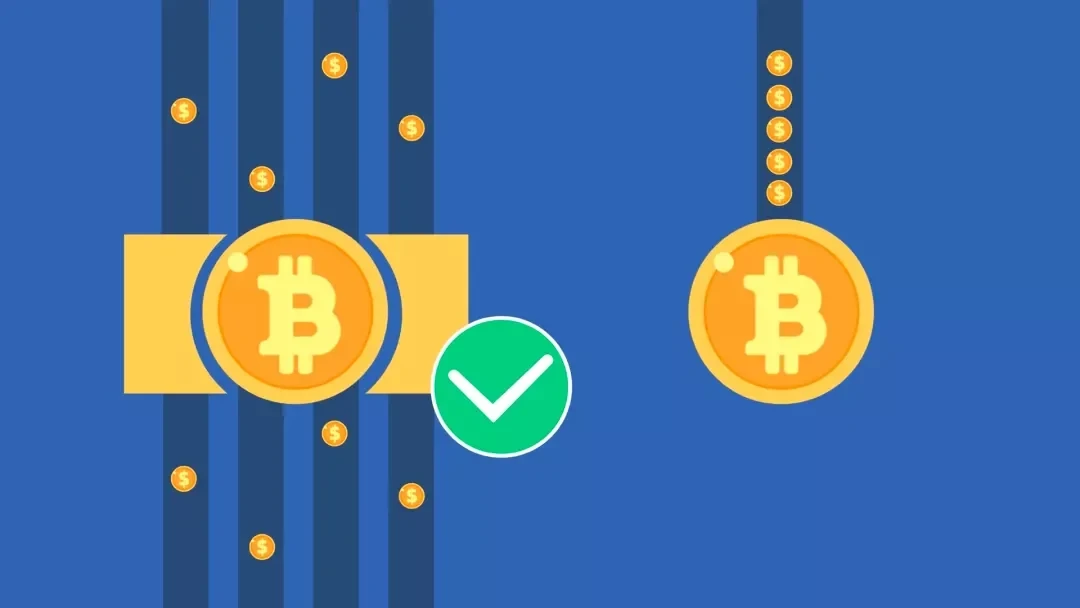
However, under the strong opposition and threats from Core, the community's core development force, ultimately the greater consensus of "never fork" defeated the "main chain expansion" consensus, and the New York Consensus was announced to have failed in early November. The minority insisting on "main chain expansion" turned to Bitcoin Cash, which became their only hope for continuing Satoshi Nakamoto's ideal. That day, Bitcoin's price fell 10%, while Bitcoin Cash's price rose nearly 100%, with BCH's peak subsequently approaching nearly 50% of Bitcoin's price.
After expansion failed, the Bitcoin community still attempted to solve capacity issues through the Lightning Network, but progress was slow. In early 2019, Bitcoin began a significant rally without congestion and fee issues being resolved, with gains far exceeding other cryptocurrencies. The Bitcoin community began to widely believe that Bitcoin should not be peer-to-peer electronic cash focused on payments, but rather digital gold emphasizing store-of-value functionality.
At this point, Bitcoin and Bitcoin Cash each moved toward digital gold and electronic cash paths respectively—one as the originator of cryptocurrency, the other as a decentralized cryptocurrency that forked twice due to internal disagreements, both widely recognized by the public. The fork events caused by the expansion dispute became textbook cases, influencing generation after generation of new blockchain entrepreneurs and projects, becoming an unmentionable event in Bitcoin's history.
Special thanks to Liu Changyong for his assistance and guidance with this episode's content.
Sina Weibo: @昌用老师
"OKX Blockchain 60 Lectures" is a blockchain science animation video jointly produced by OKX & Sina Technology, targeting zero-basis blockchain users. Through series articles, science animations, and other forms, from concepts, technology, applications, and other perspectives, through 5 major sections and 60 knowledge points, it vividly explains blockchain concepts. This episode's course content was completed under the guidance of Liu Changyong, Ph.D. in Economics from Peking University.
Disclaimer
This article may contain product-related content not applicable to your region. This article is intended only to provide general information and assumes no responsibility for any factual errors or omissions therein. This article represents only the author's personal views and does not represent OKX's views. This article is not intended to provide any of the following advice, including but not limited to: (i) investment advice or investment recommendations; (ii) offers or solicitations to buy, sell, or hold digital assets; or (iii) financial, accounting, legal, or tax advice. Holding digital assets (including stablecoins) involves high risk, may fluctuate significantly, and may even become worthless. You should carefully consider whether trading or holding digital assets is suitable for you based on your financial situation. For questions about your specific situation, please consult your legal/tax/investment professional. The information appearing in this article (including market data and statistics, if any) is for general reference only. While we have taken all reasonable precautions in preparing these data and charts, we assume no responsibility for any factual errors or omissions expressed herein. © 2025 OKX. This article may be reproduced or distributed in its entirety, or excerpts of 100 words or less from this article may be used, provided such use is non-commercial. Any reproduction or distribution of the entire article must also prominently state: "This article is copyrighted © 2025 OKX, used with permission." Permitted excerpts must cite the article name and include attribution, such as "Article Name, [Author Name (if applicable)], © 2025 OKX". Some content may be generated or assisted by artificial intelligence (AI) tools. Derivative works or other uses of this article are not permitted.
Show More
Recommended Reading
OKX Blockchain 60 Lectures | Episode 43: The Rise of Mining Circles (Part 2) —The Rise of Bitmain
Hello everyone, I'm Xiao Kjun. Today we'll cover: "The Rise of Mining Circles (Part 2) —The Rise of Bitmain." In our last lesson, we discussed two people who opened the door to mining capital and commercialization: Pumpkin Zhang—Zhang Nan'geng, and Fried Cat—Jiang Xinyu. While they jointly ushered in the golden era of mining circles, the person who truly pushed the mining industry to its peak was someone else, and that person's name is Wu Jihan.
September 18, 2025

OKX Blockchain 60 Lectures | Episode 2: Why Is Blockchain Called Blockchain?
"OKX Blockchain 60 Lectures" is a blockchain science animation video jointly produced by OKX & Sina Technology, targeting zero-basis blockchain users. Through series articles, science animations, and other forms, from concepts, technology, applications, and other perspectives, through 5 major sections and 60 knowledge points, it vividly explains blockchain concepts. This episode's course content was completed under the guidance of Teacher Meng Yan, Vice Dean of the Digital Assets Research Institute. In 2008, a global financial crisis erupted. On October 31st, "
September 18, 2025

OKX Blockchain 60 Lectures | Episode 16: What Is the PoW Consensus Mechanism
"OKX Blockchain 60 Lectures" is a blockchain science animation video jointly produced by OKX & Sina Technology, targeting zero-basis blockchain users. Through series articles, science animations, and other forms, from concepts, technology, applications, and other perspectives, through 5 major sections and 60 knowledge points, it vividly explains blockchain concepts. This episode's course content was completed under the guidance of mentor Huang Fangyu, co-founder of Wan You Computing Power. Hello everyone, I'm Xiao Kjun. Today we'll cover:
September 18, 2025

OKX Blockchain 60 Lectures | Episode 51: 2019, Giants Enter, Facebook's Cryptocurrency Dream
Previously we discussed how in 2018, as blockchain was hyped into excessive prosperity, a vigorous de-bubbling process began, and the entire industry entered winter. However, crisis and opportunity coexist. This cyclical industry downturn precisely provided the best timing for international giants to enter. In February 2019, Wall Street financial behemoth JPMorgan Chase thoroughly sounded the clarion call for international giants entering the blockchain field. Thereafter, Goldman Sachs, UBS, Citigroup, Microsoft, and other giants
September 18, 2025

OKX Blockchain 60 Lectures | Episode 7: What Does Fork Mean in Blockchain?
"OKX Blockchain 60 Lectures" is a blockchain science animation video jointly produced by OKX & Sina Technology, targeting zero-basis blockchain users. Through series articles, science animations, and other forms, from concepts, technology, applications, and other perspectives, through 5 major sections and 60 knowledge points, it vividly explains blockchain concepts. This episode's course content was completed under the guidance of mentor Bufeimo, an Austrian School economist. The so-called blockchain fork can be said to be unique to blockchain networks, a
September 18, 2025

OKX Blockchain 60 Lectures | Episode 25: What Is Lightning Network?
Hello everyone, I'm Xiao Kjun. Today we'll cover: "What Is Lightning Network?" The so-called Lightning Network was first proposed in a 2015 whitepaper by Joseph Poon and Thaddeus Dryja as a technology to solve Bitcoin trading congestion. The origin of this technology stems from a problem left over from Bitcoin's early days. Because when Bitcoin was first designed, a
September 18, 2025