OKX Blockchain 60 Lessons | Episode 52: A New Chapter for Blockchain
In the previous lesson, we discussed how Facebook's dream of decentralized cryptocurrency ultimately failed, but this did not signal the failure of other major players. Instead, it served as a starting point that opened an entirely new chapter for the blockchain industry.
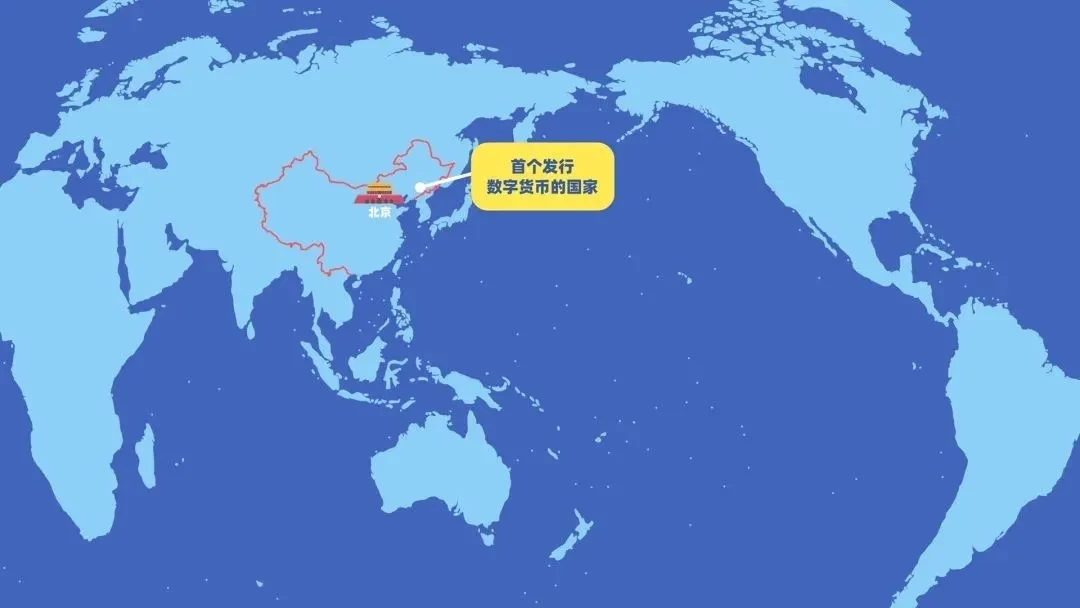
On October 25, 2019, during the 18th collective study session of the Politburo of the Central Committee, President Xi emphasized that blockchain should be regarded as an important breakthrough for core technological innovation, and that efforts to advance blockchain technology and industrial innovation should be accelerated. Shortly after, China's digital yuan DC/EP was officially unveiled.
On November 28 of the same year, Fan Yifei, Deputy Governor of the People's Bank of China, elaborated on the technical principles and application scenarios of DC/EP at a forum. Huang Qifan, Vice Chairman of the China Center for International Economic Exchange, also stated that the People's Bank of China had been researching DC/EP for five to six years and was about to enter the application phase, making the People's Bank of China the first central bank in the world to issue a cryptocurrency.
From this point, China's long-developed token-free blockchain technology began to gain momentum. The blockchain electronic invoice system led by Tencent, within less than a year, issued over 9.8 million invoices totaling over 70 billion yuan, with coverage expanding from the city of Shenzhen to multiple regions including Shenzhen, Guangzhou, Hangzhou, Fujian, and Yunnan.
The blockchain system led by Alibaba also completed its transformation of the supply chain, solving problems including counterfeiting, information traceability, and logistics tracking, helping Single's Day achieve a transaction volume exceeding 498.2 billion yuan. Beyond these two scenarios, blockchain had mature and deployed applications in supply chain, copyright, legal, education, and other fields. Blockchain technology also officially became one of the important cores of China's science and technology development direction.

The existing forces in the blockchain space also grew significantly in this environment. On November 21, 2019, Zhang Nangeng, the former dragon slayer, led Canaan Creative to officially list on the Nasdaq, becoming the world's first blockchain stock, bringing a fitting conclusion to the 10-year journey of the mining circle.
DeFi, the successor to DApps, also began to emerge in 2019. A variety of DeFi products sprung up, including the asset collateralization platform MakerDao and the trading venue Uniswap. The total value of DeFi assets surged twofold from the beginning of the year, reaching 670 million dollars. By 2020, DeFi had become a new trend, shining brightly in the financial sector, disrupting traditional trading, insurance, fund, and other models, and creating more diverse business models. At its peak, the total value locked exceeded 15 billion dollars. Meanwhile, new technologies such as sharding, cross-chain, and sidechains broke through existing bottlenecks, gradually building a more promising public chain ecosystem.
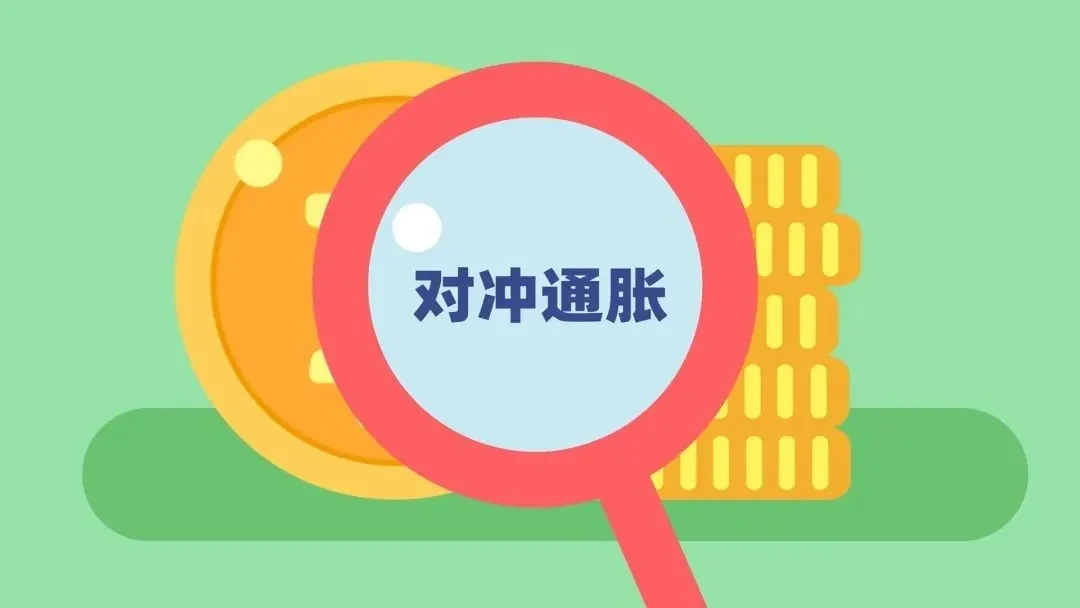
On January 21, 2020, the Grayscale Bitcoin Trust successfully registered with the U.S. SEC and became the first cryptocurrency investment tool to report to the SEC. Grayscale Fund completely brought Bitcoin to the U.S. stock market. More listed companies began to use Bitcoin as a store of value and a hedge against inflation. Bitcoin truly fulfilled the digital gold vision that people had for it 10 years ago.
Starting from Bitcoin's birth and ending with large-scale entry by Wall Street, the blockchain industry had been developing for over 10 years. Through this process, people have been dismissive of blockchain, have questioned it, have gone wild over it, and have believed in it. But thankfully, we were born in this era and can witness the birth and development of an entirely new industry.
Perhaps one day in the future, when we trace the origins of blockchain, we will think back to that night in 2008 when Nakamoto wrote the Bitcoin whitepaper. What is blockchain, after all? A peer-to-peer decentralized network, a better era of the internet.
Special thanks to Teacher Xu Yinglong for his help and guidance on the content of this episode.
Sina Weibo: @许英龙_sun1y
Disclaimer
This article may contain product-related content that does not apply to your region. This article is committed to providing general information only and does not accept responsibility for any factual errors or omissions. This article represents the author's personal views only and does not represent the views of OKX. This article is not intended to provide any advice, including but not limited to: (i) investment advice or investment recommendations; (ii) offers or solicitations to buy, sell, or hold digital assets; or (iii) financial, accounting, legal, or tax advice. Holding digital assets (including stablecoins) involves a high degree of risk and may be subject to significant price fluctuations, and may even become worthless. You should carefully consider whether trading or holding digital assets is appropriate for you based on your financial situation. For questions about your specific circumstances, please consult your legal/tax/investment professional. The information contained in this article (including market data and statistical information, if any) is for general reference purposes only. Although we have taken all reasonable precautions in preparing such data and charts, we accept no responsibility for any factual errors or omissions expressed herein. © 2025 OKX. This article may be reproduced or distributed in full or used in excerpts of 100 words or less, provided that such use is non-commercial in nature. Any reproduction or distribution of the full article must prominently state: "This article is copyrighted © 2025 OKX, used with permission." Permitted excerpts must cite the article name and include the source, for example "Article name, [author name (if applicable)], © 2025 OKX". Portions of this content may have been generated or assisted by artificial intelligence (AI) tools. Derivative works and other uses of this article are not permitted.
Show More
Recommended Reading
OKX Blockchain 60 Lessons | Episode 43: The Rise of the Mining Circle (Part 2) — The Rise of Bitmain
Hello everyone, I'm Xiao K. Today we are going to talk about: "The Rise of the Mining Circle (Part 2) — The Rise of Bitmain." In the previous lesson, we talked about two people who opened the door to the capitalization and commercialization of the mining circle — one being Pumpkin Zhang (Zhang Nangeng) and the other being Fried Cat (Jiang Xinyu). Although together they inaugurated the golden era of the mining circle, it was someone else who truly pushed the mining industry to its peak. That person's name is Wu Jihan.
September 18, 2025

OKX Blockchain 60 Lessons | Episode 2: Why Is Blockchain Called Blockchain?
"OKX Blockchain 60 Lessons" is a blockchain popular science animated video series jointly produced by OKX and Sina Technology, targeting users with zero knowledge of blockchain. Through articles, animated explainers, and other formats, it popularizes blockchain concepts vividly and clearly from the perspectives of concepts, technology, and applications, across 5 major sections and 60 key points. The content of this lesson was guided by Meng Yan, Deputy Dean of the Digital Assets Research Institute. In 2008, a global financial crisis erupted. On October 31, "
September 18, 2025
OKX Blockchain 60 Lessons | Episode 16: What Is the PoW Consensus Mechanism?
"OKX Blockchain 60 Lessons" is a blockchain popular science animated video series jointly produced by OKX and Sina Technology, targeting users with zero knowledge of blockchain. Through articles, animated explainers, and other formats, it popularizes blockchain concepts vividly and clearly from the perspectives of concepts, technology, and applications, across 5 major sections and 60 key points. The content of this lesson was guided by Huang Fangyu, Co-founder of Wanyou Computing Power. Hello everyone, I'm Xiao K. Today we are going to talk about:
September 18, 2025

OKX Blockchain 60 Lessons | Episode 51: 2019, Giants Enter the Market, Facebook's Cryptocurrency Dream
Previously, we discussed how in 2018, as blockchain was overly hyped and prosperity reached its peak, a massive de-bubble process began, sending the entire industry into a downturn. But crisis and opportunity coexisted. This cyclical retreat of the industry also happened to provide the best timing for international giants to enter the market. In February 2019, Wall Street financial giant JPMorgan Chase completely sounded the horn for international giants to enter the blockchain space, followed by Goldman Sachs, UBS, Citigroup, Microsoft, and other giants.
September 18, 2025
OKX Blockchain 60 Lessons | Episode 7: What Does a Fork in the Blockchain Mean?
"OKX Blockchain 60 Lessons" is a blockchain popular science animated video series jointly produced by OKX and Sina Technology, targeting users with zero knowledge of blockchain. Through articles, animated explainers, and other formats, it popularizes blockchain concepts vividly and clearly from the perspectives of concepts, technology, and applications, across 5 major sections and 60 key points. The content of this lesson was guided by Boolean费墨, an Austrian School economist.所谓的区块链的分叉, can说是区块链网络中独有的一
September 18, 2025

OKX Blockchain 60 Lessons | Episode 25: What Is the Lightning Network?
Hello everyone, I'm Xiao K. Today we are going to talk about: "What Is the Lightning Network"? The Lightning Network is a technology first proposed in 2015 by Joseph Poon and Thaddeus Dryja in a whitepaper, used to solve Bitcoin trading congestion. The origin of this technology stems from a problem left over from Bitcoin's early days. Because when Bitcoin was first designed, a
September 18, 2025