OKX Blockchain 101 | Episode 53: What Is a Blockchain Invoice?
Hello everyone, I'm Xiao K. Today we'll be talking about: "What Is a Blockchain Invoice?"
A blockchain invoice is a type of electronic invoice issued using blockchain technology, and it differs significantly from traditional invoices. Our conventional invoices, whether paper or electronic, require businesses to purchase their own royalty control equipment or outsource to third-party service providers just to issue an invoice.
However, this approach has several drawbacks. First, data is not shared between parties. Since each enterprise builds its own platform, the sheer number of systems and the complexity of the equipment creates significant barriers to data sharing and circulation. As a result, each invoice is difficult to track and verify, leading to long reimbursement cycles and cumbersome processes.

Second, the lack of data sharing leads to another problem: invoice fraud and duplicate reimbursements. Traditional invoice anti-counterfeiting relies on tax authority-issued serial numbers with electronic signatures. Combined with the difficulty of quickly implementing paperless online reimbursement in batch verification systems, duplicate reimbursements and even counterfeit invoices have become a serious issue.

Third, building an invoice system also comes with costs, placing a significant burden on small and micro enterprises.
Blockchain invoices work differently. The state essentially builds an invoice system using blockchain technology, allowing participants in the blockchain network to take part without needing to establish trust relationships. Small and micro enterprises don't need to purchase equipment to issue invoices, saving on hardware expenses.
Additionally, blockchain invoices solve the problems of counterfeiting and difficult reimbursement at the source. In a traditional invoice system, the reimbursement process is: user completes consumption → issues a paper invoice → user requests reimbursement → system queries information → reimbursement completed. Throughout this process, most actions are carried out offline, making it extremely difficult to trace an invoice's origin, verify its authenticity, or check its accounting status. Blockchain invoices are different — since everyone's consumption data is recorded in the blockchain system, as soon as you make a purchase, the system automatically issues you a corresponding invoice, which you can claim through the WeChat portal. This skips all the offline steps and fundamentally solves the problems of counterfeiting and difficult reimbursement.
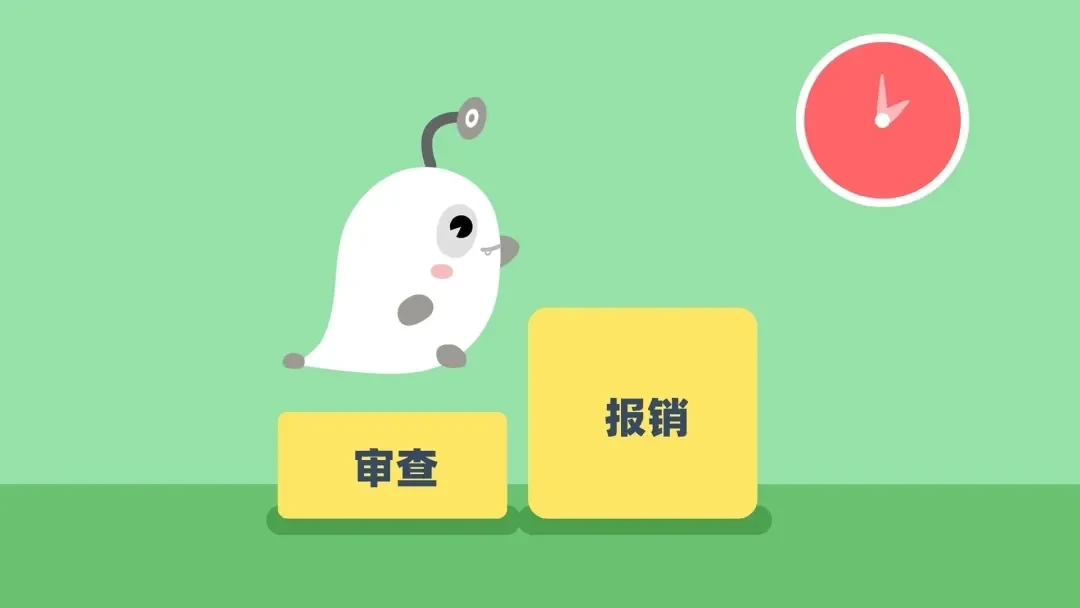
Beyond this, because blockchain invoices use blockchain technology, the data is shareable, traceable, and immutable. This makes it easy to query the origin and accounting information of every single invoice, significantly shortening review and reimbursement cycles. Therefore, blockchain invoices represent one of the most significant real-world applications of blockchain technology today.
Regarding the current adoption of blockchain invoices: as early as 2018, Tencent launched the first pilot program in Shenzhen. As of the first half of this year, nearly 20,000 enterprises have registered, with a total of over 25 million invoices issued and cumulative amounts exceeding 25.9 billion yuan — truly solving the problem of difficult reimbursement.
This technology is steadily advancing across the country, and before long, it will become an integral part of our daily lives. Let's look forward to that together.
Special thanks to Kevin Shao for his assistance and guidance on this episode.
"OKX Blockchain 101" is a blockchain educational animation series co-produced by OKX and Sina Tech. Designed for users with zero knowledge of blockchain, it uses articles and animated explanations to vividly introduce blockchain concepts from the perspectives of concepts, technology, and applications across five major sections and 60 knowledge points. The content of this episode was guided by Kevin Shao, Founder of Bitrise Capital.
Disclaimer
This article may contain product-related content not applicable in your region. This article is committed to providing general information only and does not accept responsibility for any factual errors or omissions. This article represents the author's personal views only and does not represent the views of OKX. This article is not intended to provide any advice, including but not limited to: (i) investment advice or investment recommendations; (ii) offers or solicitations to buy, sell, or hold digital assets; or (iii) financial, accounting, legal, or tax advice. Holdings in digital assets (including stablecoins) involve a high degree of risk and may fluctuate significantly or even become worthless. You should carefully consider whether trading or holding digital assets is appropriate for you based on your financial situation. For questions about your specific circumstances, please consult your legal/tax/investment professional. Any information appearing in this article (including market data and statistics, if applicable) is provided for general reference purposes only. While all reasonable precautions have been taken in preparing such data and charts, we accept no responsibility for any factual errors or omissions expressed herein. © 2025 OKX. This article may be reproduced or distributed in its entirety, or excerpts of 100 words or less may be used, provided that such use is non-commercial. Any reproduction or distribution of the full article must also prominently state: "This article is copyrighted © 2025 OKX, used with permission." Permitted excerpts must cite the article name and include attribution, e.g., "Article name, [author name (if applicable)], © 2025 OKX". Portions of this content may have been generated or assisted by Artificial Intelligence (AI) tools. Derivative works and other uses of this article are not permitted.
Show More
Recommended Reading
OKX Blockchain 101 | Episode 43: The Rise of the Mining Industry (Part 2) — Bitmain's Rise
Hello everyone, I'm Xiao K. Today's topic is: "The Rise of the Mining Industry (Part 2) — Bitmain's Rise." In the previous lesson, we talked about two people who opened the door to mining industry capitalization and commercialization:南瓜张 (Pumpkin Zhang) — Zhang Nan, and烤猫 (Roast Cat) — Jiang Xinyu. Although together they ushered in the golden age of the mining industry, it was someone else who truly brought the mining business to its peak, and that person's name is Wu Jihan.
2025年9月18日
OKX Blockchain 101 | Episode 2: Why Is Blockchain Called Blockchain?
"OKX Blockchain 101" is a blockchain educational animation series co-produced by OKX and Sina Tech. Designed for users with zero knowledge of blockchain, it uses articles and animated explanations to vividly introduce blockchain concepts from the perspectives of concepts, technology, and applications across five major sections and 60 knowledge points. The content of this episode was guided by Meng Yan, Deputy Dean of the Digital Assets Research Institute. In 2008, a global financial crisis erupted. On October 31st, "
2025年9月18日
OKX Blockchain 101 | Episode 16: What Is the PoW Consensus Mechanism?
"OKX Blockchain 101" is a blockchain educational animation series co-produced by OKX and Sina Tech. Designed for users with zero knowledge of blockchain, it uses articles and animated explanations to vividly introduce blockchain concepts from the perspectives of concepts, technology, and applications across five major sections and 60 knowledge points. The content of this episode was guided by Huang Fangyu, Co-founder of Wanyou Computing Power. Hello everyone, I'm Xiao K. Today's topic is:
2025年9月18日
OKX Blockchain 101 | Episode 51: 2019, Giants Enter the Arena, Facebook's Cryptocurrency Dream
Previously, we discussed how 2018 saw blockchain being excessively hyped, leading to a dramatic de-bubble process as the entire industry entered a winter. However, where there is danger, there is also opportunity. This cyclical downturn恰好 provided international giants with the optimal timing to enter the market. In February 2019, Wall Street financial giant JPMorgan Chase sounded the horn for international giants to enter the blockchain space, followed by Goldman Sachs, UBS, Citigroup, Microsoft, and other major players.
2025年9月18日
OKX Blockchain 101 | Episode 7: What Does a Fork in Blockchain Mean?
"OKX Blockchain 101" is a blockchain educational animation series co-produced by OKX and Sina Tech. Designed for users with zero knowledge of blockchain, it uses articles and animated explanations to vividly introduce blockchain concepts from the perspectives of concepts, technology, and applications across five major sections and 60 knowledge points. The content of this episode was guided by Bulan Feimo, an Austrian School economist. A fork in blockchain can be said to be a unique concept in blockchain networks —
2025年9月18日
OKX Blockchain 101 | Episode 25: What Is the Lightning Network?
Hello everyone, I'm Xiao K. Today's topic is: "What Is the Lightning Network"? The Lightning Network, first proposed in 2015 by Joseph Poon and Thaddeus Dryja in a white paper, is a technology designed to solve Bitcoin transaction congestion. The origin of this technology stems from a problem left over from Bitcoin's early days. Because when Bitcoin was first designed, a
2025年9月18日