
OKX Blockchain 60 Lectures | Episode 55: What Is Blockchain Gaming?
Hello everyone, I'm Xiao K. Today we're going to talk about: "What Is Blockchain Gaming?"
Blockchain gaming refers to the application of blockchain technology in the gaming sector. As early as 2017, Cryptokitties, a blockchain game, took the world by storm, creating a record of over 14,000 daily active addresses in a single day, with total trading volume exceeding 200 million RMB. It can be said that gaming was the first sector where blockchain technology truly achieved real-world adoption.
You might be wondering why, among all the industries that experimented with blockchain early on, it was specifically the blockchain + gaming combination that won market acceptance. The reason lies in how blockchain technology reshapes the relationship between developers and players.
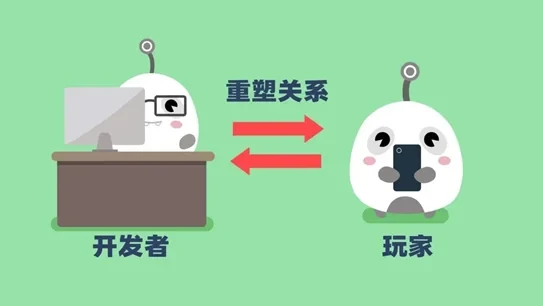
Simply put, in traditional games, since all data runs on centralized servers, the game company has sole authority over game rules and development rights. Players' hard-earned efforts can be wiped out overnight due to a single rule change by the developers.
Additionally, traditional game mechanics lack transparency. Drop rates for rare weapons, lottery probabilities for rare cards—these are all black boxes to players, with no way to verify whether developers actually honor their stated odds.
Blockchain games are different. Because blockchain is a multi-node decentralized ledger, the development and maintenance of the entire game is shared among nodes. Game rules, beyond the game company, can also be participated in by players. This ensures that the game's balance and playability are inherently transparent and verified by users.
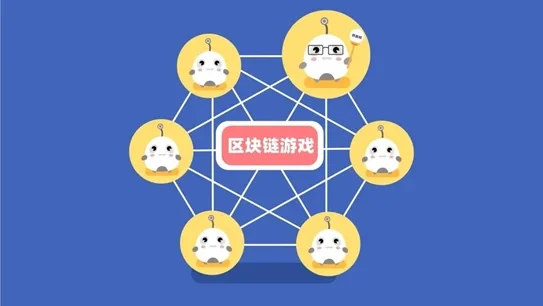
Furthermore, games naturally incorporate concepts like items and virtual currencies, which align well with blockchain economic models. When gaming is combined with blockchain token economics, players can earn additional token incentives beyond the pure gaming experience. This helps games acquire more new users and extend the game's lifecycle. That's why blockchain gaming has garnered so much market attention.
Currently, although blockchain + gaming has seen real-world adoption, it remains dominated by card and sandbox-style games, and has yet to produce any killer applications comparable to "Honor of Kings" or "PUBG." The primary reason is that blockchain infrastructure remains imperfect, with significant technical challenges still to overcome, including:
1. Current public chains cannot meet high throughput demands, meaning application performance cannot rival mainstream internet mobile games;
2. Blockchain's decentralized model results in excessively high latency for on-chain data processing, failing to deliver the real-time experience needed for in-game payment scenarios;
3. The value island problem: major public chains operate in isolated environments, where data between different chains and applications on different chains cannot communicate, value cannot flow, and scenarios cannot interact.
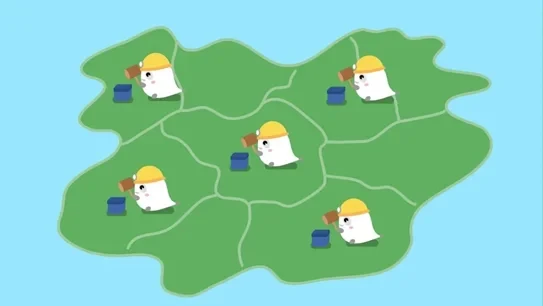
It is precisely due to these issues that blockchain gaming development still faces certain bottlenecks. Hopefully, with the development of new technologies such as cross-chain, sidechains, and Layer 2, blockchain efficiency challenges will be thoroughly resolved in the future, truly creating a blockchain gaming world.
Special thanks to Xiong Yue for his assistance and guidance on this episode.
Disclaimer
This article may contain product-related content not applicable to your region. This article is committed to providing general information only and does not accept responsibility for any factual errors or omissions. This article represents the author's personal views only and does not constitute OKX's views. This article is not intended to provide any advice, including but not limited to: (i) investment advice or investment recommendations; (ii) offers or solicitations to buy, sell, or hold digital assets; or (iii) financial, accounting, legal, or tax advice. Holding digital assets (including stablecoins) involves a high degree of risk, may fluctuate significantly, or even become worthless. You should carefully consider whether trading or holding digital assets is appropriate for you based on your financial situation. For questions specific to your circumstances, please consult your legal/tax/investment professional. The information contained in this article (including market data and statistics, where applicable) is provided for general reference purposes only. While all reasonable precautions have been taken in preparing this data and these charts, we accept no responsibility for any factual errors or omissions expressed herein. © 2025 OKX. This article may be reproduced or distributed in its entirety, or excerpts of 100 words or less may be used, provided that such use is non-commercial in nature. Any reproduction or distribution of the full article must prominently state: "This article is copyrighted © 2025 OKX, used with permission." Permitted excerpts must cite the article title and include attribution, for example: "Article title, [author name (if applicable)], © 2025 OKX." Portions of this content may have been generated or assisted by artificial intelligence (AI) tools. Derivative works and other uses of this article are not permitted.
Show More
Recommended Reading
OKX Blockchain 60 Lectures | Episode 43: The Rise of the Mining Circle (Part 2) — The Rise of Bitmain
Hello everyone, I'm Xiao K. Today we're going to talk about: "The Rise of the Mining Circle (Part 2) — The Rise of Bitmain." In the previous lesson, we discussed that two people opened the door to the capitalization and commercialization of the mining circle: one was "Pumpkin Zhang" — Zhang Nangeng, and the other was "Fried Cat" — Jiang Xinyu. Although they jointly inaugurated the golden age of the mining circle, it was someone else who truly pushed the mining industry to its peak—and that person's name is Wu Jihan.
2025年9月18日

OKX Blockchain 60 Lectures | Episode 2: Why Is Blockchain Called Blockchain?
"OKX Blockchain 60 Lectures" is a blockchain educational animation series jointly produced by OKX and Sina Technology, targeting users with zero blockchain knowledge. Through articles, educational animations, and other formats, it vividly introduces blockchain concepts from the perspectives of concepts, technology, and applications, across five major sections and 60 knowledge points. The content of this episode was guided by Meng Yan, Deputy Dean of the Digital Assets Research Institute. In 2008, a global financial crisis erupted. On October 31st, "
2025年9月18日

OKX Blockchain 60 Lectures | Episode 16: What Is the PoW Consensus Mechanism?
"OKX Blockchain 60 Lectures" is a blockchain educational animation series jointly produced by OKX and Sina Technology, targeting users with zero blockchain knowledge. Through articles, educational animations, and other formats, it vividly introduces blockchain concepts from the perspectives of concepts, technology, and applications, across five major sections and 60 knowledge points. The content of this episode was guided by Huang Fangyu, Co-founder of Wanyou Computing Power. Hello everyone, I'm Xiao K. Today we're going to talk about:
2025年9月18日

OKX Blockchain 60 Lectures | Episode 51: 2019 — Giants Enter the Arena, Facebook's Cryptocurrency Dream
As we discussed previously, in 2018, as blockchain was hyped beyond reality, the market underwent a vigorous de-bubbling process, and the entire industry entered a winter. However, opportunity exists alongside danger—this cyclical downturn恰好也给了国际巨头们入场的最佳时机. 2019年2月, 华尔街金融巨兽摩根大通彻底吹响了国际巨头进入区块链领域的号角, 此后高盛, 瑞银, 花旗, 微软等巨头
2025年9月18日
OKX Blockchain 60 Lectures | Episode 7: What Does a Fork in the Blockchain Mean?
"OKX Blockchain 60 Lectures" is a blockchain educational animation series jointly produced by OKX and Sina Technology, targeting users with zero blockchain knowledge. Through articles, educational animations, and other formats, it vividly introduces blockchain concepts from the perspectives of concepts, technology, and applications, across five major sections and 60 knowledge points. The content of this episode was guided by Bool39 FM, an Austrian School economist. A fork in the blockchain can be described as a unique p
2025年9月18日

OKX Blockchain 60 Lectures | Episode 25: What Is the Lightning Network?
Hello everyone, I'm Xiao K. Today we're going to talk about: "What Is the Lightning Network"? The Lightning Network is a technology first proposed in 2015 by Joseph Poon and Thaddeus Dryja in a whitepaper, designed to solve Bitcoin trading congestion. This technology originated from a problem left over from Bitcoin's early design. Because when Bitcoin was originally designed, a
2025年9月18日