OKX Blockchain 60 Lessons | Episode 57: What is Blockchain + Judicial Forensics?
Hello everyone, this is Xiao K. Today we are going to cover: "What is Blockchain + Judicial Forensics"?
Judicial forensics is one of the real-world application scenarios for blockchain. Many of you may be wondering: what does blockchain have to do with judicial forensics? The two seem completely unrelated. However, blockchain technology can actually solve the problem of evidence authenticity in judicial proceedings.
We all know that evidence collection is a critical part of judicial trials. The validity of evidence is assessed based on three key elements: authenticity, relevance, and legality. Among these, authenticity is the most important. But here's the question: in this era of advanced technology, how can we prove the authenticity of evidence?
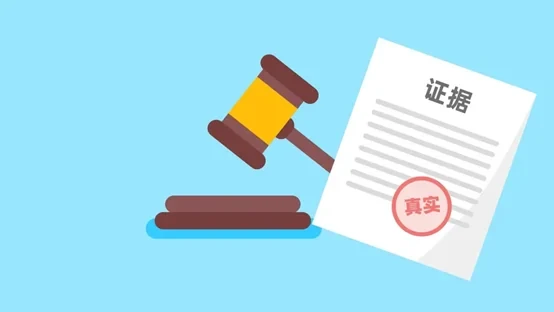
For example, photos can be modified using photo editing software, and audio recordings can be fabricated through audio manipulation techniques. This means that during court proceedings, evidence obtained through great difficulty may end up going nowhere simply because a lawyer raises a question about it. Therefore, the biggest challenge in proving evidence validity is the need to establish beforehand that the evidence has not been tampered with.
Isn't immutability one of the defining characteristics of blockchain? The essence of blockchain is a distributed, decentralized database. Once data is uploaded to the chain, it is backed up by nodes across the network. To modify this data, one would need to compromise more than 50% of all nodes on the network, making the data extremely difficult to alter — which directly addresses the immutability requirement for evidence.

However, this alone does not fully prove that evidence is valid. While blockchain technology can ensure that evidence remains immutable during storage, it cannot guarantee the authenticity of the original data itself.
To address this, local governments have launched blockchain-based forensics apps. Users can record audio, capture video, take photos, and perform other evidence-collection activities directly within the app. The evidence is generated through the platform and transmitted to the blockchain for backup. Once uploaded, the file is encrypted using blockchain's cryptographic algorithms. Anyone can take this file to the blockchain platform for verification to confirm whether it has been tampered with. This prevents anyone from falsifying evidence during the collection process and solves the problem of evidence authenticity at its source.
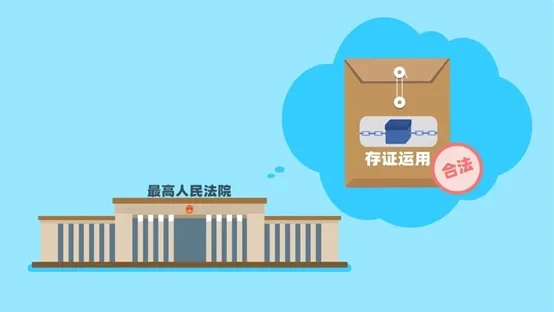
Currently, China's Supreme People's Court, in its regulations on internet courts, has recognized blockchain as a means of evidence collection, preservation, and tamper-proofing technology, establishing the legality of blockchain evidence storage. Additionally, regions such as Beijing, Shenzhen, and Hangzhou have all launched related blockchain forensics platforms, significantly improving evidence固证 efficiency for law enforcement officers. It is believed that as blockchain technology continues to be applied in the judicial field, it will bring about a fairer and more just new internet world.
Special thanks to Professor Cao Yin for his assistance and guidance on this episode.
– END –
Disclaimer
This article may contain product-related content that does not apply to your region. This article is intended to provide general information only and does not accept responsibility for any factual errors or omissions. This article represents the author's personal views only and does not constitute the views of OKX. This article is not intended to provide any advice, including but not limited to: (i) investment advice or investment recommendations; (ii) offers or solicitations to buy, sell, or hold digital assets; or (iii) financial, accounting, legal, or tax advice. Holding digital assets (including stablecoins) involves a high degree of risk and may be subject to significant price fluctuations, and may even become worthless. You should carefully consider whether trading or holding digital assets is appropriate for you based on your financial situation. For questions specific to your circumstances, please consult your legal/tax/investment professional. Any information contained in this article (including market data and statistics, where applicable) is provided for general reference purposes only. Although we have taken all reasonable precautions in preparing such data and charts, we accept no responsibility for any factual errors or omissions expressed herein. © 2025 OKX. This article may be reproduced or distributed in its entirety, or excerpts of 100 words or fewer may be used, provided that such use is for non-commercial purposes only. Any reproduction or distribution of the full article must prominently state: "This article is copyrighted © 2025 OKX, used with permission." Permitted excerpts must cite the article name and include attribution, for example "Article Name, [Author Name (if applicable)], © 2025 OKX". Some content may have been generated or assisted by artificial intelligence (AI) tools. Derivative works and other uses of this article are not permitted.
Show More
Recommended Reading
OKX Blockchain 60 Lessons | Episode 43: The Rise of the Mining Circle (Part 2) — The Rise of Bitmain
Hello everyone, this is Xiao K. Today we are going to cover: "The Rise of the Mining Circle (Part 2) — The Rise of Bitmain." In the previous lesson, we talked about two individuals who opened the door to the commercialization of the mining circle. One was Pumpkin Zhang — Zhang Nan Geng, and the other was烤猫 — Jiang Xinyu. Although together they kicked off the golden age of the mining circle, it was someone else who truly propelled the mining industry to its peak, and that person's name is Wu Jihan.
2025年9月18日
OKX Blockchain 60 Lessons | Episode 2: Why is Blockchain Called Blockchain?
The "OKX Blockchain 60 Lessons" is a blockchain educational animated video series jointly produced by OKX and Sina Technology. Designed for users with zero knowledge of blockchain, it uses articles and animated videos to vividly explain blockchain concepts through five major sections and 60 key knowledge points, covering concepts, technology, and applications. The content of this episode was guided by Meng Yan, Deputy Dean of the Digital Assets Research Institute. In 2008, a global financial crisis erupted. On October 31st, "
2025年9月18日
OKX Blockchain 60 Lessons | Episode 16: What is the PoW Consensus Mechanism
The "OKX Blockchain 60 Lessons" is a blockchain educational animated video series jointly produced by OKX and Sina Technology. Designed for users with zero knowledge of blockchain, it uses articles and animated videos to vividly explain blockchain concepts through five major sections and 60 key knowledge points, covering concepts, technology, and applications. The content of this episode was guided by Huang Fangyu, Co-Founder of Wanyou Computing Power. Hello everyone, this is Xiao K. Today we are going to cover:
2025年9月18日

OKX Blockchain 60 Lessons | Episode 51: 2019, Giants Enter the Arena — Facebook's Cryptocurrency Dream
Previously, we discussed how in 2018, as blockchain was being overly hyped, the market underwent a dramatic de-bubble process, and the entire industry entered a winter. However, where there is crisis, there is also opportunity. This cyclical downturn in the industry also happened to provide the perfect timing for international giants to enter the market. In February 2019, Wall Street financial giant JPMorgan Chase officially sounded the horn for international giants to enter the blockchain space. Subsequently, major players such as Goldman Sachs, UBS, Citigroup, and Microsoft
2025年9月18日
OKX Blockchain 60 Lessons | Episode 7: What Does a Fork in the Blockchain Mean?
The "OKX Blockchain 60 Lessons" is a blockchain educational animated video series jointly produced by OKX and Sina Technology. Designed for users with zero knowledge of blockchain, it uses articles and animated videos to vividly explain blockchain concepts through five major sections and 60 key knowledge points, covering concepts, technology, and applications. The content of this episode was guided by economist Boolean费墨.所谓的区块链分叉, 可以说是区块链网络中独有的一
2025年9月18日

OKX Blockchain 60 Lessons | Episode 25: What is the Lightning Network?
Hello everyone, this is Xiao K. Today we are going to cover: "What is the Lightning Network"? The Lightning Network is a technology first proposed in 2015 by Joseph Poon and Thaddeus Dryja in a whitepaper, designed to solve Bitcoin trading congestion. This technology arose from a problem left over from Bitcoin's early days, because when Bitcoin was initially designed, a
2025年9月18日