OKX Blockchain 101 | Episode 58: What is Blockchain + Art?
NFT-0. 42%
Hello everyone, I'm Xiao K. Today we'll be covering: "What is Blockchain + Art"?
Blockchain has extremely important applications in the art field. Why is that? Because blockchain can solve the authentication problem in art. As we all know, the value of artwork lies in its scarcity—for example, if everyone has a copy of a painting, then the painting doesn't hold much value. Conversely, if a painting is created by a renowned artist and is one-of-a-kind, it could be worth a fortune. But here's the problem: in today's highly digital world, how do we ensure the scarcity of artwork in the digital realm?
And this is exactly what blockchain can solve. The essence of blockchain is an immutable distributed database, which can be used as a foundation to issue NFTs. NFT stands for Non-Fungible Token—a type of cryptographic tool that refers to tokenizing digital goods that are traded on the blockchain, such as artwork. Put simply, it's a tool that makes digital items non-fungible, allowing digital goods recorded on the blockchain to have unique attributes and be irreplaceable, so that every digital good is one-of-a-kind.

When artists create works on the internet, they can use NFT as a tool to tokenize and sign their artwork. Since NFT tokens are non-fungible, this ensures the uniqueness of digital artwork. Additionally, blockchain itself is a distributed database—once data is recorded, it can be verified on-chain and cannot be altered. Every NFT trade can be verified through the blockchain, so when users purchase digital artwork, they simply need to verify the NFT on the blockchain network to confirm they are buying an original rather than a counterfeit. This solves the scarcity problem of artwork at its root.
Of course, beyond this, blockchain also addresses some issues that exist in the process of digitizing artwork, such as slow payment channels and complex transfer methods. Blockchain technology can standardize these digital artworks in the form of tokens, which can be exchanged on various public blockchain networks, thereby bringing more liquidity and cash flow to the digital project market, while also providing strong cryptographic protection for ownership, censorship resistance, and fraud and plagiarism prevention.
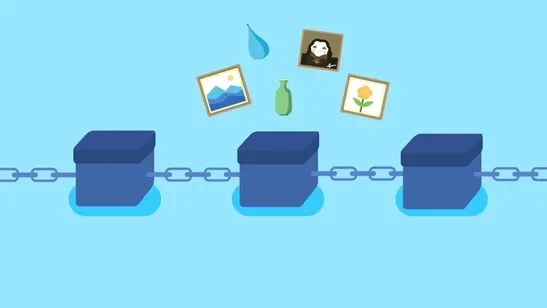
Currently, the application of blockchain in the art field is growing rapidly. Artist Beeple's NFT work "Everydays: The First 5000 Days" was sold at Christie's auction house for over $69 million, and more renowned artists are gradually embracing the blockchain art market, such as DC Comics artists and illustrators of "Wonder Woman." We believe that as blockchain technology continues to develop, it will surely bring about a wave of digital artwork in the future.
Thanks to Kevin Shao for his assistance and guidance on this episode.
– END –
Disclaimer
This article may contain product-related content that does not apply to your region. This article strives to provide general information and does not accept responsibility for any factual errors or omissions. The views expressed herein are those of the author and do not represent the views of OKX. This article is not intended to provide any advice, including but not limited to: (i) investment advice or investment recommendations; (ii) offers or solicitations to buy, sell, or hold digital assets; or (iii) financial, accounting, legal, or tax advice. Holdings in digital assets (including stablecoins) involve a high degree of risk and may fluctuate significantly, or even become worthless. You should carefully consider whether trading or holding digital assets is appropriate for you based on your financial situation. For questions specific to your circumstances, please consult your legal/tax/investment professional. The information contained in this article (including market data and statistics, where applicable) is provided for general reference purposes only. Although we have taken all reasonable precautions in preparing this data and these charts, we assume no responsibility for any factual errors or omissions expressed herein. © 2025 OKX. This article may be reproduced or distributed in its entirety, or excerpts of 100 words or fewer may be used, provided that such use is non-commercial in nature. Any reproduction or distribution of the full article must prominently state: "This article is copyrighted © 2025 OKX, used with permission." Permitted excerpts must cite the article name and include attribution, for example, "Article name, [author name (if applicable)], © 2025 OKX." Portions of this content may have been generated or assisted by artificial intelligence (AI) tools. Derivative works and other uses of this article are not permitted.
Show More
Recommended Reading
OKX Blockchain 101 | Episode 43: The Rise of the Mining Industry (Part 2) — The Rise of Bitmain
Hello everyone, I'm Xiao K. Today we'll be covering: "The Rise of the Mining Industry (Part 2) — The Rise of Bitmain." In the previous lesson, we discussed that there were two people who opened the door to commercialization and capital in the mining industry—one being Pumpkin Zhang (Zhang Nangeng) and the other being烤猫 (Jiang Xinyu). Although they jointly ushered in the golden age of the mining industry, it was someone else who truly brought mining to its peak, and that person's name is Wu Jihan.
2025年9月18日
OKX Blockchain 101 | Episode 2: Why is Blockchain Called Blockchain?
"OKX Blockchain 101" is a blockchain educational animation series jointly produced by OKX and Sina Technology, designed for users with zero knowledge of blockchain. Through articles, educational animations, and other formats, it covers blockchain concepts from the perspectives of concepts, technology, and applications across 5 major sections and 60 knowledge points, presenting them in a vivid and accessible way. The content for this episode was guided by Meng Yan, Deputy Dean of the Digital Assets Research Institute. In 2008, a global financial crisis erupted. On October 31st, "
2025年9月18日
OKX Blockchain 101 | Episode 16: What is the PoW Consensus Mechanism
"OKX Blockchain 101" is a blockchain educational animation series jointly produced by OKX and Sina Technology, designed for users with zero knowledge of blockchain. Through articles, educational animations, and other formats, it covers blockchain concepts from the perspectives of concepts, technology, and applications across 5 major sections and 60 knowledge points, presenting them in a vivid and accessible way. The content for this episode was guided by Huang Fangyu, Co-founder of Wanyou Computing Power. Hello everyone, I'm Xiao K. Today we'll be covering:
2025年9月18日
OKX Blockchain 101 | Episode 51: 2019, Giants Enter the Scene — Facebook's Cryptocurrency Dream
As we discussed previously, in 2018, as blockchain was hyped to be overly prosperous, it underwent a thorough de-bubble process, and the entire industry entered a winter. But danger and opportunity coexist—this periodic downturn in the industry also happened to give international giants the best opportunity to enter the market. In February 2019, the Wall Street financial giant JPMorgan Chase sounded the horn for international giants to enter the blockchain space, followed by Goldman Sachs, UBS, Citi, Microsoft, and other giants.
2025年9月18日
OKX Blockchain 101 | Episode 7: What Does a Fork in the Blockchain Mean?
"OKX Blockchain 101" is a blockchain educational animation series jointly produced by OKX and Sina Technology, designed for users with zero knowledge of blockchain. Through articles, educational animations, and other formats, it covers blockchain concepts from the perspectives of concepts, technology, and applications across 5 major sections and 60 knowledge points, presenting them in a vivid and accessible way. The content for this episode was guided by Boolean Finance (Bulun Feimo), an Austrian School economist. A fork in the blockchain can be said to be a unique occurrence in blockchain networks—
2025年9月18日
OKX Blockchain 101 | Episode 25: What is the Lightning Network?
Hello everyone, I'm Xiao K. Today we'll be covering: "What is the Lightning Network"? The Lightning Network is a technology first proposed in 2015 by Joseph Poon and Thaddeus Dryja in a white paper to solve Bitcoin trading congestion. The origin of this technology stems from a problem left over from Bitcoin's early days. Because when Bitcoin was originally designed, the
2025年9月18日