OKX Blockchain 60 Lectures | Episode 6: The Mining Principle of Bitcoin
Through articles, animated videos, and other formats, this series provides an engaging and accessible introduction to blockchain concepts from the perspectives of concepts, technology, and applications, covering 5 major sections and 60 key points. The content for this episode was guided by Shen Yu, Founder of F2Pool.
On January 3, 2009, Satoshi Nakamoto mined the first Bitcoin and embedded an unalterable message in the genesis block: "the time 03/Jan/2009 Chancellor on brink of second bailout for banks." This marked the original intent behind Bitcoin's creation…
Around 2011, Bitcoin mining entered the视野 of a group of Chinese internet cafe teenagers, and from there Bitcoin took root in China…
In 2012, the launch of ASIC miners by Butterfly Labs in the US sparked the beginning of an intense arms race in Bitcoin mining…
Then more recently, Bitmain, a Bitcoin mining manufacturer, announced its IPO, reaching a peak valuation of $15 billion. There is no denying that Bitcoin mining has become a massive industry worth hundreds of billions of dollars, and as the cryptocurrency market cap continues to climb toward the trillion-dollar mark, this industry will only keep growing. Readers who have gone through our previous article "《What Does Mining Mean》" will understand why this came to be. And today, Xiao K Jun will explain something more fundamental — what is the underlying principle behind Bitcoin mining?
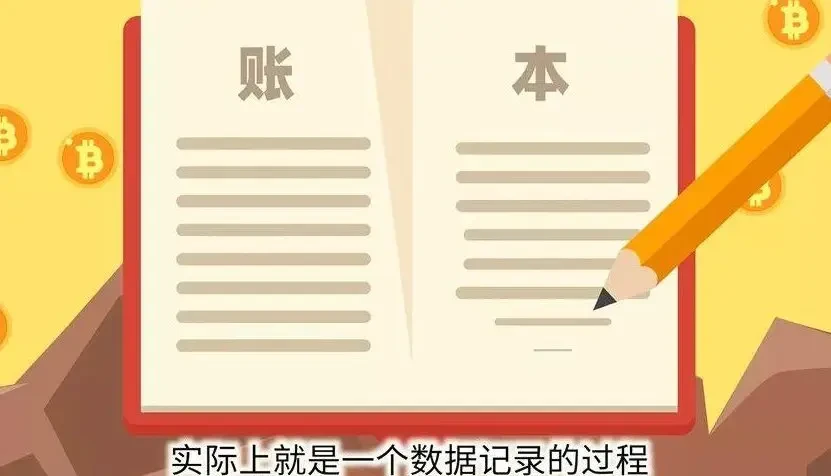
The mining principle of Bitcoin can be simply described as a process of recording data. As we all know, Bitcoin is actually the most well-known application of blockchain technology, and the essence of blockchain is a database that everyone can participate in processing — handling data updates, record-keeping, and similar tasks.
So, at regular intervals, someone needs to collect and process transaction data that has not yet been confirmed by everyone. Here is the problem: because the blockchain is a decentralized system, there is no company or team to proactively maintain the network's operation — so who does this work? People cannot just help you for free, right? Moreover, if many participants join in processing data, determining whose processed data should be used for the record is also an issue.
Satoshi Nakamoto, the original creator of blockchain, designed a special mechanism. Everyone can participate in data processing, and whoever processes the fastest and best gets the right to record the data and receives the corresponding Bitcoin reward (which is also the actual process of Bitcoin issuance). Therefore, the essence of the mining mechanism is to solve these two problems mentioned above.
However, this "fastest and best" follows a specific set of steps:
First, miners (the data processors) collect raw transaction information that has not yet been recorded, verify whether there are any issues with this information, and assemble it into a data block.
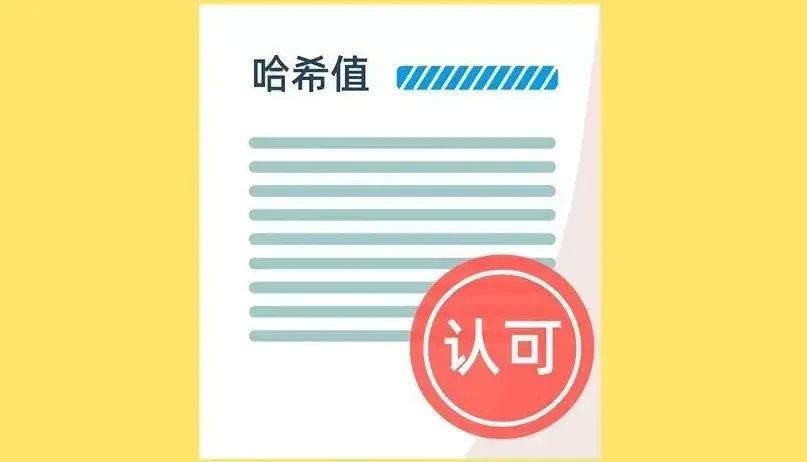
At regular intervals (approximately every 10 minutes), everyone needs to process the data, and only one person can successfully record. After packaging the data block, miners must compete for the sole right to record by solving a series of cryptographic puzzles. This cryptographic puzzle specifically involves performing extensive computations to find a hash output, also known as a hash value. Because the hash function used is irreversible, finding a hash value that meets the requirements is extremely difficult.
When a miner finds a hash value that meets the requirements, they can broadcast their processing result to the entire network. Other miners receive and verify whether this data block complies with the rules. If most agree that there are no issues and it meets the requirements, this miner's packaged data block will be connected to the entire blockchain, accepted by everyone, and the miner will receive the corresponding Bitcoin reward.
This is the working principle of Bitcoin mining. The whole process is somewhat like a pirate king leaving behind a massive treasure of gold and jewels, then telling everyone: "Go search for it! Whoever finds the key to unlock my treasure can claim all my wealth."

Of course, this is just Xiao K Jun using Bitcoin as an example to explain the role that mining plays in the blockchain. Overall, mining is an important part of the blockchain ecosystem — it not only solves the problem of who processes the data, but more importantly, it brings more and more people to participate in the construction of the blockchain network. The more people participate, the more decentralized the blockchain becomes, the more participants there are for data confirmation, and the more secure our information and data become.
As blockchain achieves large-scale popular application, the mining industry will only continue to grow. It is believed that in the future, mining may become a social-level foundational industry, much like AI data trainers are in the artificial intelligence industry. At that time, "miners changing the world" will not just be talk!
Thanks to Teacher Shen Yu for his help and guidance on the content of this episode.
Disclaimer
This article may contain product-related content that does not apply to your region. This article is committed to providing general information only and does not accept responsibility for any factual errors or omissions. This article solely represents the author's personal views and does not represent the views of OKX. This article is not intended to provide any advice, including but not limited to: (i) investment advice or investment recommendations; (ii) offers or solicitations to buy, sell, or hold digital assets; or (iii) financial, accounting, legal, or tax advice. Holding digital assets (including stablecoins) involves high risk and may be subject to significant price fluctuations, or may even become worthless. You should carefully consider whether trading or holding digital assets is appropriate for you based on your financial situation. For questions specific to your situation, please consult your legal/tax/investment professional. The information contained in this article (including market data and statistics, if any) is for general reference purposes only. While all reasonable precautions have been taken in the preparation of such data and charts, we accept no responsibility for any factual errors or omissions expressed herein. © 2025 OKX. This article may be reproduced or distributed in its entirety, or excerpts of 100 words or less may be used, provided that such use is non-commercial. Any reproduction or distribution of the full article must prominently state: "This article is copyrighted © 2025 OKX, used with permission." Permitted excerpts must cite the article name and include attribution, for example, "Article name, [author name (if applicable)], © 2025 OKX." Some content may be generated or assisted by artificial intelligence (AI) tools. Derivative works and other uses of this article are not permitted.
Show More
Recommended Reading
OKX Blockchain 60 Lectures | Episode 43: The Rise of the Mining Circle (Part 2) — The Rise of Bitmain
Hello everyone, this is Xiao K Jun. Today we are going to cover: "The Rise of the Mining Circle (Part 2) — The Rise of Bitmain." In the previous lesson, we talked about two individuals who opened the door to the capitalization and commercialization of the mining circle. One was Zhang Nan-gai (aka南瓜张), and the other was Jiang Xin-yu (aka烤猫). Although they jointly ushered in the golden age of the mining circle, it was someone else who truly brought the mining industry to its peak, and that person's name is Wu Jihan.
2025年9月18日

OKX Blockchain 60 Lectures | Episode 2: Why Is Blockchain Called Blockchain?
"OKX Blockchain 60 Lectures" is a blockchain education animation video jointly produced by OKX and Sina Technologies. It is designed for users with zero blockchain knowledge, and through articles, animated videos, and other formats, it provides an engaging and accessible introduction to blockchain concepts from the perspectives of concepts, technology, and applications, covering 5 major sections and 60 key points. The content for this episode was guided by Meng Yan, Deputy Dean of the Digital Assets Research Institute. In 2008, a global financial crisis erupted. On October 31st, "
2025年9月18日

OKX Blockchain 60 Lectures | Episode 16: What Is the PoW Consensus Mechanism?
"OKX Blockchain 60 Lectures" is a blockchain education animation video jointly produced by OKX and Sina Technologies. It is designed for users with zero blockchain knowledge, and through articles, animated videos, and other formats, it provides an engaging and accessible introduction to blockchain concepts from the perspectives of concepts, technology, and applications, covering 5 major sections and 60 key points. The content for this episode was guided by Huang Fang-yu, Co-founder of Wanyou Computing Power. Hello everyone, this is Xiao K Jun. Today we are going to cover:
2025年9月18日

OKX Blockchain 60 Lectures | Episode 51: 2019, Giants Enter the Arena, Facebook's Cryptocurrency Dream
As we discussed previously, in 2018, as blockchain was hyped beyond its means and began a dramatic de-bubble process, the entire industry entered a winter. However, crisis and opportunity coexist — this periodic downturn in the industry also happened to provide the best timing for international giants to enter the market. In February 2019, Wall Street financial giant JPMorgan Chase completely sounded the horn for international giants to enter the blockchain field, followed by giants such as Goldman Sachs, UBS, Citibank, and Microsoft.
2025年9月18日
OKX Blockchain 60 Lectures | Episode 7: What Does a Fork in the Blockchain Mean?
"OKX Blockchain 60 Lectures" is a blockchain education animation video jointly produced by OKX and Sina Technologies. It is designed for users with zero blockchain knowledge, and through articles, animated videos, and other formats, it provides an engaging and accessible introduction to blockchain concepts from the perspectives of concepts, technology, and applications, covering 5 major sections and 60 key points. The content for this episode was guided by Bool39, an Austrian School economist. A fork in the blockchain can be said to be a unique phenomenon in the blockchain network…
2025年9月18日

OKX Blockchain 60 Lectures | Episode 25: What Is the Lightning Network?
Hello everyone, this is Xiao K Jun. Today we are going to cover: "What Is the Lightning Network?" The Lightning Network refers to a technology first proposed in 2015 by Joseph Poon and Thaddeus Dryja in a whitepaper, designed to solve Bitcoin transaction congestion. This technology originated from a problem left over from Bitcoin's early design. Because when Bitcoin was first designed,
2025年9月18日