
OKX Blockchain 60 Lessons | Episode 9: Core Technologies of Blockchain
"OKX Blockchain 60 Lessons" is an educational blockchain animation series jointly produced by OKX and Sina Technology. Designed for users with zero prior knowledge of blockchain, it uses articles, animated videos, and other formats to vividly explain blockchain concepts through 5 major sections and 60 key points, covering concepts, technology, and applications. The content of this episode was guided and reviewed by Zhu Fa, Co-Founder of Poolin.
Generally speaking, the core technologies of blockchain consist of four main components: distributed storage, consensus mechanism, smart contracts, and cryptography. Each technology plays its own distinct role within the overall blockchain system.
Distributed storage, simply put, is a data storage technology that distributes data across multiple locations. The stored data can be shared among multiple participants — anyone can participate and everyone has equal rights to jointly record data. It primarily serves the function of data storage.
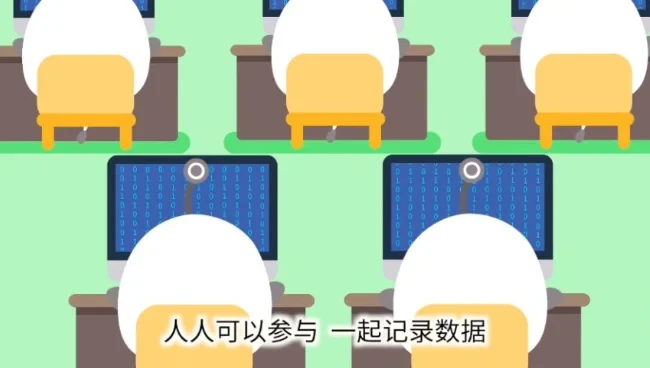
A consensus mechanism is essentially the mining principle we discussed earlier. Because there is no central authority in a blockchain's distributed network, the network needs a decision-making mechanism to help participants reach agreement. The consensus mechanism is precisely a mechanism that coordinates how everyone processes data.
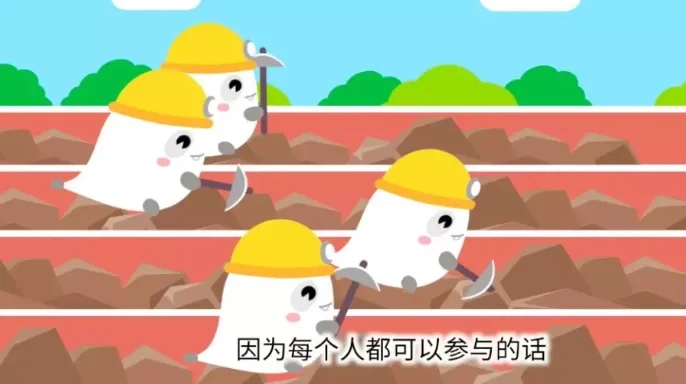
Since everyone can participate and there are so many recorded data entries, whose should be used? Therefore, the consensus mechanism determines who gets the right to record data from among all these entries. Consensus mechanisms primarily serve the function of data maintenance.
Smart contracts are computer protocols designed to disseminate, verify, or execute contracts in an information-based way. They are somewhat like a technology where everyone sets up the rules in advance, and then the machine automatically executes them.

Because the data stored and maintained on the network always needs someone to execute it, smart contracts can perform可信的交易 without a third party, and these transactions are traceable and irreversible. Therefore, smart contracts primarily serve the function of data execution in the system.
Finally, cryptography is a specialized encryption and decryption technology. Blockchain systems employ a wide variety of cryptographic techniques, including hash algorithms, public and private keys, digital signatures, and more, to ensure data security throughout the entire system and to verify data ownership. With it, we can prove "I am me" on the network and prove that this is my Bitcoin rather than your Bitcoin.
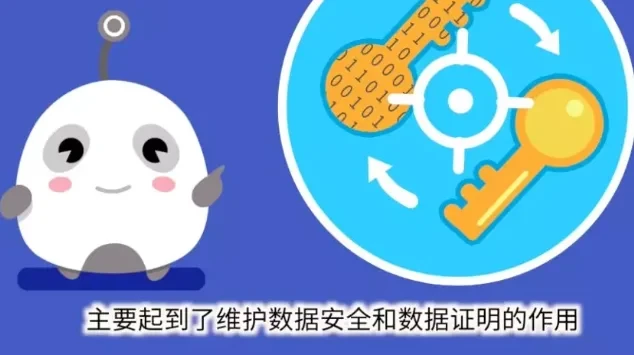
So, when data is generated, the consensus mechanism handles data maintenance, records it on-chain through distributed storage, then delegates execution to smart contracts, and finally cryptography safeguards the entire system. Each component performs its own role, together building the complete blockchain system.
Overall, as we mentioned in Episode 1, blockchain is a data transmission application model composed of these four technologies — much like how blockchain is a tall building and the technology is the material used to construct it.
It is precisely because these technologies serve as the foundation, solving problem after problem, that blockchain holds such broad promise. We believe that as technology gradually matures over time, blockchain will one day showcase its power to the world.
Special thanks to Instructor Zhu Fa for his assistance and guidance on the content of this episode.
Disclaimer
This article may contain product-related content that does not apply to your region. This article is committed to providing general information only and accepts no responsibility for any factual errors or omissions contained herein. This article represents only the author's personal viewpoint and does not represent the viewpoint of OKX. This article is not intended to provide any advice, including but not limited to: (i) investment advice or investment recommendations; (ii) offers or solicitations to buy, sell, or hold digital assets; or (iii) financial, accounting, legal, or tax advice. Holding digital assets (including stablecoins) involves a high degree of risk and may be subject to significant price fluctuations, or may even become worthless. You should carefully consider whether trading or holding digital assets is suitable for you based on your financial situation. For questions specific to your circumstances, please consult your legal/tax/investment professional. The information contained in this article (including market data and statistics, if any) is provided for general reference purposes only. Although all reasonable precautions have been taken in preparing this data and these charts, we assume no responsibility for any factual errors or omissions expressed herein. © 2025 OKX. This article may be reproduced or distributed in its entirety or in excerpts of 100 words or less, provided that such use is non-commercial. Any reproduction or distribution of the full article must prominently state: "This article is copyrighted © 2025 OKX, used with permission." Permitted excerpts must cite the article title and include attribution, for example "Article Title, [Author Name (if applicable)], © 2025 OKX". Some content may have been generated or assisted by artificial intelligence (AI) tools. Derivative works and other uses of this article are not permitted.
Show More
Recommended Reading
OKX Blockchain 60 Lessons | Episode 43: The Rise of the Mining Circle (Part 2) — The Rise of Bitmain
Hello everyone, this is Xiao K. Today we will be covering: "The Rise of the Mining Circle (Part 2) — The Rise of Bitmain." In the last lesson, we discussed two individuals who opened the door to capitalization and commercialization of the mining circle: "Pumpkin Zhang" — Zhang Nan'geng, and "烤猫" (Fried Cat) — Jiang Xinyu. Although together they initiated the golden age of the mining circle, the person who truly brought the mining industry to its peak was someone else — and that person's name is Wu Jihan.
2025年9月18日

OKX Blockchain 60 Lessons | Episode 2: Why Is Blockchain Called Blockchain?
"OKX Blockchain 60 Lessons" is an educational blockchain animation series jointly produced by OKX and Sina Technology. Designed for users with zero prior knowledge of blockchain, it uses articles, animated videos, and other formats to vividly explain blockchain concepts through 5 major sections and 60 key points, covering concepts, technology, and applications. The content of this episode was guided and reviewed by Meng Yan, Deputy Dean of the Digital Assets Research Institute. In 2008, a global financial crisis erupted. On October 31st, "
2025年9月18日

OKX Blockchain 60 Lessons | Episode 16: What Is the PoW Consensus Mechanism?
"OKX Blockchain 60 Lessons" is an educational blockchain animation series jointly produced by OKX and Sina Technology. Designed for users with zero prior knowledge of blockchain, it uses articles, animated videos, and other formats to vividly explain blockchain concepts through 5 major sections and 60 key points, covering concepts, technology, and applications. The content of this episode was guided and reviewed by Huang Fangyu, Co-Founder of Wàn Yǒu Computing Power. Hello everyone, this is Xiao K. Today we will be covering: "
2025年9月18日

OKX Blockchain 60 Lessons | Episode 51: 2019, Giants Enter the Market, Facebook's Cryptocurrency Dream
Previously, we discussed how in 2018, as blockchain was hyped beyond its capabilities, a dramatic de-bubble process began and the entire industry entered a downturn. However, crisis and opportunity coexist — this cyclical correction in the industry coincidentally provided international giants with the optimal timing to enter the market. In February 2019, Wall Street financial giant JPMorgan Chase officially sounded the horn for international giants to enter the blockchain field. Subsequently, giants such as Goldman Sachs, UBS, Citigroup, and Microsoft
2025年9月18日

OKX Blockchain 60 Lessons | Episode 7: What Does a Fork in the Blockchain Mean?
"OKX Blockchain 60 Lessons" is an educational blockchain animation series jointly produced by OKX and Sina Technology. Designed for users with zero prior knowledge of blockchain, it uses articles, animated videos, and other formats to vividly explain blockchain concepts through 5 major sections and 60 key points, covering concepts, technology, and applications. The content of this episode was guided and reviewed by Boolean Economics (Burkett Moody). A fork in the blockchain can be said to be a unique occurrence in blockchain networks —
2025年9月18日

OKX Blockchain 60 Lessons | Episode 25: What Is the Lightning Network?
Hello everyone, this is Xiao K. Today we will be covering: "What Is the Lightning Network"? The Lightning Network is a technology first proposed in 2015 by Joseph Poon and Thaddeus Dryja in a whitepaper, designed to solve Bitcoin transaction congestion. The origin of this technology stems from a problem left over from Bitcoin's early days. Because when Bitcoin was initially designed, a
2025年9月18日