OKX Blockchain 60 Lessons | DeFi Episode 1: What is DeFi?
Hello everyone, I'm Xiao K. Today our topic is: "What is DeFi"?
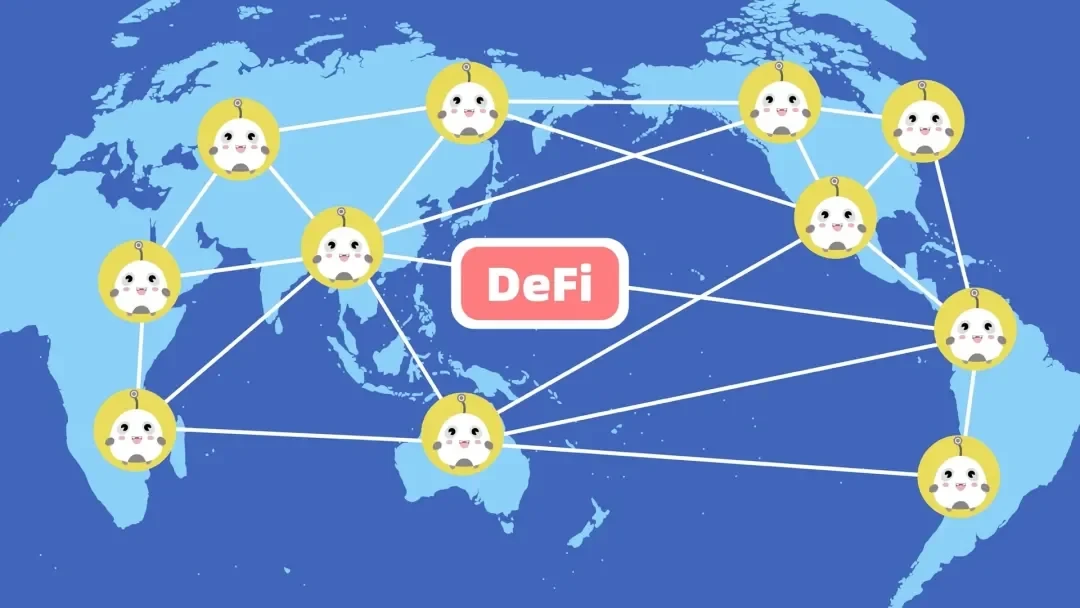
DeFi is currently one of the hotter concepts in the blockchain market. DeFi stands for Decentralized Finance, referring to decentralized protocols used to build an open financial system. Essentially, it establishes a transparent, accessible, and inclusive peer-to-peer financial system through distributed open-source protocols, minimizing trust risk and making it easier for participants to access financing.
How do we understand this? As we all know, the financial services around us today—such as loans, transfers, Trading, and insurance—are all provided with third-party institutions as guarantors. Blockchain, however, is a decentralized database that can solve trust-related problems.
Therefore, someone proposed removing third-party financial institutions entirely and using Blockchain and smart contract technologies to replace them, rebuilding the traditional financial system. This ensures no centralized entity while keeping the system trustworthy, with no restrictions, allowing everyone in the world free access to financial services. Thus, the concept of DeFi was born.
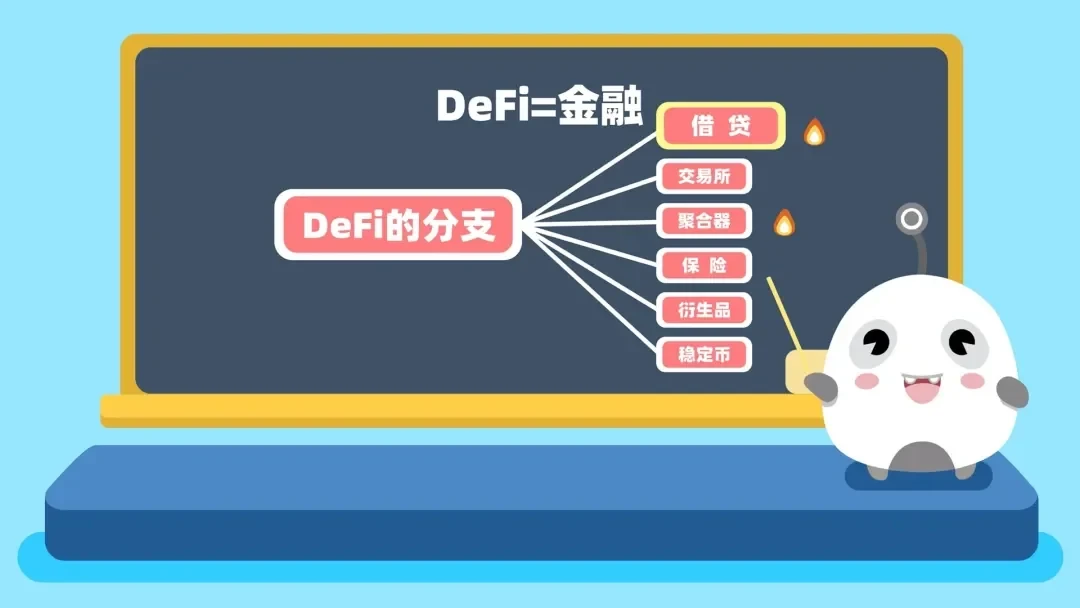
Since DeFi is a general term for a financial concept, it naturally encompasses many specialized sectors. Current DeFi细分领域include lending, decentralized exchanges, aggregators, insurance, derivatives, stablecoins, and more. Among these, lending and aggregators have grown the most rapidly.
First, let's discuss the lending sector in DeFi. There are many lending projects in DeFi currently, but they all follow a similar principle—comparable to bank loans, except the intermediary has changed from a bank to various smart contract lending protocols written in code.
For example, when we take out a bank loan with physical assets as collateral, the bank needs to check our credit, evaluate the assets, and go through a series of procedures before approving the loan.
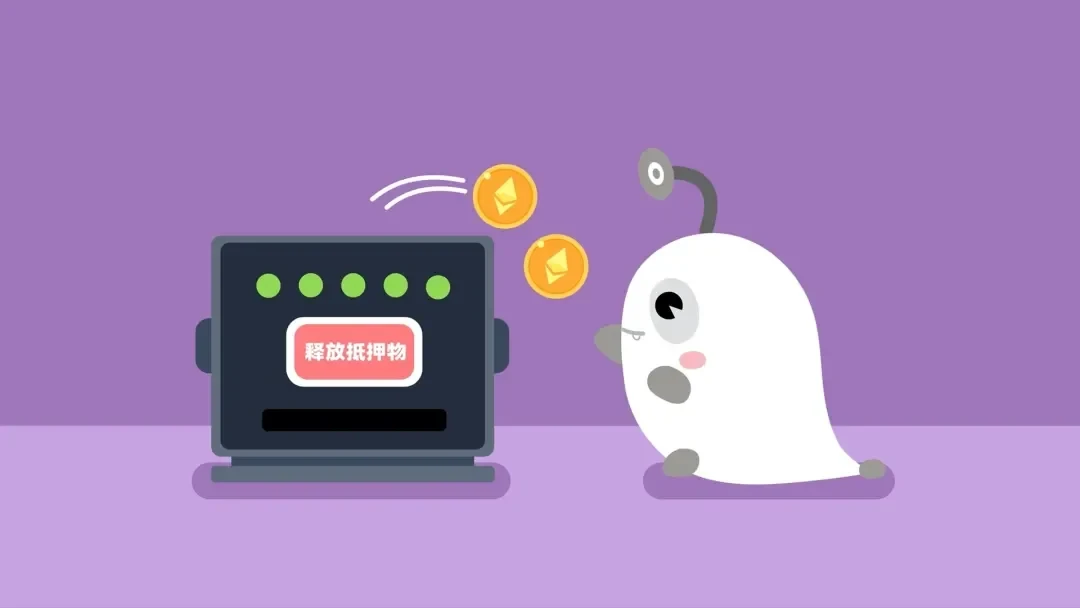
In the DeFi world, the lending principle is similar. Users who want to borrow need to pledge certain digital assets such as Ethereum or Bitcoin, and the smart contract will release the corresponding amount of USD stablecoins as the loan. When you finish using the funds, you repay the same amount of USD stablecoins plus some interest, and the system returns your collateral.
In this process, because banks have been replaced by smart contract protocols written in code, asset valuation, review, and loan disbursement are all handled autonomously by smart contracts, solving the problems of long processing times and cumbersome procedures in traditional lending. Additionally, since DeFi lending uses an over-collateralization model instead of banks' credit checks, it can also serve more people who cannot access traditional financial services.
Second, let's discuss aggregators, which can be compared to wealth management services in the DeFi world. In the traditional financial world, banks offer time deposits and wealth management—you deposit money in the bank, and if you don't withdraw it within the specified period, the bank pays you interest while using the funds for lending to earn returns.
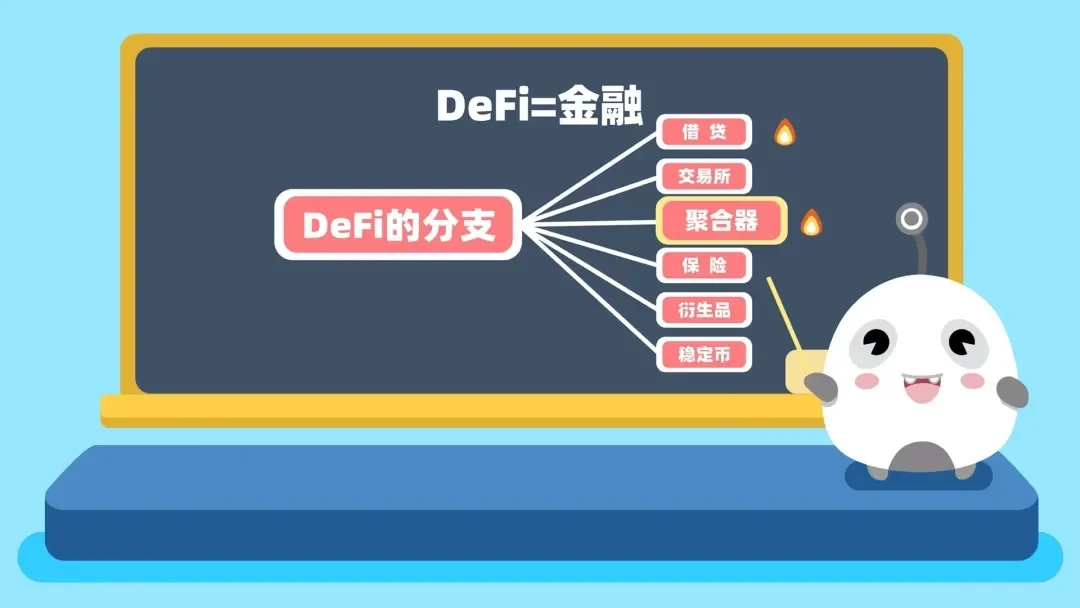
The principle behind aggregators is similar—we can deposit our digital assets into an aggregator, which will find the highest-yielding DeFi lending projects and pool our funds into them for management to generate returns. The difference is that aggregators return the lending returns directly to us, so DeFi aggregator returns are higher, but so is the risk.
Of course, besides these, whether it's lending, aggregators, or other areas of DeFi, the biggest difference from traditional financial services is decentralization. Since there is no third-party institution like a bank in DeFi, every DeFi project—like Bitcoin—has its own decentralized autonomous organization, and anyone can join to participate in the project's maintenance and governance. Whenever significant decisions arise, just like in a parliamentary system, everyone votes together to decide the project's development and changes.
Overall, DeFi is more like a reflection of the financial market in a decentralized world, carrying a beautiful vision—because not everyone in this world can enjoy good financial services, and hopefully DeFi will ultimately create a decentralized financial world where everyone can participate.
Thanks to Cao Yin for his assistance and guidance on this episode.
Weibo: @高等曹寅
– END –
Disclaimer
This article may contain product-related content not applicable to your region. This article is committed to providing general information only and is not responsible for any factual errors or omissions. This article represents the author's personal views only and does not represent OKX's views. This article is not intended to provide any advice, including but not limited to: (i) investment advice or investment recommendations; (ii) offers or solicitations to buy, sell, or hold digital assets; or (iii) financial, accounting, legal, or tax advice. Holding digital assets (including stablecoins) involves high risk and may be subject to significant volatility or may even become worthless. You should carefully consider whether trading or holding digital assets is suitable for you based on your financial situation. For questions specific to your circumstances, please consult your legal/tax/investment professionals. The information contained in this article (including market data and statistical information, if any) is provided for general reference purposes only. Although we have taken all reasonable precautions in preparing such data and charts, we accept no responsibility for any factual errors or omissions expressed herein. © 2025 OKX. This article may be reproduced or distributed in full, or excerpts of 100 words or less may be used, provided that such use is non-commercial in nature. Any reproduction or distribution of the full article must prominently state: "This article is copyrighted © 2025 OKX, used with permission." Permitted excerpts must cite the article name and include attribution, e.g., "Article Name, [Author Name (if applicable)], © 2025 OKX". Some content may have been generated or assisted by artificial intelligence (AI) tools. Derivative works and other uses of this article are not permitted.
Show More
Recommended Reading
OKX Blockchain 60 Lessons | Episode 43: The Rise of the Mining Circle (Part 2) — Bitmain's Rise
Hello everyone, I'm Xiao K. Today our topic is: "The Rise of the Mining Circle (Part 2) — Bitmain's Rise". In the last lesson, we discussed two people who opened the door to capital and commercialization in the mining circle—one being Pumpkin Zhang (Zhang Nangeng) and the other being Fried Cat (Jiang Xinyu). Although they jointly initiated the golden age of the mining circle, it was someone else who truly pushed the mining industry to its peak—and this person's name is Wu Jihan.
2025年9月18日
OKX Blockchain 60 Lessons | Episode 2: Why is Blockchain Called Blockchain?
"OKX Blockchain 60 Lessons" is a blockchain educational animation series jointly produced by OKX and Sina Technology, targeting users with zero blockchain knowledge. Through articles, educational animations, and other formats, it covers blockchain concepts from conceptual, technical, and application perspectives across five major sections and 60 key points, vividly explaining blockchain concepts. The content of this episode was guided by Vice President of the Digital Assets Research Institute Meng Yan. In 2008, a global financial crisis erupted. On October 31st, "
2025年9月18日
OKX Blockchain 60 Lessons | Episode 16: What is PoW Consensus Mechanism
"OKX Blockchain 60 Lessons" is a blockchain educational animation series jointly produced by OKX and Sina Technology, targeting users with zero blockchain knowledge. Through articles, educational animations, and other formats, it covers blockchain concepts from conceptual, technical, and application perspectives across five major sections and 60 key points, vividly explaining blockchain concepts. The content of this episode was guided by Wan You Computing Power Co-founder Huang Fangyu. Hello everyone, I'm Xiao K. Today our topic is:
2025年9月18日
OKX Blockchain 60 Lessons | Episode 51: 2019, Giants Enter the Market, Facebook's Cryptocurrency Dream
Previously we discussed how, in 2018, as blockchain was hyped to excessive prosperity, a dramatic de-bubbling process began, and the entire industry entered a winter. However, opportunities exist alongside dangers—this cyclical downturn恰好 gave international giants their best opportunity to enter the market. In February 2019, Wall Street financial giant JPMorgan Chase sounded the horn for international giants entering the blockchain space, followed by Goldman Sachs, UBS, Citibank, Microsoft, and other giants.
2025年9月18日
OKX Blockchain 60 Lessons | Episode 7: What Does a Fork in the Blockchain Mean?
"OKX Blockchain 60 Lessons" is a blockchain educational animation series jointly produced by OKX and Sina Technology, targeting users with zero blockchain knowledge. Through articles, educational animations, and other formats, it covers blockchain concepts from conceptual, technical, and application perspectives across five major sections and 60 key points, vividly explaining blockchain concepts. The content of this episode was guided by Austrian School economist Boo Feimo. A fork in the blockchain can be said to be a unique phenomenon in the blockchain network—
2025年9月18日
OKX Blockchain 60 Lessons | Episode 25: What is the Lightning Network?
Hello everyone, I'm Xiao K. Today our topic is: "What is the Lightning Network"? The Lightning Network was first proposed in 2015 by Joseph Poon and Thaddeus Dryja in a whitepaper as a technology to solve Bitcoin trading congestion. This technology originated from a problem left over from Bitcoin's early days. Because when Bitcoin was first designed, a
2025年9月18日