OKX Blockchain 60 Lectures | DeFi Episode 3: What Are DeFi Aggregators?
YFI+0. 12%
Hello everyone, I'm Xiao K Jun. Previously, we discussed how DeFi represents the entire decentralized finance sector, and how DeFi's ecosystem traffic gateway is the aggregator. So today, let's introduce you to what DeFi aggregators are all about.
We all know that in traditional finance, we can entrust our money to professional fund management teams, who will invest this capital in a diversified portfolio, and after generating returns, they will take a certain percentage as profit share.
What is an aggregator in DeFi? It is an aggregation platform that supports multiple DeFi protocols. It can automatically migrate positions between various DeFi protocols offering liquidity mining, helping users earn higher returns. Simply put, it is a fund product in the DeFi world — except the centralized investment management team is removed, and the smart contracts written in code take over the wealth management functions of traditional funds.
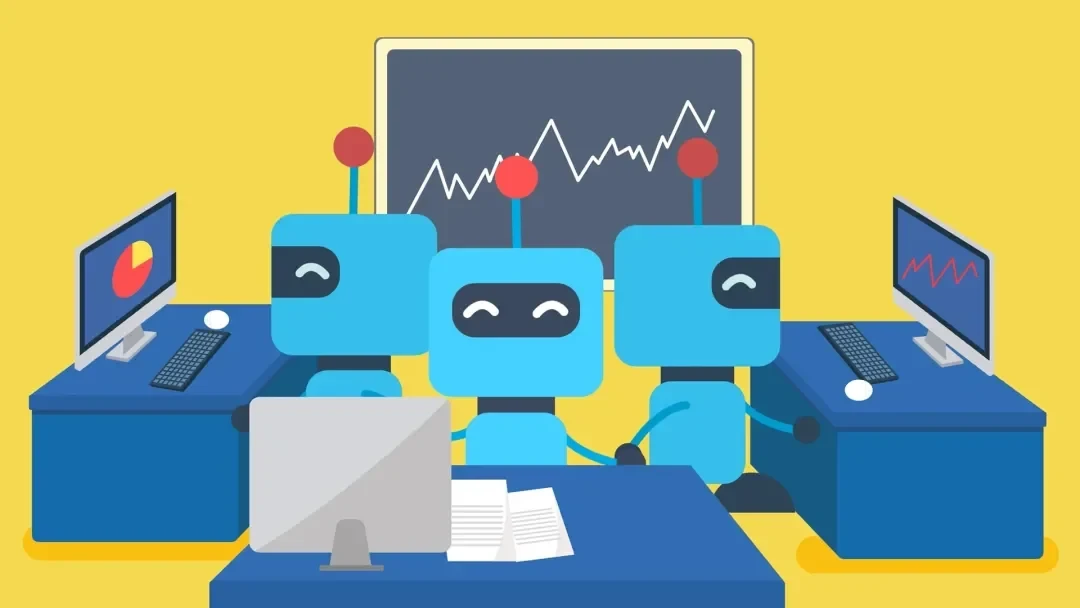
Some of you might be wondering: how can code replace people for wealth management? Below, we'll use the leading aggregator project — Yearn Finance — as an example to explain its operational principles.
Yearn Finance's returns come from two main sources. The first source is the DeFi lending projects we mentioned earlier. They share a common business logic: providing loans to these projects can earn you a portion of the project's token returns as well as loan interest. However, the return rates of these lending projects vary.
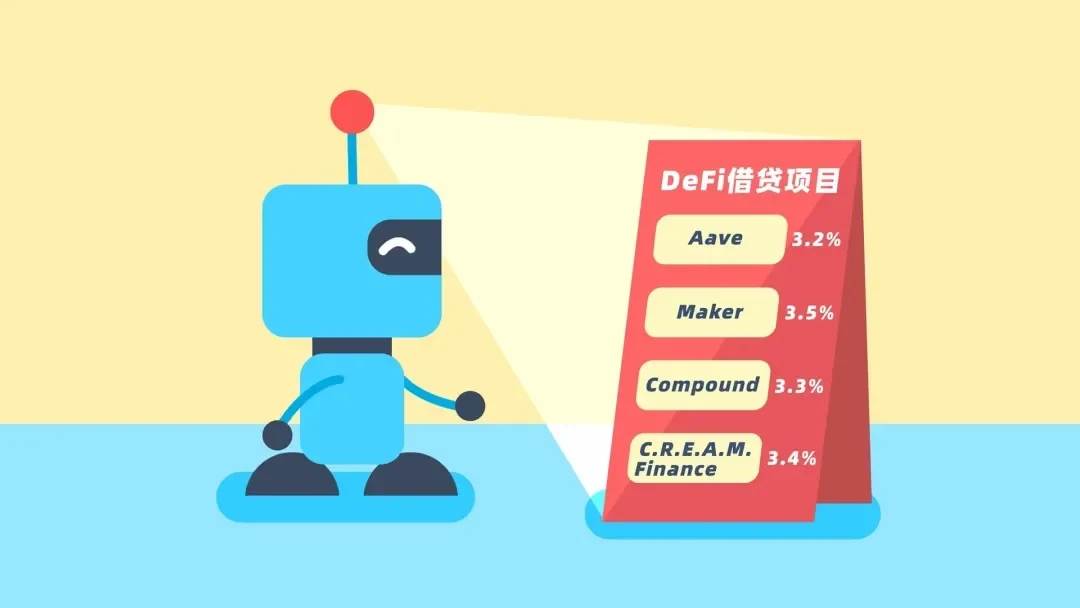
The aggregator itself does not provide lending functionality, but its smart contracts can connect to other lending projects. When we deposit our digital assets into an aggregator, the aggregator's smart contracts automatically search for the lending protocol with the highest returns and transfer the assets there to provide loan funds and earn returns.
Additionally, another source of returns comes from other DeFi trading projects. These projects require funds to provide liquidity in order to ensure trading stability. In return, they give a portion of the trading fees and their project's tokens back to liquidity providers. As a multi-protocol aggregation platform, the aggregator can also connect its smart contracts to these trading projects to automatically capture returns.

Therefore, an aggregator functions as an automated trading strategy investment product. When we deposit our digital assets — stablecoins — into the aggregator, the aggregator's smart contracts automatically connect to the contracts of lending and trading projects, select the one with the highest return rate for investment, and pool all the returns together. These returns are then distributed to users according to certain rules.
Overall, aggregators are currently a crucial part of the DeFi ecosystem. They not only serve a wealth management function but also act as a tool that lowers the barrier to entry for DeFi usage. Perhaps in the future, as the decentralized market continues to grow, aggregators — serving as the ecosystem's traffic gateway — will truly help DeFi achieve a decentralized financial world where everyone can freely participate.
Special thanks to Bear Yong for his assistance and guidance on the content of this episode.
Sina Weibo: @熊越Xiong Yue
– END –
Disclaimer
This article may contain product-related content that does not apply to your region. This article is only intended to provide general information and makes no responsibility for any factual errors or omissions. This article represents the author's personal views only and does not represent the views of OKX. This article is not intended to provide any advice, including but not limited to: (i) investment advice or investment recommendations; (ii) offers or solicitations to buy, sell, or hold digital assets; or (iii) financial, accounting, legal, or tax advice. Holding digital assets (including stablecoins) involves a high degree of risk and may be subject to significant price fluctuations, or may even become worthless. You should carefully consider whether trading or holding digital assets is suitable for you based on your financial situation. For questions specific to your situation, please consult your legal/tax/investment professional. The information contained in this article (including market data and statistics, if any) is provided for general reference purposes only. Although we have taken all reasonable precautions in preparing such data and charts, we assume no responsibility for any factual errors or omissions expressed herein. © 2025 OKX. This article may be reproduced or distributed in its entirety, or excerpts of 100 words or less may be used, provided that such use is for non-commercial purposes. Any reproduction or distribution of the full article must prominently state: "This article is copyrighted © 2025 OKX, used with permission." Permitted excerpts must cite the article title and include attribution, for example, "Article Title, [Author Name (if applicable)], © 2025 OKX." Some content may have been generated or assisted by artificial intelligence (AI) tools. Derivative works and other uses of this article are not permitted.
Show More
Recommended Reading
OKX Blockchain 60 Lectures | Episode 43: The Rise of the Mining Industry (Part 2) — Bitmain's Rise
Hello everyone, I'm Xiao K Jun. Today we'll be covering: "The Rise of the Mining Industry (Part 2) — Bitmain's Rise." In the last lesson, we talked about two people who opened the door to commercialization and capital in the mining industry. One was "Pumpkin Zhang" — Zhang Nan Geng, and the other was "Fried Cat" — Jiang Xin Yu. Although together they initiated the golden age of the mining industry, it was someone else who truly pushed the mining business to its peak — and that person's name is Wu Jihan.
2025年9月18日
OKX Blockchain 60 Lectures | Episode 2: Why Is Blockchain Called Blockchain?
"OKX Blockchain 60 Lectures" is a blockchain education animation series jointly produced by OKX and Sina Tech. Aimed at users with zero blockchain knowledge, it uses articles, animated videos, and other formats to vividly explain blockchain concepts from the perspectives of concepts, technology, and applications through 5 major sections and 60 knowledge points. The content of this episode was guided by Meng Yan, Deputy Dean of the Digital Assets Research Institute. In 2008, a global financial crisis erupted. On October 31st, "
2025年9月18日
OKX Blockchain 60 Lectures | Episode 16: What Is the PoW Consensus Mechanism?
"OKX Blockchain 60 Lectures" is a blockchain education animation series jointly produced by OKX and Sina Tech. Aimed at users with zero blockchain knowledge, it uses articles, animated videos, and other formats to vividly explain blockchain concepts from the perspectives of concepts, technology, and applications through 5 major sections and 60 knowledge points. The content of this episode was guided by Huang Fang Yu, Co-founder of Wanyou Computing Power. Hello everyone, I'm Xiao K Jun. Today we'll be covering:
2025年9月18日

OKX Blockchain 60 Lectures | Episode 51: 2019 — Giants Enter the Scene, Facebook's Cryptocurrency Dream
Previously, we discussed how in 2018, as blockchain was hyped beyond realistic expectations, a massive de-bubble process began, and the entire industry entered a cold winter. However, opportunity coexists with danger. This cyclical downturn恰好 provided international giants with the optimal timing to enter the market. In February 2019, Wall Street financial giant JPMorgan Chase sounded the horn for international giants to enter the blockchain space, followed by Goldman Sachs, UBS, Citibank, Microsoft, and other industry titans.
2025年9月18日
OKX Blockchain 60 Lectures | Episode 7: What Does a Blockchain Fork Mean?
"OKX Blockchain 60 Lectures" is a blockchain education animation series jointly produced by OKX and Sina Tech. Aimed at users with zero blockchain knowledge, it uses articles, animated videos, and other formats to vividly explain blockchain concepts from the perspectives of concepts, technology, and applications through 5 major sections and 60 knowledge points. The content of this episode was guided by economist Bulfeimo from the Austrian School. A blockchain fork can be said to be a unique phenomenon in blockchain networks.
2025年9月18日
OKX Blockchain 60 Lectures | Episode 25: What Is the Lightning Network?
Hello everyone, I'm Xiao K Jun. Today we'll be covering: "What Is the Lightning Network?" The Lightning Network was first proposed in 2015 by Joseph Poon and Thaddeus Dryja in a whitepaper, as a technology to solve Bitcoin trading congestion. This technology originated from a problem left over from Bitcoin's early days. Because when Bitcoin was first designed,
2025年9月18日