OKX Blockchain 60 Lectures | DeFi Part, Episode 6: What Impact Has DeFi Brought?
Hello everyone, I'm Xiao K. Today we'll be discussing: "What Impact Has DeFi Brought?"
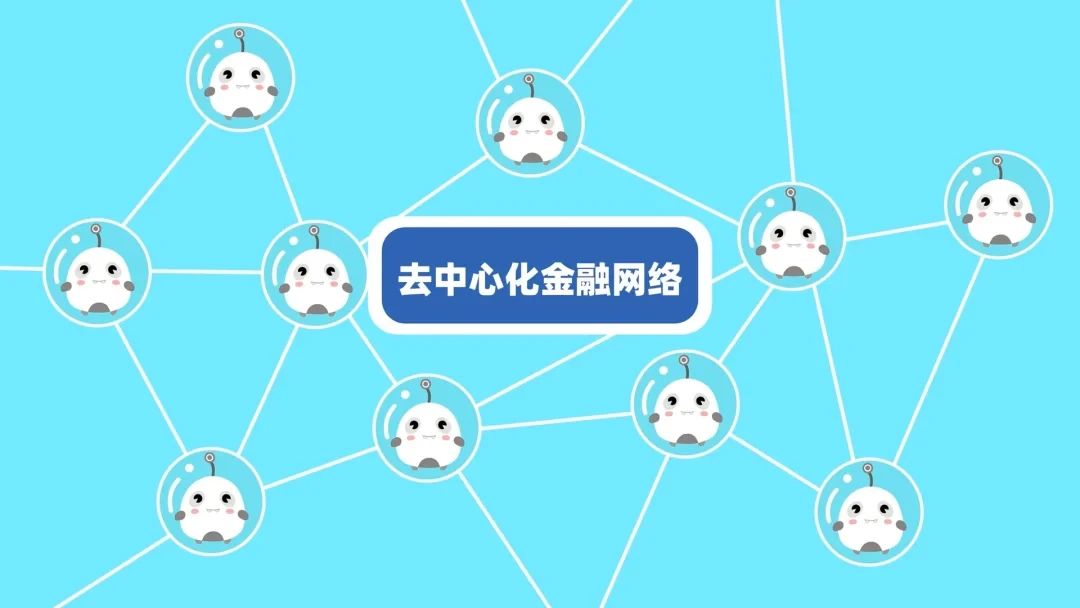
DeFi is an umbrella term for decentralized finance. We've previously covered the operational logic of various DeFi sectors in detail, including decentralized lending, DEX, aggregators, decentralized insurance, and more. The most fundamental difference between DeFi and traditional finance lies in the fact that the DeFi model is a completely free, decentralized network model that does not rely on any traditional centralized financial institutions, which allows it to largely overcome the shortcomings of the existing financial system.
So today, let's summarize what impacts DeFi can actually bring us. Put simply, DeFi's impact mainly falls into three areas:
First, DeFi lowers the barriers to accessing financial services. As we all know, in the traditional financial system, certain prerequisites must be met in order to enjoy financial services. For example, if you want to take out a loan, you need a good credit standing and assets as collateral; if you want to invest, you need a certain level of capital reserves as a qualification.

In such circumstances, many people may be excluded from the financial services system due to insufficient qualifications. Yet it is often these very people who need access to such financial services the most.
Because DeFi incorporates the technical features of blockchain, its essence is a financial network that everyone can freely participate in. This characteristic determines that it can solve the trust problem of prerequisites, effectively ensuring trading security between parties without relying on third parties. Users can use all financial services according to their own will, without needing approval from any institution.
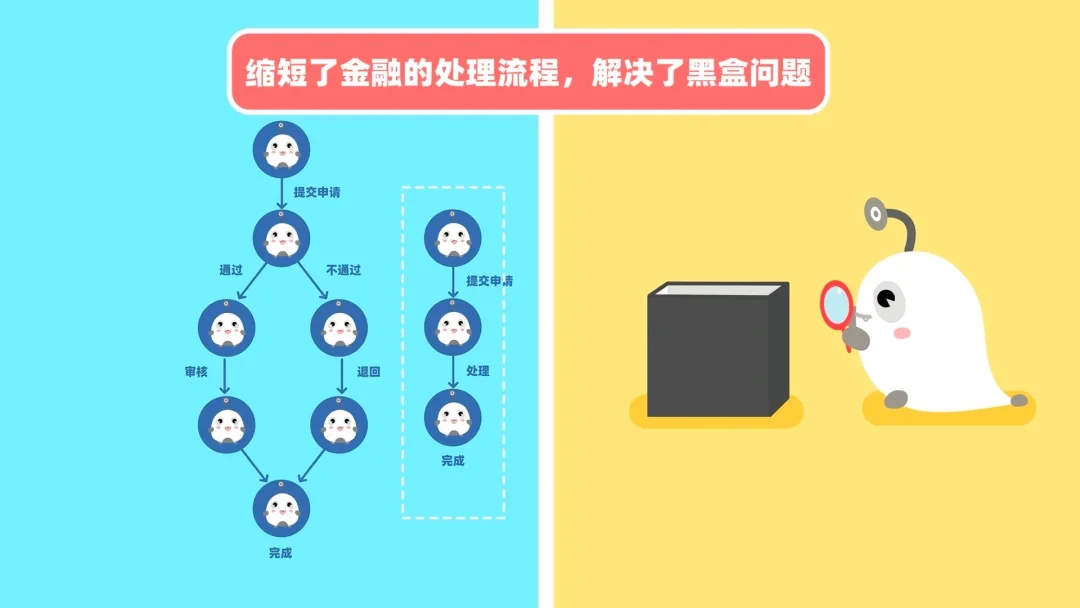
Second, DeFi shortens financial processing workflows and solves the black box problem. When we deposit money, take out loans, or trade in our daily lives, third-party financial institutions are always involved. All financial transactions are not completed directly but require a detour through institutional intermediaries to handle our transactions. In this process, they act like black boxes—extremely opaque. We don't know how they process data, whether they infringe on our rights, or how they commercialize our data.
DeFi removes these third-party institutions through blockchain technology, allowing users to conduct financial transactions peer-to-peer. This significantly reduces users' financial costs. Furthermore, data processing through smart contracts written in code makes data more trustworthy and transparent, solving the institutional black box problem.
Third, DeFi brings more possibilities. In truth, after traditional finance has developed to this point, the range of products available to us—whether for wealth management or insurance—is limited. DeFi takes a different path from traditional finance from the ground up. Its transactions occur more directly between users, and users have the authority to provide feedback on product design details. So, just like a new continent, it has the potential to give rise to more business models, more diverse products, and consequently, more innovation.
Therefore, overall, DeFi's impact is multifaceted. Perhaps for a long time to come, traditional finance and decentralized finance will coexist. But DeFi is like an innovator in the old world. Its significance lies not in overthrowing the existing system, but in bringing us more choices in such a centralized world of power.
Thanks to kevinshao for the help and guidance on this episode.
Sina Weibo: @邵建良kevinshao
– END –
Disclaimer
This article may contain product-related content that is not applicable in your region. This article is committed to providing general information only and does not accept responsibility for any factual errors or omissions. This article represents the author's personal views only and does not represent the views of OKX. This article is not intended to provide any recommendations, including but not limited to: (i) investment advice or investment recommendations; (ii) offers or solicitations to buy, sell, or hold digital assets; or (iii) financial, accounting, legal, or tax advice. Holding digital assets (including stablecoins) involves a high degree of risk and may be subject to significant price fluctuations, and may even become worthless. You should carefully consider whether trading or holding digital assets is appropriate for you based on your financial situation. For questions about your specific circumstances, please consult your legal/tax/investment professional. The information contained in this article (including market data and statistical information, if any) is provided for general reference purposes only. Although we have taken all reasonable precautions in preparing such data and charts, we do not accept any responsibility for any factual errors or omissions expressed herein. © 2025 OKX. This article may be reproduced or distributed in its entirety or in excerpts of 100 words or less, provided that such use is non-commercial in nature. Any reproduction or distribution of the full article must prominently state: "This article is copyrighted © 2025 OKX, used with permission." Permitted excerpts must cite the article title and include attribution, for example, "Article Title, [Author Name (if applicable)], © 2025 OKX." Some content may have been generated or assisted by artificial intelligence (AI) tools. Derivative works or other uses of this article are not permitted.
Show More
Recommended Reading
OKX Blockchain 60 Lectures | Episode 43: The Rise of the Mining Circle (Part 2) — The Rise of Bitmain
Hello everyone, I'm Xiao K. Today we'll be discussing: "The Rise of the Mining Circle (Part 2) — The Rise of Bitmain." In the previous lesson, we talked about two people who opened the door to mining circle capitalization and commercialization. One was Nanogui Zhang (Zhang Nan'gai), and the other was烤猫 (Fried Cat) — Jiang Xinyu. Although together they kicked off the golden age of the mining circle, the one who truly propelled the mining industry to its peak was someone else, and that person's name is Wu Jihan.
September 18, 2025
OKX Blockchain 60 Lectures | Episode 2: Why Is Blockchain Called Blockchain?
"OKX Blockchain 60 Lectures" is a blockchain educational animation series jointly produced by OKX and Sina Tech. Targeted at users with zero foundation in blockchain, through articles, animated videos, and other formats, it covers blockchain concepts from the perspectives of concepts, technology, and applications across five major sections and 60 knowledge points, vividly explaining blockchain concepts. This episode's content was guided and completed by Meng Yan, Deputy Dean of the Digital Assets Research Institute. In 2008, a global financial crisis erupted. On October 31st, "
September 18, 2025

OKX Blockchain 60 Lectures | Episode 16: What Is the PoW Consensus Mechanism
"OKX Blockchain 60 Lectures" is a blockchain educational animation series jointly produced by OKX and Sina Tech. Targeted at users with zero foundation in blockchain, through articles, animated videos, and other formats, it covers blockchain concepts from the perspectives of concepts, technology, and applications across five major sections and 60 knowledge points, vividly explaining blockchain concepts. This episode's content was guided and completed by Huang Fangyu, Co-founder of Wanyou Computing Power. Hello everyone, I'm Xiao K. Today we'll be discussing:
September 18, 2025

OKX Blockchain 60 Lectures | Episode 51: 2019, Giants Enter the Arena — Facebook's Cryptocurrency Dream
We previously discussed how in 2018, as blockchain was being overly hyped to an unsustainable繁荣, it then underwent a dramatic deflation process, and the entire industry entered a winter. However,危与机并存 (danger and opportunity coexist). This periodic downturn in the industry also happened to provide the optimal timing for international giants to enter the market. In February 2019, Wall Street financial beast JPMorgan Chase officially sounded the horn for international giants to enter the blockchain space. Subsequently, Goldman Sachs, UBS, Citigroup, Microsoft, and other giants
September 18, 2025
OKX Blockchain 60 Lectures | Episode 7: What Does a Fork in the Blockchain Mean?
"OKX Blockchain 60 Lectures" is a blockchain educational animation series jointly produced by OKX and Sina Tech. Targeted at users with zero foundation in blockchain, through articles, animated videos, and other formats, it covers blockchain concepts from the perspectives of concepts, technology, and applications across five major sections and 60 knowledge points, vividly explaining blockchain concepts. This episode's content was guided and completed by Boolean,费墨 (Boofer), an Austrian School economist. A fork in the blockchain can be said to be a unique o
September 18, 2025

OKX Blockchain 60 Lectures | Episode 25: What Is the Lightning Network?
Hello everyone, I'm Xiao K. Today we'll be discussing: "What Is the Lightning Network?" The Lightning Network is a technology first proposed in 2015 by Joseph Poon and Thaddeus Dryja in a whitepaper, designed to solve Bitcoin transaction congestion. This technology originated from a problem left over from Bitcoin's early days. Because when Bitcoin was originally designed, a
September 18, 2025