What Lessons Can the 2000 Internet Bubble Teach Web3 Observers?
Here's a math problem: You earn 1 cent on your first day, and your earnings double every day after that. If it's January (31 days), how much do you earn this month? You read that right - it's $21 million! But if you're in February (28 days), you only earn $2.6 million - far less than January. The lesson from this simple arithmetic is that when something grows exponentially, the last 3 days matter extraordinarily!
Although the crypto world is currently going through difficult times, Web3 may be at a critical moment of exponential growth. In 1997, global internet users reached 300 million, and in 2022, global crypto assets holders numbered exactly 300 million! Web3's 2022 is Web2's 1997 - this moment is just like that moment.
Looking back at the 2000 internet bubble may bring some insights to Web3 observers.
1. The "Internet Queen's" Minimalist Investment Philosophy
Web2 is like a mirror to Web3. As we ride the Web3 wave, we occasionally glance at Web2 to avoid losing our way, and it may even bring some inspiration.
Looking back at the 2000 internet bubble. Starting from 1990, the number of personal computers connected to the internet soared in a straight line, increasing from 310,000 to 43.23 million in 2000 - a more than 130-fold increase over 10 years, with a compound annual growth rate of over 60%. This provided fertile ground for the internet bubble.
In 1990, the market capitalization of NASDAQ, where internet companies clustered, was only 11% of the NYSE. By December 1999, NASDAQ's market cap had risen to 80% of the NYSE.
In March 2000, NASDAQ surged to a high of 5048.62. In April 2000, Microsoft was found guilty in its antitrust case and faced the risk of being broken up. The news sent NASDAQ down 349 points in a single day - its largest one-day drop - and the internet bubble officially burst.
During the rapid formation of the internet bubble, the performance of Mary Meeker, a Morgan Stanley analyst known as the "Queen of the Internet," is absolutely worth attention.
In 1995, as the internet bubble grew exponentially, Morgan Stanley analyst Mary Meeker, through her keen observations of the entire internet, participated in Netscape browser's IPO and published a 300-page coverage report that analyzed Netscape inside and out.
In the 1990s when the internet was not yet widespread, this was earth-shattering. The report became an internet investment textbook that every internet investor had.
Standing in 2022, 27 years later, Mary Meeker's strong bullishness on Netscape now seems to have a simple investment logic: "Netscape is the entry point to the internet, and it will inevitably generate substantial advertising revenue in the future."
Yes! It's that simple.
Netscape was founded in 1994 and went public on NASDAQ in 1995. It was the dominant player in the US search industry at the time, but due to poor management, it was quickly overtaken by Microsoft and Google, and delisted in 2003. Notably, one of Netscape's founders (Marc Andreessen) founded a16z, the most well-known investment firm in the crypto space.
Looking back at Mary Meeker's precise grasp of Netscape's profit model, this is now the profit logic of today's Twitter/Facebook and YouTube, and even Alibaba.
But this is looking at the problem from a God's perspective. If we go back 27 years, very few people could so accurately summarize the internet business model. Standing here at a critical time in Web3's development, we may not be able to describe what a Web3 killer app will look like with such simple logic either.
Let me make some predictions as a starting point for discussion. Search engines in the Web2 era likely correspond to public chains in Web3. Social networking and gaming - two areas that generated huge cash flows in the Web2 era - can all be handled by a single address in Web3. The trading trajectory on an address is proof of the user's identity, and all addresses are based on public chains. The Twitter/Facebook/YouTube model of registering accounts and trading information for usage rights may no longer work.
In this critical moment of global financial market volatility, how can we safely weather this storm? How can we survive bull and bear markets?
2. The "Stock God" Who Laughs Last
In the past two months, Bitcoin fell from its high of $69,000 to $33,000. Although there has been some rebound, the entire market remains shaky on the whole. Additionally, under the triple threat of the Federal Reserve reducing bond purchases, raising interest rates, and shrinking its balance sheet, economic sentiment across major global economies is generally pessimistic.
Meta (Facebook), with a market cap of nearly a trillion, saw its stock drop 23% in a single day in early February. Paypal's stock fell from $310 to $100 from mid-2021 to now. This is by no means a simple correction.
The entire market seems to have fallen into a dark moment. Clearly, this is not the time to be pessimistic. As the "Stock God" Warren Buffett says, "Be fearful when others are greedy, and greedy when others are fearful."
And just recently, Buffett's Berkshire Hathaway made a $1 billion investment in Latin America's largest digital bank, which is "crypto assets-friendly." Whether this is aimed at the crypto industry isn't important - what matters is that Buffett always makes the right choices at critical moments.
Looking back at the 2000 internet bubble, Buffett never touched internet stocks from start to finish, even though internet-related venture capital scale grew from $8 billion to $200 billion during this period, and NASDAQ rose 5-fold. During the subsequent burst of the internet bubble from March 2000 to the end of 2001, NASDAQ fell more than 70%, and Amazon's stock fell more than 95%.
But Buffett emerged unscathed, still the happy old man drinking Coca-Cola.
If you think you're smarter than this nonagenarian who has experienced countless changes in financial markets, you're likely close to misfortune. Buffett's calm demeanor seems to be showing the world: Don't follow blindly - be your own authority.
Looking back at the last bull market, there are also many cases of authorities failing. Masayoshi Son is the most typical example.
In December 2017, at the end of the last bull market cycle, SoftBank leader Masayoshi Son bought hundreds of millions of dollars worth of Bitcoin at the historical high of $20,000, then liquidated in 2018, losing $130 million. On this entirely new track of Web3, Web2-era experts can also "misjudge."
In the process of investing on this entirely new Web3 track, if you're not making collective decisions like a hedge fund but are acting alone, you're very likely to give up in various fears or invest indiscriminately in confusion. The more this happens, the more cautious you must be, or you'll most likely crash.
In difficult times for industry development, you need Buffett's calm composure as well as Mary Meeker's agile wisdom. Through continuous research, grasp the essence of the problem, understand what exactly determines Web3's future development, and never follow authorities blindly - because no one can control the depth of your thinking.
Finally, in 1995, 86% of adults did not use the internet. In 2022, 97% of internet users do not own Ethereum.
Disclaimer
This article may contain product-related content not applicable to your region. This article is intended only to provide general information and is not responsible for any factual errors or omissions herein. This article represents only the author's personal views and does not represent the views of OKX. This article is not intended to provide any advice, including but not limited to: (i) investment advice or investment recommendations; (ii) offers or solicitations to buy, sell, or hold digital assets; or (iii) financial, accounting, legal, or tax advice. Holding digital assets (including stablecoins) involves high risk, may fluctuate significantly, and may even become worthless. You should carefully consider whether trading or holding digital assets is suitable for you based on your financial situation. For questions about your specific situation, please consult your legal/tax/investment professional. The information appearing in this article (including market data and statistics, if any) is for general reference only. Although we have taken all reasonable care in preparing these data and charts, we accept no responsibility for any factual errors or omissions expressed herein. © 2025 OKX. This article may be reproduced or distributed in full, or excerpts of 100 words or less from this article may be used, provided such use is non-commercial. Any reproduction or distribution of the entire article must also prominently state: "© 2025 OKX. Used with permission." Permitted excerpts must cite the article title and include attribution, e.g., "Article Name, [Author Name (if applicable)], © 2025 OKX". Some content may be generated or assisted by artificial intelligence (AI) tools. Derivative works or other uses of this article are not permitted.
Show More
Recommended Reading

2025 KOL Most Used OKX Products List
In the cryptocurrency industry, professional players' choices are always direct and pure. In 2025, KOLs cast the most genuine votes for industry tools and ecosystem development with a full year of funds and time. We focused on four core questions - "What was your biggest achievement this year?", "Given that achievement, what OKX products did you use most and like best in 2025?", "Why do you like it?", and "This
January 5, 2026

2026 Investment Outlook: Assets On-Chain, Intelligence & Privacy | OKX Annual Record
Three major trends in crypto's future: asset transformation, entity transformation, and rule transformation. As we approach 2026, bidding farewell to the past four years of infrastructure focus on "road building," the crypto industry is welcoming a profound paradigm shift. OKX Ventures defines this as the opening of the "Kinetic Finance" era - where the core is no longer how fast the network is, but the flow of on-chain assets and profitability
December 31, 2025

Voting with Data: A Look at 2025 Hot Trading Products | OKX Annual Record
If you only look at market trends, it's hard to explain the difference in returns among trading users in 2025. What really determines returns also depends on account-level operating methods, not just market volatility itself. OKX's annual statement shows that mainstream coins remain the core of fund turnover and returns, supporting trading and strategy execution; emerging coins are more used to amplify volatility and provide staged opportunities, but are not a stable, long-term source of returns. What truly contributes to returns consistently,
December 30, 2025
Fusaka in Practice: What Does Ethereum's Latest Upgrade Mean for L2, Nodes, and Users?
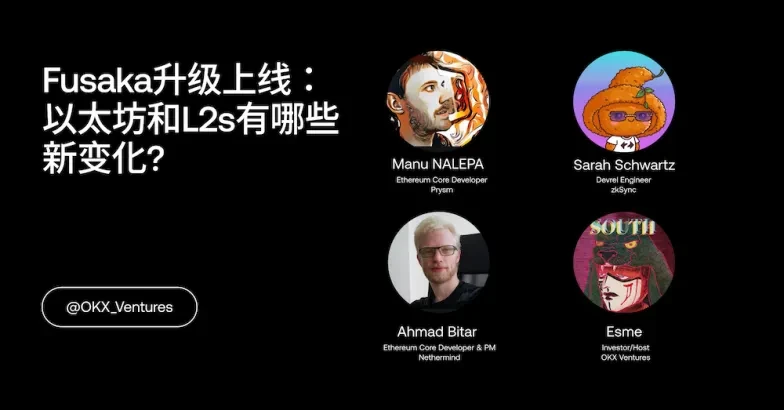
Ethereum mainnet has completed the Fusaka fork. At the protocol level, this upgrade mainly includes four parts. The full text presents the core views and frontline experience of three guests in Q&A format: Ahmad (@smartprogrammer) - Nethermind execution client / Ethereum core developer Manu (@manunalepa) - Prysm / Of
December 16, 2025

OKX Research | Why Is RWA a Key Narrative in 2025?
RWA (Real World Assets) is becoming a global capital "favorite." Simply put, RWA takes valuable things with ownership rights in the real world - such as traditional financial assets like houses, bonds, stocks, and even assets like artwork, private lending, and carbon credits that are usually not easily traded - and moves them onto blockchain, turning them into tradeable, programmable crypto assets. This way, no
November 20, 2025
Claude Takes the Championship: Truth Behind 6 Major AI Grid Strategy Showdown | OKX & Ai Coin Live Trading Review
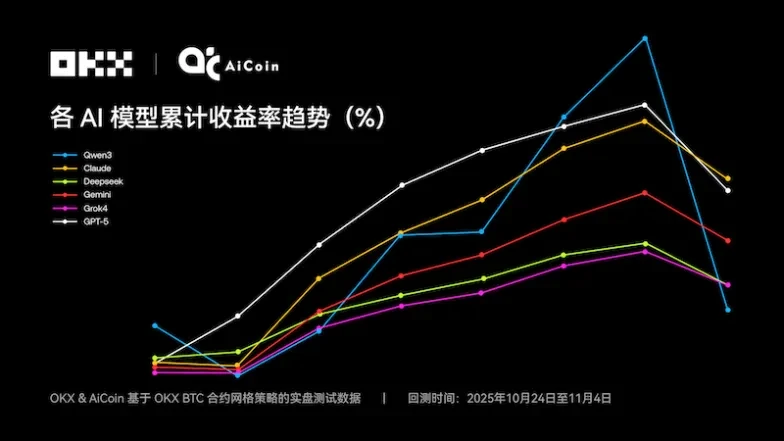
Short-term trading champion , is it also king in grid strategies? The first season of NOF1's "AI Trading Live Arena" finally concluded at 6 AM on November 4, 2025, whetting the appetites of the crypto, tech, and finance circles. But the outcome of this "AI IQ public test" was somewhat unexpected - the total principal of $60,000 across six models was only $4.3 at the end
November 6, 2025