
Over 70% of CBDC Projects Enter Pilot Phase as Global Central Bank Cryptocurrency Race Accelerates
Since launching testing in 2020, the digital yuan has made tremendous progress over the past two years. China, the Eurozone, and other countries are conducting experiments in the field of central bank cryptocurrency. Meanwhile, the Federal Reserve and the Bank of England remain relatively cautious, though the United States released a central bank cryptocurrency white paper and discussion paper this year. With the global proliferation of digitalization, many countries worldwide are accelerating their exploration of central bank cryptocurrency, making CBDC an "inevitable" topic. A BIS survey shows that by the end of 2020, 86% of central banks were actively engaged in CBDC work. Which countries are currently planning to launch central bank cryptocurrency? Which countries have already achieved significant pilot results? Why has central bank cryptocurrency become a global focus?
1. Latest Progress in Global Central Bank Cryptocurrency
CBDC stands for Central Bank Digital Currencies, meaning central bank cryptocurrency. There is no unified answer regarding its definition. The International Monetary Fund (IMF) defines it as: "Central bank cryptocurrency is a new form of currency, issued in digital form by a central bank, with legal payment tender." Simply put, central bank cryptocurrency is a digital legal tender.
Since 2014, more than 110 central banks have been exploring central bank digital currencies (CBDC). The International Monetary Fund (IMF) states that over half of the world's central banks are currently in some stage of exploring central bank digital currencies (CBDC). As some CBDC projects enter the pilot phase, this process is accelerating. Currently, the only launched central bank cryptocurrency projects globally are the Bahamas' "Sand Dollar" and Cambodia's "Bakong," both retail-type CBDCs. In October 2020, the Bahamas and Cambodia successively announced the issuance and launch of central bank cryptocurrency, with the Bahamas becoming the first country in the world to promote and use central bank cryptocurrency nationwide.
Other publicly announced national central bank cryptocurrency projects remain in different stages of pilot, launch, research, and planning. Looking at current central bank cryptocurrency progress, over 70% of announced wholesale CBDC projects are already conducting pilots, while only about 23% of retail projects have reached the implementation phase.
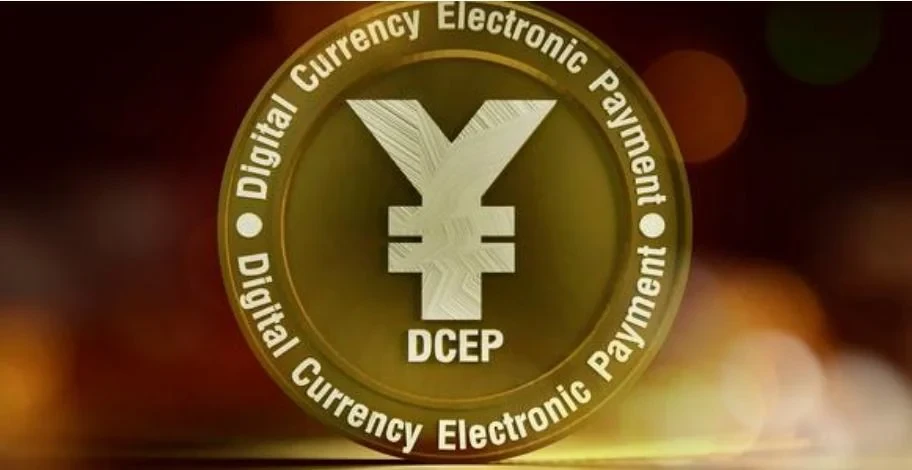
Among these announced CBDCs, Ecuador was the first country in the world to start a CBDC, while China, as the world's first major economy to pilot central bank cryptocurrency, has the digital yuan (DC/EP) as one of the projects achieving the most significant pilot results, representing an advanced level in central bank cryptocurrency pilots. Since internal testing began in April 2020, the People's Bank of China has already issued over 200 million digital yuan red envelopes. As of early 2022, the People's Bank has conducted digital yuan pilots in Shenzhen, Suzhou, Xiong'an, Chengdu, Shanghai, Hainan, Changsha, Xi'an, Qingdao, Dalian, and other locations, as well as the 2022 Beijing Winter Olympics scenario, basically covering different regions including the "Yangtze River Delta," "Pearl River Delta," "Beijing-Tianjin-Hebei," central, western, northeastern, and northwestern regions. Zou Lan, Director of the Financial Markets Department of the People's Bank of China, recently stated that as of December 31, 2021, digital yuan pilot scenarios had exceeded 8.0851 million, with 261 million individual wallets opened and a cumulative trading amount of 87.565 billion yuan.
Since 2020, under the impact of the pandemic, demand for digital payments and cashless payment systems has intensified, and the central bank cryptocurrency (CBDC) race has begun to heat up. Besides China, countries including India, Sweden, Canada, and Singapore have already launched or plan to launch central bank cryptocurrency, and many emerging countries have also joined this competition.
2. Central Banks Competing to Join the "Race"
Just between late last year and early this year, Mexico, Jamaica, India, Russia, the European Union, and multiple other countries and regions successively announced their entry into the central bank cryptocurrency competition arena. On December 30, 2021, the official account of the Mexican President's Office announced that the Bank of Mexico plans to issue cryptocurrency (CBDC) by 2024. Following this, on February 1, 2022, Indian Finance Minister Nirmala Sitharaman stated that India plans to launch a central bank cryptocurrency (CBDC) in the fiscal year 2023 starting in April.
The European Union will also launch a CBDC in the next fiscal year. On February 9, EU financial official Mairead McGuinness stated at a fintech conference that the EU would propose a digital euro bill in early 2023, which would serve as the legal foundation for the European Central Bank's ongoing technical work on virtual versions of euro paper money or coins. On February 11, Jamaica's Prime Minister revealed that the Bank of Jamaica would soon launch its own digital Jamaican dollar this year. Jamaica had already begun its cryptocurrency pilot, and by December 2021, the Bank of Jamaica stated it had successfully completed a pilot project issuing 230 million digital Jamaican dollars. On February 15, the Russian Central Bank and market participants began testing the digital ruble platform, with the first transfers between individual accounts successfully completed.
Previously, Sweden, Canada, South Korea, Japan, and emerging countries in Asia had also successively launched central bank cryptocurrency projects. Currently, quite a few leading retail CBDC projects exist: In 2017, Sweden's central bank Riksbank launched the Swedish CBDC project E-krona; following the first pilot in December 2020, the Riksbank initiated a feasibility review that will conclude at the end of November 2022; Canada's advancing Jasper project is the world's first pilot project using distributed ledger technology (DTL) for settlement payments between financial institutions through central bank and private sector cooperation; South Korea's central bank launched a 22-month pilot in March 2020, and its central bank recently announced it is studying how to use central bank cryptocurrency (CBDC) to pay for NFTs and various digital assets; Japan's central bank cryptocurrency is still in the first phase of proof of concept and will conclude in March.
Additionally, some wholesale CBDC projects in Asia have also achieved significant results. For example, Singapore's Ubin project completed its final phase of exploration in July 2020 and expects close cooperation with China in this field. The Bank of Thailand also launched a central bank cryptocurrency pilot project called "Inthanon" in July 2020 and initiated Project Inthanon-Lion Rock with the Hong Kong Monetary Authority to facilitate cross-border settlement using CBDC.

As of now, most central banks globally have gradually shifted to a positive attitude toward cryptocurrency. Relatively speaking, the United States still appears quite cautious. On January 20 this year, the Federal Reserve released a central bank cryptocurrency (CBDC) white paper titled "Money and Payments: The Dollar in the Digital Transformation Era" soliciting public opinion, aimed at exploring the pros and cons of a potential U.S. CBDC. Whether the digital dollar bill or the digital dollar white paper, these indicate that the U.S. attitude toward central bank cryptocurrency has begun to shift.
3. Why Have CBDC Projects Become Urgent?
Central bank cryptocurrency CBDC can be understood as a digitized yuan, a legal tender cryptocurrency issued by a national central bank. Looking at global central bank CBDC deployment, current research and development strategies primarily remain within national borders, and quite a few countries are still in the theoretical exploration stage. For countries at different development stages, due to different financial development statuses, their needs for central bank cryptocurrency also differ.
For example, smaller countries like the Bahamas and Ecuador may be motivated by protecting their domestic financial systems, defending financial sovereignty, and dedollarization. Meanwhile, rapidly developing major economies like China, Singapore, and India are primarily motivated by enhancing their country's status in the global financial system. Additionally, countries like the UK, Canada, and Sweden are concerned about declining cash usage rates.
However, in summary, most major countries are accelerating their central bank cryptocurrency research and development processes for the following three main reasons: 1) Global digitalization is an inevitable trend, with increasingly strong demand for cashless payments; 2) Stablecoin projects like Diem and their grand visions have made national central banks and financial institutions feel threatened and impacted; 3) More and more countries worldwide are competing to deploy CBDCs and launch pilots, and countries do not want to fall behind in this competitive landscape.
Over 88% of CBDC projects in testing and production use blockchain technology, which also reflects that invisible competition in blockchain technology development among major countries has already begun. Facing the proliferation of mainstream digital assets like Bitcoin, Facebook's previously led encrypted stablecoin project, and many fintech companies still attempting to enter the encrypted cryptocurrency field, these factors have driven central banks and financial institutions worldwide to develop more urgent needs for digital innovation, making central bank cryptocurrency increasingly important at the national strategic level. CBDC has become a key area of focus and research for central banks in recent years.
Institutions worldwide have also expressed their insights and expectations, whether from the perspective of maintaining financial system stability and national sovereign security, or based on considerations of cross-border trading and inclusive finance. The European Central Bank believes that the euro CBDC can help lower bank interest rates, make trading smoother and faster, and minimize cash usage. ECB President Christine Lagarde has stated that the EU's CBDC could complement traditional cash and serve as an alternative to private cryptocurrencies like Bitcoin.
Federal Reserve Governor Lael Brainard believes that a U.S. central bank cryptocurrency could be a potential method to ensure that people using dollars worldwide can continue to rely on the strength and security of the dollar for trading and doing business in the digital financial system. Given the dollar's important status as a global payment tool, the United States must be at the forefront of central bank cryptocurrency research and policy-making, because international developments related to central bank cryptocurrency may impact the global financial system. Given these remarks, it is believed that the United States will also seriously consider CBDC feasibility and accelerate the digital dollar process.
Disclaimer
This article may contain product-related content not applicable to your region. This article is intended to provide general information only and does not accept responsibility for any factual errors or omissions contained herein. This article represents only the author's personal views and does not represent the views of OKX. This article is not intended to provide any advice, including but not limited to: (i) investment advice or investment recommendations; (ii) offers or solicitations to buy, sell, or hold digital assets; or (iii) financial, accounting, legal, or tax advice. Holding digital assets (including stablecoins) involves high risk, may fluctuate significantly, and may even become worthless. You should carefully consider whether trading or holding digital assets is suitable for you based on your financial situation. For questions about your specific situation, please consult your legal/tax/investment professional. The information appearing in this article (including market data and statistics, if any) is for general reference only. While we have taken all reasonable precautions in preparing these data and charts, we accept no responsibility for any factual errors or omissions expressed herein. © 2025 OKX. This article may be reproduced or distributed in full, or excerpts of 100 words or less from this article may be used, provided such use is non-commercial. Any reproduction or distribution of the entire article must also prominently state: "This article copyright © 2025 OKX, used with permission." Permitted excerpts must cite the article title and include attribution, for example "Article Title, [Author Name (if applicable)], © 2025 OKX". Some content may be generated or assisted by artificial intelligence (AI) tools. Derivative works or other uses of this article are not permitted.
Show More
Recommended Reading

OKX Pay: Opening a New Era of Next-Generation Encrypted Payments
The choice of tens of millions of users. Register with OKX to enjoy the ultimate trading experience and diverse wealth management products. A letter from OKX CEO Star: Today, we officially launch the first version of OKX Pay for over 100 million global users. As the industry's first payment application that truly achieves non-custodial and compliant integration, OKX Pay will be embedded in the OKX App, currently available to select markets, expected to fully launch within
March 22, 2026

New Chapter: Building Next-Generation Financial Infrastructure Together
OKX's partnership with Intercontinental Exchange (ICE) is an important moment for OKX and equally significant for the evolution of the entire digital assets market. ICE builds and operates some of the world's most important financial infrastructure, including the New York Stock Exchange and global derivatives and clearing platforms. ICE's strategic investment in OKX and joining our board reflects both parties' shared belief that digital assets technology will transform financial markets
March 10, 2026

Tribute to Another Year of Forging Ahead
As OKX's CEO and a builder who remains true to our original mission, I proudly reflect on the remarkable growth and progress OKX has achieved this year. Despite many challenges, 2024 was a year filled with focus, innovation, and resilience. We not only expanded and optimized our products but also made significant progress in launching transparent and compliant localized operations, while further strengthening our global management team. Notably, after experiencing
January 29, 2026

2025: Steady Progress Toward Financial Freedom Together
—— Year-end letter from OKX Founder and CEO Star to global users. "Financial freedom" is often misunderstood. It doesn't mean no rules, but rather having the right to choose even when rules exist—and when the system is truly tested, it remains reliable and effective. This has been our consistent focus throughout 2025. First, I want to extend sincere gratitude to our global clients, partners, and regulatory authorities
January 16, 2026

OKX Officially Launches in Germany and Poland
Author: Erald Ghoos, CEO of OKX Europe. Today is significant for OKX—and equally so for cryptocurrency users across Europe. We have officially launched fully compliant centralized cryptocurrency trading platforms in Germany and Poland! For us, this is not just a geographic expansion, but a commitment to building the cryptocurrency future the right way: secure, transparent, and meeting local needs. If you are in Germany
October 21, 2025

Partnership Expanded! OKX Partners with Standard Chartered to Expand European Market
On October 15, OKX Europe CEO Erald Ghoos stated that OKX is expanding its strategic partnership with Standard Chartered to the European Economic Area (EEA). Earlier this year, OKX first partnered with Standard Chartered in the UAE to launch the collateral mirroring program—a
October 15, 2025