One Article Roundup: The Best-Performing Public Blockchains at the Start of 2022
ADA +4. 97%
In 2021, driven by the great crypto bull market, the public blockchain sector ushered in a golden era of flourishing development. Ethereum's total market cap continued to hit new highs, while Solana, Avalanche, and Terra fiercely competed for the title of second-ranked public blockchain. The two major super application scenarios of DeFi and NFT further highlighted the fundamental infrastructure role of public blockchains. We discussed this in detail in our article 《2021 Year-End Roundup: A Flourishing Public Blockchain Sector》.
Moving into 2022, as the crypto space gradually entered a bear market, the热度 of the public blockchain sector began to cool down. According to the latest data from Dapp Radar, the total TVL of the public blockchain sector in January 2022 was approximately $178 billion, a 23% decrease compared to the end of December. However, consistent with the overall crypto market performance, the public blockchain sector also exhibited certain structural characteristics, which were also reflected in the first two months of 2022.
In 2021, driven by the great crypto bull market, the public blockchain sector ushered in a golden era of flourishing development. Ethereum's total market cap continued to hit new highs, while Solana, Avalanche, and Terra fiercely competed for the title of second-ranked public blockchain. The two major super application scenarios of DeFi and NFT further highlighted the fundamental infrastructure role of public blockchains. We discussed this in detail in our article 《2021 Year-End Roundup: A Flourishing Public Blockchain Sector》.
Moving into 2022, as the crypto space gradually entered a bear market, the热度 of the public blockchain sector began to cool down. According to the latest data from Dapp Radar, the total TVL of the public blockchain sector in January 2022 was approximately $178 billion, a 23% decrease compared to the end of December. However, consistent with the overall crypto market performance, the public blockchain sector also exhibited certain structural characteristics, which were also reflected in the first two months of 2022.
During this period, although the overall market sentiment was relatively subdued, some public blockchains managed to buck the trend and show strong upward momentum, impressing observers in terms of TVL, market performance, attention, and ecosystem strategy. Below, we will give you a brief overview of the top-performing public blockchains since the start of 2022. Most of them ranked outside the top 10 in TVL, and many also遗憾地 missed the wave during the 2021 bull market, but studying the logic behind their recent strength may help us grasp the general direction of the public blockchain sector and the entire crypto market in 2022, thereby informing personal investment decisions.
1. Cosmos:
Cosmos and Polkadot are collectively known as the "Twin Giants of Interoperability." However, in the two critical years of 2019 and 2020, Cosmos was deeply mired in internal team conflicts, which subsequently led to stagnant development progress. It is worth noting that those two years were crucial for many technical developers as they were the key years for building up momentum for this market cycle's explosion. Unfortunately, Cosmos遗憾地 missed both the DeFi summer of 2020 and the NFT summer of 2021.
Of course, as the total TVL of major public blockchains reached new highs, the demand for cross-chain transfers surged immediately. However, Polkadot clearly attracted the vast majority of attention and funds through its parallel chain slot auction—a phenomenal event—leaving Cosmos with a dim presence.
It was not until the end of 2021, when the Terra public blockchain rapidly exploded and maintained a long-term ranking of second in TVL, that public attention shifted back to Cosmos. The reason is simple: Terra's public blockchain was built on Cosmos's SDK, which enabled higher performance. Additionally, Cosmos's exclusive cross-chain communication protocol IBC was also highly anticipated by cross-chain enthusiasts. Moreover, Cosmos's technical design philosophy resonated with the modular blockchain concept that the industry was热议 about at the start of the year, making it a reference point for many developers.
Of course, all expectations must ultimately be reflected in concrete data. Cosmos's token ATOM rose from around $20 at the end of December last year to a high of $44 on January 7th, a maximum gain of nearly 100%. Furthermore, Osmosis, the first native DEX on its chain, saw its total TVL climb steadily, reaching a high of $1.27 billion, becoming a star project in the industry.
2,Cardano:
Similar to Cosmos, Cardano has carried a halo since its inception. Founded in 2015 and self-described as a third-generation blockchain platform, it focuses on solving issues related to on-chain scalability, interoperability, and sustainability. Its core founder, Charles Hoskinson, is also a co-founder of Ethereum. However, it was not until September 13, 2021, that the Cardano mainnet underwent the Alonzo hard fork upgrade to support smart contract deployment—by which time the crypto market had already passed its peak of this cycle. One might say it got up early only to fall behind.
However, it is important to note that Cardano has a high level of developer activity on-chain, which serves as the fundamental basis for all its bullish catalysts. According to a report published by Santiment in early January, throughout 2021, an average of 53 contributors submitted GitHub code to Cardano every day, making it the most active among all public blockchains. Another report by Outlier showed that from July 2020 to June 2021, Cardano had the highest number of monthly code commits on GitHub repositories at 701 times, 24% higher than the previous year, with Ethereum ranking second at 447 times.
Of course, ultra-low gas fees are a prerequisite for Cardano to attract developers, and this is also one of its core selling points. According to news released by Cardano in January, its gas fees are 568 times cheaper than Ethereum, which is more enticing for average users in a bear market environment. As of February 18th, the number of new daily addresses on Cardano's chain reached 112,500, a 167% increase over the past three months. On February 10th, the number of Cardano network transactions exceeded 30 million, and its TVL exceeded $120 million, most of which was deposited in the native DEX SundaeSwap. However, contrary to Cardano's火热 on-chain activity, its token ADA has been consistently sluggish since the start of the year, drawing complaints from holders.
3,Near:
Near was launched to solve Ethereum's scaling problems. As the Ethereum Layer 2 sector became hugely popular in 2021, industry expectations for Near一度 exceeded those for many high-performance public blockchains that were gaining momentum. Near excels in sharding technology, but its ecosystem layout was relatively lagging, leaving it with no sense of presence. It was not until the second half of 2021, when Near launched an $800 million developer incentive program and promoted Aurora, an Ethereum EVM-compatible scaling solution, that Near gradually gained momentum.
Aurora allows developers to transfer ERC20 assets to the Near chain without modifying code, and at no cost. At the turn of the year, well-known cross-chain projects Celer cBridge and Synapse Protocol, as well as ConsenSys (the parent company of MetaMask wallet) and Math Wallet, also reached cooperation with Aurora recently, committed to achieving efficient asset cross-chain circulation and user cross-chain access. The trending Terra public blockchain also announced the integration of its stablecoin UST into the Near and Aurora ecosystems.
In early January, Near's total daily active accounts exceeded 2 million, its market cap surpassed $10 billion, and it achieved daily trading volume growth exceeding 30% for a period of time—while the top five public blockchains by TVL all saw declining daily trading volumes.
Near's sharding technology adopts a horizontal scaling mechanism; theoretically, every 10 shards can achieve 10,000 TPS, and so on, with no upper limit. However, whether Near's sharding technology can ultimately deliver, or whether it can be more attractive than ETH 2.0, remains to be seen.
4. The Twin Giants of NFT Public Blockchains — Flow + WAX:
By analogy with Polkadot + Cosmos, Flow + WAX can be regarded as the twin giants of NFT public blockchains. As NFTs further broke through into the mainstream in 2022, this pair of NFT public blockchain giants fully benefited from this process.
First, let's look at Flow. On the eve of the 2021 NFT summer, Flow gained sudden fame through NBA Top Shot, a blockbuster IP game. However, the irrational frenzy in the NFT market subsequently prompted a large number of developers to build applications on Ethereum and Solana, causing Flow to一度被 forgotten by the market. This was also reflected in the data. On January 1, 2022, Flow's total NFT sales were overtaken by Solana. Additionally, during the GameFi wave that began in the fall of 2021, the Flow public blockchain also failed to nurture any trending blockchain gaming projects. This is related to Flow's consistent positioning: focused on the NFT-ization of traditional entertainment IPs, while merely dipping its toes into pure crypto gameplay. However, an opportunity for reversal came from recent strategic adjustments.
The Dapper Labs team behind the Flow public blockchain announced that in 2022, they would continue to increase investment in DeFi ecosystem development and blockchain technology optimization. In terms of DeFi ecology, Flow introduced the stablecoin USDC into its ecosystem since the start of the year, with the circulating supply exceeding $9 million as of February 11th. At the same time, the oracle Chainlink also began supporting Flow. Flow's native Blocto wallet also launched its own cross-chain bridge and Swap functionality, with other foundational cross-chain infrastructure already in the planning stages.
In terms of technology, surprisingly, Flow ranks high in on-chain activity. According to a Santiment report, Flow's on-chain activity ranked ninth across the entire sector in 2021, which may explain Flow's intent to further expand into crypto.
Of course, what can bring the most traffic to Flow is the 2022 Beijing Winter Olympics—a mega hotspot. The officially licensed mobile game "Olympic Games Jam: Beijing 2022" was released on the Flow blockchain, and the IOC officially licensed Bing Dwen Dwen digital blind boxes were also launched on Flow's trading marketplace nWay Play on February 12th. For Flow, this was another excellent brand exposure opportunity. On February 6th, Flow's NFT trading volume exceeded $900 million, hitting a record high.
Now let's look at the WAX public blockchain. In fact, WAX's exploration in NFTs predates Flow, but WAX focuses more on the NFT-ization of traditional online games. After all, the founding team originated from OP Skins, a globally leading online game skin trading platform.
The characteristics of WAX public blockchain, which is based on modifications to EOS, and its positioning focused on the NFT sector, give it unique advantages in NFT development. Using WAX's NFT creation protocol Atomic Hub, ordinary users can create their own NFTs in just 4 steps at zero cost. This is also why a large number of developers have been motivated to deploy GameFi applications on the WAX chain.
According to incomplete statistics, the total number of GameFi projects on the WAX chain is close to 140. However, there is quantity without quality—some projects have fewer than 10 daily active users. But scale advantages终究还是 can be reflected in data performance. As of the end of January, the WAX chain's daily trading volume exceeded 18 million transactions, ranking fifth in total NFT sales, just behind Flow.
5. OKTC Public Blockchain:
As expected, Web3 will be the biggest trend throughout 2022. Although the narrative around Web3 is currently过于宏大, players who have been deeply cultivating in key segments of the crypto world for years can always get a head start. In mid-January 2021, OKX, a globally leading digital assets trading service provider, announced the upgrade of its brand name to OKX, using this opportunity to achieve strategic transformation and fully deploy Web3 technology and application ecosystems.
Subtracting from the brand, adding to the business. Compared to its original brand name, OKX has downplayed its exchange attributes, meaning that this ever-vibrant crypto veteran will, while consolidating its leading position in CEX and fully leveraging its traffic entry advantages, complete a comprehensive crypto ecosystem application layout covering Meta X, DeFi, NFT, DApp development, the metaverse, OKTC public blockchain, multi-chain wallets, and crypto unicorn incubation—essentially meeting all product needs of crypto enthusiasts and developers.
Under these favorable conditions, the OKTC public blockchain will fully benefit from the multiple advantages of the OKX Web3 ecosystem, and generate synergies with various applications within it, thereby better fulfilling its role as underlying technical infrastructure and prospering the on-chain ecosystem. Based on this, the multiple competitive advantages of the OKTC public blockchain—such as high performance, security, and EVM compatibility—will be continuously strengthened, forming a positive interaction with OKX's entire Web3 ecosystem. In 2022, the performance of the OKTC public blockchain is worth looking forward to.
Conclusion:
Looking back, the best-performing public blockchains since the start of 2022 generally share the following characteristics:
1. Mostly established projects that遗憾地 lagged behind during the 2021 bull market, but leveraged their technical accumulation to address specific market pain points, such as cross-chain difficulties and poor scalability. At the same time, they rode on the popularity of one of the top five public blockchains by TVL, becoming new favorites in a period when market hot topics were scarce at the end of the year;
2. NFT popularity remained strong in 2022. Due to its powerful破圈属性, NFTs can deeply integrate with materials from traditional internet culture, thereby playing the role of an introductory guide for newcomers to the crypto world. Therefore, NFT public blockchains still have看点 in 2022, but it should be noted that the irrational prosperity of 2021 has come to an end;
3. Web3 may become the key term for competition in the public blockchain sector throughout the year. OKTC's layout in the Web3 ecosystem is comprehensive and multi-dimensional, which is determined by the strong platform support behind it. For public blockchain players with slightly less strength, targeting a specific细分 application in the Web3 ecosystem for ecosystem development may be a path to overtaking on a different track.
Disclaimer
This article may contain product-related content not applicable to your region. This article is only intended to provide general information and does not accept responsibility for any factual errors or omissions. This article only represents the author's personal views and does not represent the views of OKX. This article is not intended to provide any advice, including but not limited to: (i) investment advice or investment recommendations; (ii) offers or solicitations to purchase, sell, or hold digital assets; or (iii) financial, accounting, legal, or tax advice. Holdings of digital assets (including stablecoins) involve high risk, may fluctuate significantly, or may even become worthless. You should carefully consider whether trading or holding digital assets is suitable for you based on your financial situation. For questions specific to your circumstances, please consult your legal/tax/investment professional. The information contained in this article (including market data and statistical information, if any) is for general reference purposes only. Although we have taken all reasonable precautions in preparing such data and charts, we do not accept any responsibility for factual errors or omissions expressed herein. © 2025 OKX. This article may be reproduced or distributed in its entirety, or excerpts of 100 words or less may be used, provided that such use is for non-commercial purposes. Any reproduction or distribution of the full article must prominently state: "This article is copyrighted © 2025 OKX, used with permission." Permitted excerpts must cite the article name and include attribution, for example, "Article name, [author name (if applicable)], © 2025 OKX." Some content may be generated or assisted by artificial intelligence (AI) tools. Derivative works and other uses of this article are not permitted.
Show More
Recommended Reading

2025 年 KOL 最常用 OKX 产品榜大盘点
在cryptocurrency行业, 职业玩家的Select总是直接而纯粹. 2025 年, KOL 们用整年的Funds投入和时间沉淀, 为行业工具和生态发展投下了最真实的一票. 我们围绕四个核心问题——“今年取得的最大成果是What? ”, “在取得成果的前提下, 2025 年你最常用, 最喜爱的 OKX 产品是What? ”, “Why喜欢它? ”, “这款
2026年1月5日

2026年investment展望: Assets上链, 智能与隐私 |OKX 年记
Crypto未来的三大趋势: Assets变革, 主体变革与规则变革. 即将迈入2026年的当下, 告别过去四年专注于"修路"的基础建设, 加密行业正迎来一场深刻的范式转移. OKX Ventures 将其定义为"动能金融" (Kinetic Finance) 时代的开启, 其核心不再是网络有多快, 而是链上Assets的流动和赚钱
2025年12月31日

用数据投票, 透视 2025 年热门Trading产品| OKX 年记
如果只看行情, 很难解释 2025 年Trading所用户之间的returns差异. 真正决定returns的, 同样依赖Account层面的操作method, 而不仅是市场波动本身. OKX 年度账单显示, mainstream coins依然是Funds周转和returns承载的核心, 支撑Trading和策略执行; 新兴币更多用于放大波动, 提供阶段性机会, 但并非稳定, 长期的returns来源. 真正持续贡献returns的,
2025年12月30日
Fusaka 实战: Ethereum最新升级对于 L2, 节点, 以及用户意味着What?
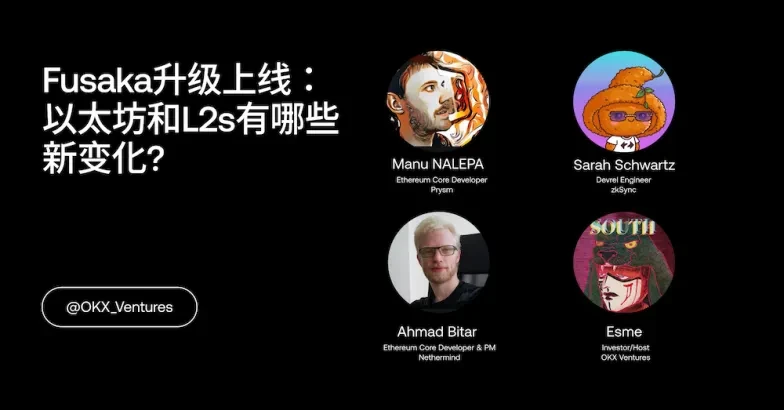
Ethereum主网已经Complete Fusaka 分叉. 从协议层面, 这次升级主要包含四块, 全文 按 Q& A Show More三位嘉宾的核心观点与一线经验: Ahmad (@smartprogrammer) – Nethermind 执行客户端 / Ethereum核心开发 Manu (@manunalepa) – Prysm / Of
2025年12月16日
OKX 研究院 | RWA Why在2025年成为关键叙事?
RWA (Real World Assets, 真实世界Assets) 正成为全球资本「新宠」. 简单来说, RWA就是把真实世界里那些有价值, 有所有权的东西——比如房子, 债券, 股票等传统金融Assets, 甚至艺术品, 私人借贷, 碳信用这种平时不太好直接Trading的Assets——搬到区块链上, 变成can Trading, 可编程的crypto assets. 这样一来, 不
2025年11月20日
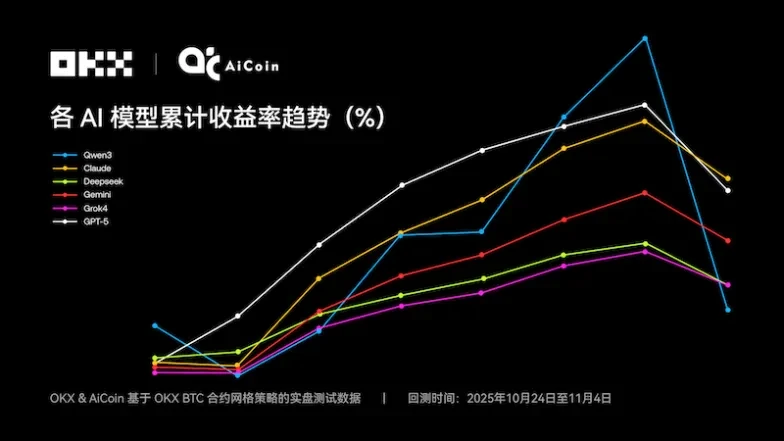
Claude拿下冠军, 6 大 AI 网格策略对决真相 | OKX & Ai Coin 实盘测评
短线炒币冠军 , 在网格策略里也是王者吗? NOF1 推出的「AI 炒币实盘竞技场」第一赛季, 终于在 2025 年 11 月 4 日早上 6 点收官, 吊足了币圈, 科技圈和金融圈的胃口. 但这场"AI 智商公开测试"的结局却有点出乎意料, 六个模型总计的 6 万美元本金, 收官时只剩 4. 3
2025年11月6日