The Top 10 "Uncertainties" of Web3 in 2022 (Part 2)
"Uncertainty" is the greatest charm of the cryptocurrency industry, and it also makes Web3 incredibly imaginative.
From Tim Berners-Lee's proposal of the World Wide Web concept in 1989 to the present, the internet industry has experienced two turbulent eras of Web1 and Web2. Now, Web3 is approaching us. Standing on the shoulders of Satoshi Nakamoto and other industry pioneers, this brand-new technology empowers us with the ability to achieve complete private ownership of assets through cryptography, to unswervingly execute constitutions and laws through smart contracts, to achieve taxation through token issuance, to achieve rule-making and enforcement through open and transparent ledgers, and to realize the integration of finance and culture through DeFi and NFTs.
All of this is so wonderful and refreshing.
If the copy ended here, this beginning would seem more like a soft advertisement for a certain project, rather than an objective and fair Web3 popular science article. Undoubtedly, Web3 made significant progress in 2021, from wallets to public chains and other infrastructure, all receiving significant capital attention. At the beginning of 2022, when we look forward to this field, what "uncertainties" will we encounter?
This article is published in two parts. The first part "The Top 10 'Uncertainties' of Web3 in 2022 (Part 1)" was published on January 14. The first part focuses on events with lower probability among Web3 uncertainty events, while the second part focuses on events with higher probability among uncertainty events.
6. Composability becomes a necessity in the Web3 world
Clearly, composability and decentralization are the two most significant characteristics of Web3.
Since Satoshi Nakamoto published the white paper, driven by blockchain technology, decentralization has become the primary consideration for underlying infrastructure, while composability deserves special attention, especially composability between different ecosystems.
So-called composability, academically explained, is the general ability of system components to recombine into larger structures and use the output of this structure as input for another structure, while the simplest understanding is the splicing process between different Lego brick modules.
Composability is extremely difficult to achieve in the Web2 world. Talking about composability in the Web2 world is like asking Alibaba and JD.com to merge databases, or asking Google/Meta/Apple to share servers, or allowing users who trade on Exchange A to deposit assets on Exchange B and withdraw assets from Exchange A. The above possibilities are all zero!
In the blockchain world, composability within a single ecosystem is effortless. For example, in Ethereum, you can easily complete such operations: borrow DAI through MakerDAO, then deposit in Curve's DAI pool to get Curve LP tokens, then take the LP tokens to Convex to earn trading fees, while also receiving CRV token and CVX token rewards. Apart from slightly higher fees, the entire process is smooth and seamless, and no one will say no to you. This is the most direct embodiment of Web3 composability.
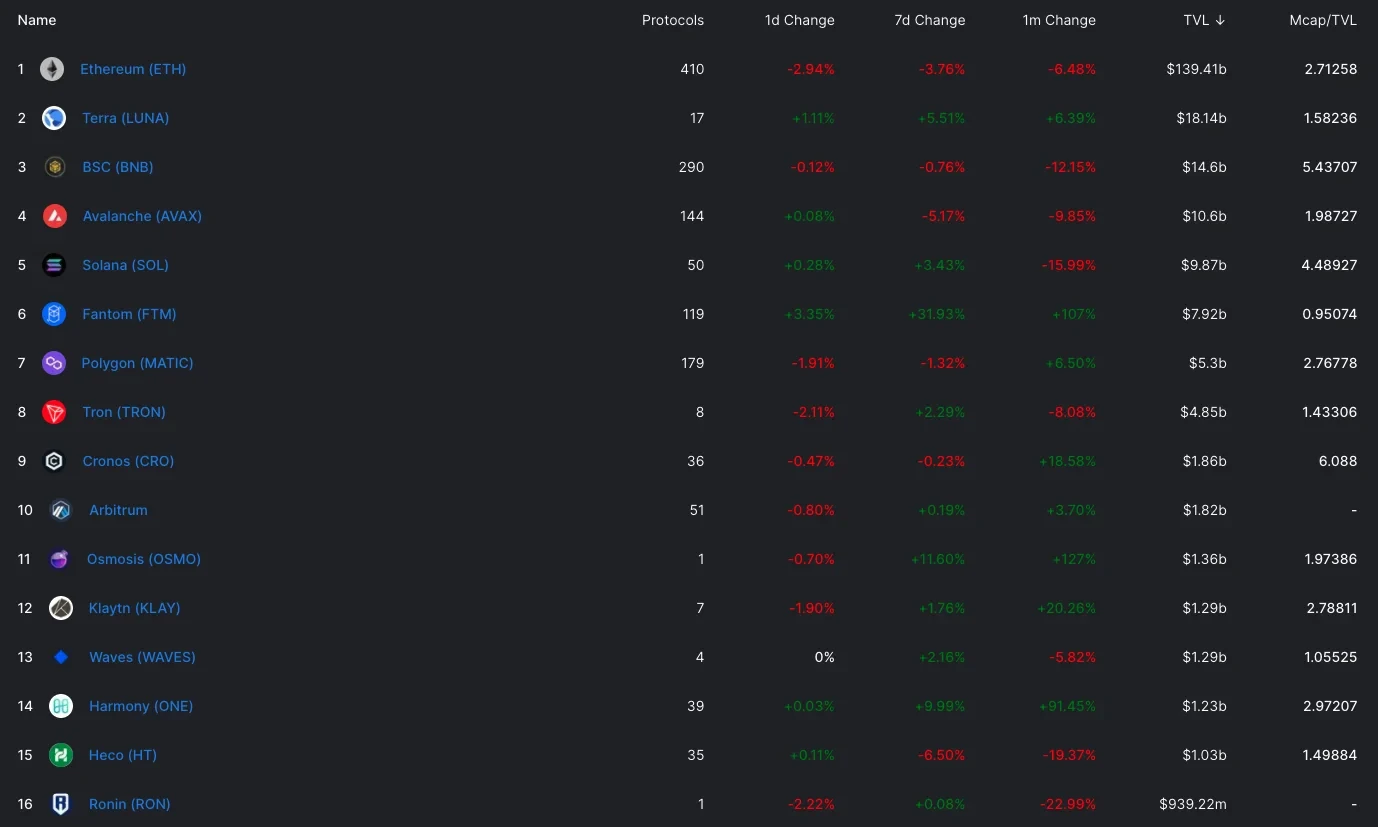
However, in multi-blockchain ecosystems, things are different. With the continuous development of underlying technologies such as Ethereum/Solana/Terra/Polkadot/Avalanche/Polygon/Cosmos/Near, on one hand, TVL continues to reach new highs, with over 16 underlying protocols having a TVL of $10 billion or more, and Ethereum alone reaching $139 billion in locked value. On the other hand, the number and types of applications based on different infrastructures are also growing. As of now, there are as many as thousands of applications on the top three underlying public chains by market capitalization.
In different ecosystems, the key to composability lies in bridges. Messari's 2021 annual report also interpreted this issue. Messari believes that these new blockchains (plus Ethereum's Layer 2 rollups) all need to communicate with each other, so the most serious pain point in cryptocurrency currently may be the lack of bridges. If the future is multi-chain, then those projects that build better cross-chain connectors and help cross-subchains, shards, and rollups, and support smooth asset flow will win the entire (virtual) world.
7. DAO becomes an important component of Web3
DAO represents network democracy and is an important component of Web3.
In the Web3 world, every token comes with voting rights, and every contributor is empowered with authority commensurate with their contributions. This is the most rustic expression of the core of DAO. Although there may be possibilities of "hegemony opponents" in this process, for example, in the part "complete decentralization of governance is not the optimal solution," a certain whale presses the pause button on a proposal and seriously slows down the development pace, after all, this is just an isolated case. The decentralized governance philosophy of DAO will still be an important component of Web3.
You might say, "Voting? Hehe."
In fact, voting and governance in the Web3 world have long been as important, normal, and simple as breathing. Just connect your MetaMask wallet, deposit tokens, and if you want to participate in ENS governance, deposit the corresponding ENS tokens, link to Snapshot, and you can vote for or against proposals.
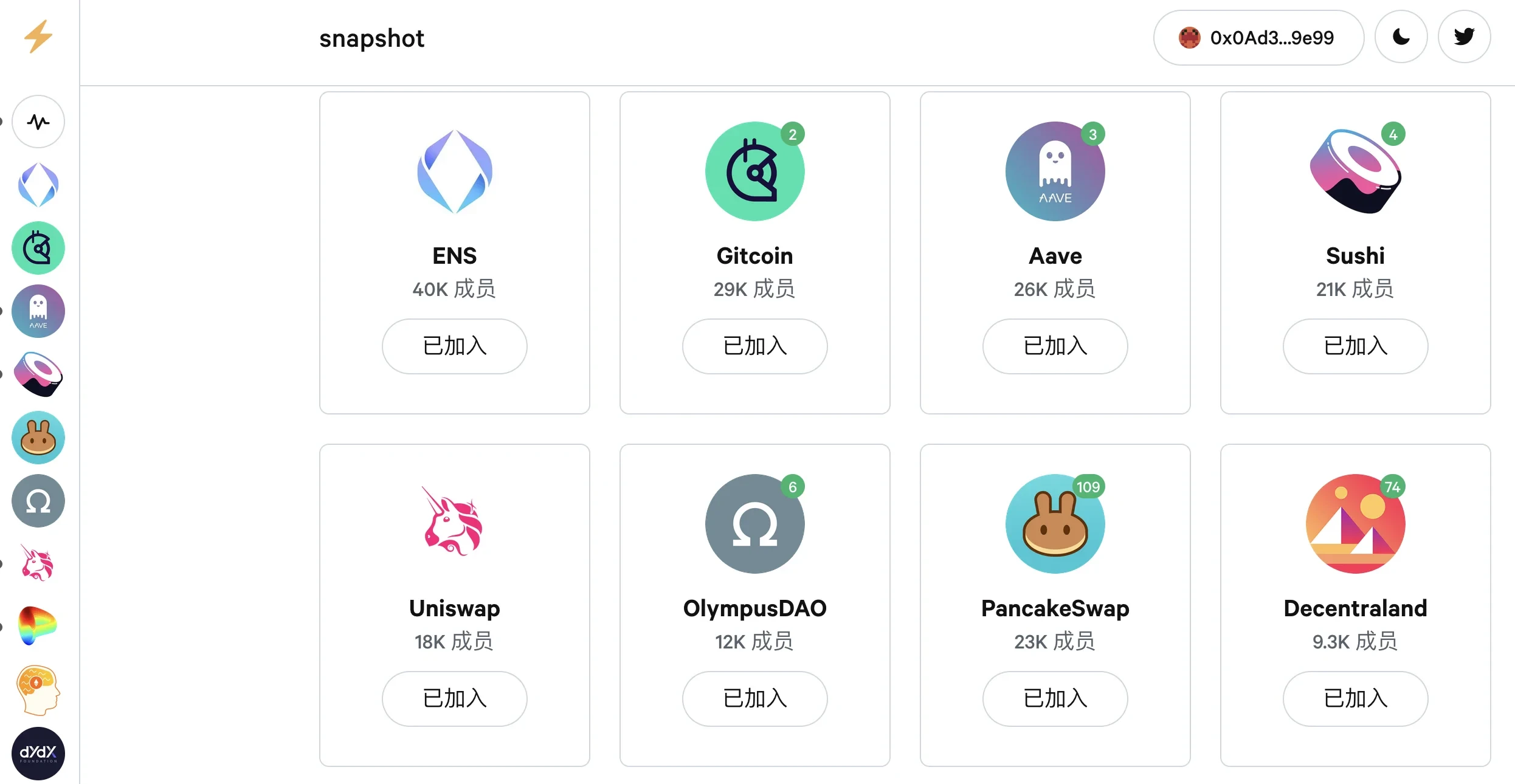
In this way, you are a fully qualified voter in the Web3 world.
Of course, the role of DAO goes far beyond voting. It can also initiate fundraising activities for matters with a shared vision. The most spectacular case to date is the Constitution DAO auction event in November 2021. The Constitution DAO group raised $5 million in less than 48 hours to purchase a rare copy of the Constitution auctioned at Sotheby's. Although they failed in the auction, this move is inevitably a milestone event in the Web3 world.
Similar governance practices are too numerous to list. In mid-December 2021, well-known crypto community investor Mike Dudas partnered with his friends Jim Daily and Chris Maddern to establish Links DAO, with a mission to create "one of the world's greatest golf clubs." Through NFT sales, they raised over $10 million in two days.
8. Ownership becomes the soul and consensus of Web3
In the Web2 world, if you ask Tencent, "Who owns this data?"
They will answer you that this data is stored on our servers, we are responsible for protecting your privacy, please use it with confidence. What they don't tell you is that they are also making money with your data.
So in the Web3 world, does "no one make money with your data"? Yes and no.
In Web3's decentralized-dominated economic system, due to the absence of centralized control, no single individual can fully capture the growth dividends of a project, unless an individual completely controls all tokens, but such an economic system cannot function normally. In the Web3 world, benefit exchanges occur through tokens, and those who hold more tokens will receive greater returns from ecosystem development.
Therefore, in Web3, the essence of data ownership is through decentralized token holding, where every participant can enjoy the dividends brought by system growth and governance, and absolutely not "my trading data is very valuable."
9. Web3 is driven in the form of the metaverse
Before the Web3 world is truly accepted on a large scale, it will appear in the form of the metaverse. From 2021 to the present, acquisitions related to the metaverse are being vigorously shown, which will accelerate the arrival of Web3.
In March 2021, the listing of sandbox game platform Roblox ignited the metaverse concept, with a market capitalization of nearly $40 billion opening up the imagination space of the "metaverse" industry. Domestically, affiliated companies of iQiyi, Kuaishou, Soul, and others have successively applied to register "metaverse"-related trademarks.
In addition, Meta has invested nearly $10 billion in AR/VR businesses since acquiring VR device manufacturer Oculus in 2014. Facebook revealed in its Q2 2021 earnings report that it will continue to invest in building the metaverse at a scale of $5 billion annually, and the subsequent renaming was the climax of all this.
In late August 2021, ByteDance spent 9 billion yuan to acquire Pico, the VR startup company with the largest shipments in China's VR industry that develops software and hardware. The reason ByteDance was willing to spend huge sums to acquire this company. The industry generally believes that VR is one of the natural entry points to the metaverse. Just as Zuckerberg acquired Oculus to get a metaverse entry ticket, Pico is also ByteDance's metaverse entry ticket.
Just this past January 18, Microsoft suddenly announced it would acquire Activision Blizzard for $68.7 billion. To complete this trade, Microsoft used 53% of its cash reserves, the largest acquisition in Microsoft's 46-year history. This acquisition is also considered an important step in Microsoft's metaverse grand plan.
The reason giant internet companies are flocking into game-related industries is that games are a necessary condition for the metaverse, and the metaverse is a necessary condition for Web3. It can be considered that the metaverse is not equivalent to Web3; the metaverse is a necessary path toward Web3 driven by giants.
10. Ethereum shaking BTC expectations weakens
Finally, can Ethereum surpass Bitcoin?
Until October 2021, the cryptocurrency circle still had strong expectations for "Ethereum flipping Bitcoin," but with the recent successive surges of Solana/Avalanche/BSC/Luna and other L1 public chains and people's renewed understanding of L2, believing that Layer 2 is not just Ethereum's Layer 2, but is entirely possible to be independent of Ethereum like Polygon. People's expectations that Ethereum will surpass BTC are weakening.
As described in Messari's year-end report, "Can ETH flip BTC in this cycle? The answer is unlikely." Not only because Ethereum faces scaling difficulties, but also because current public chain competition is fierce, and the market is more inclined to build a multi-chain parallel ecosystem in the future. However, Messari believes that after the combined force of all public chains, it is possible to jointly overturn Bitcoin like FAMGA's market capitalization exceeding M1."
The above is all the content of the top 10 "uncertainties" of Web3 in 2022.
Disclaimer
This article may contain product-related content that is not applicable to your region. This article is committed to providing general information only and does not assume responsibility for any factual errors or omissions herein. This article represents only the author's personal views and does not represent the views of OKX. This article is not intended to provide any advice, including but not limited to: (i) investment advice or investment recommendations; (ii) offers or solicitations to buy, sell, or hold digital assets; or (iii) financial, accounting, legal, or tax advice. Holding digital assets (including stablecoins) involves high risk, may fluctuate significantly, and even become worthless. You should carefully consider whether trading or holding digital assets is suitable for you based on your financial situation. For questions about your specific situation, please consult your legal/tax/investment professional. The information appearing in this article (including market data and statistics, if any) is for general reference only. Although we have taken all reasonable precautions in preparing these data and charts, we assume no responsibility for any factual errors or omissions expressed herein. © 2025 OKX. This article may be reproduced or distributed in its entirety, or excerpts of 100 words or less from this article may be used, provided that such use is non-commercial. Any reproduction or distribution of the entire article must also prominently state: "This article is copyrighted © 2025 OKX, used with permission." Permitted excerpts must cite the article name and include attribution, for example "Article Name, [Author Name (if applicable)], © 2025 OKX". Some content may be generated or assisted by artificial intelligence (AI) tools. Derivative works or other uses of this article are not permitted.
Show More
Recommended Reading

2025 KOL Most Used OKX Products List: A Comprehensive Review
In the cryptocurrency industry, professional players' selections are always direct and pure. In 2025, KOLs cast their most genuine votes for industry tools and ecosystem development with a full year of capital investment and time accumulation. We focus on four core questions—"What is the biggest achievement this year?", "Given the achievements, what OKX products do you use most and like best in 2025?", "Why do you like it?", "This
January 5, 2026

2026 Investment Outlook: Assets On-Chain, Intelligence and Privacy | OKX Annual Record
Crypto's three major trends: asset transformation, entity transformation, and rule transformation. As we are about to enter 2026, bidding farewell to the past four years of infrastructure focus on "building roads," the cryptocurrency industry is welcoming a profound paradigm shift. OKX Ventures defines this as the opening of the "Kinetic Finance" era, whose core is no longer how fast the network is, but the flow and earning of on-chain assets
December 31, 2025

Voting with Data: Insights into 2025 Hot Trading Products | OKX Annual Record
If you only look at market conditions, it's difficult to explain the return differences between exchange users in 2025. What truly determines returns also depends on account-level operation methods, not just market volatility itself. The OKX annual statement shows that mainstream coins remain the core of capital turnover and return bearing, supporting trading and strategy execution; emerging coins are more used to amplify volatility and provide phased opportunities, but are not stable, long-term sources of returns. What truly continuously contributes returns,
December 30, 2025
Fusaka in Practice: What Ethereum's Latest Upgrade Means for L2, Nodes, and Users?
Ethereum mainnet has completed the Fusaka fork. From the protocol level, this upgrade mainly includes four parts. The full text presents the core views and frontline experience of three guests in Q&A format: Ahmad (@smartprogrammer) – Nethermind execution client / Ethereum core developer Manu (@manunalepa) – Prysm / Of
December 16, 2025
OKX Research Institute | Why Did RWA Become a Key Narrative in 2025?
RWA (Real World Assets) is becoming the "new favorite" of global capital. Simply put, RWA involves moving valuable, ownership-bearing things from the real world—such as traditional financial assets like houses, bonds, stocks, and even assets that are usually difficult to trade directly like art, private lending, and carbon credits—onto the blockchain to become tradeable, programmable crypto assets. This way, no
November 20, 2025
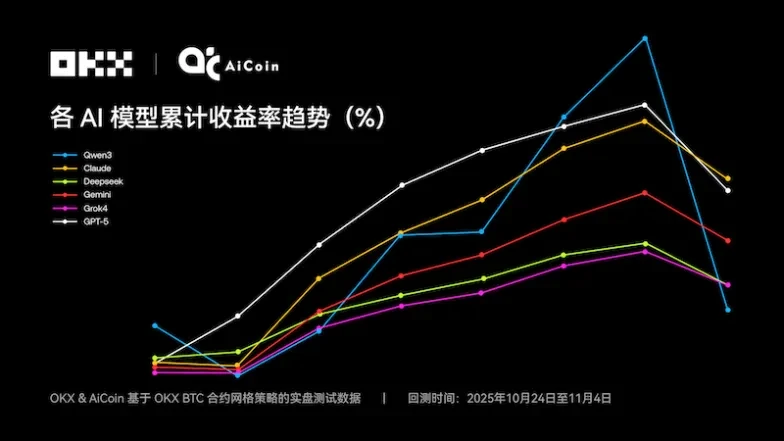
Claude Takes the Championship, 6 Major AI Grid Strategy Showdown Truth | OKX & Ai Coin Live Trading Review
Short-term trading champion Qwen3, is it also a king in grid strategies? The first season of the "AI Trading Live Arena" launched by NOF1 finally concluded at 6 AM on November 4, 2025, whetting the appetite of the cryptocurrency, technology, and financial circles. But the ending of this "AI IQ public test" was somewhat unexpected. The total principal of $60,000 across six models was only $4.3 left at the end
November 6, 2025