A Comprehensive Guide to the Top 5 Most Popular Chain Games, Full Analysis of GameFi Secrets
GHST-0. 78%
The breakout success of Axie Infinity not only sparked a new wave of growth in blockchain gaming, but also catapulted the GameFi concept and Play-to-Earn model into the mainstream. According to statistics, as of July 30, 2021, the blockchain gaming sector had attracted $1 billion in investment—a figure that amounted to just $72 million for the entire year of 2020.
Powered by strong monetization capabilities and remarkable wealth-creation potential, GameFi centered on the Play-to-Earn model has seamlessly taken the baton from DeFi and NFT, becoming the focal point of attention and discussion in the industry. Given that the early concepts were somewhat ambiguous, we will focus here on the two most widely recognized interpretations of GameFi.
The first is the original meaning of GameFi, namely "Gamified DeFi." The emphasis is on introducing gaming elements to make DeFi more entertaining, accessible, and easier to spread. For example, Aavegotchi, an NFT platform built on DeFi collateral lending, and last year's viral Pineapple (MEME), both introduced NFT exchange and gaming elements into DeFi, allowing players to participate in DeFi while also earning money through gaming and acquiring NFTs.
The second interpretation emerged as GameFi evolved further—the concept of "DeFi-powered Gaming." By adding financial attributes to games, a prime example being Axie Infinity, users can earn while playing, replacing "liquidity mining" with "gaming mining."
Essentially, as GameFi continues to evolve and new projects emerge endlessly, the boundary between these two definitions is gradually blurring, and the practical differences are minimal. After all, the original fusion of gaming and finance was driven by the shared goal of fostering better project development. This wave of GameFi's explosion was primarily fueled by improvements in public chain performance, the development of sidechains and Layer 2 solutions gradually addressing pain points, and the maturation of DeFi and NFT technologies and products. NFTs brought scarce and unique differentiated assets to DeFi, while DeFi endowed NFTs with commercialized value through its financial mechanisms. The combination of all three has injected new vitality into chain games. Today, we will use this GameFi topic to walk you through the most representative GameFi projects currently available.
1. Axie Infinity
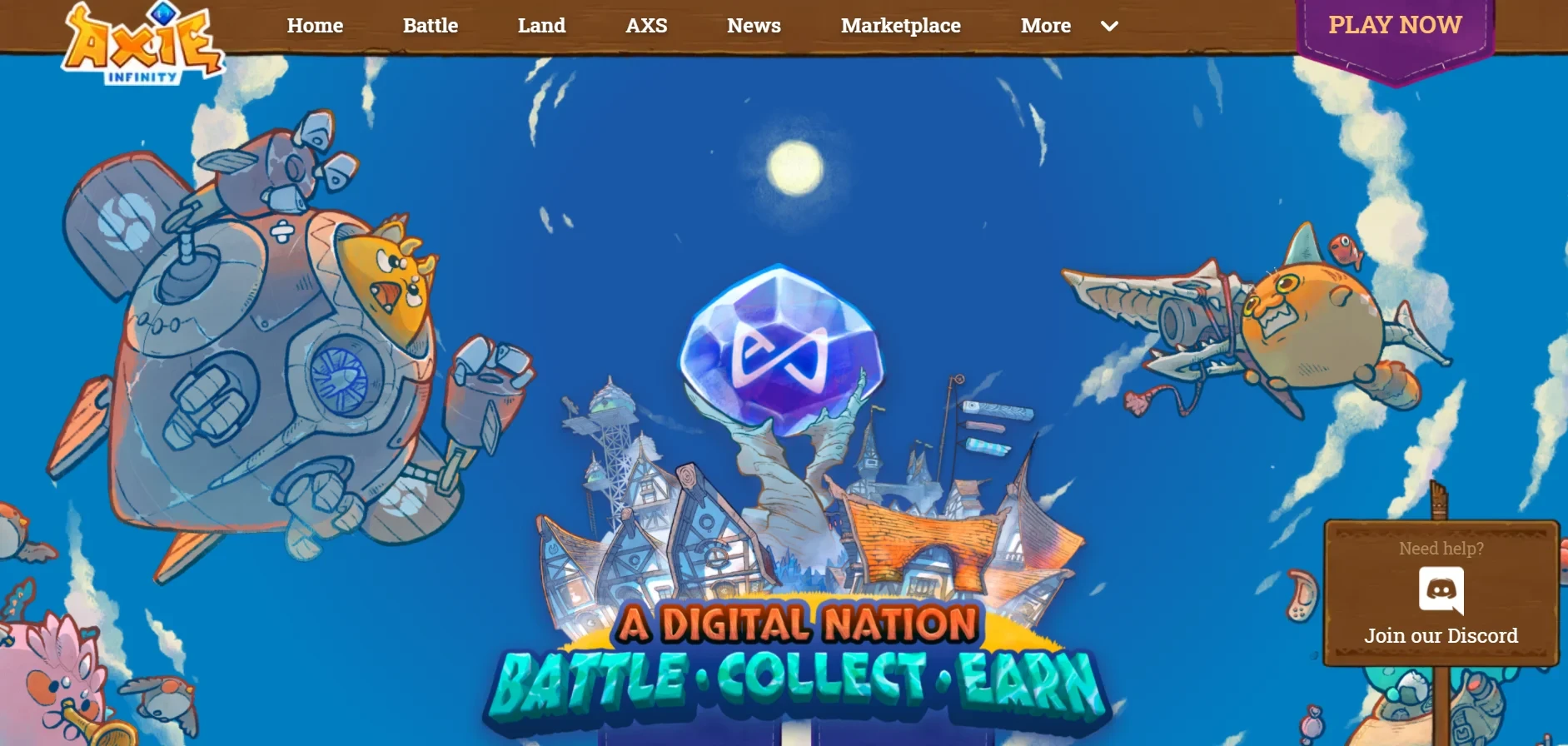
When discussing GameFi, the breakout hit Axie Infinity is unavoidable. As a hugely popular game on Ethereum, it allows players to collect, breed, raise, battle, and trade token-based pets called Axies. There are currently approximately 140,000 Axies, each with distinct traits and attributes that determine their combat abilities.
Axie Infinity has issued two tokens: AXS (Axie Infinity Shards) and SLP (Small Love Potion). SLP is used for pet breeding and serves as an in-game task incentive asset. AXS is primarily used for governance proposals and voting. Since players can earn SLP by winning matches in competitive play or completing tasks, and SLP can be traded in the secondary market, the Play-to-Earn objective is achieved. Of course, players who are bullish on Axie Infinity and deeply involved in the game—including governance and operations—can also purchase AXS. AXS has been successfully listed on OKX, rising nearly 4x within one month.
Additionally, OKX has also listed YGG, issued by the gaming guild Yield Guild Games that originated from Axie Infinity. Yield Guild Games is a decentralized autonomous organization (DAO) composed of tens of thousands of gamers who aim to create a virtual world economy by earning in-game assets through investing in Play-to-Earn games, sponsoring gamers, and building tools to enhance the future of metaverse gaming. In less than a month, YGG's price surged by a staggering 15x.
Worth mentioning is that to break free from Ethereum's underlying limitations and high gas fees, the Axie Infinity team built its own Ethereum sidechain Ronin. Currently, the game operates entirely on the Ronin chain, but trading of SLP and AXS needs to be bridged to Ethereum. Therefore, users need to connect both a Ronin wallet and the OKX DeFi Hub plugin (or MetaMask wallet) to enter the game. The project's revenue mainly comes from four methods: pet sales, land sales, marketplace trading fees, and breeding fees.
According to Token Terminal data, Axie Infinity ranks first among DApp and public chain protocol revenues with approximately $357 million in returns over the past 30 days. AXS's market cap stands at $4.46 billion, currently ranking 35th among all crypto assets. The number of token holder addresses is 23,919, representing a month-over-month increase of 176%.
2. Illuvium
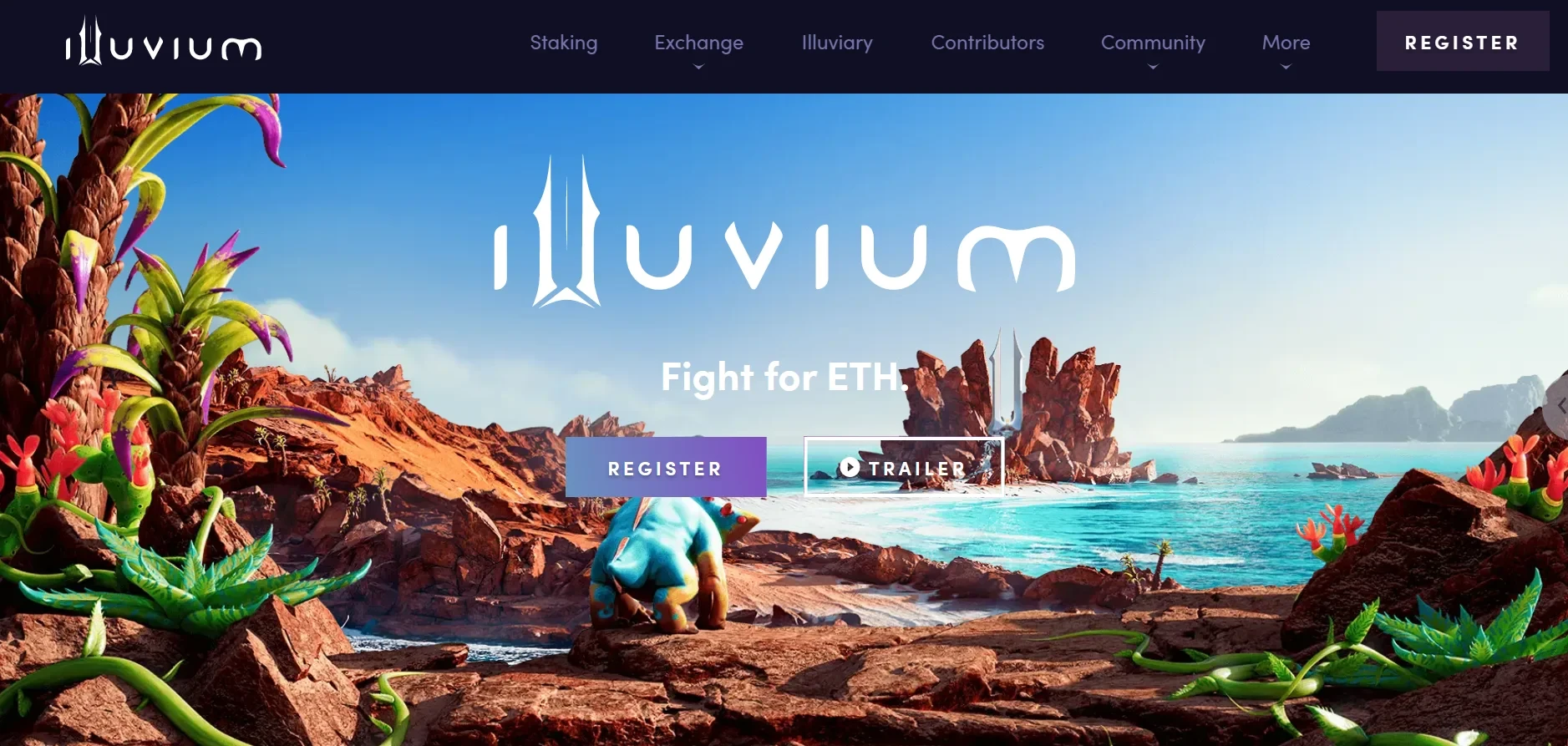
Illuvium is also an RPG (Role-Playing Game) and NFT collection game built on Ethereum. The game's core mechanic involves players defeating monsters to level up and capture beasts, which are then minted into NFTs and sold on the marketplace for profit (Play-to-Earn). Illuvium has not yet launched and is expected to go live on Immutable X in Q3 or Q4.
Immutable X is an Ethereum Layer 2 solution jointly developed by Immutable, the company behind the popular Ethereum game Gods Unchained, and zero-knowledge proof technology company StarkWare, to address Ethereum's trading and gas fee issues. Its purpose is to enable players to quickly and nearly costlessly mint, burn, and trade NFTs during gameplay.
Due to Axie Infinity's tremendous success, the market has higher expectations for Illuvium. Another important reason is that its co-founders, Kieran Warwick and Aaron Warwick, are the brothers of Kain Warwick, founder of synthetic asset protocol Synthetix.
According to official information, Illuvium's backstory takes place in a mysterious alien world. The premise is that all players are survivors aboard a spaceship that crash-landed on an alien planet. This world is home to numerous divine beasts (Illuvials). During exploration, players will encounter various divine beasts and battle them—those who successfully defeat a divine beast can capture it and level up.
There are over 100 different divine beasts living in the Illuvium world, with varying capture difficulty and rarity levels, which naturally translates to different values in trading. New players can earn free fragments through in-game quests to capture beast cubs, then level up their beasts through constant battles. Paying players can purchase equipment in-game using ETH. Players can also fuse two or more different species or classes of beasts to forge more powerful creatures.
Illuvium's token is ILV, with a total supply of 10 million. Its main functions are threefold: First, governance—token holders can participate in on-chain governance. Second, staking—users who stake ILV can earn game returns. Third, game incentives—users participating in game competitions and completing tasks can earn ILV token rewards. As can be seen, as the game develops, Illuvium will also conduct community governance through ILV, ultimately evolving into a DAO governance model led by players or the community.
The Illuvium project began operations in January 2021 and has already gained considerable attention. Its official social accounts have 56,100 Twitter followers, 9,168 Telegram group members, and 75,885 active Discord users in lively discussions. According to DappRadar data, ILV's current price is approximately $466, with 17,900 trades in the past 30 days and a trading volume of $78.24 million.
3. Aavegotchi
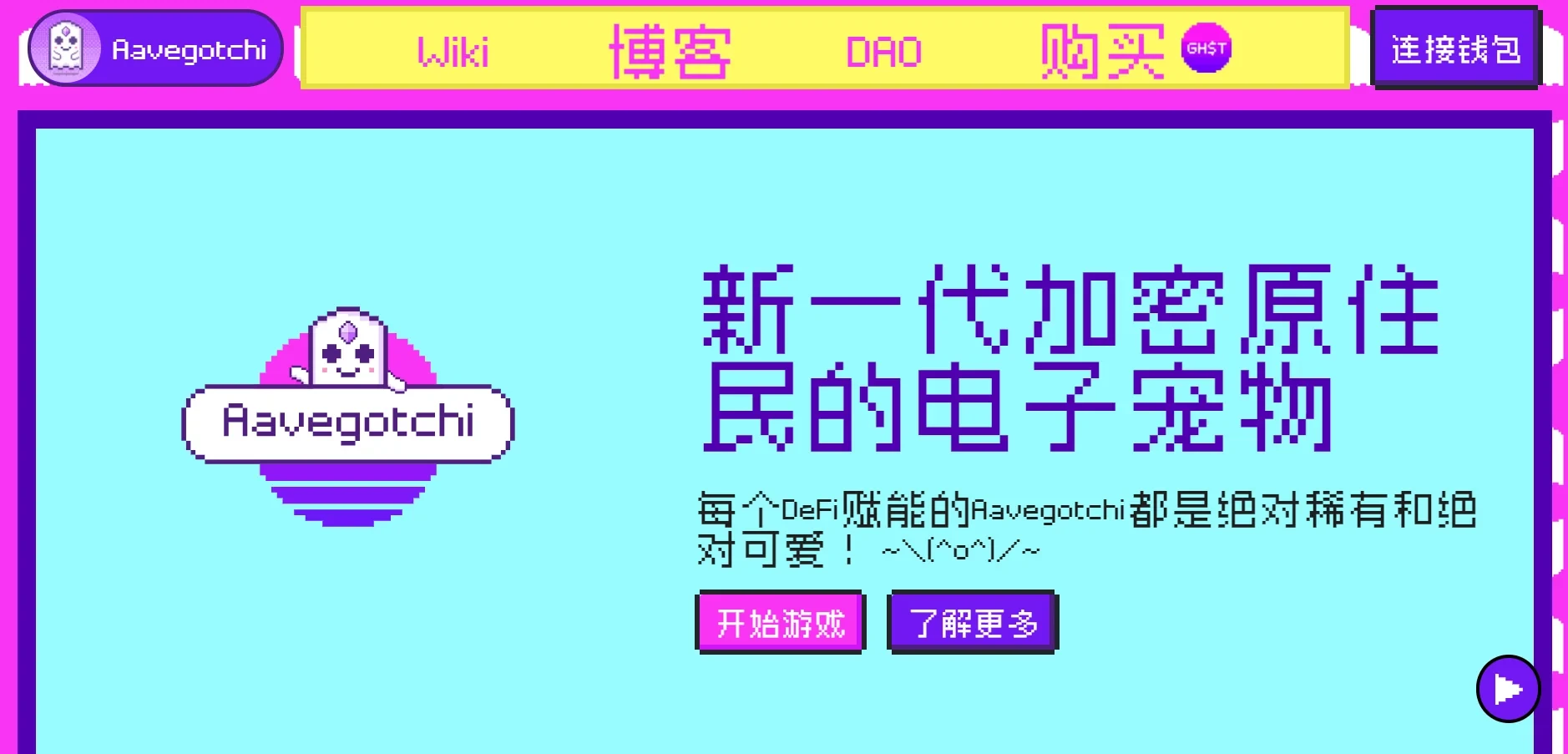
Aavegotchi (GHST) is an NFT game built on the DeFi lending platform Aave, deployed on Polygon, incorporating multiple innovations such as DeFi token staking, dynamically changing rarity, and scarcity mining mechanisms. It is one of the earlier games to achieve gamified DeFi and financialized NFTs.
Aavegotchi is an entirely new type of NFT digital collectible. Each little ghost Aavegotchi is an ERC721 standard NFT, and each Aavegotchi's underlying ERC721 NFT manages a custodial contract address that holds Aave-supported ERC20 collateral, known as aTokens.
The Aavegotchi ecosystem consists of four key elements: Portals, the governance token GHST, Aavegotchi DAO, and Aavegotchi Realm (land parcels). Players summon Aavegotchis from Portals by staking aTokens and interact with them. GHST is Aavegotchi's governance token. Players can stake GHST or GHST-ETH liquidity pairs to earn points in the game, which can be exchanged for lottery tickets of varying rarity. Lottery tickets can yield various wearables with different attributes or be used to draw for Portals and land parcels. Players can also sell lottery tickets or equipment in the Aavegotchi Bazaar for returns (Play-to-Earn).
Additionally, players can farm, craft, trade, and battle on land parcels. Farming yields the alchemy token Gotchus Alchemica, which consists of four different element tokens: FUD, FOMO, ALPHA, and KEK. These tokens can also be used to craft installations and other decorative items.
OKX listed GHST last year, and its token price has risen 110% in the past 30 days, currently trading at approximately $2.29. According to DappRadar data, over the past 30 days, 3,770 wallets have interacted with it, generating 140,300 trades.
4. Zed Run
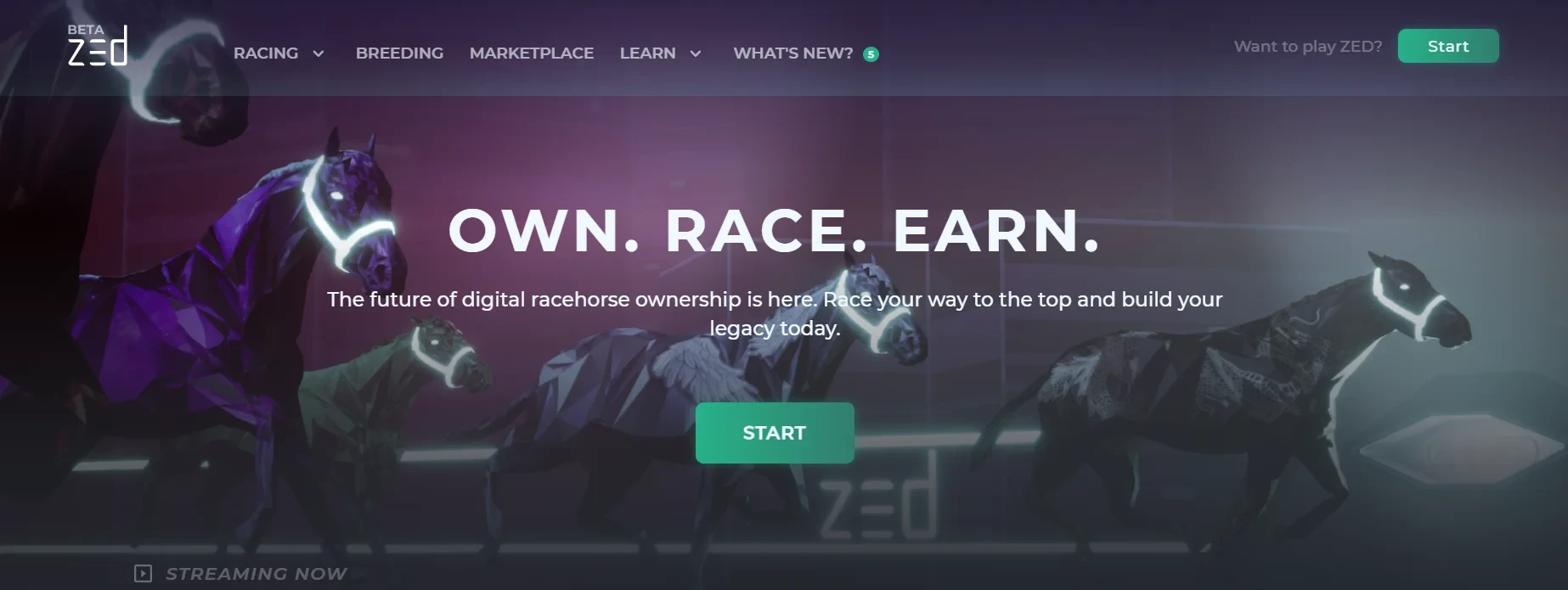
Zed Run is a Polygon-based AR futuristic horse racing game that combines breeding, racing, watching races, and various other gameplay elements into a one-stop NFT horse racing experience. Zed Run was launched in 2019. Benefiting from the rapid growth of the NFT market, its developer Virtually Human Studio (VHS) recently completed a $20 million Series A funding round, led by TCG with participation from a16z, Red Beard Ventures, and others.
Zed Run's horse racing rules require horse owners to pay an entry fee. If they win on the digital racetrack, they receive rewards. Each race outcome is entirely determined by the horse's innate qualities, using an algorithm that factors in thousands of possible outcomes to determine the final result. A horse's innate abilities are based on its DNA, which is determined by its bloodline, genetics, and breed. The higher a horse's win rate, the more buzz it generates in the secondary market.
It is reported that Zed Run will introduce track conditions, weather, fatigue levels, and tier systems. They also plan to experiment with other ideas such as fences, jumps, and track ownership. Recently, they acquired a parcel of land in Decentraland where players can socialize. In the future, the game will create a creator economy within the metaverse, where players can take on roles such as stable owner, track owner, breeder, or accessory designer. It is reported that YGG has also invested in Zed Run and is forming player teams and building Zed Run horse racing stables for competition and breeding. As of August 20, Zed Run has over 42,000 Twitter followers, 2,335 Telegram users, and 72,081 Discord members.
5. Nine Chronicles
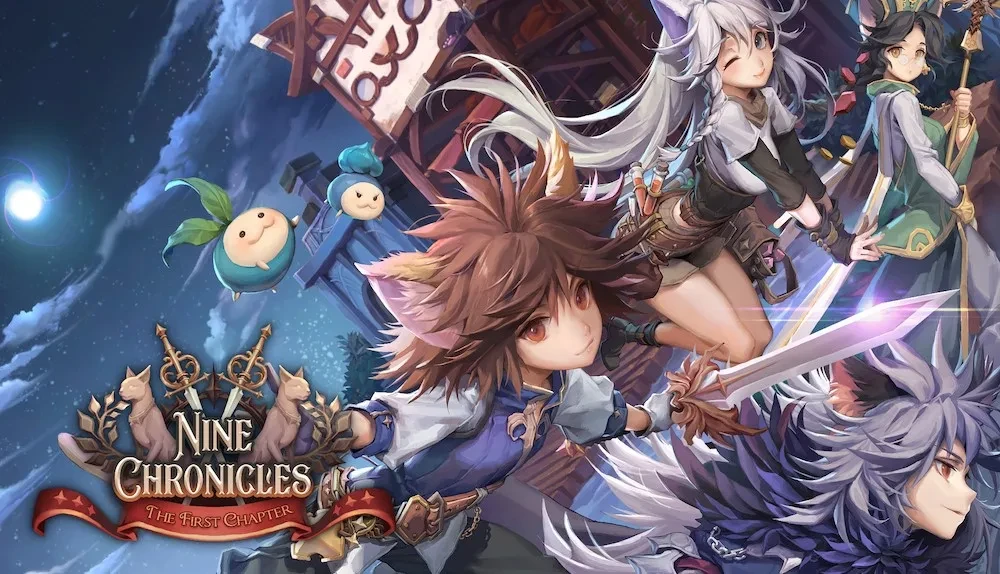
Recently, there has been intense discussion in the crypto space about Nine Chronicles. It is reported that Nine Chronicles is a Korean-style casual RPG developed by Planetarium, a blockchain gaming studio backed by French gaming giant Ubisoft, with core team members coming from the development team of the renowned MMORPG Dungeon & Fighter.
Recently, Nine Chronicles completed a $2.6 million funding round, led by Animoca Brands with participation from Divergence Ventures, IDEO Co Lab, Axie Infinity co-founder Jeffrey Zirlin, and Aave protocol CEO Stani Kulechov, among others. On August 10, it launched a one-week IDO for Wrapped NCG (WNCG) on SushiSwap's MISO platform. WNCG is now available for trading on OKX.
It is easy to understand why Nine Chronicles has generated such heated interest. At the GameFi forefront, Nine Chronicles has an outstanding founding team, the backing of a top-tier gaming giant, and support from well-known institutional investors.
The game is a fully decentralized RPG driven by players, where players take on the role of a rookie adventurer, traveling between nine kingdoms, collecting rare treasures, battling enemies, and ultimately becoming a legendary hero. Each world and each boss have multiple levels, and players can craft and trade custom equipment to create stronger characters. Recently, we published an article titled "Detailed Tutorial on How to Participate in Ubisoft's New Blockchain Game Nine Chronicles". For further information, please click to read.
Currently, Nine Chronicles is still in closed beta. Players can earn NCG (the game's native token) by inviting friends to join the game.
Each account can create 3 characters, and once created, the adventure can begin. Players can only unlock equipment crafting after reaching stage 3, and different equipment has varying crafting times. Players can only activate item trading after reaching stage 17. Since Nine Chronicles is a fully decentralized RPG, there are no NPCs or game company sales of items. As items are only traded between players, item prices are determined by market behavior among players. Upon reaching stage 25, battle mode can be activated. If PvP is opened and players can maintain a high ranking, they will receive rewards.
As can be seen, GameFi will build on the foundation of "Gaming + DeFi + NFT," incorporating DAO governance and attracting a large number of users through the Play-to-Earn model. This will not only drive the development of the crypto industry but may also have a certain impact on the traditional gaming industry. However, whether GameFi is a fleeting trend or a disruptive innovation ultimately depends on two aspects: first, the sustainability of its economic incentive model design, and second, the attractiveness and playability of the games themselves—can they cultivate highly engaged users? If these two issues can be resolved, GameFi will not only gain temporary attention but will also achieve long-term vitality.
Disclaimer
This article may contain product-related content that does not apply to your region. This article is only intended to provide general information and does not accept responsibility for any factual errors or omissions. This article represents the author's personal views only and does not represent OKX's views. This article does not intend to provide any advice, including but not limited to: (i) investment advice or investment recommendations; (ii) offers or solicitations to buy, sell, or hold digital assets; or (iii) financial, accounting, legal, or tax advice. Holding digital assets (including stablecoins) involves a high degree of risk and may fluctuate significantly or even become worthless. You should carefully consider whether trading or holding digital assets is suitable for you based on your financial situation. For questions about your specific circumstances, please consult your legal/tax/investment professional. The information contained in this article (including market data and statistical information, where applicable) is provided for general reference purposes only. Although we have taken all reasonable precautions in preparing such data and charts, we do not accept any responsibility for any factual errors or omissions expressed herein. © 2025 OKX. This article may be reproduced or distributed in its entirety, and excerpts of 100 words or less may be used, provided that such use is non-commercial in nature. Any reproduction or distribution of the full article must prominently state: "This article is copyrighted © 2025 OKX, used with permission." Permitted excerpts must cite the article title and include attribution, e.g., "Article title, [author name (if applicable)], © 2025 OKX." Some content may be generated or assisted by artificial intelligence (AI) tools. Derivative works and other uses of this article are not permitted.
Show More
Recommended Reading
OKX Pay: Ushering in the Next Generation of Crypto Payment
Tens of millions of users choose OKX, enjoy an unparalleled trading experience and a wide range of wealth management products. A letter from OKX CEO Star: Today, we officially launched the first version of OKX Pay for over 100 million global users. As the industry's first truly non-custodial and compliant payment application, OKX Pay will be embedded within the OKX App and is currently available in select markets, with full global rollout expected within a few months.
March 22, 2026

A New Chapter: Building the Next Generation of Financial Infrastructure Together
The partnership between OKX and the Intercontinental Exchange (ICE) represents a significant milestone for OKX and holds equally profound meaning for the evolution of the entire digital assets market. ICE establishes and operates the world's most critical financial infrastructure, including the New York Stock Exchange and global derivatives and clearing platforms. ICE's Select investment in OKX and joining our board reflects our shared conviction—that digital assets technology will play a pivotal role in the financial markets.
March 10, 2026
Reflecting on Another Year of Relentless Progress
As CEO of OKX and a builder who stays true to the mission, I take great pride in looking back on the extraordinary growth and progress OKX has achieved this year. Despite significant challenges, 2024 was a year marked by focus, innovation, and resilience. We not only expanded and optimized our products but also made significant strides in launching transparent and regulation-compliant localized businesses, while further strengthening our global management team. It is worth noting that after going through.
January 29, 2026

2025: Steady Progress Toward Financial Freedom
— Year-End Letter to Global Users from Star, Founder and CEO of OKX "Financial freedom" is often misunderstood. It does not mean the absence of rules, but rather the ability to make choices even within a framework of rules—and when the system is truly put to the test, it remains reliable and effective. This has been our unwavering focus throughout 2025. First and foremost, I would like to express my sincere gratitude to our global customers, partners, and regulators.
January 16, 2026

OKX Officially Launches in Germany and Poland
By Erald Ghoos, CEO of OKX Europe — Today is a momentous day for OKX—and for crypto users across Europe. We have officially launched our fully compliant centralized cryptocurrency trading platform in Germany and Poland! For us, this is not merely a geographic expansion, but a commitment to building the future of cryptocurrency the right way: secure, transparent, and tailored to local needs. If you are in Germany.
October 21, 2025
Partnership Upgrade! OKX and Standard Chartered Join Forces to Expand in Europe
On October 15, Erald Ghoos, CEO of OKX Europe, stated that OKX is expanding its strategic partnership with Standard Chartered to the European Economic Area (EEA). Earlier this year, OKX and Standard Chartered first joined forces in the UAE, launching a collateral mirroring program—a.
October 15, 2025